Google Sets Jan 2027 Android Developer Verification? Google ne confirm kiya hai ki vah January 2027 mein apne Android Developer Verification requirement ko global star par lagu karna shuru karega, jiski shuruaat saal ke shuruati mahino mein certified Android devices par additional countries aur sabhi installation sources tak expand hone se pehle, saat major app distributors ke sath hogi. Android App Safety ke Director of Product Management Matthew Forsythe dwara 19 November 2026 ko Android Developers Blog par announce ki gayi yeh rollout, 30 September 2026 ko Brazil, Indonesia, Singapore aur Thailand ke participating stores mein live hone wali regional protections par adharit hai. Is policy ke antargt, Google Play ke bahar distribute karne wale developers—jisme OEM storefronts, open-source repositories, aur direct APK downloads shamil hain—ko standard installation behavior banaye rakhne ke liye apni identity verify karni hogi aur apne package names aur signing keys ko register karna hoga.
Android Developer Verification ke liye Rollout Timeline aur Distributor Scope
Ek Nazar Mein
- Global rollout January 2027 mein saat participating distributors—Google Play, Samsung Galaxy Store, Honor, Oppo, Xiaomi, Transsion, aur Vivo—ke sath shuru hota hai, jabki Google ka kehna hai ki aane wale mahino mein protections additional stores, countries, aur installation sources par expand hongi; Google ka distributor guide broader store enforcement ke liye 1 March, 2027 ko target readiness milestone ke roop mein list karta hai.
- Google report karta hai ki March 2026 ke baad se millions apps register ho chuke hain, jo global Android app installs ka 99% se adhik cover karte hain, halanki Play ke bahar ke unregistered packages ko installation blocks ka samna karna padega jab tak ki users ek 24-hour bypass flow enable na karein.
- Developers ki feedback ke baad, Google ne apne free limited-distribution tier ke sharing cap ko 50 authorized devices tak badha diya hai aur open-source registries aur third-party app stores ke liye formal guides ke sath do automation APIs bhi ship kiye hain.
Google ne sabse pehle August 2025 mein Android Developer Verification initiative introduce kiya tha, jisme identity registration ko ek accountability layer ke roop mein frame kiya gaya tha jiska uddeshya malicious actors ke liye takedowns ke baad harmful packages ko bar-bar distribute karna mushkil banana hai. Jabki Google Play developers pehle hi identity verification workflows se guzar chuke hain, naya framework certified Android devices par non-Play distribution channels mein package-level registration ko extend karta hai.
Ars Technica ke anusar, underlying system verifier service pehle hi Android 8 Oreo ya uske baad ke version chalane wale Google-certified devices par deploy ki ja chuki hai—jo global star par certified handsets ke vast majority ko cover karta hai, jabki uncertified devices isse prabhavit nahi hote hain. 30 September, 2026 ko, user protections Brazil, Indonesia, Singapore, aur Thailand ke participating storefronts par live ho gaye. Shuruati regional rollout ke ab live hone ke sath, Google ne confirm kiya hai ki global enforcement January 2027 se phases mein roll out hogi.

Google ke resources for app distributors participating third-party storefronts ke liye verification ke prabhavi hone ko reflect karne ke liye 1 March, 2027 ko target readiness milestone ke roop mein set karte hain. Is dauran, Google ki November 19 rollout announcement kehti hai ki January 2027 launch ke baad kai mahino tak certified devices par bache hue countries aur sabhi installation sources mein protections dheere-dheere expand hoti rahengi.
| Rollout Milestone | Verified Scope | Effective Timing |
|---|---|---|
| Program Announcement | Identity verification aur package registration policy introduce ki gayi | August 2025 |
| Open Developer Registration | Developers ke liye globally registration kholi gayi | March 2026 |
| Limited Distribution & Bypass Launch | Free student/hobbyist tier aur 24-hour Advanced Flow introduce kiya gaya | August 2026 |
| Regional Rollout Activation | Brazil, Indonesia, Singapore aur Thailand ke participating stores ke liye activate kiya gaya | September 30, 2026 |
| Global Seven-Distributor Launch | Google Play, Galaxy Store, Honor, Oppo, Xiaomi, Transsion, aur Vivo par rollout shuru hota hai | January 2027 |
| Broader Store Readiness | Participating third-party app distributors ke liye target readiness milestone | March 1, 2027 (Target) |
| All Installation Sources | Bache hue countries aur certified devices par sabhi installation sources mein gradual expansion | Subsequent months (2027) |
Technical Registration Mechanics aur Identity Discrepancies
Technical layer par, Google ki open-source registration documentation aur distributor guides specify karte hain ki kisi app ko register karna ek unique package name aur uski signing key ke SHA-256 certificate fingerprint ko verified Android Developer Console ya Google Play Console account se bind karta hai. Google ka kehna hai ki kisi individual application ko register karne mein das minut se kam samay lagta hai aur company off-Play binaries ke content ko review karne ke bajaye developer ki identity verify kar rahi hai.
Commercial aur general distribution ke liye, Ars Technica report karta hai ki full verification ke liye government-issued identification aur $25 registration fee ki avashyakta hoti hai. Ars Technica yeh bhi note karta hai ki jabki popular app IDs offline checks ke liye devices par directly cache ki jati hain, kam common packages ko sideload karne ke liye installation aage badhne se pehle registration status confirm karne ke liye Google ke servers se active network connection ki avashyakta ho sakti hai.
Jurisdictional exclusions ke sandarbh mein, Google ka verification FAQ kehta hai ki jabki comprehensively sanctioned countries mein sthit developers legal restrictions ke karan Android developer verification complete nahi kar sakte hain, verification checks un countries mein physically sthit certified Android devices par run nahi hote hain. Parinamswaroop, sanctioned jurisdictions ke andar physically sthit users verification checks ke bina apps install karna jari rakh sakte hain.
Limited Distribution Tier aur Reported Cap Discrepancy
Classroom projects aur personal prototypes ko block hone se bachane ke liye, Google ne August 2026 mein limited distribution accounts introduce kiye the. Yeh accounts free hain aur inke liye government ID verification ki avashyakta nahi hoti hai, halanki inke liye abhi bhi 2-Step Verification ke sath ek Google Account aur developer ka legal name aur address rakhne wali Google payments profile ki avashyakta hoti hai. Is tier ke antargt app sharing QR codes ya links ke madhyam se device-authorization handshake ka upyog karta hai.
Public sources pre-expansion cap ko describe kiye jane ke tarike mein ek chhoti si discrepancy ko reflect karte hain:
- Official Google Documentation: Jabki Google ka standalone limited-distribution guide aur pehle ke FAQ entries ne pehle 20-device ceiling ko document kiya tha, Google ki November 19, 2026 rollout announcement spasht roop se kehti hai ki sharing limit ko “20 se badha kar 50 authorized devices” kar diya gaya hai.
- Secondary Media Reporting: Ars Technica ki reporting ne adjustment ko shuruati cap “25 total installs se 50 installs” tak ki vridhi ke roop mein describe kiya.
Google ne external outlets dwara cite kiye gaye alag-alag initial baseline figures ko explain karne wala koi reconciliation publish nahi kiya hai, halanki dono sources confirm karte hain ki updated ceiling 50 devices ya installs par khadi hai.
Automation APIs aur Store Re-Signing Friction
Large catalogs ya third-party distribution pipelines manage karne wale organizations ke liye, manual console entry operational friction introduce karti hai. Iska samadhan karne ke liye, Google ne apne distributor resources mein documented do programmatic interfaces release kiye:
- Android Developer ID Status API: Storefronts aur distributors ko yeh query karke existing app catalogs ko audit karne ki anumati deta hai ki koi specific package name aur SHA-256 signing certificate fingerprint pehle se registered hai ya nahi.
- Android Developer Console API: OAuth 2.0 delegation ka upyog karta hai taaki participating storefronts ya open-source repositories verified developers ki taraf se seedhe package names aur store-managed signing keys register kar sakein.
Signing-key detail cross-store aur open-source distribution ke liye vishesh roop se parinamswaroop hai. Jaise ki Google ke open-source app registration guide mein bataya gaya hai, agar koi open-source repository ya third-party store developer ki original key ke bajaye apni khud ki platform key ka upyog karke APK ko re-sign karta hai, to developer ko ya toh store-signed SHA-256 fingerprint ko extract aur register karna hoga ya repository ki Console API integration par nirbhar rehna hoga. Anyaatha, device verifier re-signed package ko unregistered manega.
User Bypass Paths, Exemptions, aur Open-Ecosystem Trade-offs
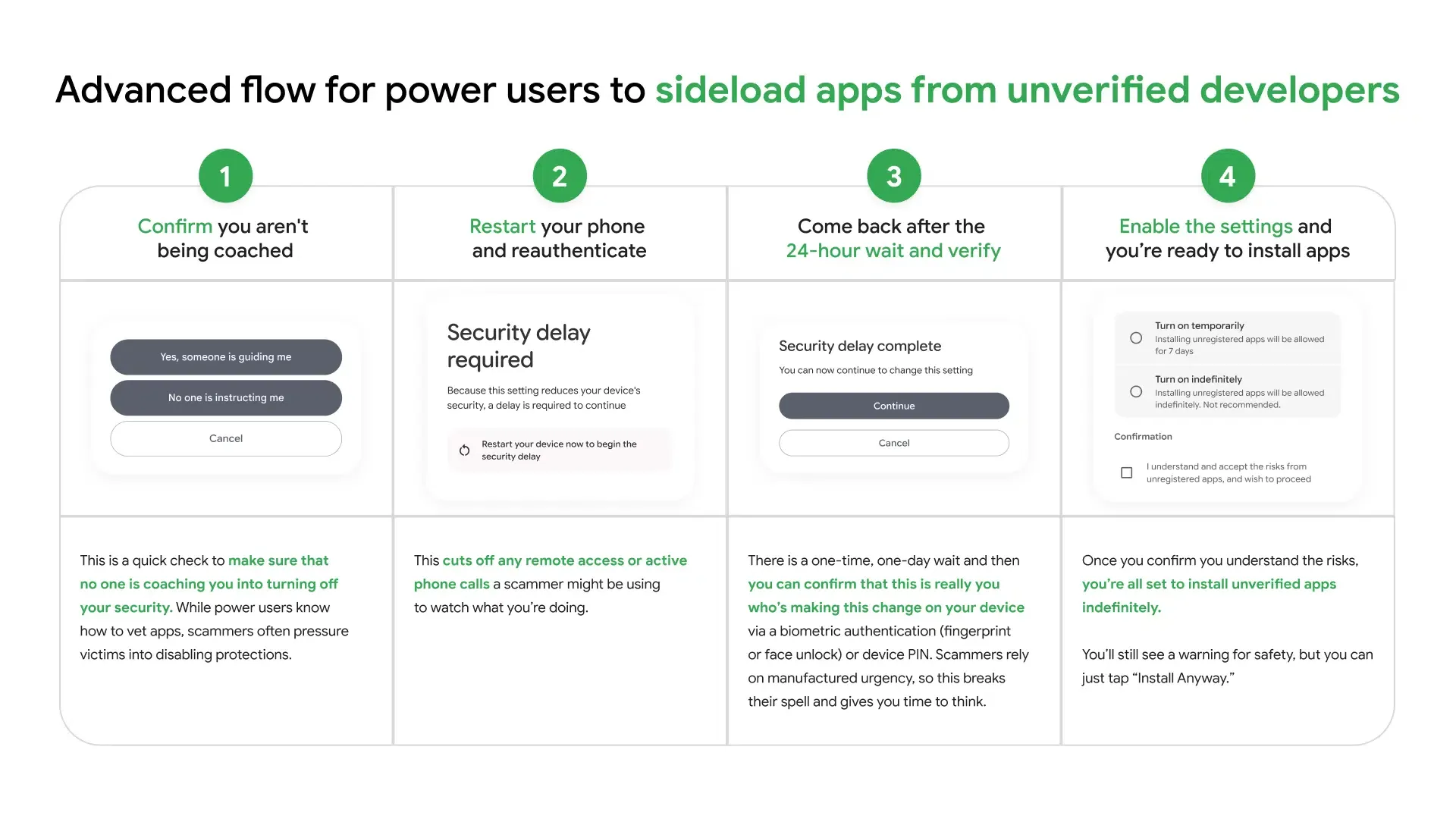
Social-engineering malware ke response ke roop mein program ko frame karne ke bawajood, Google ko sideloading par restrictions ko lekar open-source maintainers aur power users se pushback ka samna karna pada. Iske jawab mein, company ne ek opt-out mechanism ship kiya jise Android Help aur iske verification FAQ mein Advanced Flow ke roop mein document kiya gaya hai.
Advanced Flow ke antargt, experienced users unverified developers se installations ki anumati de sakte hain, lekin workflow jan-bujhkar friction introduce karta hai. Ars Technica ke walkthrough aur Google ki support documentation ke anusar, users ko Developer Options ko unlock karna hoga, unverified-packages toggle ko enable karna hoga, device PIN ke madhyam se confirm karna hoga ki वे kisi dabav ke adhin kaam nahi kar rahe hain, handset ko reboot karna hoga, aur temporary ya indefinite unverified installs chunne se pehle ek anivarya 24-hour security delay ka intezar karna hoga.
Google ka verification FAQ spasht scope boundaries ki bhi pushti karta hai jahan verification checks installation ko block nahi karte hain:
- Android Debug Bridge (ADB): ADB par execute kiye gaye developer installs certified devices par package registration checks se exempt rehte hain.
- Enterprise Managed Devices: Kisi organization ke managed device store ke madhyam se deploy kiye gaye private applications ko verification ki avashyakta nahi hoti hai, halanki Google unhe register karne ki salah deta hai.
- Uncertified Devices: Uncertified Android devices system verifier ke scope ke bahar hain.
Multi-Channel Distribution Responsibilities Android Developer Verification ke Baad
Jab 2027 mein installation sources mein enforcement expand hoti hai, Google Play, saron partner OEM stores, aur direct Web-to-APK landing pages par Android software distribute karne wali teams installation eligibility aur post-install context delivery ke beech ek spasht separation ka samna karti hain. Google ke package-and-key verification ko pass karna 24-hour Advanced Flow ko trigger kiye bina developer-verification layer ko clear karta hai, jabki anya platform, store, aur compatibility checks abhi bhi laagu ho sakte hain., phir bhi distribution verification apne aap mein naye launch kiye gaye app mein marketing campaign tags, referral codes, ya destination deep-link states nahi lata hai.
Conceptual Responsibility Model (Non-Official Architecture)
Note: Neeche diya gaya diagram aur table ek Conceptual Responsibility Model present karte hain jo yeh darshate hain ki multi-channel Android distribution stacks verification, delivery, aur parameter handoff ko kaise alag karte hain; yeh koi official Google internal implementation topology nahi hai.
[ Developer Build & Registry ]
  Sign APK (SHA-256 Key) ──> Register Package + Key Fingerprint (Play / Developer Console)
                                       │
                                       ▼
[ Multi-Channel Distribution ]
  Google Play / 6 OEM Stores / Direct Web APK ──> Device Verifier Check (Certified Android 8+)
                                       │
                                       ▼
[ Post-Install Context Layer ]
  Parameter SDK (e.g., OpoInstall) ──> Delivers Web Params at First Launch ──> App Backend Validates
Google Play aur non-Play Android storefronts par shipping karne wali teams store compliance ko attribution ke sath conflating karne ke bajaye har layer par alag-alag engineering responsibilities assign karne se labh uthati hain:
| Component | Illustrative Responsibilities | Scope & Limitations |
|---|---|---|
| Android Developer Console / Play Console | Verified developer identity ko package names aur SHA-256 signing fingerprints se bind karta hai; ID Status aur Console APIs provide karta hai | Kewal installation accountability sthapit karta hai; referral attribution ya in-app routing ko handle nahi karta hai |
| App Distributors (Play & 6 OEM Stores) | Submitted packages ko audit karta hai, yadi laagu ho to store-side re-signing manage karta hai, aur listing status surface karta hai | Store-specific distribution rules enforce karta hai; Play Install Referrer Google Play installs tak seemit hai |
| Parameter Pass-Through SDK (e.g., OpoInstall) | Supported web promotional, invite, ya room parameters ko installation ke dauran first app launch tak pass karta hai | Kewal ek installation parameter pass-through framework ke roop mein kary karta hai; developer identity verify nahi karta hai, Android verification ko bypass nahi karta hai, users ko authenticate nahi karta hai, ya IAP validate nahi karta hai |
| Developer Business Backend | Users ko authenticate karta hai, receipts validate karta hai, anti-abuse rules enforce karta hai, aur delivered parameters ko user records se bind karta hai | Account state, entitlements, aur campaign reconciliation ke liye single source of truth ke roop mein kary karta hai |
Kyonki Google Play ka native Install Referrer API kewal Play Store installs par laagu hota hai, Web-to-APK campaigns chalane wali ya Honor, Oppo, Xiaomi, Transsion, Vivo, aur Samsung Galaxy Store par distribute karne wali teams compliant package registration ko OpoInstall jaise ek alag installation parameter pass-through layer ke sath pair kar sakti hain taaki first launch par invite ya campaign context recover kiya ja sake—bsharte ki underlying APK aur uski channel-specific signing key ko pehle Google ke verification rules ke tahat thik se register kiya gaya ho.
Multi-Store aur Direct APK Teams ke liye Engineering Checklist
Google Play ke bahar Android packages distribute karne wali engineering aur release teams ko January 2027 rollout shuru hone se pehle apne release pipelines ko audit karna chahiye:
- Audit Off-Play Package Signatures: Google Play aur OEM stores ya direct website downloads dono ke madhyam se distribute kiye jane wale apps ke liye, Play Console mein confirm karein ki har active package name aur SHA-256 signing certificate—kisi bhi store-re-signed keys sahit—registered hai.
- Integrate ID Status Checks in CI/CD: Unregistered build variants ya rotated signing keys ko distribution se pehle pakadne ke liye release automation ko Android Developer ID Status API se connect karein.
- Account for Store Re-Signing Workflows: Third-party stores ya open-source repositories ke madhyam se distribute karte samay jo binaries ko re-sign karte hain, final distributor-signed SHA-256 fingerprint ko extract karein ya Android Developer Console API ke madhyam se OAuth 2.0 delegation grant karein.
- Separate Verification From Parameter Delivery: Identity registration ko certified devices par installation eligibility ke liye ek prerequisite ke roop mein treat karein, jabki parameter delivery, receipt validation, aur user authentication ko dedicated backend aur SDK layers mein isolated rakhein.
Frequently Asked Questions (FAQ)
Kya Android developer verification APK sideloading ko puri tarah block kar dega?
Kya Google Play developers ko kuch register karne ki avashyakta hai yadi वे kewal Play par publish karte hain?
Open-source repositories aur third-party stores APK re-signing ko kaise handle karte hain?
Kya free hobbyist account 20, 25, ya 50 devices par capped hai?
Engineering Teams ke liye Key Takeaways
Google ka January 2027 global rollout of Android Developer Verification non-Play channels par Android software provenance ko kaise handle karta hai, isme ek structural transition ka sanket deta hai. Launch ke samay Google Play, Samsung Galaxy Store, Honor, Oppo, Xiaomi, Transsion, aur Vivo ke sath partner karke—January mein shuru hokar aur subsequent months mein certified devices par additional stores aur installation sources mein expand hokar—Google basic installability ko cryptographic key registration aur verified developer identity se tie kar raha hai.
Mobile engineering aur release teams ke liye, tatkal operational priority code rewriting ke bajaye key hygiene hai. Har active package name ko audit karna, OEM aur open-source channels mein store-managed re-signing fingerprints ko track karna, aur status APIs ko continuous integration pipelines mein integrate karna yeh tay karega ki jab enforcement live hoti hai to off-Play distribution channels frictionless bane rahein.
References
-
Android Developers Blog. Expanding Android developer verification in 2027. Primary official rollout announcement (Nov 19, 2026).
-
Android Developers Blog. Elevating Android security with developer verification. Initial official program announcement (Aug 2025).
-
Android Developers. Resources for app distributors | Android developer verification. Official technical documentation on target store readiness and automation APIs.
-
Android Developers. Register your app on open-source repositories | Android developer verification. Official guide on package names, SHA-256 fingerprints, and store re-signing.
-
Android Developers. Register for limited distribution on Android devices. Official specification for free student and hobbyist limited-distribution accounts.
-
Android Developers. Frequently asked questions | Android developer verification. Official policy documentation covering ADB, enterprise exemptions, sanctioned regions, and Advanced Flow.
-
Android Help. Allow app installs from unverified developers. Official end-user support guide for the 24-hour Advanced Flow bypass.
-
Ars Technica. Google will launch Android app verification requirement globally in January 2027. Independent reporting on Android 8+ verifier deployment, $25 fee, and offline caching caveats (Nov 20, 2026).
-
Ars Technica. Google details new 24-hour process to sideload unverified Android apps. Independent walkthrough of the 24-hour Advanced Flow opt-out mechanism.
-
OpoInstall Documentation. OpoInstall Official Technical Documentation. Reference specification for installation parameter pass-through frameworks.
Share this article