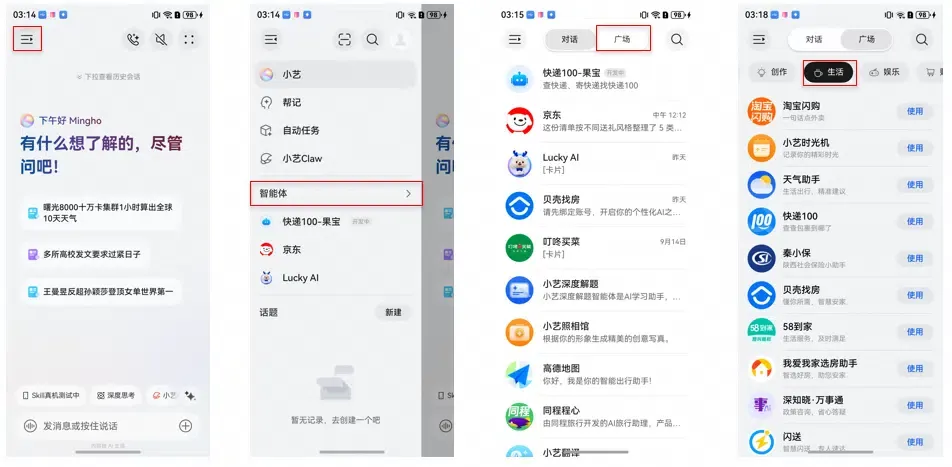
Huawei Celia orders food? Huawei confirmed the production integration of the Taobao Instant Commerce agent directly into the Celia system assistant on September 22, 2026. Powered by the architectural rollout of HarmonyOS 7, this deployment allows users to execute complete delivery workflows—from localized merchant discovery and menu filtering to automated cart assembly and checkout dispatch—entirely through natural language prompts. When Huawei Celia Orders Food via background platform services, it highlights a profound structural transition in mobile computing: service discovery is bypassing traditional application launchers in favor of system-level intent dispatching. For software architects and mobile engineering teams, this architectural realignment demonstrates why verified system routing, resilient session state handoffs, and verified deep-link routing mechanisms are vital to preserve transactional context across heterogeneous client runtimes.
Chronological Evolution and Intelligent Ecosystem Milestones
The operational availability of automated meal ordering inside Celia reflects a broader, multi-year paradigm shift across the mobile computing landscape. Throughout the smartphone era, consumer digital interaction adhered strictly to an application-centric topology. Users unlocked physical endpoints, manually identified branded application icons, parsed visual directory menus, confirmed line-item variables, and concluded payments within detached software sandboxes. While functional, this legacy model forced substantial cognitive and operational overhead on users navigating disjointed multi-app workflows.
At a Glance
- Voice-Driven Order Execution: Commercial integration between HarmonyOS 7’s Celia assistant and Alibaba’s Taobao Instant Commerce agent enables end-to-end food ordering via natural voice commands without manual navigation through standalone application storefronts.
- HarmonyOS Ecosystem Scale: Huawei’s 2026 ecosystem disclosures show that active devices running HarmonyOS 6 and HarmonyOS 7 have surpassed 85 million, while earlier platform updates confirmed over 11 million registered developers and more than 400,000 available applications and services; industry conference coverage has additionally cited over 200 million daily app downloads.
- Unified Agent Infrastructure: The deployment operates within the broader HarmonyOS 7 agent ecosystem built around the HarmonyOS Agent Framework 2.0, utilizing hybrid on-device and cloud planning to coordinate system intents across 2,100 platform capabilities, 500 partner Skills, and over 2,000 domain-specific agents.
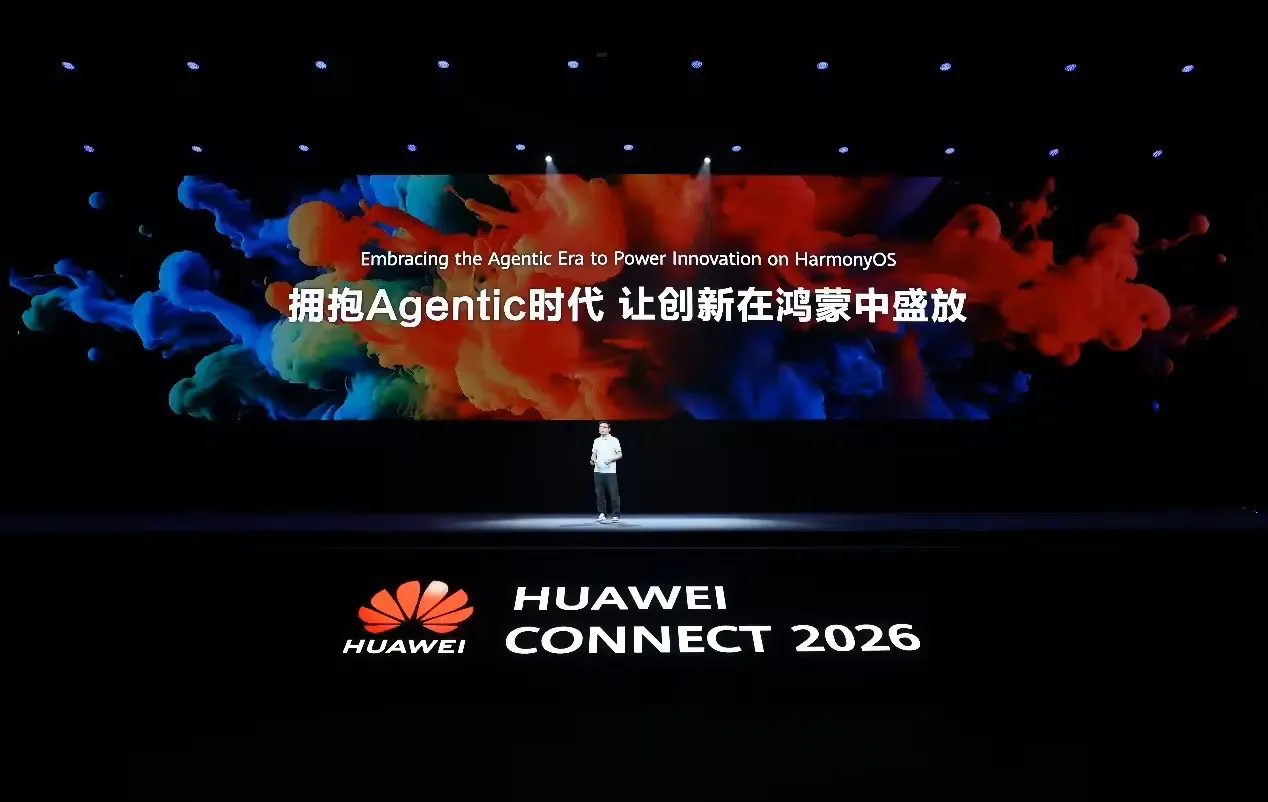
The introduction of unified conversational agents began addressing this friction by intercepting intent at the operating system root. As documented across the official HarmonyOS platform overview, Huawei positioned its system-level assistant not merely as a passive voice listener, but as an intent-driven coordination layer. Throughout 2026, Huawei detailed how the platform evolved beyond basic binary compatibility into collaborative architectural co-creation. Operating across an active footprint exceeding 85 million HarmonyOS 6 and HarmonyOS 7 devices, the platform’s distributed foundation now hosts more than 400,000 available applications and platform services.
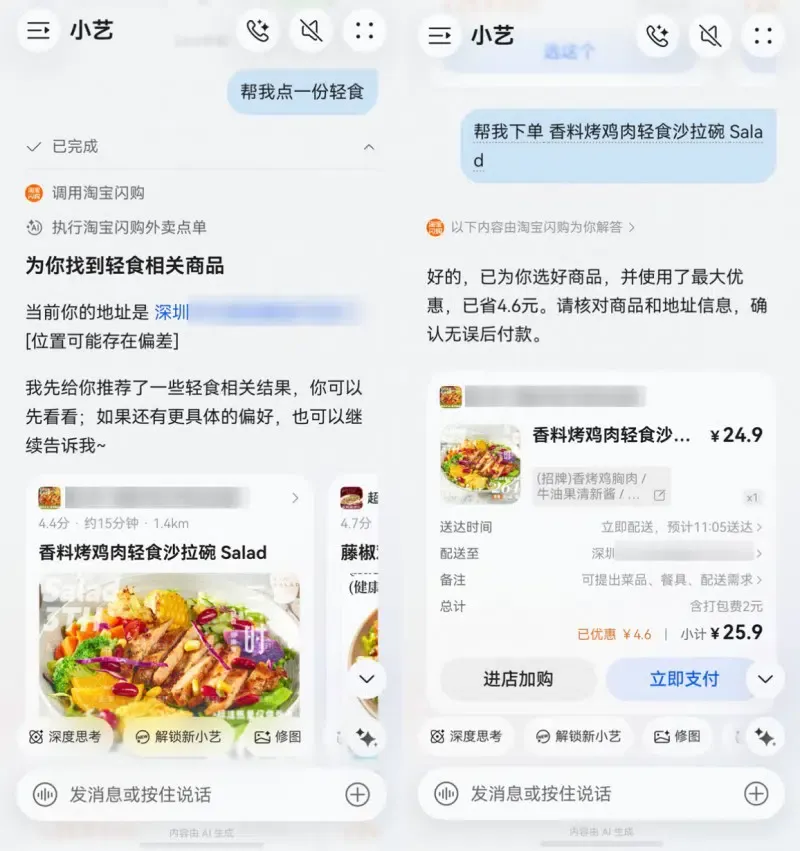
The practical manifestation of this infrastructure emerged through the consumer release of the Taobao Instant Commerce agent. Rather than requiring users to manually launch dedicated food delivery software, Celia dynamically orchestrates the interaction. A user initiating an ambiguous prompt—such as requesting high-value spicy food or ordering an extra-shot iced Americano with light ice—triggers autonomous entity resolution. The agent framework parses contextual geolocation, retrieves merchant availability metrics, applies user-specific dietary preferences, automatically maps eligible promotional vouchers, and renders an interactive checkout card on screen.

In current production releases, food search, dish selection, address confirmation, and final payment verification execute entirely within Celia’s conversational cards. However, in broader ecosystem workflows, edge boundaries inevitably emerge. If a partner workflow later needs to transfer the user into a native client for an interaction not supported inside the assistant surface—such as advanced dispute resolution, custom merchant loyalty interactions, or complex order adjustments—the receiving app must safely restore the relevant context. The engineering integrity of that transition governs the ultimate success of the user journey.
Technical Deep Dive and The Friction of Context Handoffs
Beneath conversational presentation, transferring structured state between an operating system assistant and a third-party native client presents intricate architectural hurdles. System-level assistants function as coordinated execution environments, evaluating user intent and dispatching structured payloads. Conversely, commercial client software depends on stateful, UI-driven architectures governed by discrete component lifecycles.
+-----------------------------------------------------------------------------------------+
|                  SYSTEM ASSISTANT TO NATIVE APPLICATION HANDOFF SEQUENCE                |
+-----------------------------------------------------------------------------------------+
|                                                                                         |
|  [ User Voice Input ] ---> "Order an extra-shot iced Americano with light ice"          |
|                                                                                         |
|  [ OS Assistant (Celia) ]                                                               |
|         |                                                                               |
|         +---> HarmonyOS Agent Framework 2.0 (Intent Resolution)                         |
|         |                                                                               |
|         +---> Geolocation & Stored Preference Binding (Merchant Selection)              |
|         |                                                                               |
|         v                                                                               |
|  [ Partner Agent (Taobao Instant Commerce) ]                                            |
|         |                                                                               |
|         +---> Generates Opaque Ephemeral Pointer: { handoff_id: "hnd_9921_alpha" }      |
|         |     (Canonical state retained securely on backend servers)                    |
|         |                                                                               |
|         v                                                                               |
|  [ Conditional Boundary: Complex Fulfillment or Native Escalation Required ]            |
|         |                                                                               |
|         +---------------------------------------+---------------------------------------+
|         |                                       |                                       |
|         v                                       v                                       |
|  ( Custom URI Scheme )                 ( Verified App Link Protocol )                   |
|         |                                       |                                       |
|  * No domain ownership verification    * Domain ownership verified via Asset Links      |
|  * High risk of scheme collision       * Collision risk significantly mitigated         |
|  * May prompt disambiguation chooser   * Dispatches directly to Activity / UIAbility    |
|         |                                       |                                       |
|         v                                       v                                       |
|  [ Receiving Application Lifecycle: Target Scene Restoration Execution ]                |
|  * App extracts opaque handoff_id from validated HTTPS URI                              |
|  * Dispatches token asynchronously to authoritative backend validation service          |
|  * Backend verifies expiration, single-use nonce, and account binding                   |
|  * Server returns canonical merchant, SKU, and target route state                      |
|  * Client securely renders destination interface with zero client-trusted URI state     |
|                                                                                         |
+-----------------------------------------------------------------------------------------+
Intent Serialization and Secure Token Handshake
When an assistant coordinates an order, it processes high-level requests into structured parameters. If an interaction flow requires transitioning to a standalone native application, this context must be transferred safely. Both Custom URI Schemes and Verified App Links can carry path and query parameters; however, their security guarantees differ fundamentally.
Custom URI schemes lack domain ownership verification. Any application installed on the operating system can declare an identical scheme, creating collision risks where untrusted apps intercept navigation requests. Conversely, Verified App Links establish domain ownership through server-hosted verification manifests.
From a defensive architecture perspective, sensitive credentials must never be placed in URLs. While common public identifiers such as catalog items or merchant names frequently appear in web links, client applications should treat all URL-supplied business parameters as untrusted transport hints rather than authoritative transaction state. Allowing native clients to blindly trust URI query values exposes fulfillment funnels to parameter tampering and replay attacks. Modern security designs favor passing a short-lived, opaque reference identifier (such as an ephemeral handoff_id). Upon launch, the native client exchanges this opaque token with its secure backend service over an authenticated channel. The server validates expiration, caller identity, and single-use idempotency before returning the canonical transaction state, preventing untrusted client-side mutation.
Runtime Lifecycle Mismatches
The transition from a system-level assistant to a native client must navigate the underlying mobile application lifecycle. In Android environments, this process centers on the Activity lifecycle; in HarmonyOS, it involves the UIAbility architecture. When a system intent triggers an already running application instance, the host platform does not invoke standard initialization methods from scratch. Instead, it routes the incoming request to specific background-to-foreground event handlers.
If an engineering team implements routing logic exclusively within entry lifecycle hooks (such as onCreate), any invocation occurring while the application resides in a suspended memory state will bypass initialization routines. The operating system brings the app forward, but the incoming navigation intent is dropped. As a result, the user encounters the generic home dashboard rather than the intended merchant view, causing context to be lost or requiring manual reconstruction.
+-----------------------------------------------------------------------------------------+
|                    ROUTING MECHANISM COMPARISON ACROSS RUNTIME BOUNDARIES               |
+-----------------------+------------------------------+----------------------------------+
| Architectural Metric  | Custom URI Scheme            | Verified App Link                |
+-----------------------+------------------------------+----------------------------------+
| Domain Verification   | None                         | Verified via digital asset links |
| Disambiguation Prompt | May prompt system chooser    | Normally routes directly         |
| Parameter Support     | Supports full path & query   | Supports full path & query       |
| Collision Risk        | High (unrestricted naming)   | Low (bound to verified domain)   |
| Context Restoration   | Must be implemented by app   | Must be implemented by app       |
| Lifecycle Handling    | Must be implemented by app   | Must be implemented by app       |
+-----------------------+------------------------------+----------------------------------+
Context Gaps Across the Application Install Boundary
The structural challenge escalates when the consumer does not have the native partner application installed on their physical hardware. While system assistants like Celia execute partner capabilities via cloud-rendered cards, secondary conversion loops—such as loyalty rewards redemption, detailed order tracking, or customer service dispute management—often encourage local application installation.
A generic web-to-store transition does not automatically deliver arbitrary application-defined URL state to the app’s first native launch. Platform-specific mechanisms are required when that context must survive installation. On Android, the Google Play Install Referrer API provides a mechanism to pass campaign and referral parameters to newly installed apps. Within the Huawei ecosystem, AppGallery Connect App Linking provides native deferred capabilities, routing users to AppGallery when uninstalled and restoring in-app destination parameters upon first launch. When operating across heterogeneous web and multi-store distribution channels, teams rely on deferred routing infrastructure to reconcile pre-install state with cold app launches.
Best Practices and Reference Implementation Standards
To eliminate context severance during cross-surface execution, mobile engineering teams must implement standardized, cryptographically verified routing architectures. By anchoring navigation logic to verifiable platform domains and structuring client lifecycle handlers, applications can reliably ingest external parameters and restore runtime state.
+-----------------------------------------------------------------------------------------+
|                  CRYPTOGRAPHIC DOMAIN VERIFICATION ARCHITECTURE                         |
+-----------------------------------------------------------------------------------------+
|                                                                                         |
|  [ Developer Web Host: https://order.example.com ]                                      |
|         |                                                                               |
|         +---> Hosts: /.well-known/assetlinks.json (Android Digital Asset Links)         |
|               - namespace: "android_app"                                                |
|               - package_name: "com.example.storeapp"                                    |
|               - sha256_cert_fingerprints: [ "14:6D:E9:DE:..." ]                         |
|                                                                                         |
|  [ Android System Verification Pipeline ]                                               |
|         |                                                                               |
|         +---> Client Manifest: <intent-filter android:autoVerify="true">               |
|         +---> System queries /.well-known/assetlinks.json over HTTPS                    |
|         +---> Verifies certificate fingerprint matches local signing key                |
|         +---> Directly routes https://order.example.com URLs to native client           |
|                                                                                         |
|  [ HarmonyOS Native App Linking Pipeline ]                                              |
|         |                                                                               |
|         +---> Client module.json5 configures skills with domainVerify: true             |
|         +---> Declares actions: ["ohos.want.action.viewData"], entities: ["browsable"]   |
|         +---> Invoked programmatically via UIAbilityContext.openLink()                  |
|                                                                                         |
+-----------------------------------------------------------------------------------------+
Cryptographic Domain Verification via Standardized App Links
Modern mobile environments rely on verifiable bidirectional trust between an internet domain and an application binary to ensure secure routing. Android accomplishes this via App Links backed by Digital Asset Links declarations, while iOS employs Universal Links anchored to Apple App Site Association files.
During package installation or update cycles on Android, the operating system inspects declared domain associations. If configured with android:autoVerify="true", the mobile operating system queries the target domain over a secure HTTPS connection:
[https://order.example.com/.well-known/assetlinks.json](https://order.example.com/.well-known/assetlinks.json)
When the SHA-256 fingerprint declared in the remote Digital Asset Links statement matches the signing certificate of the installed application package, the operating system registers the domain. Subsequent link invocations normally route directly into the native client without disambiguation dialogs, subject to user system link settings.
In HarmonyOS native application engineering, developers configure domain verification inside the module.json5 configuration file by declaring the domainVerify property within the ability’s skills block, handling navigation triggers via openLink() APIs.
<!-- AndroidManifest.xml: Verified App Links Declaration -->
<activity
    android:name=".routing.ContextRoutingActivity"
    android:exported="true"
    android:launchMode="singleTask">

    <!-- Intent Filter for Cryptographic Domain Verification -->
    <intent-filter android:autoVerify="true">
        <action android:name="android.intent.action.VIEW" />

        <category android:name="android.intent.category.DEFAULT" />
        <category android:name="android.intent.category.BROWSABLE" />

        <!-- Authoritative developer-owned domain endpoints -->
        <data android:scheme="https" />
        <data android:host="order.example.com" />
        <data android:pathPrefix="/checkout/handoff" />
    </intent-filter>
</activity>
Managing Stateful Lifecycle Hooks in Native Clients
Once cryptographic identity is established, the application must capture, deserialize, and route contextual parameters across all runtime states. To ensure parameters survive background-to-foreground transitions, developers must bind routing logic to both primary launch handlers and reactive intent callbacks.
Within Android architectures, this requires processing intents within both onCreate() and onNewIntent(). In HarmonyOS architectures using the Stage model, engineers implement corresponding handling inside the onCreate() and onNewWant() hooks of the designated UIAbility.
To ensure defense-in-depth, incoming URIs must undergo strict schema, host, path, and parameter validation. The client must enforce an allowlist of trusted hosts and paths, reject unexpected query keys, and validate format constraints. Crucially, the client must never treat business entities inside a URL as authenticated truth; instead, the application passes only the validated opaque reference identifier to its backend service, waiting for cryptographic authorization and canonical state resolution before executing destination navigation.
package com.example.storeapp.routing;

import android.content.Intent;
import android.net.Uri;
import android.os.Bundle;
import android.os.Handler;
import android.os.Looper;
import android.view.View;
import android.widget.ProgressBar;
import android.widget.Toast;
import androidx.annotation.NonNull;
import androidx.annotation.WorkerThread;
import androidx.appcompat.app.AppCompatActivity;
import java.io.IOException;
import java.util.Set;
import java.util.concurrent.ExecutorService;
import java.util.concurrent.Executors;
import java.util.regex.Pattern;

public class ContextRoutingActivity extends AppCompatActivity {

    private static final String ALLOWED_SCHEME = "https";
    private static final String ALLOWED_HOST = "order.example.com";
    private static final String EXACT_PATH = "/checkout/handoff";
    private static final String PATH_PREFIX = "/checkout/handoff/";

    // Unescaped regex literal: hyphen placed at class end without backslash escapes
    private static final Pattern SAFE_ID_PATTERN = Pattern.compile("^[a-zA-Z0-9_-]{1,64}$");

    private final ExecutorService backgroundExecutor = Executors.newSingleThreadExecutor();
    private final Handler mainThreadHandler = new Handler(Looper.getMainLooper());
    private ProgressBar loadingIndicator;

    @Override
    protected void onCreate(Bundle savedInstanceState) {
        super.onCreate(savedInstanceState);
        setupLoadingInterface();
        handleIncomingRoutingIntent(getIntent());
    }

    @Override
    protected void onNewIntent(Intent intent) {
        super.onNewIntent(intent);
        setIntent(intent);
        handleIncomingRoutingIntent(intent);
    }

    private void setupLoadingInterface() {
        loadingIndicator = new ProgressBar(this);
        loadingIndicator.setIndeterminate(true);
        setContentView(loadingIndicator);
    }

    private void handleIncomingRoutingIntent(Intent intent) {
        if (intent == null || !Intent.ACTION_VIEW.equals(intent.getAction())) {
            navigateToDefaultDashboard();
            return;
        }

        Uri uri = intent.getData();
        if (!isUriValidAndSafe(uri)) {
            navigateToDefaultDashboard();
            return;
        }

        // Extract exclusively the opaque handoff reference identifier
        String handoffId = uri.getQueryParameter("handoff_id");
        if (handoffId != null) {
            loadingIndicator.setVisibility(View.VISIBLE);
            initiateSecureHandoffExchange(handoffId);
        } else {
            navigateToDefaultDashboard();
        }
    }

    private boolean isUriValidAndSafe(Uri uri) {
        if (uri == null || !uri.isHierarchical()) {
            return false;
        }

        // Validate scheme, host, and path against strict allowlist
        if (!ALLOWED_SCHEME.equalsIgnoreCase(uri.getScheme())) {
            return false;
        }
        if (!ALLOWED_HOST.equalsIgnoreCase(uri.getHost())) {
            return false;
        }
        String path = uri.getPath();
        if (path == null || (!path.equals(EXACT_PATH) && !path.startsWith(PATH_PREFIX))) {
            return false;
        }

        // Enforce strict query key allowlist: only handoff_id is permitted
        Set<String> parameterNames = uri.getQueryParameterNames();
        if (parameterNames == null || parameterNames.size() != 1 || !parameterNames.contains("handoff_id")) {
            return false;
        }

        String handoffId = uri.getQueryParameter("handoff_id");
        return handoffId != null && SAFE_ID_PATTERN.matcher(handoffId).matches();
    }

    private void initiateSecureHandoffExchange(@NonNull String handoffId) {
        backgroundExecutor.execute(() -> {
            try {
                // Fail-closed authorization pattern: client dispatches opaque token to backend
                // Navigation executes exclusively upon authenticated, non-null server state
                CanonicalHandoffState canonicalState = queryBackendHandoffService(handoffId);

                mainThreadHandler.post(() -> {
                    if (!isFinishing() && !isDestroyed()) {
                        if (canonicalState != null && canonicalState.isValid()) {
                            dispatchToVerifiedCheckout(canonicalState);
                        } else {
                            handleValidationFailure("Session expired or invalid transaction state");
                        }
                    }
                });
            } catch (Exception e) {
                mainThreadHandler.post(() -> {
                    if (!isFinishing() && !isDestroyed()) {
                        handleValidationFailure("Network communication failure during authorization");
                    }
                });
            }
        });
    }

    @WorkerThread
    private CanonicalHandoffState queryBackendHandoffService(String handoffId) throws IOException {
        // Production contract: dispatch authenticated TLS request via client networking stack
        // (e.g., OkHttp / Retrofit) to exchange handoffId for canonical merchant and SKU details.
        // Sample implementation fails closed by default until wired to production API service.
        throw new UnsupportedOperationException("Production implementation requires authenticated backend exchange endpoint");
    }

    private void dispatchToVerifiedCheckout(CanonicalHandoffState state) {
        Intent checkoutIntent = new Intent(this, CheckoutActivity.class);
        checkoutIntent.putExtra("EXTRA_CANONICAL_MERCHANT_ID", state.merchantId);
        checkoutIntent.putExtra("EXTRA_CANONICAL_SKU", state.sku);
        startActivity(checkoutIntent);
        finish();
    }

    private void handleValidationFailure(String message) {
        Toast.makeText(this, message, Toast.LENGTH_SHORT).show();
        navigateToDefaultDashboard();
    }

    private void navigateToDefaultDashboard() {
        Intent homeIntent = new Intent(this, MainActivity.class);
        startActivity(homeIntent);
        finish();
    }

    @Override
    protected void onDestroy() {
        super.onDestroy();
        backgroundExecutor.shutdown();
    }

    // Immutable canonical data structure holding server-verified business state
    public static class CanonicalHandoffState {
        public final String merchantId;
        public final String sku;
        public final boolean authorized;

        public CanonicalHandoffState(String merchantId, String sku, boolean authorized) {
            this.merchantId = merchantId;
            this.sku = sku;
            this.authorized = authorized;
        }

        public boolean isValid() {
            return authorized && merchantId != null && sku != null;
        }
    }
}
By abstracting URI parsing and asynchronous validation into a decoupled routing delegate, the application isolates security validation from visual view rendering. The navigation controller resolves the opaque handoff reference against the authenticated backend, validates the returned canonical state, and only then routes to the fulfillment view.
Resolving Context Gaps Across the Install Boundary
When service discovery originates inside an AI assistant and leads to an application download, preserving user intent across the installation barrier requires deferred parameter restoration. Traditional linking fails here because public application repositories act as stateless gatekeepers.
+-----------------------------------------------------------------------------------------+
|               DEFERRED LINKING ARCHITECTURE & RECOVERY LIFECYCLE                        |
+-----------------------------------------------------------------------------------------+
|                                                                                         |
|  1. Pre-Install Touchpoint Registration                                                 |
|     * User interacts with assistant referral link or H5 discovery card                  |
|     * Web endpoint records eligible pre-install context in server registry              |
|                                                                                         |
|  2. Platform Store Transition                                                           |
|     * Redirects to official marketplace (Google Play / Huawei AppGallery)               |
|     * Preserves context via platform services (Install Referrer / AppGallery Linking)   |
|                                                                                         |
|  3. First Launch Context Reconciliation                                                 |
|     * Application initializes for the first time on the physical endpoint               |
|     * Resolves context via platform APIs or server reconciliation mechanisms            |
|                                                                                         |
|  4. In-App Destination Restoration                                                      |
|     * Target parameters returned directly to main application controller                |
|     * Application automatically navigates to designated merchant or cart screen         |
|                                                                                         |
+-----------------------------------------------------------------------------------------+
Engineering organizations evaluate how to manage routing across this lifecycle through two distinct approaches:
- Bespoke Internal Architecture: Building custom infrastructure gives organizations full control over data residency, protocol definitions, and security policies. However, it requires engineering teams to take on significant maintenance responsibilities, including managing high-concurrency parameter databases, handling store-specific referrer APIs, maintaining iOS AASA and Android Asset Link endpoints, and updating client routing libraries as operating system privacy rules change.
- Turnkey Routing Platforms: Managed routing platforms provide standardized abstractions across Android App Links, iOS Universal Links, store referrer APIs, and web fallbacks, speeding up integration across diverse distribution channels. However, teams must weigh these benefits against third-party software dependencies, recurring infrastructure costs, and compliance considerations regarding how external SDKs collect and process device metadata. One example of specialized tooling designed to handle deferred parameter restoration and deep linking handoffs is Opoinstall.
+-----------------------------------------------------------------------------------------+
|                    ENGINEERING CHECKLIST: ROUTING & CONTEXT INTEGRATION                 |
+-----------------------------------------------------------------------------------------+
| [ ] Host valid assetlinks.json containing production certificate SHA-256 fingerprints   |
| [ ] Declare developer-owned web endpoints in manifest with android:autoVerify="true"   |
| [ ] Implement intent parsing inside both onCreate() and onNewIntent() / onNewWant()     |
| [ ] Enforce strict URI validation (allowlist scheme, host, pathPrefix, and query keys)  |
| [ ] Pass short-lived opaque identifiers instead of plaintext session tokens in URLs     |
| [ ] Verify backend exchange endpoint enforces authentication, expiry, and idempotency   |
| [ ] Implement fallback routing for uninstalled users using platform referrer services   |
| [ ] Validate deep linking behavior across cold-start, backgrounded, and killed states   |
+-----------------------------------------------------------------------------------------+
अक्सर पूछे जाने वाले प्रश्न (FAQ)
Celia पूरे ऐप को खोले बिना Taobao फूड ऑर्डर कैसे ट्रिगर करती है?
कस्टम URL स्कीमें सुरक्षित डोमेन सत्यापन प्रदान करने में क्यों विफल होती हैं?
जब उपयोगकर्ता को पहले ऐप इंस्टॉल करना हो, तो ऐप्स संदर्भ (context) को कैसे सुरक्षित रख सकते हैं?
व्यावहारिक निहितार्थ और भविष्य का दृष्टिकोण
हुवेई के Celia असिस्टेंट में Taobao Instant Commerce एजेंट का गहरा एकीकरण मोबाइल सॉफ़्टवेयर आर्किटेक्चर में एक विकासवादी कदम है। जैसे-जैसे आर्टिफिशियल इंटेलिजेंस मॉडल निष्क्रिय संवादात्मक टूल से सक्रिय निष्पादन परतों में परिपक्व होते हैं, विखंडित, आइकन-केंद्रित मोबाइल नेविगेशन का दीर्घकालिक मॉडल एक संक्रमणकालीन चरण में प्रवेश कर रहा है। मोबाइल डिवाइस इरादे से संचालित समन्वय की ओर बढ़ रहे हैं, जहाँ सिस्टम असिस्टेंट उच्च-स्तरीय उपयोगकर्ता उद्देश्यों की व्याख्या करते हैं और गतिशील रूप से अंतर्निहित सेवा क्षमताओं को एकत्र करते हैं।
क्लाइंट सॉफ़्टवेयर इंजीनियरिंग और आर्किटेक्चर टीमों के लिए, इस इकोसिस्टम बदलाव के लिए एप्लिकेशन डिज़ाइन के मौलिक पुनर्मूल्यांकन की आवश्यकता है। एप्लिकेशनों को अब पूरी तरह से स्व-निहित ग्राफिकल गंतव्यों के रूप में नहीं बनाया जा सकता है; उन्हें होस्ट ऑपरेटिंग सिस्टम के साथ द्विपक्षीय संचार में सक्षम मॉड्यूलर, मशीन-पठनीय इंटरफेस को उजागर करना होगा। यह सुनिश्चित करना कि उपयोगकर्ता संदर्भ, प्रमाणीकरण स्थिति, और लेनदेन इतिहास सिस्टम-स्तरीय संवादात्मक एजेंटों और मालिकाना मूल इंटरफेस के बीच आसानी से प्रवाहित हों, आधुनिक डिजिटल सेवा वितरण के लिए एक आवश्यक आवश्यकता है।
आगे बढ़ते हुए, उद्यम वाणिज्य आर्किटेक्चर की स्थायित्व उनके अंतर्निहित परिवहन तंत्र की स्थिरता पर निर्भर करेगी। जो संगठन क्रिप्टोग्राफ़िक रूप से सत्यापित डोमेन एसोसिएशन, लचीले एक्टिविटी और UIAbility लाइफसाइकल हैंडलिंग, और मजबूत विलंबित रूटिंग बुनियादी ढांचे में निवेश करते हैं, वे संवादात्मक खोज और मूल पूर्ति के बीच की खाई को सफलतापूर्वक पाट देंगे। क्रॉस-सर्फ़ेस संदर्भ रूटिंग में महारत हासिल करके, डेवलपर्स यह सुनिश्चित कर सकते हैं कि चाहे कोई लेनदेन स्पर्श टैप, स्क्रीन जेस्चर, या एक बोले गए वाक्य के माध्यम से उत्पन्न हो, उपयोगकर्ता यात्रा की परिचालन अखंडता बरकरार रहे।
Share this article