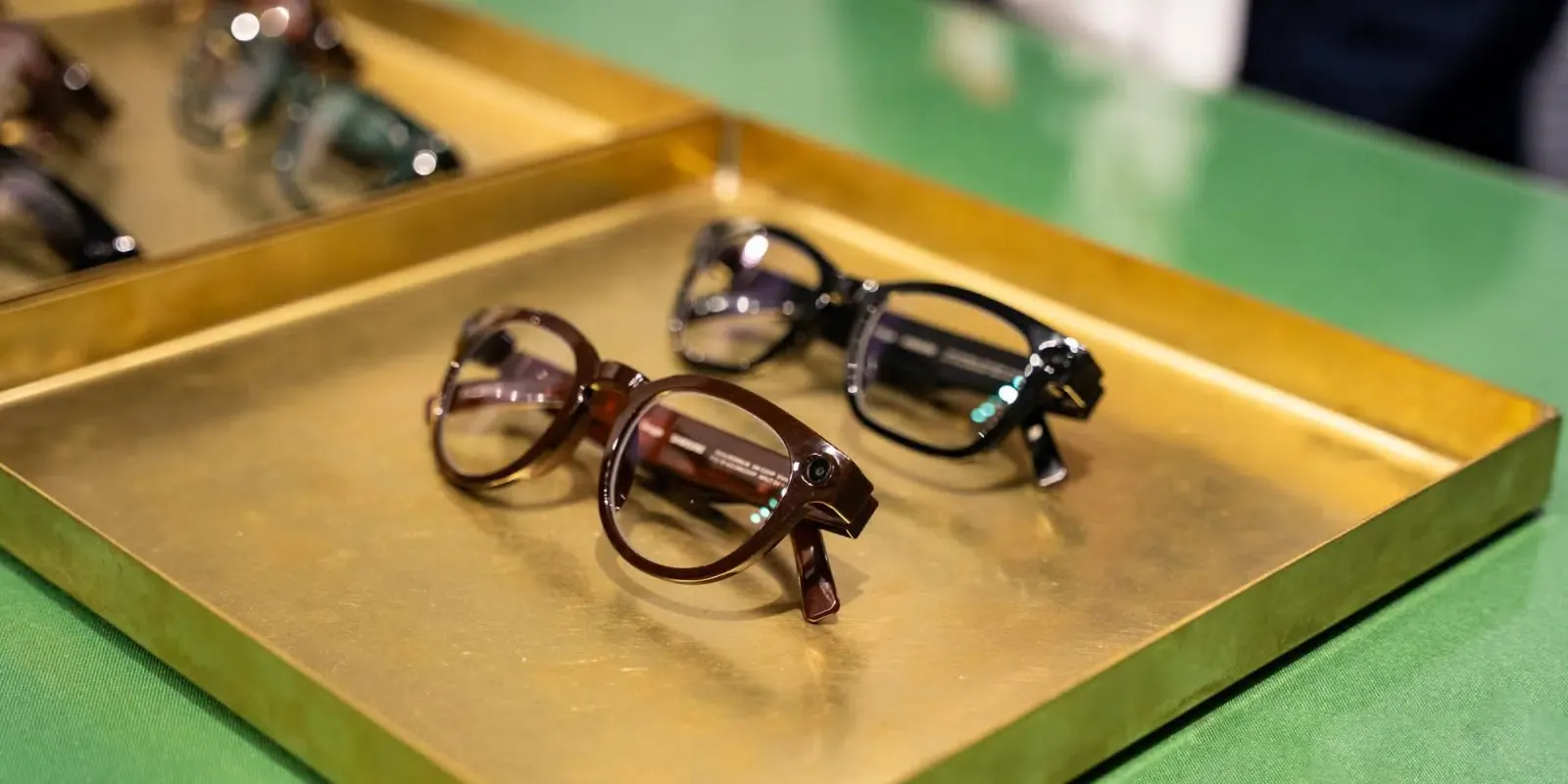
Google Android XR Connects to iOS? Google and Samsung officially introduced the Intelligent Eyewear smart glasses collection on November 12, 2026, confirming official Apple Made for iPhone (MFi) certification alongside native iOS companion support. However, compatibility requires specific modern iPhone models, and several headline features remain Android-exclusive at launch, as documented in the Google Product Announcement. Pre-orders opened ahead of general retail availability scheduled for December 10, 2026. While consumer wearables have often functioned as mechanisms for single-platform lock-in, Google and Samsung have designed a dedicated iOS companion app to deliver camera capture, local media synchronization, and core conversational features across ecosystem boundaries.
Cross-Platform Ecosystem Shift: Why Google Android XR Connects to iOS
At a Glance
- Google, Samsung, Warby Parker, and Gentle Monster introduced the Intelligent Eyewear collection powered by Qualcomm’s Snapdragon AR1 Gen 1 platform, featuring thirty frame and lens variations weighing approximately 40 to 44 grams (averaging around 41 grams).
- The frames incorporate Apple Made for iPhone (MFi) certification, allowing direct local media transfers to iOS devices over Wi-Fi Aware protocols.
- Feature availability differs by platform at launch: camera capture, phone calls, and spoken Google Maps directions support iOS, while Guided Vision, Aira Explorer, and Audible are restricted to compatible Android phones.
Developing camera- and audio-equipped smart glasses without an embedded display requires careful trade-offs between battery size, thermal limits, and physical weight. Audio-first glasses operate within tight hardware constraints, making broad market reach important for commercial sustainability. By offering an iOS companion application, Google broadens the potential user base beyond Android handset owners.
According to the Apple MFi Program Overview, MFi certification indicates that an electronic accessory has been designed to connect specifically to iPod, iPhone, or iPad and has been certified by the developer to meet Apple performance standards. It confirms compliance with supported accessory protocols rather than granting unrestricted system access.
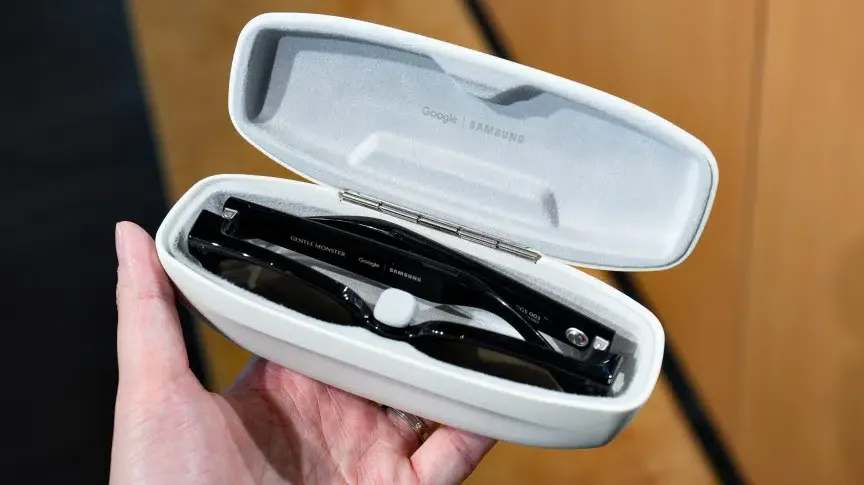
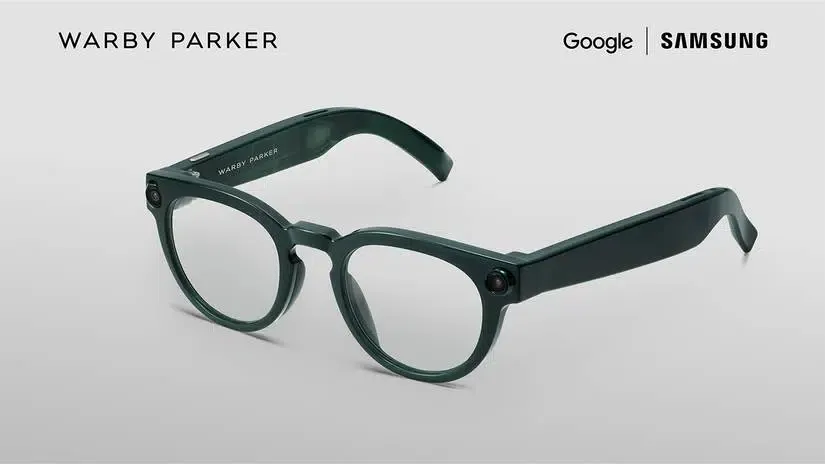
Hardware specifications published on the Warby Parker Technical Specifications page indicate that the frames feature a 12-megapixel ultra-wide camera, a four-microphone array, two open-ear stereo speakers, a capacitive touch sensor on the temple, and 64 GB of onboard flash storage. Gentle Monster offers six distinct frame designs starting at $449 across the United States and South Korea, while Warby Parker provides three styles starting at $395 online and across selected retail locations.
Documented Connectivity and Remaining Implementation Questions
Integrating external smart accessories into iOS requires operating within Apple’s background app execution policies and accessory communication guidelines. According to technical reporting on the companion client in 9to5Google, the system utilizes Bluetooth for accessory pairing and command exchange alongside Wi-Fi Aware (Neighbor Awareness Networking) for direct peer-to-peer media synchronization.
As detailed in the Apple Wi-Fi Aware Documentation, Wi-Fi Aware enables local devices to discover each other and transfer high-bandwidth data directly without requiring an intermediate Wi-Fi access point. In this configuration, the glasses stream captured photos and video clips (up to 90 seconds) directly to the companion application, which then writes the files into the Apple Photos library.
[Conceptual Architecture: Companion Wearable Data Flow]
  ┌─────────────────────────┐           Standard Bluetooth Link
  │   Intelligent Eyewear   │ ◄────────────────────────────────────────► ┌────────────────────────┐
  │ (Snapdragon AR1 / 64GB) │         Wi-Fi Aware (Local Media Transfer) │  iOS Companion Client  │
  └───────────┬─────────────┘ ◄────────────────────────────────────────► └───────────┬────────────┘
              │                                                                      │
              ▼ Sensor Capture                                                       ▼ Platform Services
    [ 12MP Camera / 4x Mic ]                                             [ Apple Photos / Messaging ]
The following breakdown represents a conceptual responsibility model based on typical companion wearable workflows, rather than a publicly disclosed internal implementation map. Hardware sensors, local storage, and audio beamforming operate on the Qualcomm Snapdragon AR1 Gen 1 platform, while the mobile companion client handles network transmission, account synchronization, and media organization.
Platform feature parity is not identical across operating systems. Google’s documentation specifies distinct platform boundaries at initial launch:
| Feature & Workflow | iOS Support Status (Launch) | Android Support Status (Launch) | Operational Notes & Dependencies |
|---|---|---|---|
| Photo & Video Capture (12MP) | Supported | Supported | Saves up to 90-second clips to native gallery over Wi-Fi Aware |
| Google Maps Audio Directions | Supported | Supported | Delivers spoken turn-by-turn navigation through open-ear speakers |
| Hands-Free Calling & Texting | Supported | Supported | Coordinates phone calls and messaging via native mobile connectivity |
| Music Streaming (Apple Music, Spotify) | Supported | Supported | Direct playback routing through onboard open-ear speakers |
| Audible Audiobook Playback | Not Supported | Supported | Restricted to compatible Android devices at initial commercial rollout |
| Gemini Guided Vision | Not Supported | Supported | Audio scene description tool; not for navigation or safety-critical tasks |
| Aira Explorer Assistance | Not Supported | Supported | Visual interpretation streaming to trained human agents on Android |
Note: Feature availability and device requirements are based on initial launch documentation. Guided Vision is an assistive visual description feature and is explicitly not intended for navigation, obstacle avoidance, or safety-critical mobility.
Privacy Controls and Their Limits
Wearables equipped with outward-facing cameras face significant public scrutiny regarding bystander notice and recording boundaries. To address these concerns, Google outlines physical indicators and data policies in the Google Privacy Protections Announcement.
A dedicated white indicator light illuminates whenever the camera actively records video or captures photographs for the gallery. Google states that the glasses incorporate sensor checks designed to detect if the LED indicator is covered, obscured, or altered, and are configured to prevent capturing photos and recording video clips to the gallery if tampering is detected.

Google’s privacy disclosures draw specific distinctions regarding visual data handling:
- Visual Inputs for Gemini Queries: Google states that camera visuals used to answer questions about the surroundings (such as visual translation or object identification) are not saved in Gemini History or used for model training or ad targeting. These statements reflect stated platform policy and do not establish a blanket zero-retention guarantee across all internal processing or temporary logging systems.
- Bystander Face Redaction: Google notes that the system is designed to blur bystander faces before visual inputs are processed by Gemini cloud endpoints.
- Directional Microphone Focus: The four-microphone array utilizes beamforming to prioritize the wearer’s voice, which helps reduce ambient noise during voice commands.
- Account Boundaries: Hardware setup requires an adult Google Account (18+), and user agreements restrict recording in sensitive environments.
Users must recognize that these controls represent specific product safeguards rather than absolute technical guarantees. Standard text-based Gemini conversation history remains governed by individual Google Account settings, and directional audio filtering reduces—but cannot guarantee complete isolation from—ambient background speech in crowded settings.
Decoupled Device Systems and Developer Integration Trade-offs
The architectural design of the Intelligent Eyewear collection reflects a distributed model where tasks are allocated across the frames, the paired smartphone, and cloud backends.
| Architectural Layer | Primary Hardware Node | Illustrative Responsibilities | System Constraints & Boundaries |
|---|---|---|---|
| Hardware Capture Layer | Intelligent Eyewear Frames | Sensor capture, 64 GB storage, open-ear audio, physical touch decoding | 40–44g weight envelope; battery rated up to nine hours of use, depending on conditions |
| Local Companion Layer | Paired iOS / Android Device | Wi-Fi Aware transfers, initial media ingestion, network routing | Bound by background processing quotas and platform-specific accessory permissions |
| Cloud Intelligence Layer | Gemini Cloud Services | Multimodal visual analysis, conversational reasoning, real-time translation | Requires active cellular or Wi-Fi internet connectivity via the host phone |
For engineering teams developing software for screen-less audio wearables, this decoupled architecture presents concrete operational considerations. Because these frames provide audio feedback rather than an augmented visual display, interactions must be structured around concise spoken responses and system audio cues.
Furthermore, developers must account for selective device whitelists. At launch, official Android support requires a Google Pixel 7 or newer running Android 17 or later, or select Samsung Galaxy phones running One UI 9 or later. Other Android device manufacturers remain unsupported at initial commercial release.
Frequently Asked Questions (FAQ)
Which iPhone models are compatible with Google's Android XR glasses?
How does the recording indicator prevent tampering and stealth filming?
Does visual data captured for Gemini queries get saved or used for AI training?
Key Takeaways for Engineering Teams
The introduction of MFi-certified Android XR eyewear demonstrates a cross-platform companion strategy aimed at expanding the initial market for smart glasses. Rather than restricting accessory hardware exclusively to Android handsets, manufacturers are utilizing standardized local wireless protocols to deliver audio and camera services across operating system lines.
For software developers, the growth of audio-first wearables emphasizes the importance of voice-centric application interfaces. System architects should design user journeys that deliver concise audio feedback without assuming the availability of visual screens. As wearable platforms continue to evolve, clearly understanding platform-specific feature boundaries and privacy safeguards will remain essential for deploying reliable cross-device experiences.
References
- Google. Intelligent Eyewear Collections with Gemini Features Announcement. Official Blog Announcement.
- Google. Privacy Protections for Intelligent Eyewear. Official Policy and Safety Overview.
- Warby Parker. Intelligent Eyewear Technical Specifications. Official Product Specification Sheet.
- Apple. MFi Program Overview and Performance Standards. Developer Hardware Certification Reference.
- Apple Developer. Wi-Fi Aware Framework Documentation. Wireless Accessory Networking Reference.
- 9to5Google. Google’s New Android XR Glasses Work with iOS, Made for iPhone Certified. Technical Media Analysis.
- ZDNET. Google’s New Android XR Glasses Are Stylish with Lower Creep Factor. Hands-on Evaluation and Privacy Review.
- Android Police. Samsung and Google’s First Android XR Glasses Are Here, Starting at $395. Product Specifications and Hardware Overview.
Share this article