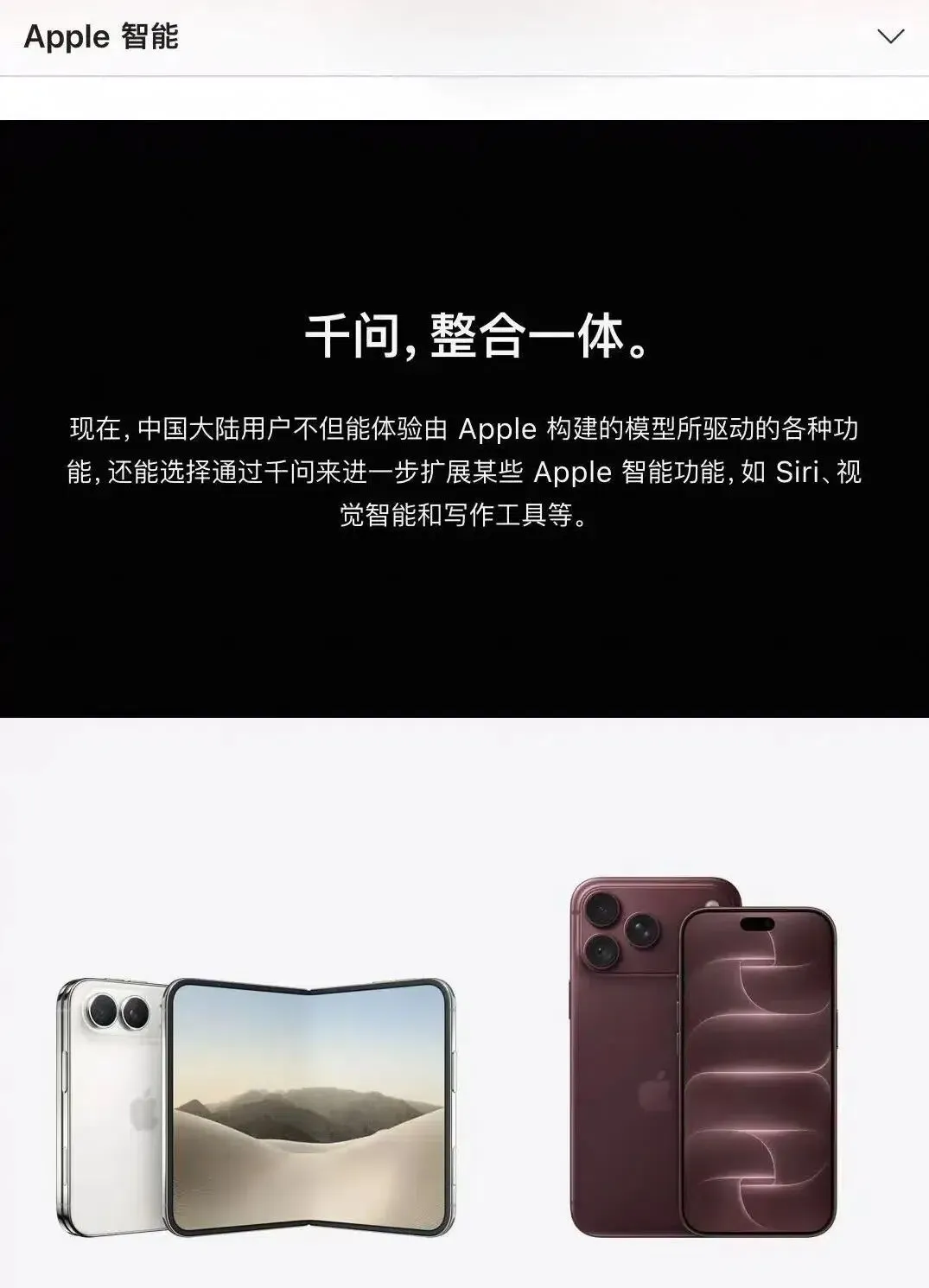
Apple Brings Qwen to Apple Intelligence in China? Apple officially announced on October 31, 2026, that it has partnered with Alibaba Group to integrate the Qwen foundation model into Apple Intelligence for mainland China. The localized AI features will open for testing on November 4, 2026, in the latest iOS developer beta, ahead of a planned rollout with iOS 27.3 in December. According to official announcements from both companies, Alibaba’s Qwen will support selected experiences across Siri, system Writing Tools, and Visual Intelligence alongside Apple’s own foundation models. For software developers and product teams, this rollout establishes a concrete timeline for generative AI in the Chinese market while clarifying the initial feature set and device eligibility requirements.
Core Architecture: Integrating Qwen into the System Runtime
At a Glance
- Apple and Alibaba confirmed that Qwen will support selected cloud-based AI experiences in China, launching in developer beta on November 4, 2026, and rolling out publicly with iOS 27.3 in December.
- Apple’s foundation models power the core Apple Intelligence experience, while Alibaba’s Qwen supports selected knowledge, content-generation, and visual-understanding features in China. The full per-feature routing architecture has not been publicly disclosed.
- The initial China release focuses on baseline productivity features and deliberately excludes the next-generation Siri AI, screen awareness, and cross-app agent execution unveiled at WWDC 2026.
The expansion of Apple Intelligence into mainland China represents a major milestone in Apple’s global AI deployment strategy. For more than two years following the initial preview of Apple Intelligence in 2024, Chinese iPhone users could not access native generative AI capabilities due to localized regulatory requirements. In July 2026, China’s cyberspace regulator completed the registration of Apple’s on-device generative AI services, clearing a key approval milestone for domestic release. To support cloud-based generative capabilities, Apple partnered with Alibaba Group to integrate Qwen, as reported by China Daily.
In mainland China, Apple Intelligence integrates Alibaba’s Qwen into selected Siri, Writing Tools, and Visual Intelligence experiences rather than relying on the same external AI integrations used in other markets. Apple has not disclosed how every complex reasoning or image-generation request is routed across its available models. Through this partnership, Chinese users gain access to generative text and image understanding directly within the iOS interface without needing to launch a standalone third-party chatbot application.
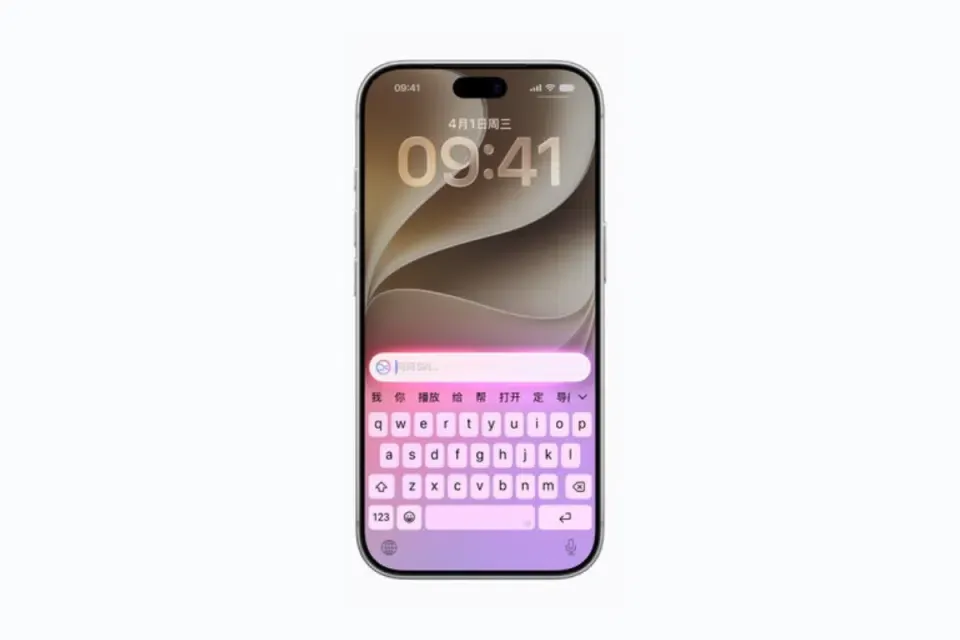
This integration demonstrates the practical division of labor required when global hardware platforms adapt to regional compliance frameworks. The localized system operates through three primary native access points: Siri, system-wide Writing Tools, and Visual Intelligence. According to statements from Alibaba Group CEO Eddie Wu, Qwen is integrated directly into these core operating system surfaces, allowing users to invoke cloud intelligence seamlessly while maintaining strict privacy boundaries.
Deployment Model and Privacy Boundaries: On-Device Intelligence and Cloud Support
Apple has confirmed that its own foundation models power Apple Intelligence and that Alibaba’s Qwen will support selected experiences in Siri, Writing Tools, and Visual Intelligence in mainland China. This establishes a distinction between Apple’s system-level AI capabilities and an integrated external model provider. However, Apple has not publicly documented a universal local-to-Qwen escalation algorithm, the full per-feature inference architecture, or the internal routing criteria for this regional deployment. Developers should therefore treat detailed routing diagrams as conceptual illustrations rather than confirmed implementation specifications.
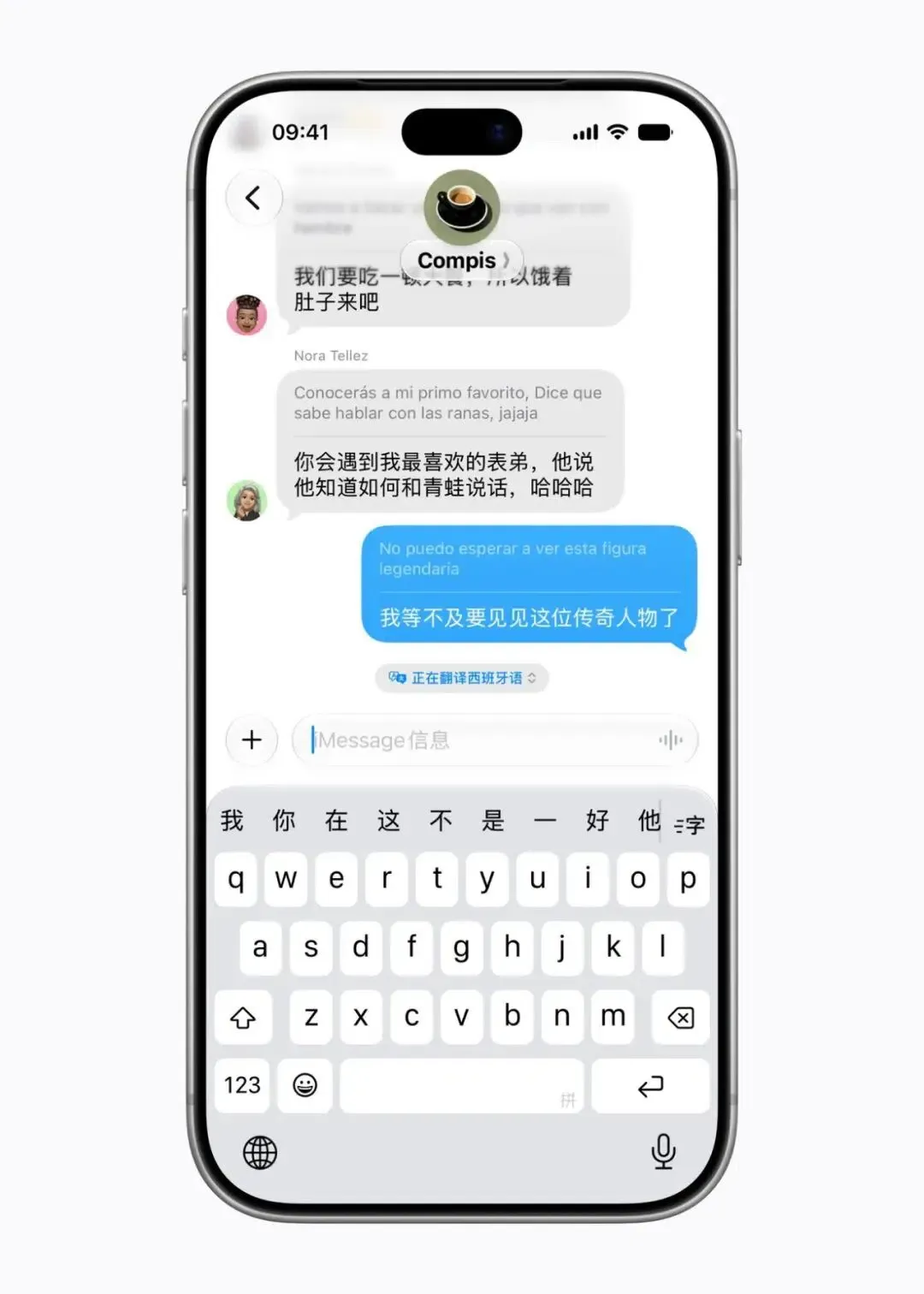
The first layer consists of Apple Foundation Models running locally on the device’s neural engine. These models handle system-level tasks, including real-time translation across Messages and FaceTime, object removal via the Photos Clean Up tool, notification summarization, and natural language search. Apple states that personal data processed by these local models remains on the device.
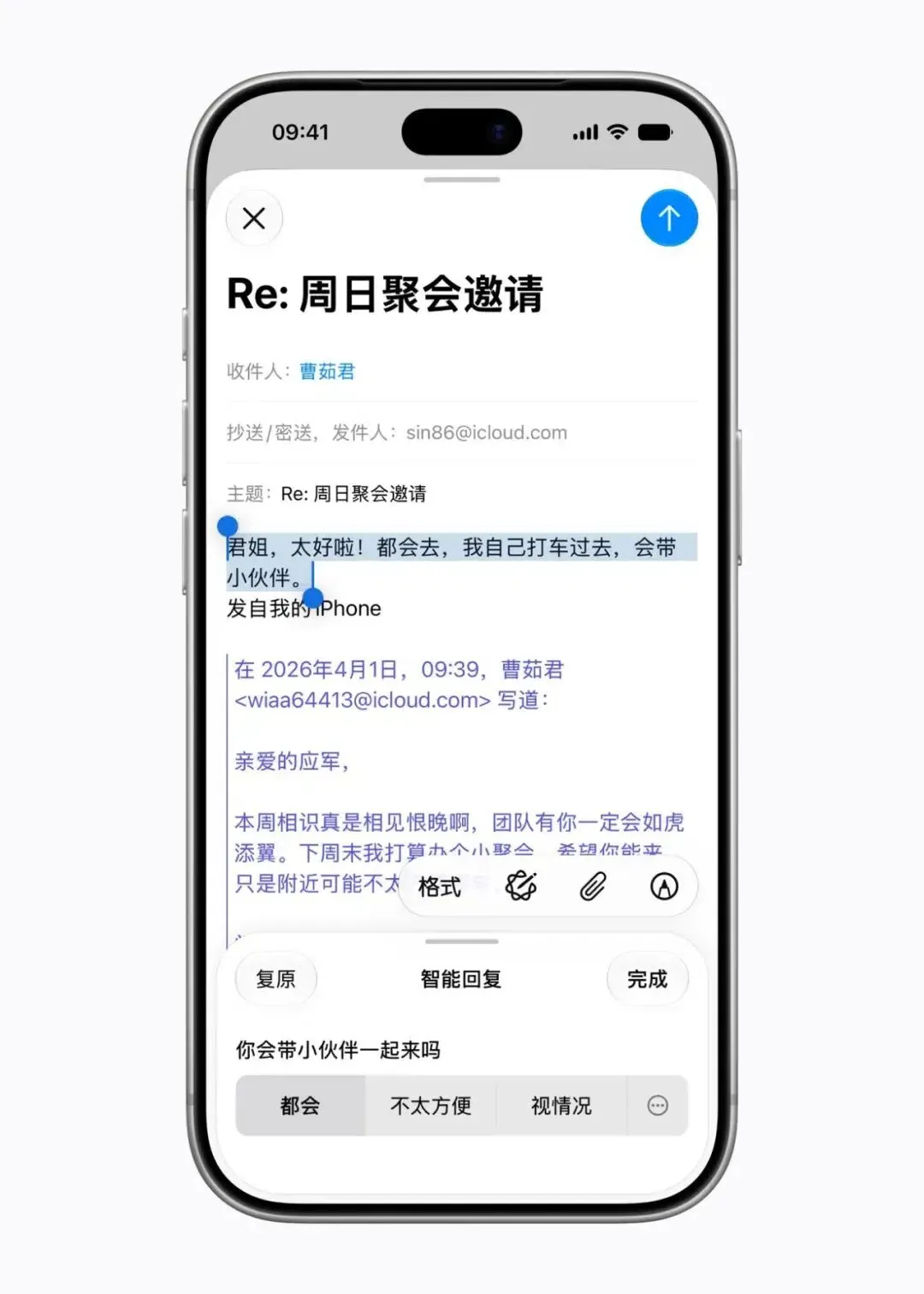
For selected Siri requests, Apple Intelligence can provide access to Alibaba’s Qwen for broader knowledge and supported content-understanding tasks. Apple has confirmed that users can ask questions about photos and documents, including PDFs and presentations, and access the integration through a Qwen account or Sign in with Apple. Users have controls over whether to enable the integration and what information they share. However, Apple has not publicly specified a universal complexity threshold, an identical consent-dialog sequence for every request, or a complete routing algorithm for all China-market Apple Intelligence features.
[Conceptual Overview: System AI and External Cloud Delegation]

User Request (Siri / Writing Tools / Visual Intelligence)
                        │
                        ▼
[Apple System Runtime / Foundation Models]
  ├── Core Features: Clean Up, Live Translation, Notification Summaries
  └── Architecture: System-level processing on supported devices
                        │
            (Selected Supported Requests)
                        ▼
[User-Controlled Qwen Access]
                        │
                        ▼
[Alibaba Qwen Integration]
  ├── Scope: Broad knowledge answers, "Compose with Qwen"
  └── Privacy Commitment: Requests not used to train Alibaba models
In addition to conversational queries, Qwen powers the “Compose with Qwen” capability embedded inside system Writing Tools, enabling users to generate original content from prompts within supported Writing Tools experiences across Notes, Mail, and third-party apps. Apple has confirmed that Visual Intelligence will be available in the initial China rollout and that Qwen will support selected text- and image-understanding experiences. The company has not disclosed a complete provider-by-provider routing specification for visual queries in this release. Developers should avoid assuming a specific third-party search backend or fixed image-processing pipeline without additional primary-source documentation.

To address enterprise and consumer data privacy concerns, the Qwen integration operates under an explicit opt-in mechanism. Users can sign in using Sign in with Apple or connect an existing Qwen account, maintaining control over when the cloud model is invoked. Furthermore, both Apple and Alibaba confirmed in press statements reported by RTHK News and Xinhua that user prompts and generated outputs processed through the integration will not be used to train Alibaba’s models.
Feature Availability, System Capabilities, and Device Eligibility
While the launch of Apple Intelligence in China introduces core generative features, technical teams must understand the precise boundaries of this initial release. The software package arriving in the November 4 developer beta and December’s public iOS 27.3 update represents Apple’s baseline feature set rather than the advanced agentic capabilities showcased at more recent industry events.
The table below outlines the availability, announced behavior, and limitations of the features confirmed for the China rollout:
| Feature | Officially Announced Behavior | Publicly Disclosed Qwen Role | Availability | Known Limitations |
|---|---|---|---|---|
| Writing Tools (Rewrite/Summarize) | System-wide text manipulation across Notes, Mail, and third-party apps | Powers optional “Compose with Qwen” function | Nov 4 testing / Dec iOS 27.3 (planned) | Requires compatible text input view implementation |
| Photos Clean Up | Removes distracting objects while preserving background detail | Not separately disclosed | Nov 4 testing / Dec iOS 27.3 (planned) | Execution location not separately disclosed |
| Genmoji & Memory Movies | Generates custom emojis and video storylines from natural descriptions | Not separately disclosed | Nov 4 testing / Dec iOS 27.3 (planned) | Device language must be English or Simplified Chinese |
| Live Translation | Real-time speech and text translation across Phone, Messages, and AirPods | Not separately disclosed | Nov 4 testing / Dec iOS 27.3 (planned) | Requires compatible AirPods models for voice translation |
| Visual Intelligence | Camera-based identification and information lookup for objects and locations | Supports selected text and image understanding | Nov 4 testing / Dec iOS 27.3 (planned) | Complete provider routing pipeline not separately disclosed |
| Priority Notifications & Mail | Highlights urgent alerts and summarizes email threads | Not separately disclosed | Nov 4 testing / Dec iOS 27.3 (planned) | Feature availability and settings may vary; specific configuration requirements are not detailed in the launch announcement |
| Next-Gen Siri AI (Context & Cross-App) | Screen-aware context and autonomous multi-app action execution | Not included; future provider configuration not announced | Excluded (Deferred to Future Updates) | Deferred to future software update cycles |
Crucially, the advanced Siri AI demonstrated at WWDC 2026—which includes real-time on-screen awareness, personal context indexing across applications, and autonomous cross-app execution—is completely absent from this update. Apple confirmed that support for other hardware platforms, such as iPadOS and macOS, remains subject to subsequent regulatory filings, leaving the initial launch restricted strictly to compatible iPhone hardware.
Device eligibility follows specific hardware model specifications outlined by Apple. Apple Intelligence in China is supported on the iPhone 16 series and later, iPhone Duo, iPhone 15 Pro, iPhone 15 Pro Max, and iPhone Air. The standard iPhone 15 and earlier devices cannot support these features. Furthermore, device settings and Siri language must both be configured for English or Simplified Chinese.
Engineering Checklist: Preparing iOS Applications for System-Level AI
With the developer beta arriving on November 4, engineering teams building for the Chinese iOS ecosystem must align their applications with Apple’s localized runtime boundaries. Preparing software for this release involves verifying text input fields, reviewing privacy policies, and testing system interactions.
Developer Implementation Checklist
- Test System Writing Tools Compatibility: Standard UI controls, including
UITextViewandUITextField, automatically support system Writing Tools. For custom text editors, developers can implement the UIWritingToolsCoordinator API to manage interaction states and text replacement gracefully. - Audit App Intents for Future Siri Integration: While full cross-app execution is deferred, review existing App Intents configurations to prepare app actions for future assistant routing and semantic indexing using standard Apple developer frameworks.
- Verify Application Privacy Disclosures: Review App Privacy details, published privacy policies, and applicable privacy manifests to ensure user data disclosures accurately reflect current data flows and third-party API interactions.
- Maintain Discoverable Web and Product Content: Maintain accurate public product descriptions, business information, and image metadata as general content-quality practices. Do not assume that these fields directly control Qwen or Visual Intelligence retrieval behavior.
Product & Growth Strategy Checklist
- Segment Audience by Hardware Capability: Account for supported hardware models in product analytics, ensuring that non-supported devices receive standard UI experiences.
- Localize Content for Dual-Language Processing: Validate that promotional copy and in-app descriptions process cleanly through on-device summarization in both Simplified Chinese and English.
- Maintain Dedicated Channel Tracking: Ensure that standard marketing campaigns maintain their own independent measurement configurations across external channels.
Where OpoInstall Fits: Web-to-App Acquisition Beyond Apple Intelligence
Apple Intelligence and App Intents address how users interact with supported system capabilities and application actions. However, these frameworks serve a different purpose from acquiring users through external marketing channels and preserving context across app installation.
For example, a mobile developer may continue to acquire users through a promotional website, referral campaign, or shared invitation link. When that journey begins with a trackable web landing page and leads to an application installation, OpoInstall offers deferred deep linking and parameter-passing capabilities that help developers retrieve eligible campaign, referral, or destination parameters when the application is first opened, subject to integration and matching conditions.
This is a complementary mobile growth scenario rather than a native Apple Intelligence integration. OpoInstall does not replace App Intents, access Qwen conversation state, or automatically attribute Siri interactions. Instead, it addresses a separate implementation requirement: preserving relevant acquisition context when users move from external web experiences into native applications.
Frequently Asked Questions (FAQ)
Does the initial China release of Apple Intelligence include the next-generation Siri AI?
Which iPhone models support Apple Intelligence in mainland China?
How does user authorization work when Siri invokes Alibaba's Qwen?
Key Takeaways for Engineering Teams
The arrival of Apple Intelligence in China via Qwen integration establishes a functional template for deploying generative AI within regional mobile markets. By deploying system-level foundation features alongside an authorized cloud partner, Apple has established a compliant path to deliver generative utilities to supported devices.
For mobile developers and enterprise architects, the immediate priority is ensuring application compatibility with system-level Writing Tools and preparing data pipelines for future assistant capabilities. However, technical leadership must distinguish between operating system conversational features and broader software infrastructure. As mobile platforms evolve into intelligent runtimes, engineering teams that establish robust, privacy-safe application foundations will be best positioned to capture user engagement across conversational surfaces and external mobile funnels alike.
References
-
Apple China Newsroom: Apple Intelligence Features Are Coming to Users in China — Official press release detailing the localized feature set, launch timeline, and partner integrations.
-
China Daily: Qwen-Powered Apple AI to Launch in China in December — News report covering executive statements and partnership details.
-
Unite.AI: Apple Brings First Apple Intelligence Features to China in iOS 27.3 — Technical analysis of the localized deployment model and device compatibility criteria.
-
Xinhua: Alibaba’s Qwen AI Model to Integrate into Apple Intelligence — Official reporting on regulatory registration and commercial deployment.
-
RTHK News: Alibaba’s Qwen and Apple Intelligence Team Up — Broadcaster report on the China-market integration and data usage commitments.
-
Apple Developer Documentation: UIWritingToolsCoordinator API — Technical guidance on integrating custom text views with system Writing Tools.
-
Apple Developer Documentation: App Intents — Framework specifications for exposing application capabilities to system assistants.
Share this article