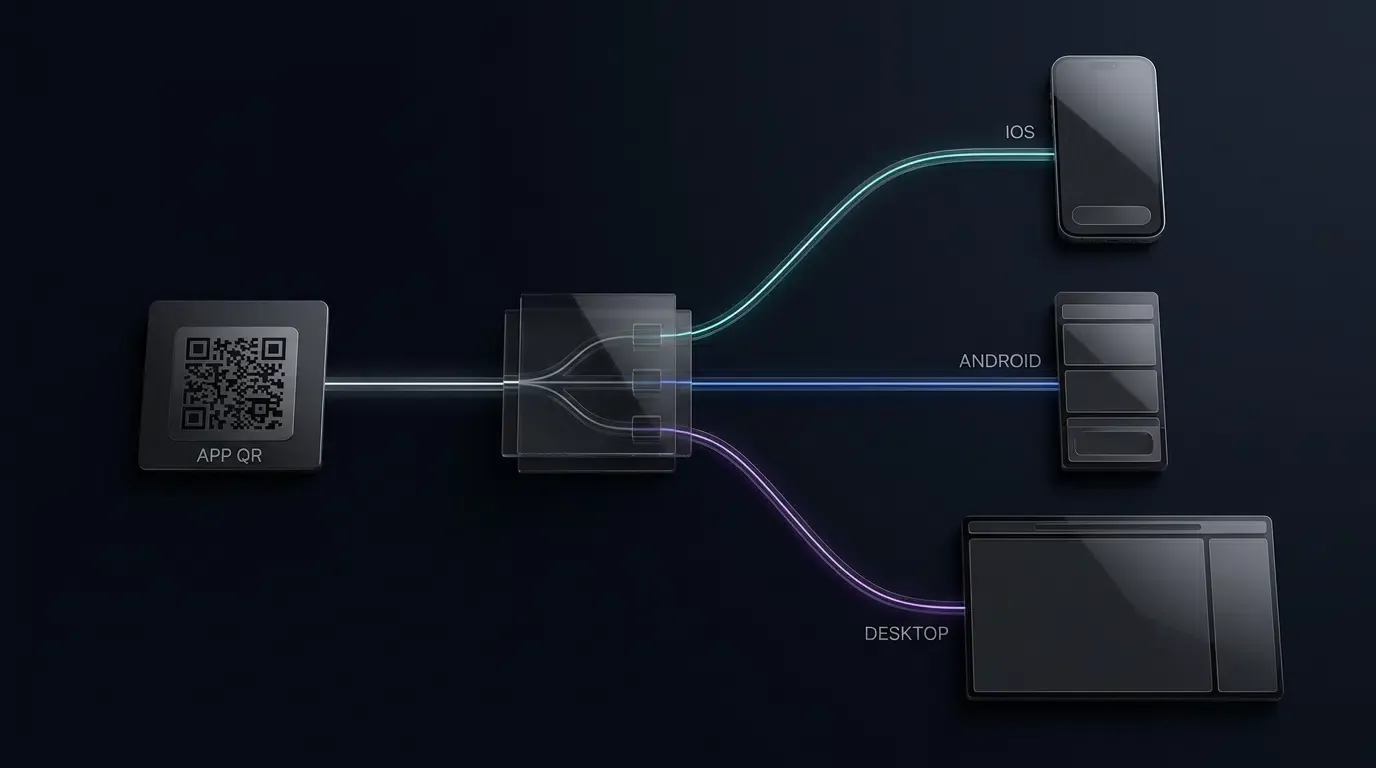
Apple Files China AI Models? Updated regulatory filings with China’s Ministry of Industry and Information Technology (MIIT) have listed Apple Intelligence alongside Alibaba Cloud’s Tongyi Qianwen (Qwen) and Tongyi Wanxiang models for several iPhone handsets, marking an important regulatory development ahead of an anticipated December debut alongside iOS 27.3 reported by Bloomberg. While this equipment-level filing represents a key administrative milestone following nearly two years of regional absence, it does not constitute an immediate consumer release. Industry reports indicate that while initial text-processing and photo-editing tools are expected to debut, advanced capabilities—including Apple’s conversational Siri AI and standalone image generation tools—remain excluded from the initial release window. For iOS developers, this developing deployment highlights a bifurcated operating environment requiring careful validation of system-level frameworks and regional feature availability.
Regulatory Approval & Architecture: Apple Files China AI Models for December Rollout
At a Glance
- Regulatory network access permits published by China’s MIIT list Apple Intelligence, Tongyi Qianwen, and Tongyi Wanxiang for compatible handsets, including the iPhone Duo, iPhone 18 Pro, and iPhone 15 Pro series.
- Media reports from Bloomberg indicate that Apple is targeting a mainland consumer rollout in December 2026 alongside iOS 27.3, though Apple has not publicly finalized an official consumer release date.
- Initial capabilities are expected to center on Writing Tools, notification summaries, and photo Clean Up, while conversational Siri AI and Image Playground remain unannounced for the Chinese mainland.
The deployment of system-integrated artificial intelligence has faced distinct jurisdictional requirements across global markets. When Apple launched the first phase of Apple Intelligence internationally in 2024, the features were unavailable in mainland China, where domestic laws require generative AI algorithms and services to undergo formal security assessments and administrative filings. During this period, competing domestic device manufacturers deployed native AI features across their flagship product lines, while Apple worked through the multi-stage regulatory processes required for foreign technology providers.
According to reporting from the South China Morning Post, the updated MIIT network access permits cover the iPhone Duo, iPhone 18 Pro, and earlier compatible models, explicitly naming three systems: Apple Intelligence, Alibaba’s Tongyi Qianwen large language model family, and the Tongyi Wanxiang visual generation engine. These equipment-level permits follow initial procedural registrations logged with the Cyberspace Administration of China (CAC) earlier in the year.
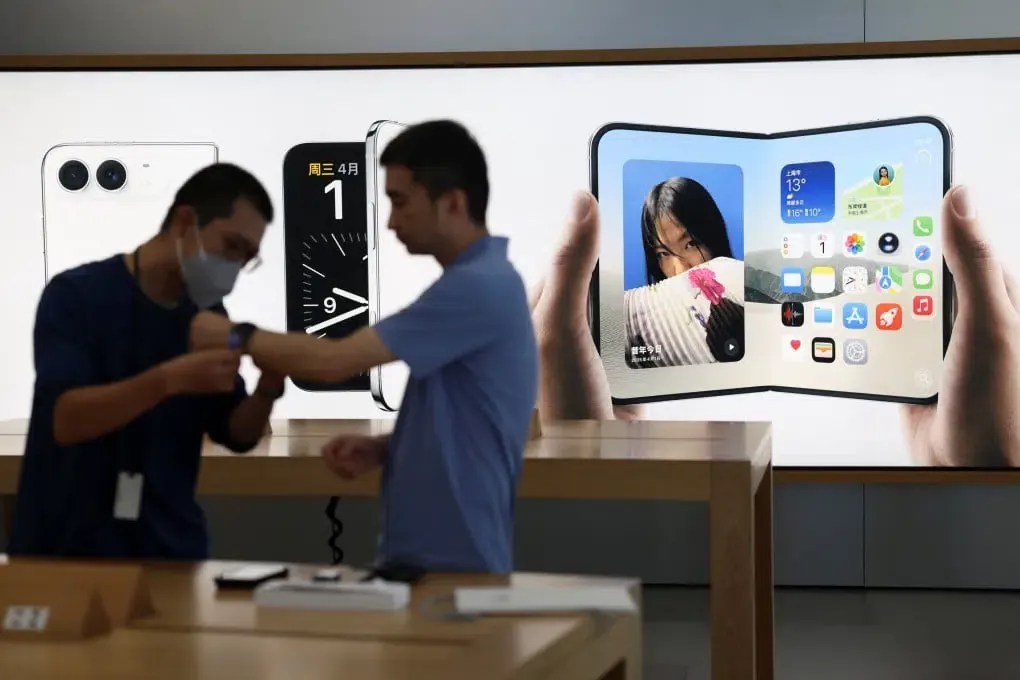
Industry analysts emphasize that receiving network access permits represents a critical technical step, yet remains distinct from an active consumer service rollout. As detailed in a Bloomberg report on Apple’s China AI schedule, Apple is working toward a December launch window expected to coincide with iOS 27.3. However, Apple’s official regional documentation on Apple China iOS Feature Availability continues to list Apple Intelligence as currently unavailable in mainland China, confirming that public deployment remains contingent on final commercial activation.
Technical Architecture: Evidence Boundaries, Model Deployment, and Regional Divergence
From an engineering perspective, deploying system-level AI across differing regulatory jurisdictions requires adapting the underlying service infrastructure. In international deployments, Apple documents a hybrid execution model: lightweight tasks execute locally on Apple silicon via Apple Foundation Models, while computationally intensive workloads route to Private Cloud Compute or optional third-party integrations like OpenAI.
In mainland China, operating generative AI models requires adherence to local data governance and algorithm registration frameworks. Industry reporting indicates that Apple has partnered with Alibaba Cloud to provide foundational large language model capabilities and visual tools, with Baidu supporting web search lookups. However, Apple has not publicly disclosed the exact request-level execution paths, internal routing logic, or data-handling agreements governing this localized platform.
The diagram below outlines documented international capabilities alongside reported mainland China regulatory information and deployment context:
[ Apple Intelligence Deployment Context ]
                      │
          ┌───────────┴───────────┐
          ▼                       ▼
[ International Markets ]   [ Mainland China ]
          │                       │
          ▼                       ▼
[ Apple-Documented        [ Regulatory & Equipment
  AI Features &             Filing Documentation ]
  Processing Models ]             │
          │                       ▼
          ▼                 [ Listed AI Systems ]
[ On-Device Foundation ]    - Apple Intelligence
[ Private Cloud Compute ]   - Tongyi Qianwen
[ Supported Third-Party ]   - Tongyi Wanxiang
  (OpenAI Integrations)           │
                                  ▼
                          [ Implementation Parameters
                            Requiring Verification ]
                          - On-device model execution
                          - Cloud request routing
                          - Local search integration
                          - Model update governance
                          - Public API availability
Technical reporting also highlights substantial functional distinctions between the expected mainland launch and international releases. As observed in coverage by The Next Web on international AI rollouts, the initial Chinese deployment is expected to align with Apple’s baseline 2024 capabilities rather than later iterations:
- Conversational Siri AI Deferred: The conversational Siri experience rebuilt with advanced external models is not expected to launch in China in December. A similar delay continues in the European Union under Digital Markets Act compliance reviews, demonstrating that conversational assistant capabilities face strict international regulatory scrutiny.
- Image Playground Omitted: Standalone visual generation applications, including Image Playground, are reportedly excluded to comply with local regulations governing synthetic media generation.
- Genmoji Feature Scope: While basic Genmoji generation has been cited in preliminary rollout reports, advanced iterative generation capabilities remain subject to verified platform restrictions.
- Content Filtering Protocols: Reports indicate that localized deployments must satisfy domestic content governance requirements. The exact architecture of model filtering and update approvals has not been detailed in official technical documentation.
Application Layer Impact: What Changes for iOS Developers in China
For iOS developers targeting the Chinese market, the impending debut of Apple Intelligence requires an objective evaluation of system frameworks. While consumer headlines emphasize the arrival of localized AI, developers must separate established operating system APIs from unconfirmed third-party integration points.
The matrix below outlines the documented capabilities of Apple Intelligence internationally compared with the reported and expected status for mainland China:
| Operational Domain | International Documentation | Mainland China Status (Reported / Projected) | Practical Developer Consideration |
|---|---|---|---|
| Writing Tools | Active across standard system text views | Expected in initial rollout via localized models | Integrates via standard UIKit and SwiftUI text interfaces |
| Notification Summaries | Active across supported notification payloads | Expected in initial rollout | Requires concise notification payload structuring |
| Photo Clean Up | Active within the Photos application | Expected in initial rollout | System-level Photos tool; not an open editing extension |
| Siri AI (Conversational) | Active in supported regions/languages | Not expected in initial launch; timeline unannounced | Developers cannot rely on conversational assistant execution |
| Image Playground | Active as dedicated app and API sheet | Excluded from initial rollout | Standalone generation sheets should not be assumed active |
| App Intents Framework | Active across Siri, Shortcuts, and Spotlight | Existing framework; individual system integrations depend on OS version, region, language, and supported features | Maintain documented Shortcuts and supported system actions; do not assume conversational Siri AI availability |
At the user interface layer, applications utilizing standard UIKit controls—such as UITextView and UITextField—or native SwiftUI text views can interface with systemwide Writing Tools as outlined in Apple Developer Writing Tools documentation. This integration allows users to proofread, rewrite, and summarize text within input fields without requiring proprietary model integrations. However, developers managing custom text-rendering engines must explicitly configure a coordinator instance to support these interactions.
Crucially, the absence of conversational Siri AI does not mean the App Intents framework is obsolete in China. Apple’s documented App Intents API continues to power system shortcuts, Spotlight indexing, and widget actions across iOS. Developers should continue maintaining structured App Intents for these functional surfaces while avoiding architectures that rely strictly on open-ended voice dialogues to initiate critical user flows.
Engineering Checklist: Preparing Applications for Regional AI Environments
To navigate the arrival of iOS 27.3 in mainland China, development teams should review their client-side implementations against Apple’s documented APIs while preparing for regional feature divergence.
Developer Implementation Checklist
- Audit UIKit and SwiftUI Text Controls: Ensure primary input fields use supported UIKit controls such as
UITextViewandUITextField, or supported SwiftUI text components. For custom UIKit text views, create and configure aUIWritingToolsCoordinatorinstance and implement itsDelegateprotocol where required. Verify Writing Tools availability and behavior on the target OS, device, language, and region using UIWritingToolsCoordinator APIs. - Structure Remote Notification Payloads: Format push notification payloads with clear title-to-body hierarchies. Because system notification summaries condense sequential alerts, ambiguous notification strings risk losing contextual clarity when summarized.
- Decouple App Intents from Conversational Voice: Maintain standard App Intents for Spotlight search, Shortcuts integration, and Action Button triggers, ensuring workflows execute reliably without assuming conversational Siri AI is present.
- Validate Media and Photo Workflows: Ensure photo pickers and media import pipelines adhere to standard Photos framework permissions. Developers should not assume direct API access to proprietary photo-manipulation tools like Clean Up.
Product & Compliance Strategy Checklist
- Design for Feature Parity Divergence: Structure application roadmaps to handle regional differences cleanly, ensuring user-facing marketing copy does not promise features like Image Playground on mainland devices.
- Validate Device and Region Settings: Implement robust client-side checks based on documented platform capability APIs rather than hardcoding regional assumptions based purely on device hardware identifiers.
- Monitor Regulatory and Feature Availability Updates: Track official updates on Apple’s developer portals and regulatory registry releases to verify when additional localized model capabilities or assistant endpoints enter developer testing.
Frequently Asked Questions (FAQ)
When will Apple Intelligence launch for consumers in mainland China?
Which AI models are listed in Chinese regulatory filings for Apple devices?
Will the rebuilt conversational Siri AI be available in China at launch?
Can third-party developers call the underlying Qwen or Wanxiang models directly through iOS APIs?
Practical Implications & Future Outlook
The regulatory trajectory of Apple Intelligence in China underscores a broader structural trend: the fragmentation of global operating systems into distinct regional variants. As artificial intelligence becomes deeply integrated into consumer hardware, device manufacturers must reconcile uniform platform architectures with sovereign data laws, content governance requirements, and localized algorithm registrations.
For software organizations operating across international borders, this environment necessitates architectural decoupling. Applications can no longer assume that platform capabilities announced at global developer conferences will deploy uniformly across all international markets. By building modular application layers, implementing graceful fallbacks for missing system features, and utilizing documented platform frameworks, developers can maintain reliable user experiences across an increasingly complex international landscape.
References
-
South China Morning Post. China approves Alibaba AI models for use in iPhone Duo and other Apple handsets.
-
Bloomberg. Apple Prepares to Debut First AI Features in China in December.
-
Apple Developer. Apple Intelligence Overview and Developer Capabilities.
-
Apple Developer Documentation. Writing Tools Overview.
-
Apple Developer Documentation. UIWritingToolsCoordinator Class.
-
Apple Developer Documentation. App Intents Framework.
-
Apple China. iOS and iPadOS Feature Availability by Region.
-
The Next Web. Apple’s first AI features reach China in December, after a two-year wait.
-
Engadget. Alibaba AI models cleared for use in Apple Intelligence in China.
Share this article