Xiaomi Rolls Out HyperOS 4? Xiaomi officially commenced the staged over-the-air rollout of its stable HyperOS 4 update in China on October 15, 2026, delivering its latest major platform upgrade to an initial cohort of flagship smartphones and tablets. Arriving after two months of beta recruitment, the release highlights systemwide artificial intelligence integrations, refined cross-device interconnection, and streamlined visual rendering across Xiaomi’s software ecosystem. For mobile software engineers and product teams distributing Android applications, major OEM platform transitions introduce critical operational questions. Rather than assuming unverified kernel modifications, development teams must evaluate how existing application lifecycles, low-memory trimming callbacks, deep-link ingestion, and cross-device handoff protocols perform across newly updated hardware tiers.
Core Industry Realignment: Xiaomi Rolls Out HyperOS 4 Across Flagship Devices
At a Glance
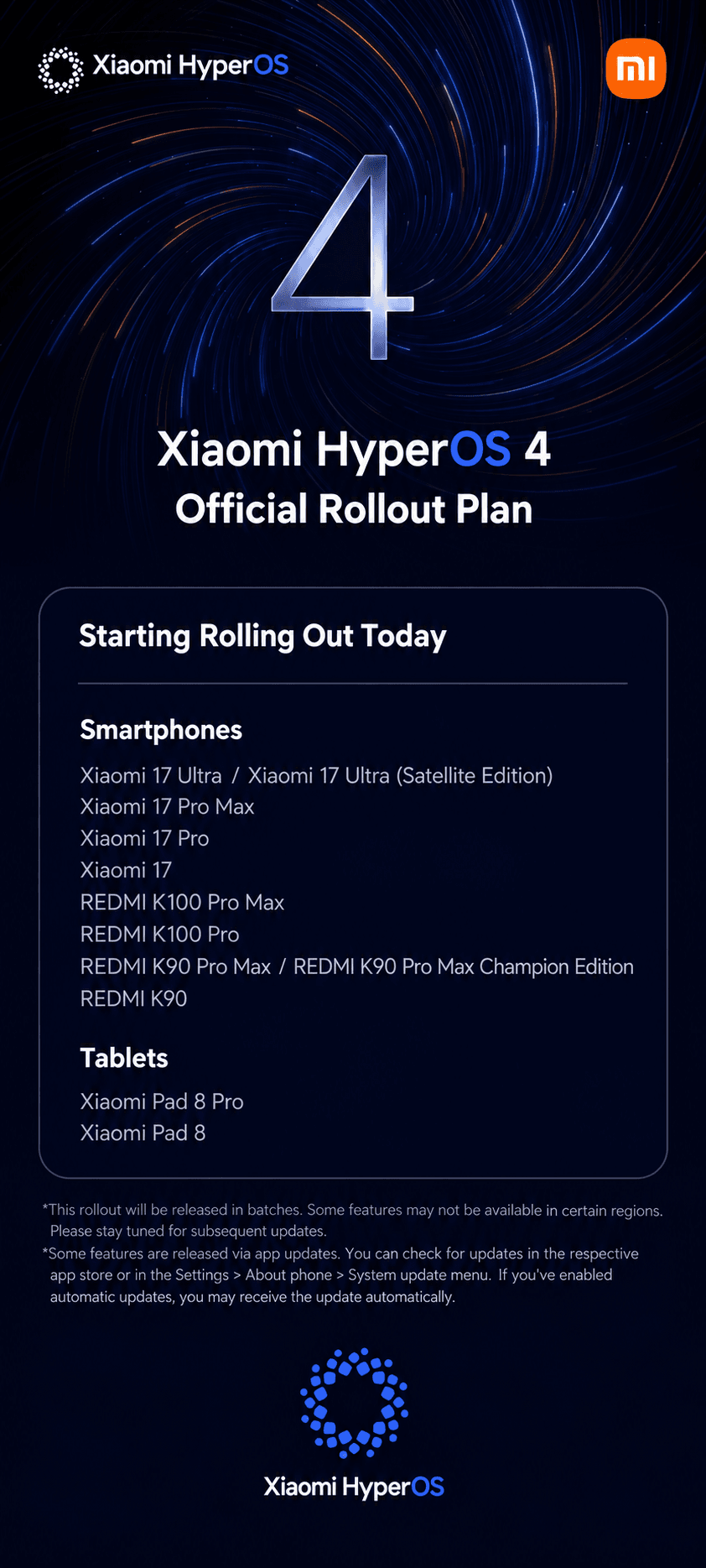
- Xiaomi initiated the stable rollout of HyperOS 4 in China on October 15, 2026, prioritizing current flagship phones and tablets before expanding across broader device categories.
- The confirmed first wave includes the Xiaomi 17 series, REDMI K100 Pro and Pro Max, REDMI K90 series, and the Xiaomi Pad 8 and Pad 8 Pro.
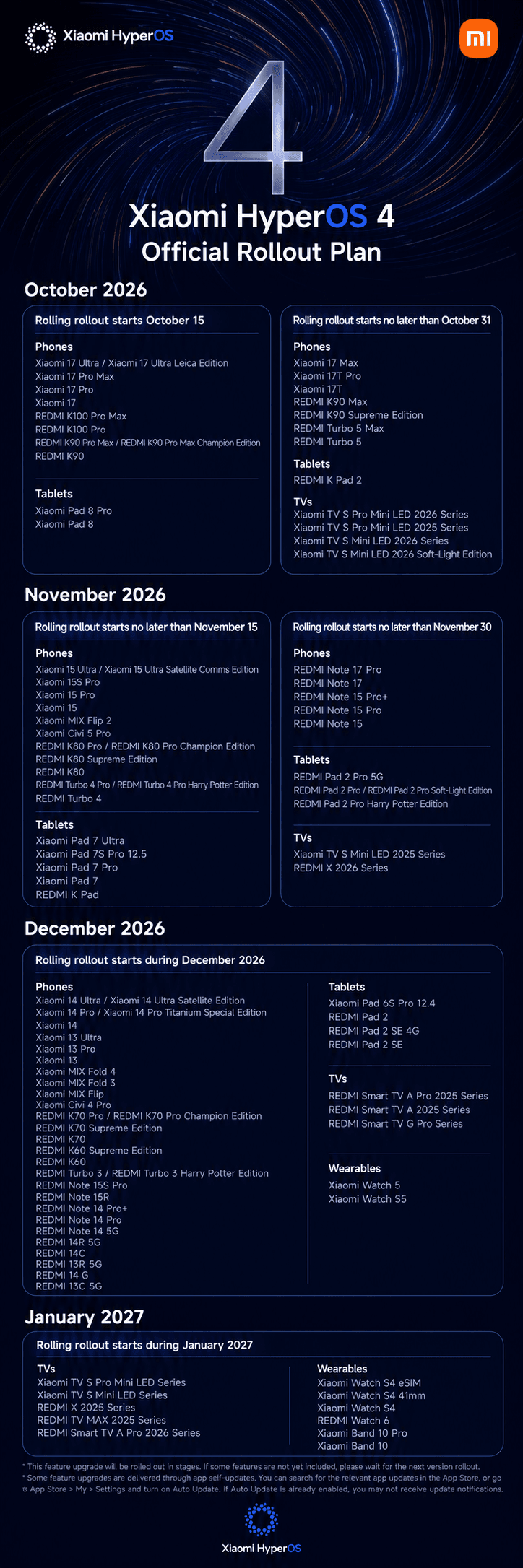
- Subsequent rollout batches are scheduled through December 2026 for major smartphone lines, concluding with smart televisions and wearable accessories in January 2027.
The distribution of a major operating system update by a leading original equipment manufacturer (OEM) represents a significant milestone in the Android landscape. In markets where platform vendors maintain custom system frameworks, operating system updates dictate the practical execution parameters for third-party software. System-level resource managers govern foreground process priorities, enforce background service constraints, and manage how applications restore state when returning from suspended modes.
According to reporting from ITHome on the official HyperOS 4 release, the update is deploying through over-the-air (OTA) channels in multiple planned phases. The initial deployment wave prioritizes high-performance hardware, specifically targeting the Xiaomi 17 lineup alongside premium REDMI K-series devices and high-end tablets.
The release timeline follows a structured, multi-month deployment calendar as Xiaomi Rolls Out HyperOS 4. Official rollout schedules indicate that secondary batches targeting devices like the Xiaomi 17T, REDMI Turbo series, and smart displays will proceed through late October and November. Broader historical flagship tiers—including the Xiaomi 14, Xiaomi 13, and MIX Fold series—are scheduled for rollout across December 2026, with the January 2027 phase primarily reserved for connected televisions, smartwatches, and fitness bands.
For international developers, while technical coverage by Nokiamob on the HyperOS 4 update notes that Xiaomi has expanded global beta recruitment to select models cited in early reports, an official release schedule for the global stable build has not yet been announced.
Technical Architecture: Evidence Boundaries, Resource Governance, and Handoff Protocols
When analyzing platform updates, engineering teams must distinguish between verified vendor release notes, established developer frameworks, and unconfirmed technical claims. While informal media reports have discussed potential kernel-level load calculation and memory preloading algorithms within Xiaomi’s HyperCore branding, Xiaomi’s official launch materials focus primarily on integrated AI features (such as Super XiaoAI 2.0 and the MiMo model family), cross-device interconnection, and general interface fluidness.
Developers should avoid assuming that HyperOS 4 introduces an entirely new, unmanaged isolated runtime or alters fundamental Linux kernel memory allocation rules. Instead, technical audits should focus on how existing, documented platform capabilities interact with new system builds.
The diagram below outlines the three-tier evidence framework developers should use to evaluate HyperOS 4:
[ HyperOS 4 Stable Rollout Context ]
                      │
                      ▼
[ Tier 1: Documented Release Areas ]
- Phased Rollout Schedule (Flagships to Wearables)
- AI Features (Super XiaoAI 2.0 / MiMo Foundation Models)
- Cross-Device Interconnection & Visual Interface Streamlining
                      │
                      ▼
[ Tier 2: Established Developer Frameworks ]
- Standard Android Lifecycle (Activity, onTrimMemory, WorkManager)
- Verified Android App Links & URI Scheme Routing
- Xiaomi HyperOS App Handoff SDK (HandoffSession & State Restoration)
                      │
                      ▼
[ Tier 3: Compatibility Testing & Unconfirmed Claims ]
- Kernel Scheduling & Memory Preloading (Requires Version-Specific Evidence)
- Background Process Retention Policies (Requires Device Profiling)
- Deep-Link Cold Start Latencies (Subject to Target Hardware Testing)
A central architectural focus for modern multi-device environments is cross-screen task continuation. Rather than relying on unverified kernel behaviors, developers targeting Xiaomi devices can leverage established developer interfaces, specifically the Xiaomi HyperOS App Handoff Development Guide. This documentation details how third-party applications participate in seamless device relay:
- Entry Point Configuration: Applications declare support for cross-device relay within
AndroidManifest.xmlby configuring standardACTION_VIEWintent filters with specific data schemes, exposing either traditional deep links or verified App Links. - Session Lifecycle Coordination: Xiaomi’s Handoff SDK uses
HandoffSessionto coordinate cross-device handoff. TheDeepLinkCallbacksuppliesonSaveState()andonRestoreState()for transferable session data, while an Activity’sonNewIntent()should forward applicable incoming intents tomHandoffSession.onNewIntent(intent)as documented. - Security and Identity Handshakes: The framework enforces application signature cross-validation, ensuring that session data can only be shared between authenticated client binaries across paired devices.
Because this Handoff SDK represents an established developer framework rather than a novel HyperOS 4 exclusive API, engineering teams should verify whether its runtime behavior exhibits modified timing or execution constraints on newly updated devices.
Application Lifecycle & Compatibility: Navigating Process Retention and Link Resolution
For Android application developers, major OEM updates require validating that client-side processes respond predictably to system resource pressure. While early beta testers report improved navigation fluidness and cleaner interface transitions, applications must remain resilient when the underlying operating system manages competing background tasks.
In Android environments, background process retention is governed by system memory availability and platform battery policies. Applications cannot assume that their processes will remain resident in memory indefinitely. When memory pressure increases, the system reclaims resources, necessitating proper implementation of the Android ComponentCallbacks2 onTrimMemory API to release non-critical UI assets and cached data.
The matrix below outlines a structured compatibility testing framework for evaluating applications on HyperOS 4:
| Architectural Domain | Established Android & Xiaomi Standards | HyperOS 4 Compatibility Testing Requirements | Version-Specific Verification Status |
|---|---|---|---|
| App Lifecycle | Standard Android Activity & Process Lifecycle | Verify cold launch, warm start, and process restoration after termination | Requires testing across target devices |
| Memory Pressure | Android ComponentCallbacks2.onTrimMemory() |
Evaluate bitmap caching, UI release, and background eviction thresholds | OEM-specific threshold adjustments pending verification |
| Background Work | Android WorkManager & battery optimization |
Test deferred execution, job constraints, and OEM power-saving rules | Background execution limits require device audit |
| Deep Linking & App Links | Android URI Schemes & Verified App Links | Validate intent resolution, parameter passing, and activity launch modes | No confirmed protocol changes; verify launch behavior |
| Cross-Device Handoff | Xiaomi HyperOS App Handoff SDK (HandoffSession) |
Validate session continuity, onSaveState/onRestoreState, and signature checks |
Existing SDK; compatibility on HyperOS 4 builds requires validation |
| Launch & ANR Diagnostics | Android Profiler & platform telemetry | Profile cold-start timing, main-thread blocking, and frame latency | Subject to physical hardware and device tier |
A critical consideration for user acquisition and engagement is how applications process inbound deep links. As outlined in standard Android Developers App Links documentation, verified App Links route web traffic directly into native application activities without prompting user disambiguation dialogs. App Link verification and routing behavior should be tested on the target Chinese and international firmware variants, including devices where Google services or provider-specific verification mechanisms differ.
When an application is invoked via external deep links—such as marketing campaigns, web-to-app redirects, or push notifications—the execution path depends heavily on whether the application process is already active and how the destination component is configured in accordance with the Android Activity Lifecycle:
- Warm Process / Existing Activity: When the application process is alive, Android may reuse an existing Activity or create a new Activity instance depending on the launch mode, task state, and intent flags. Handle inbound link data in
onCreate()for new instances andonNewIntent()for reused instances, ensuring both paths lead to consistent destination routing. - Cold Launch: If the process was terminated by system resource managers, the application executes its full initialization pipeline starting from
Application.onCreate(). In this scenario, parsing intent extras during initial Activity creation is critical; initial routing logic should be resolved cleanly without executing heavy synchronous operations that could block the main thread and trigger Application Not Responding (ANR) warnings.
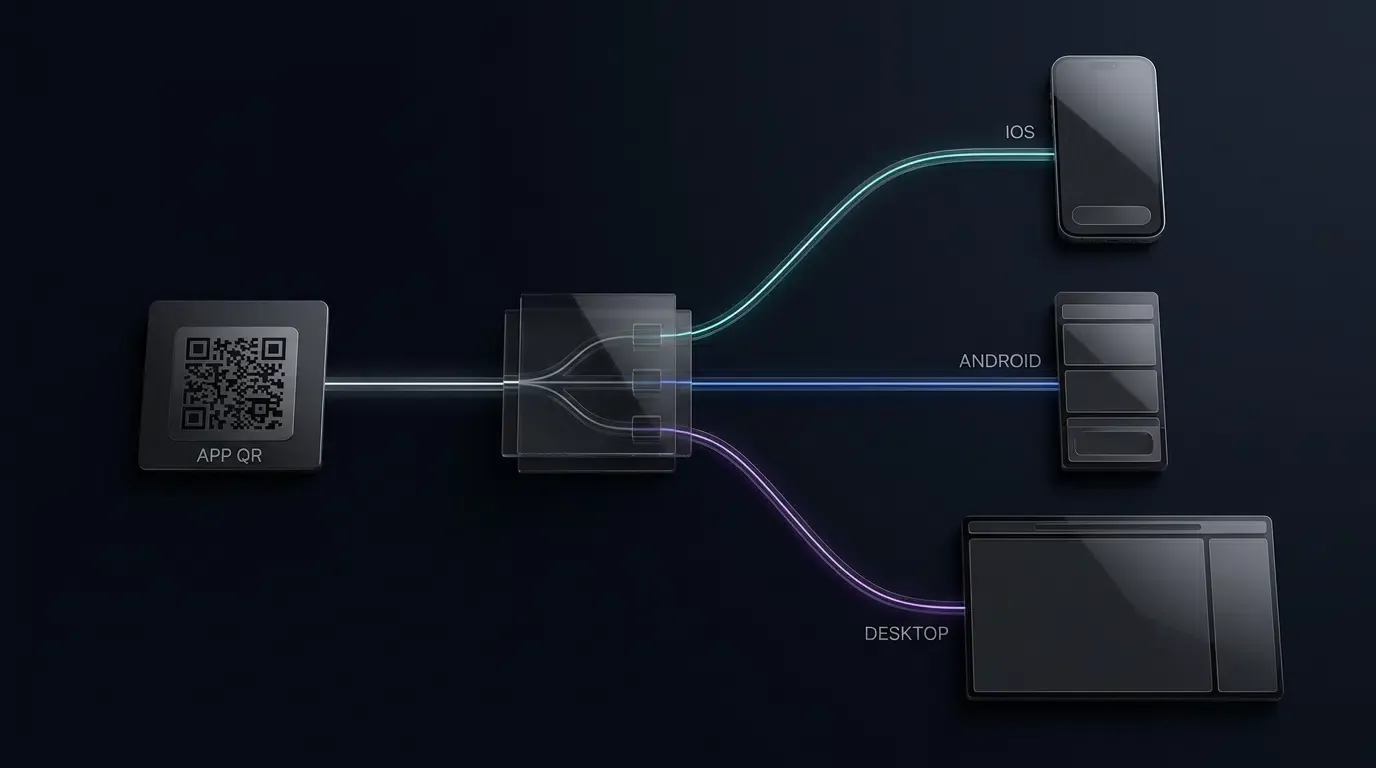
In broader digital marketing and user acquisition contexts, developers face related challenges when coordinating user onboarding across channels where applications are not yet installed. In these pre-install scenarios, mobile attribution platforms—including Adjust, AppsFlyer, and OpoInstall—operate within established, documented data pathways.
For example, OpoInstall publicly describes mobile attribution, deferred deep linking and referral tracking, and campaign parameter passing capabilities designed to support eligible post-install onboarding flows. Depending on available attribution signals, platform behavior, and SDK configuration, these capabilities may help applications recover campaign context after installation.
This remains separate from Xiaomi’s Handoff SDK: deferred deep linking addresses acquisition journeys that cross an installation boundary, while OEM handoff enables supported session transitions between already installed applications across devices. Neither capability establishes a direct technical integration between OpoInstall and Xiaomi’s proprietary handoff framework.
Engineering Checklist: Preparing Android Applications for HyperOS 4
To ensure software stability and optimal user experience across devices receiving the HyperOS 4 update, development teams should execute a disciplined compatibility audit.
Developer Implementation Checklist
- Audit Android Lifecycle and State Restoration: Verify that all activities correctly implement
onSaveInstanceState()andonRestoreInstanceState(), ensuring user input and navigation hierarchies survive background process termination. - Implement Resilient onTrimMemory Handlers: Ensure application components listen for
ComponentCallbacks2memory trimming levels, systematically evicting in-memory caches, image buffers, and non-essential objects during high-load scenarios. - Verify Android App Links and Intent Filters: Audit
AndroidManifest.xmlintent filters for correctACTION_VIEWdefinitions, validating that digital asset links (assetlinks.json) verify successfully to support direct linking across target regional firmware. - Test Both Cold-Start and Warm-Start Routing: Execute end-to-end intent tests with the application process killed and cached, confirming that deep-link routing logic correctly routes users to target destinations under both
onCreate()andonNewIntent()execution paths. - Evaluate Xiaomi App Handoff Compatibility: For applications implementing cross-device handoff, test
HandoffSessionworkflows on physical HyperOS 4 hardware to ensure signature validation,mHandoffSession.onNewIntent(intent)forwarding, and state serialization continue to execute reliably.
Product & QA Strategy Checklist
- Align QA Testing with Rollout Waves: Schedule compatibility testing to match Xiaomi’s phased deployment, validating flagship models (Xiaomi 17, REDMI K100) first before expanding test suites to mid-range lines.
- Monitor Telemetry for ANR and Crash Spikes: Track client-side crash telemetry and ANR reports during the early deployment window, paying specific attention to activity startup latencies and background worker failures.
- Track Regional Software Variants: Maintain separate compatibility matrices for Chinese domestic builds and forthcoming international releases, accounting for regional differences in system services and background execution policies.
Frequently Asked Questions (FAQ)
Which devices are included in the first wave of the stable HyperOS 4 update?
When will the global stable version of HyperOS 4 be released?
Did Xiaomi announce specific kernel architecture changes in HyperOS 4?
Does HyperOS 4 alter how deep links and App Links function?
Practical Implications & Future Outlook
The release of Xiaomi’s HyperOS 4 illustrates the ongoing evolution of OEM Android platforms toward tighter hardware-software cohesion and enhanced multi-device ecosystems. As manufacturers refine their operating systems to balance interface responsiveness with battery conservation, the operational environment for third-party software becomes increasingly sophisticated.
For software development teams, navigating OEM platform updates requires a disciplined adherence to established platform standards rather than reliance on fleeting system quirks. By implementing robust lifecycle state restoration, managing memory resources conservatively, and maintaining verified deep-link architectures, engineering teams can build resilient applications that perform consistently across evolving Android environments.
References
-
ITHome. Xiaomi HyperOS 4 Official Release First Batch Rollout Announcement.
-
Xiaomi Open Platform. Xiaomi HyperOS App Handoff Development Guide.
-
Android Developers. Handling Android App Links.
-
Android Developers. ComponentCallbacks2 and onTrimMemory Documentation.
-
Android Developers. Activity Lifecycle Documentation.
-
OpoInstall. Referral Tracking and Deferred Deep Linking.
-
Nokiamob. Xiaomi HyperOS 4 Stable Update Rolls Out: The List of Eligible Devices and Features.
Share this article