Apple credited OpenAI Codex Security on nine of the twenty-two WebKit vulnerabilities fixed in Safari 26.6.1, providing a concrete example of AI-assisted vulnerability research contributing to an operating system security release. As software ecosystems grow in complexity, browser rendering engines present massive attack surfaces that challenge conventional security testing. Historically, vulnerability discovery relied on dedicated fuzzing clusters, manual code audits, and external bug bounty reports. By combining codebase-specific threat modeling with automated exploit validation in isolated environments, AI security agents are augmenting vulnerability disclosure pipelines across high-exposure browser infrastructure.
What Apple Fixed in Safari 26.6.1: Deconstructing the 22 WebKit CVEs
At a Glance
- Apple released Safari 26.6.1 on August 18, 2026, addressing twenty-two WebKit vulnerabilities across macOS Sonoma and macOS Sequoia.
- OpenAI Codex Security (researcher Amy Burnett) was credited on nine CVE entries, representing roughly forty-one percent of the listed advisories.
- The update addresses several classes of WebKit issues, including out-of-bounds access, use-after-free conditions, memory corruption, and sensitive data leakage.
Browser vendors have long combined internal security research, external reports, and fuzzing to identify vulnerabilities. While effective, manual code review struggles to keep pace with complex modern codebases containing millions of lines of C++ and assembly.
To address these vulnerabilities across its browser ecosystem, Apple published the security contents of Safari 26.6.1 alongside operating system updates for macOS Sonoma and macOS Sequoia, as detailed on the official Apple security releases page. The update delivers fixes for twenty-two Common Vulnerabilities and Exposures (CVEs) affecting WebKit, the open-source rendering engine that powers Safari.
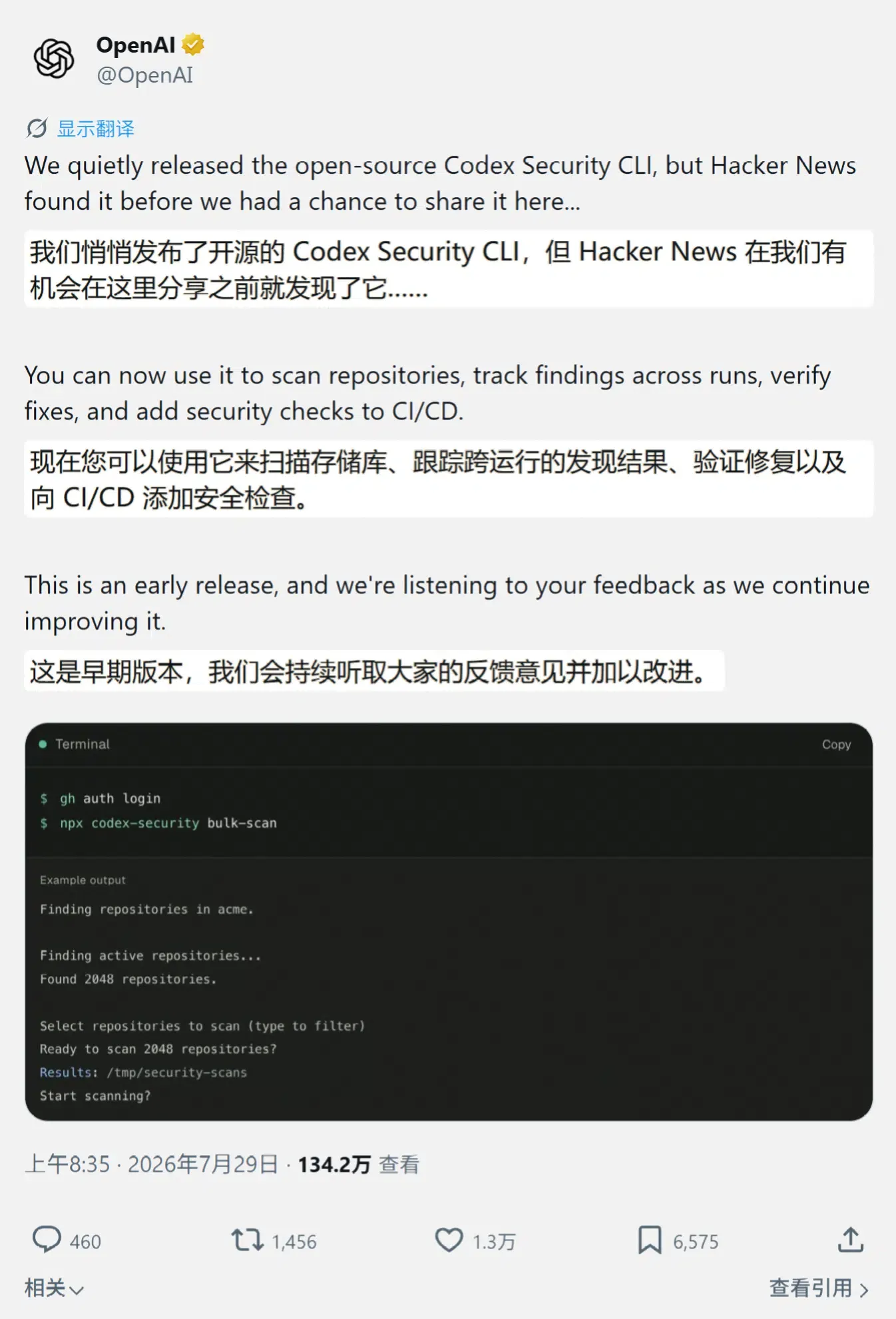
The Safari 26.6.1 release illustrates how AI-assisted vulnerability research is entering established software security workflows. Nine of the twenty-two CVEs—about forty-one percent of the vulnerabilities listed in the update—were credited to researcher Amy Burnett utilizing OpenAI Codex Security. Other security contributions came from independent research groups, including Cisco Talos, Citadelo, Out of Bounds, the TrendAI Zero Day Initiative, Calif.io, and the Braze Security Team, as reported in 9to5Mac’s technical analysis.

Under-the-Hood Mechanics: How Codex Security Contributed to Safari 26.6.1 Vulnerability Research
At the architectural level, browser engines are especially exposed because they continuously parse untrusted web content while interacting with complex memory and sandbox boundaries. WebKit is responsible for parsing untrusted HTML, executing complex JavaScript, managing memory allocations, and isolating cross-origin resources within operating system sandboxes.
The vulnerabilities resolved in Safari 26.6.1 fall into several distinct classes of WebKit issues. Examples include:
- Out-of-Bounds Memory Access (CVE-2026-64784): An out-of-bounds access issue was addressed with improved bounds checking, according to Apple’s security notes.
- Use-After-Free Vulnerabilities (CVE-2026-64715, CVE-2026-64787): A use-after-free issue was addressed through improved memory management.
- Memory Corruption via Locking and Input Validation (CVE-2026-64782, CVE-2026-64781): A memory corruption vulnerability was addressed with improved locking, and an issue causing unexpected Safari crashes was addressed with improved input validation.
- WebKit History Sensitive Data Leakage (CVE-2026-64778): A WebKit History issue where visiting a maliciously crafted website could leak sensitive data was addressed with improved checks.
Apple’s security release credits OpenAI Codex Security on nine of the twenty-two WebKit CVE entries. While Apple does not disclose a separate discovery narrative for each individual finding, the credits provide a concrete example of Codex Security participating in real-world vulnerability research.
According to official documentation for OpenAI Codex Security, the system constructs a project-specific threat model based on the target repository’s architecture and repository history. It uses language-model reasoning to explore realistic execution paths, validates potential issues within isolated test environments, and surfaces proposed patches for human review.
The diagram below outlines the structural differences between traditional scanning methods and context-aware vulnerability discovery:
[SAST Pipeline]
Source Code
  └──> Static Rules / Dataflow Analysis
        └──> Reported Findings
              └──> Analyst Triage

[Fuzzing Pipeline]
Target Binary / Harness
  └──> Input Generation & Mutation
        └──> Execution & Coverage
              └──> Crash Triage

[Codex Security Workflow]
Repository Context
  └──> Threat Model & Attack Paths
        └──> Isolated Validation
              └──> Patch Proposal & Human Review
This approach is intended to investigate vulnerabilities that may be difficult to assess from isolated static rules alone, particularly when security properties depend on broader system context and complex program behavior.
How AI-Assisted Vulnerability Research Differs from Traditional Scanning
As automated vulnerability discovery enters established security workflows, security architects must understand how these tools operate across the software testing lifecycle. These approaches differ in how they discover and validate vulnerabilities.
Methodological Evaluation: Static Analysis, Fuzzing, and AI Agents
AI security agents complement rather than replace existing vulnerability research methods. While SAST tools analyze source code using static rules, dataflow, and program-analysis techniques, fuzzers exercise runtime behavior using generated or mutated inputs to expose crashes. Context-aware agents analyze semantic intent and execution logic across interconnected modules.
The table below compares standard methodologies for identifying vulnerabilities in complex software:
| Methodology | Discovery Mechanism | Validation Approach | Primary Strength |
|---|---|---|---|
| SAST | Static rules, dataflow and code analysis | Analyst triage and testing | Scalable detection of code-level risks |
| Fuzzing | Generated or mutated inputs executed against a target | Crash reproduction and coverage analysis | Finding unexpected runtime behavior |
| Codex Security | Repository context, threat modeling and code reasoning | Isolated reproduction and evidence gathering | Investigating vulnerabilities that depend on broader code context |
By pairing automated attack-path exploration with isolated validation, security agents enable researchers to verify whether a theoretical code anomaly represents a genuine flaw before submitting remediation proposals to upstream maintainers.
Engineering Checklist: What Security Teams Should Verify Before Adopting AI Security Agents
To integrate AI-assisted vulnerability discovery into enterprise engineering workflows responsibly, security leaders can establish structured operational guidelines.
Implementation Checklist for Security Teams
- Establish Isolated Sandbox Verification: Ensure all AI security agents execute validation workflows within strictly partitioned environments to prevent unintended execution.
- Enforce Human-in-the-Loop Review: Require experienced security engineers to evaluate and validate all AI-generated vulnerability findings and proposed patches prior to deployment.
- Scope Repository and Credential Access: Configure least-privilege access permissions for automated agents, ensuring they only inspect targeted source code without access to production credentials.
Governance & Operational Oversight Checklist
- Benchmark Signal-to-Noise Ratios: Measure the false-positive rate of AI-generated security alerts against existing SAST and dynamic analysis pipelines to ensure engineering efficiency.
- Maintain Transparent CVE Disclosures: Follow coordinated vulnerability disclosure standards, providing upstream software maintainers with clear reproduction steps and validated remediation proposals.
- Deploy Operating System Security Patches Promptly: Ensure enterprise endpoints receive browser updates such as Safari 26.6.1 to remediate disclosed WebKit memory and state handling defects.
Frequently Asked Questions (FAQ)
How did Codex Security contribute to the nine credited WebKit findings?
What types of security flaws were resolved in Safari 26.6.1?
How does AI-assisted vulnerability research differ from conventional SAST and fuzzing tools?
Key Takeaways for Engineering Teams
The Safari 26.6.1 release provides a concrete example of AI-assisted vulnerability research contributing to a real-world browser security release. Rather than replacing human researchers, AI agents can extend the scope of automated vulnerability analysis while keeping validation and remediation under human review.
For security teams, the practical lesson is to combine repository context, vulnerability validation, and human review rather than rely on a single detection method. By implementing rigorous sandbox testing and coordinated disclosures, organizations can identify and remediate complex vulnerabilities before software reaches production environments.
Share this article