Cursor Launches Origin Hosting? The move is significant because Cursor is now extending its AI coding environment into code hosting itself. Cursor introduced Origin on August 17, 2026, rolling it out in early beta to all paid plans with repositories, pull requests, code browsing, and GitHub synchronization. As AI coding agents take on more software development tasks, the shift brings source-code hosting closer to the environment where those agents already operate. Historically, developers utilized separate environments for writing code, reviewing pull requests, running continuous integration tests, and deploying applications. By embedding repository management directly within the Codebase tab, Origin attempts to consolidate these disparate stages into a unified workspace.
Core Industry Realignment: Why Cursor Launches Origin Hosting
At a Glance
-
Cursor released an early beta of Origin on August 17, 2026, introducing native Git hosting, code browsing, and pull request reviews within the editor.
-
The platform features bidirectional GitHub synchronization, allowing teams to evaluate Origin while maintaining GitHub as the canonical source of truth.
-
While basic repository operations and third-party continuous integration connectors are live, specialized agent-native hosting capabilities remain on the development roadmap.
Origin is entering the market at a time when AI coding agents are already handling more branch-level development work. For nearly two decades, Git hosting platforms functioned primarily as passive storage and collaboration hubs for human developers who committed code several times per day. With autonomous coding agents now drafting pull requests and iterating on branches in parallel, traditional code review queues and context switching between browser tabs have become notable friction points.
To address these workflow boundaries, Cursor introduced Origin across Pro, Teams, and Enterprise plans, as documented in the official Cursor changelog. Rather than requiring developers to navigate between local editors, terminal sessions, and external hosting portals, Origin embeds repository management directly inside a dedicated Codebase view.
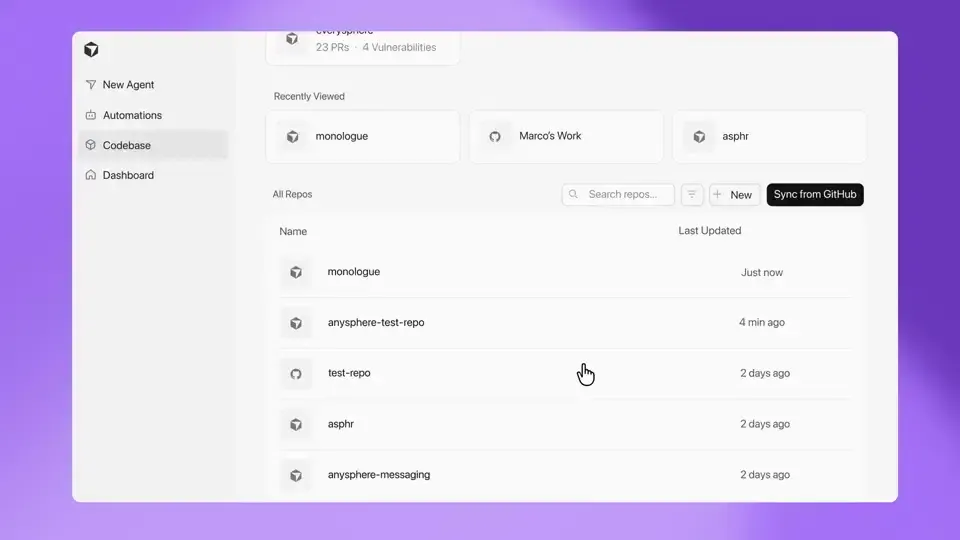
The strategic discussion surrounding why Cursor Launches Origin Hosting reflects a broader push toward AI-native developer infrastructure. Origin supports repository creation and Git-based workflows, while bringing pull requests, code browsing, and GitHub synchronization into Cursor’s Codebase view. For continuous integration and deployment, Origin connects with external services like Vercel, Depot, and Buildkite to execute builds. Cursor notes that specialized agent-native features are still to come. Simultaneously, GitHub continues to expand its own infrastructure via initiatives such as GitHub Agent HQ, positioning itself as a neutral, governed control plane for multi-agent workflows.
Under-the-Hood Architectural Mechanics: Evaluating Agent-Centric Repository Workflows
At the architectural level, developer platforms are exploring how to support higher event density as AI agents become regular code contributors. When autonomous agents assist with refactoring, bug fixing, and test generation, repositories experience more frequent branch creation, automated rebases, and webhook events.
Conventional hosting platforms were architected around human interaction cadences, relying on centralized web interfaces for code review and long-lived credentials. By contrast, an integrated forge architecture seeks to collapse the loop between prompt generation, code modification, automated testing, and merging into a single environment.
The diagram below illustrates how an editor-integrated workflow compares with conventional remote Git workflows:
[Current Git Hosting Workflow]
  Developer Editor
        │
        ▼
  Remote Repository
        │
        ▼
  Web-Based PR Review
        │
        ▼
  CI Verification
        │
        ▼
      Merge

[Origin's Current Workflow]
  Cursor / Codebase View
        │
        ▼
  Origin Repository
        │
        ▼
  Pull Request + Code Browsing
        │
        ▼
  GitHub Sync / Connected CI
        │
        ▼
  Review & Merge
While integrated forges promise tighter coordination for agent-driven workflows, engineering teams must distinguish between current early beta capabilities and future architectural concepts. Current implementations provide essential Git hosting and synchronization primitives, while advanced multi-agent orchestration, automated conflict resolution, and enterprise-grade policy enforcement continue to evolve across the industry.
Migration Decision Framework: Assessing When to Pilot vs. Retain GitHub
For enterprise teams, the main barrier is not Git compatibility but governance: repository access, audit requirements, CI dependencies, and the ability to exit the platform cleanly. As new hosting models emerge, engineering leaders evaluating whether Cursor Launches Origin Hosting warrants a repository migration should apply a structured decision framework. Because source code hosting is critical infrastructure, adoption decisions must balance productivity gains against governance, security, and ecosystem dependencies.
Decision Matrix: Evaluating Repository Placement
The matrix below outlines key evaluation criteria to help engineering teams determine when to pilot Origin and when to maintain existing hosting infrastructure:
| Evaluation Criteria | When Origin Fits (Pilot Candidate) | When GitHub Remains Preferable |
|---|---|---|
| Workflow Primary Focus | Teams standardized on Cursor seeking unified in-editor review velocity | Organizations with diverse IDE toolchains across engineering departments |
| Repository Criticality | Non-critical internal projects, prototypes, or mirrored repositories | Core production services, regulated codebases, and compliance-audited assets |
| CI/CD Dependencies | Modular pipelines compatible with connected runners (Depot, Buildkite, Vercel) | Deeply embedded GitHub Actions workflows, custom runners, and complex matrix builds |
| Governance & Access | Standard repository permissions and small-to-medium team collaboration | Enterprise SAML/SCIM policies, strict CODEOWNERS rules, and compliance audit logs |
| Ecosystem & Community | Private internal codebases without external contributor requirements | Public open-source projects requiring forks, issue tracking, and community discovery |
Evaluating Platform Options for Code Governance
For teams comparing broader hosting and review architectures, the trade-offs between self-hosted, cloud-native, and editor-coupled solutions remain distinct:
| Solution | Codebase Governance | Integration Overhead | Best For |
|---|---|---|---|
| Self-Hosted Forge (e.g., GitLab, Gitea) | Full on-premises data control | High (Server maintenance and operational overhead) | Regulated organizations requiring strict physical data residency |
| Established Cloud Forge (GitHub Enterprise) | Centralized cloud policy management | Low–Medium (Managed cloud infrastructure) | Large engineering organizations with complex compliance workflows |
| Editor-Coupled Platform (Cursor Origin) | Integrated workspace review flow | Low (Staged beta access with GitHub sync) | Teams heavily utilizing Cursor agents seeking reduced context switching |
For mobile teams, repository governance is only one part of the delivery chain. Third-party runtime components should also be evaluated independently for source integrity, update provenance, and data-handling behavior before being introduced into production applications. Teams evaluating mobile distribution infrastructure can separately review platforms such as Opoinstall for their deep-linking and parameter handoff requirements.
Engineering Checklist & Verification Schedules: Running a Safe Pilot
To evaluate Origin responsibly without introducing operational risk to production codebases, engineering teams should establish a staged pilot program.

Developer Implementation Checklist
-
Leverage Bidirectional Mirroring: Maintain GitHub as the canonical system of record while using Origin as an evaluation surface for in-editor code browsing and reviews.
-
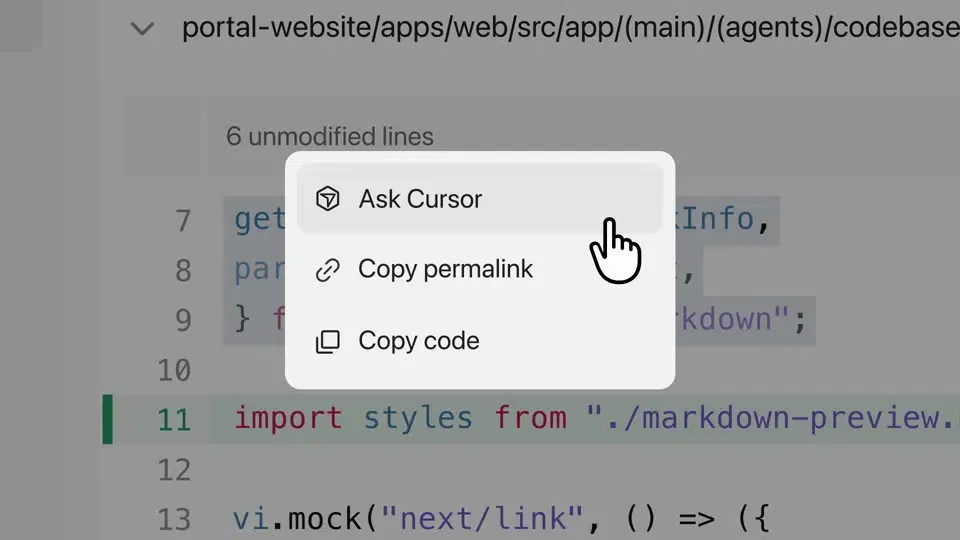
Test Pull Request Workflows: Evaluate the in-editor review experience and “Ask Cursor” capabilities across representative diffs to measure actual review efficiency.
-
Verify CI/CD Connectivity: Run existing build and test suites through supported integration partners to confirm pipeline reliability before altering any production workflows.
Security & Governance Checklist
-
Review Data Handling Terms: Confirm repository retention policies, access control boundaries, and administrative settings across organizational accounts.
-
Validate Export and Exit Paths: Test repository detachment and verify that commit histories, branch structures, and tags can be exported cleanly back to standard remotes.
-
Audit Administrative Permissions: Ensure organization administrators verify default settings and configure repository access according to internal security standards.
Frequently Asked Questions (FAQ)
Is Cursor Origin intended to replace GitHub immediately?
How does GitHub synchronization operate within Cursor Origin?
What factors should engineering teams evaluate before migrating repositories?
Key Takeaways for Engineering Teams
The introduction of editor-integrated code hosting reflects the ongoing evolution of AI-native developer infrastructure. As AI coding agents become standard contributors to modern codebases, development platforms will continue exploring ways to reduce coordination friction between writing, reviewing, and deploying software.
For engineering leaders, the most practical approach is measured evaluation. By utilizing synchronization capabilities, testing non-critical repositories, and verifying governance controls, teams can determine whether integrated workflows deliver meaningful productivity gains while keeping their core repository infrastructure dependable and secure.
Share this article