GenStorAIGE Launches AI90 SSD? This hardware-accelerated memory virtualization scheme has been officially confirmed as GenStorAIGE introduced its unified AI90 architecture at WAIC 2026, enabling high-performance solid-state drives to act directly within the GPU memory pool. As generative artificial intelligence workloads transition from raw compute scaling to memory-constrained real-time inference, data throughput has become the primary infrastructure bottleneck. Traditionally, maintaining large-context model performance required expensive, high-bandwidth memory (HBM) allocations. Today, because engineering teams seek to optimize hardware budgets and reduce token latency under strict operational margins, platforms must transition to efficient, multi-tier storage architectures.
Why GenStorAIGE Launches AI90 SSD: Aligning High-Throughput Pipelines with Hardware Limits
At a Glance
- The AI90 software-hardware unified architecture integrates SSDs directly into the GPU memory pool, offloading KV Cache to large-capacity solid-state drives.
- Multi-tier storage configurations reduce first-token latency by fifty times, bringing the response speed from standard seconds down to sub-second levels.
- Liquid-cooled 52U high-density server racks integrate up to ninety-six AMD Instinct accelerators, boosting physical processing density by fifty percent.
The balance of power in modern data centers is shifting from compute scaling to memory optimization. For several years, the race to build larger large language models focused on scaling the sheer volume of graphics processing units (GPUs). Enterprises and cloud providers invested billions of dollars to acquire massive compute clusters, which was highly logical during the training era. Under those workloads, parallel computing units operated at maximum capacity to update model parameters.
According to GenStorAIGE, AI90 addresses this bottleneck by introducing a multi-tier memory system. During inference, GPU memory is frequently occupied by KV Cache and model weights. As the active context grows, memory bandwidth rather than raw arithmetic throughput becomes the dominant bottleneck. Because standard bus architectures cannot move data fast enough to match standard processor execution speeds, computing cores are starved of data, resulting in extremely high idle rates. These performance bottlenecks are explored in technical industry reports tracking memory-centric hardware design.

The launch of AI90 reflects a broader industry movement toward memory-centric AI infrastructure. This hardware-software co-design demonstrates how the AI90 architecture is emerging as a benchmark for memory-centric AI infrastructure. For infrastructure architects, evaluating the design implications of GenStorAIGE Launches AI90 SSD illustrates a fundamental rule of high-throughput systems: the bottleneck is almost always the transport layer, not the computation node. According to GenStorAIGE, the unified AI90 architecture reduces GPU memory footprint by 39% and improves throughput by more than five times, as officially registered via the WAICA official portal.
How AI90 SSD Reduces First Token Latency: Under-the-Hood Mechanics
At the system architecture layer, standard computer buses act like narrow highways, restricting the flow of high-volume datasets. When an application executes an inference call, the processor must read data from memory, complete the operation, and write the output back. In standard configurations, this process creates severe latency because data must travel across a wide physical distance on the motherboard.
The memory virtualization architecture bypasses these transport-layer bottlenecks by routing the KV Cache directly to PCIe Gen5 solid-state drives. PCIe Gen5 provides substantially higher sequential bandwidth than previous PCIe generations, making SSD-based KV cache offloading practical for inference workloads. This storage virtualization strategy complements broader industry trends such as advanced 3D chip packaging and HBM integration. Hardware vendors are also exploring vertically integrated memory hierarchies that combine SRAM, HBM, DRAM, and high-capacity storage into increasingly compact package designs.
Peer-to-Peer Interconnection and Write Wear Mitigation
When an AI agent performs a task on behalf of a human user, the standard memory pool must handle high-write wear. Because offloading the KV Cache to a standard SSD involves continuous, high-frequency write-cycles, traditional NAND flash media would fail rapidly. The AI90 architecture addresses this by pairing its system with a specialized PT200Z AI SSD, built on pSLC flash media with PCIe Gen5 interfaces to support a daily write endurance rating of up to one hundred drive writes per day (DWPD).
[Traditional GPU Processing]
  GPU Compute Core <──> HBM (Ultra-Fast but Capacity-Limited) <──> Memory Wall Bottleneck


[Unified AI90 Multi-Tier Memory Pool]
  GPU Compute Core <──> DRAM <──> pSLC SSD (KV Cache Offload / PCIe Gen5) ──> 50x Latency Reduction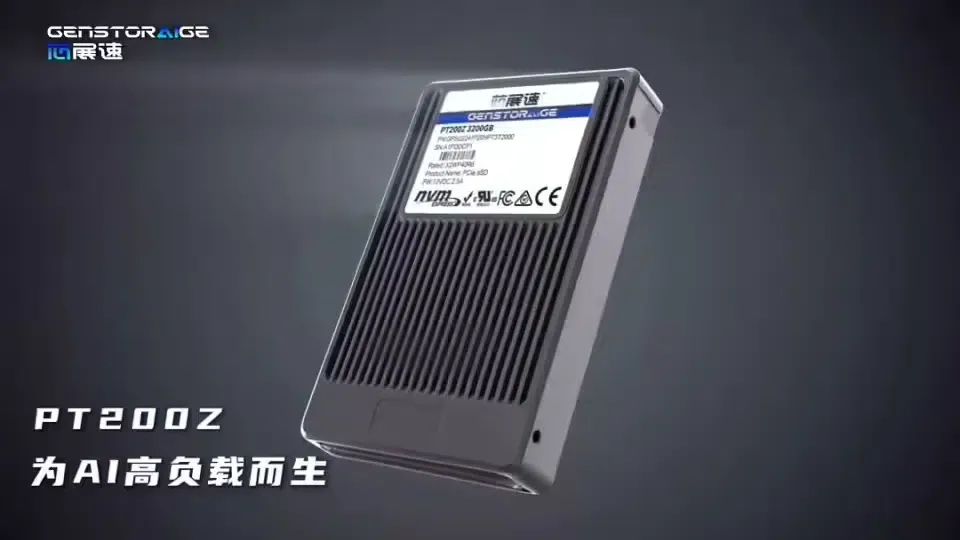
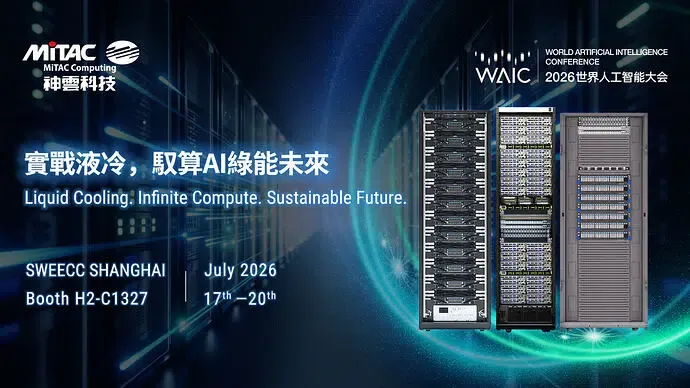
Furthermore, by utilizing intelligent peer-to-peer (P2P) multi-card interconnection technology, the system enables an eight-card graphics processor cluster (such as NVIDIA GeForce RTX 5090) to scale its inference speed by up to 5.8 times. This horizontal expansion allows the cluster to support extremely long contexts exceeding 128K tokens without experiencing latency spikes. In high-density server configurations, this data throughput can be paired with advanced liquid-cooled racks, such as the 52U cabinet, which houses up to ninety-six AMD Instinct accelerators to maximize computing density while maintaining a low Power Usage Effectiveness (PUE) ratio.
Build vs. Buy: Open-Weight Deployment Strategies
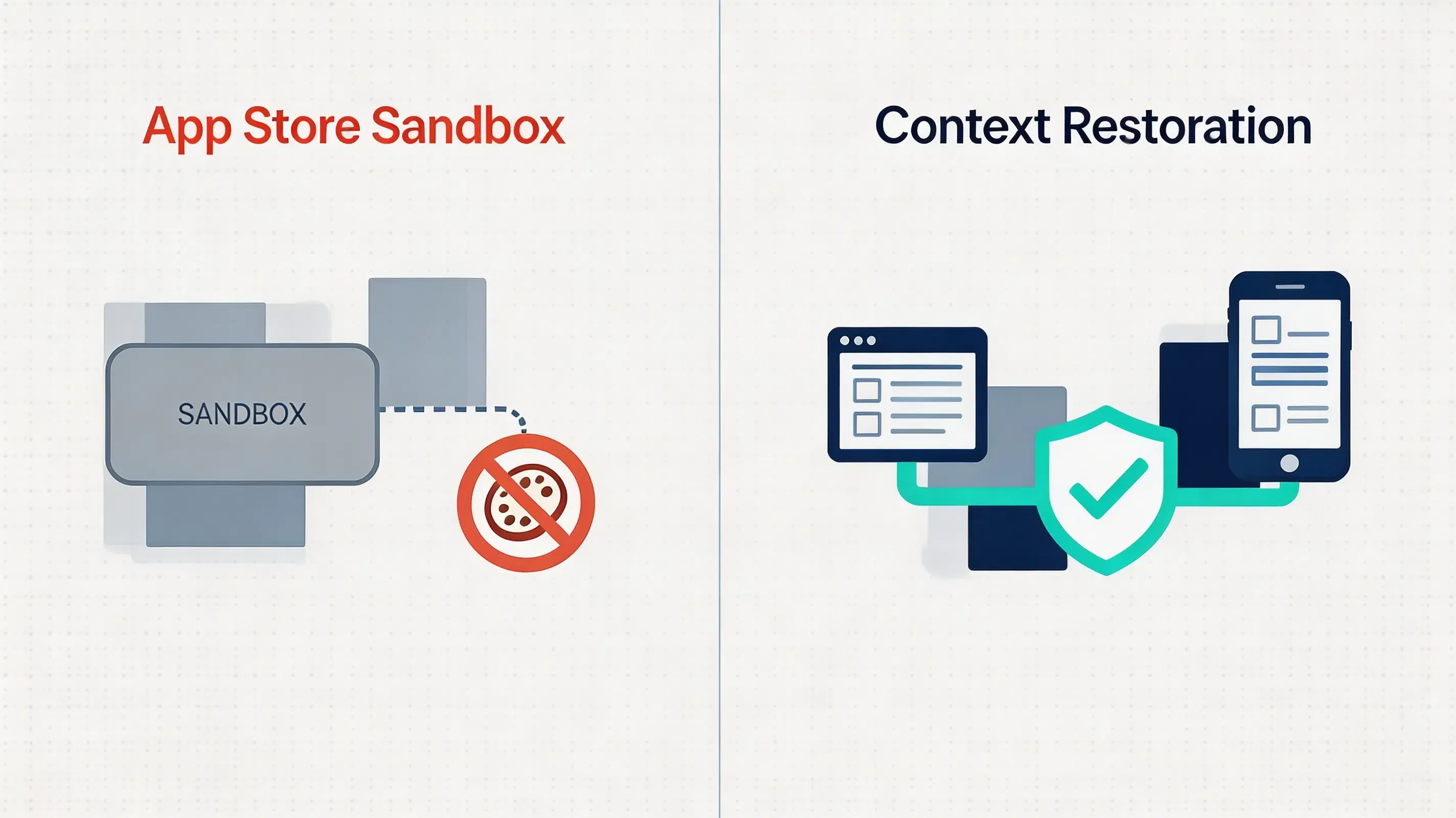
As modern computing environments move away from local, client-side identifiers to comply with strict data privacy regulations, maintaining session state across distributed digital touchpoints has become a primary engineering challenge. For developers, managing stateless context in the GenStorAIGE Launches AI90 SSD era requires architectures that are both compliant with data privacy laws and highly accurate. Organizations can either build their own custom server-side session architecture or adopt mature SDK frameworks. The same build-versus-buy decision also appears in server-side attribution systems, where engineering teams must preserve session continuity without relying on browser storage.
Traditional application-layer session synchronization often requires significant engineering effort to maintain distributed databases and ensure consistency across environments. Managed server-side platforms reduce operational complexity while improving scalability and regulatory compliance. In the underlying architecture, there are clear performance and compliance boundaries between self-built databases and commercial platforms.
The table below compares standard methodologies for managing session state and conversion context:
| Solution | State Persistence | Data Throughput | Best For |
|---|---|---|---|
| In-house Session Database | High (Continuous Sync) | Medium (DB Latency Limits) | Custom enterprise environments with highly specialized storage logic |
| Browser-based Session Tracking | Low (Session Cookies) | Low (No Server Logging) | Basic website tracking with minimal cross-domain conversion requirements |
| Managed Server-side Platform | None (Temporary Server-side Session Tokens) | High (Standardized Sandbox) | High-concurrency mobile app and multi-platform campaign attribution |
Just as high-performance SSD virtualization decouples the GPU from physical memory limits, modern server-side session architectures decouple the user’s conversion context from standard client-side storage, protecting metadata from browser-based redirects and local cookies. Depending on implementation requirements, organizations can build their own custom server-side session architecture or adopt commercial platforms. Examples include OpoInstall and similar server-side measurement platforms, which provide server-side state restoration and parameter pass-through frameworks, mapping session metadata to a server-side session database to maintain session continuity anonymously, without storing persistent client-side identifiers. By maintaining session state in a centralized server-side database rather than browser storage, conversion context remains consistent even when users move across different environments. Engineering teams can evaluate these approaches to balance data protection and measurement consistency.
Integration Checklists: Preparing Your Architecture for Memory-Centric Computing
To secure data pipelines and ensure conversion consistency as platforms transition to memory-centric computing architectures, engineering and product teams must adopt robust state preservation workflows.

Developer Implementation Checklist
- Optimize NVLink and P2P Interconnection Pathways: Configure the server motherboard and bus routing to maximize peer-to-peer memory access speeds during high-concurrency inference runs.
- Implement Asynchronous Memory Swapping: Set up memory managers to proactively offload KV Cache data to SSD storage during idle cycles, minimizing first-token latency.
- Configure pSLC Write Profiles: Align SSD controller settings to match the high-frequency, sequential write patterns of active AI session logs, extending drive lifespan.
Product & Growth Strategy Checklist
- Monitor Compute Infrastructure Budgets: Prioritize multi-tier memory configurations over raw GPU expansions to reduce the total cost of ownership (TCO) in model scaling.
- Audit System PUE and Power Consumption: Choose high-density liquid-cooled server configurations to meet environmental guidelines and decrease operational costs.
- Verify Session Database Scalability: Ensure that server-side parameter restoration databases are capable of handling high-throughput, real-time consumer requests.
By establishing these structured guidelines, development teams can transition their applications to safer, more compliant architectures while maintaining operational continuity.
Frequently Asked Questions (FAQ)
How does offloading KV Cache to high-performance SSDs affect GPU performance?
What makes pSLC flash media necessary for AI database write-loads?
Can AI90 SSD replace HBM?
Key Takeaways for Engineering Teams
As AI workloads shift toward larger context windows and memory-centric inference, traditional client-side architectures struggle to maintain state and context across distributed environments. High-throughput data pipelines require robust, server-side data preservation to coordinate separate session events without relying on vulnerable client-side storage.
To maintain operational consistency under these evolving requirements, engineering teams must prioritize server-side session management, tiered storage architectures, and memory virtualization. Organizations that prepare for these changes early will be better positioned to maintain efficient, secure, and sustainable digital products.
Share this article