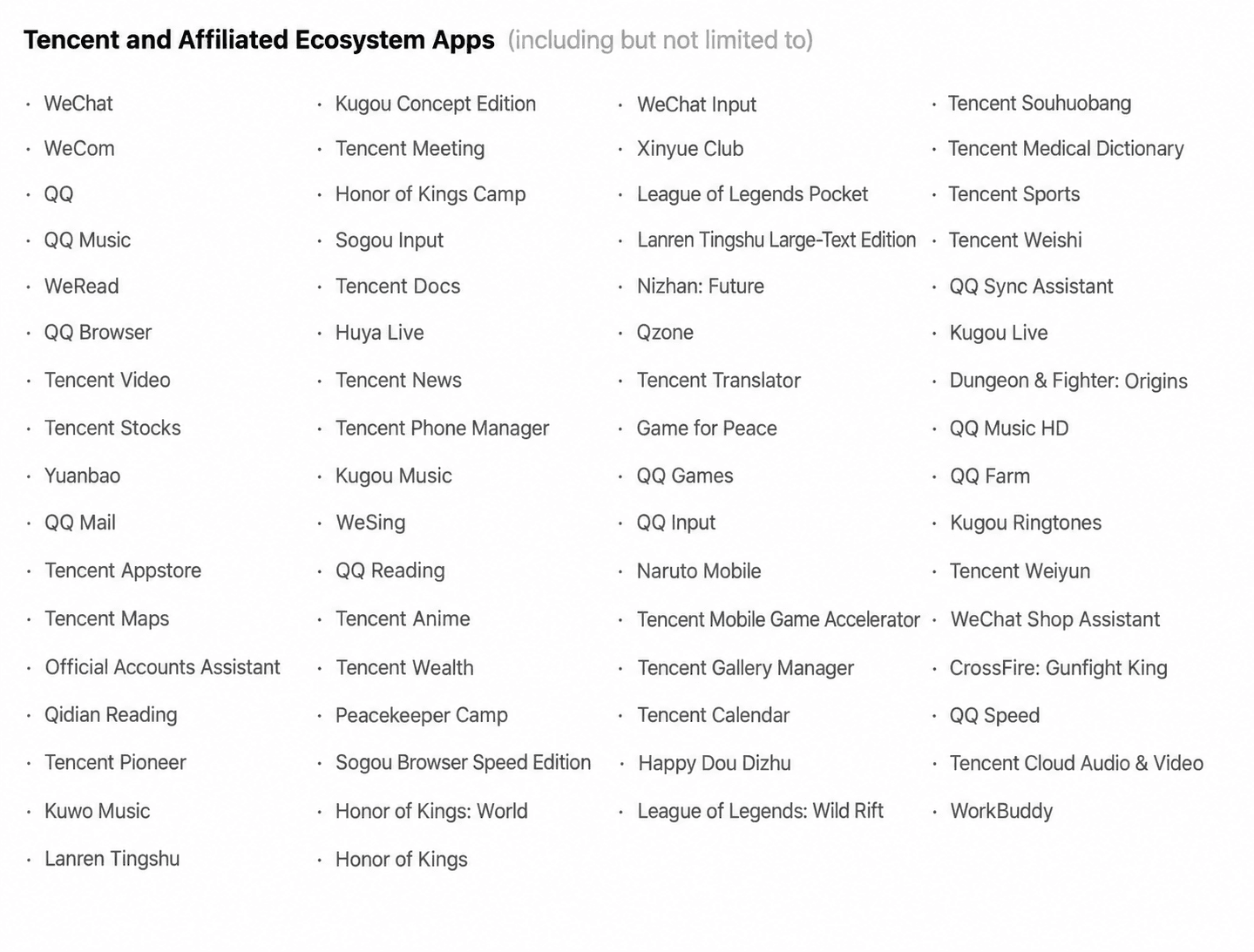
Doubao Enables Screen Automation? ByteDance’s Doubao Phone Assistant concluded the thirty-day public comment period for its Screen Automation Execution Protocol (SAEP) on October 14, 2026, initiating an opt-out by default policy that allows AI agents to automate screen actions across non-refusing third-party Android apps. However, an initial list of 151 applications—quickly updated on October 14 to 153 apps—formally registered their refusal to permit automated graphical operations. Led by 65 applications from Tencent and 23 from Alibaba, these entries account for approximately 57.5 percent of the updated refusal registry. As autonomous artificial intelligence shifts from cloud chat interfaces to device-level execution, this standoff highlights the complex technical and governance challenges of balancing user-directed task automation with application security boundaries, commercial models, and anti-bot protections.
Chronological Timeline & Background Evolution: The SAEP Rollout and Application Opt-Outs
At a Glance
- Doubao Phone Assistant concluded its 30-day SAEP notice period on October 14, 2026, transitioning to a phased rollout of GUI automation for third-party Android apps that have not declared a refusal.
- The refusal registry expanded from an initial 151 applications to 153 on October 14, with Tencent- and Alibaba-affiliated software representing 88 entries, or roughly 57.5 percent of the list.
- The protocol governs graphical automation across supported agent-enabled smartphones, establishing declaration and audit mechanisms for cross-application tasks.
The evolution of on-device artificial intelligence has progressed rapidly from conversational text assistance toward graphical user interface (GUI) automation. Rather than waiting for third-party services to expose bespoke API endpoints, GUI agents interpret on-screen visual elements using computer vision, parsing interactive controls and executing synthetic touch and keyboard inputs. In theory, this fallback capability allows assistants to complete cross-application workflows on behalf of users across legacy or unintegrated applications.
To establish governance for these automated interactions, ByteDance introduced the Screen Automation Execution Protocol (SAEP) as a declaration framework for mobile GUI agents, as detailed in the official Doubao SAEP developer documentation. Under this framework, developers can define whether an external agent may interact with an application at the package level, the specific Activity level, or the functional intent level, establishing boundaries around sensitive interactions such as authentication screens or financial checkouts.
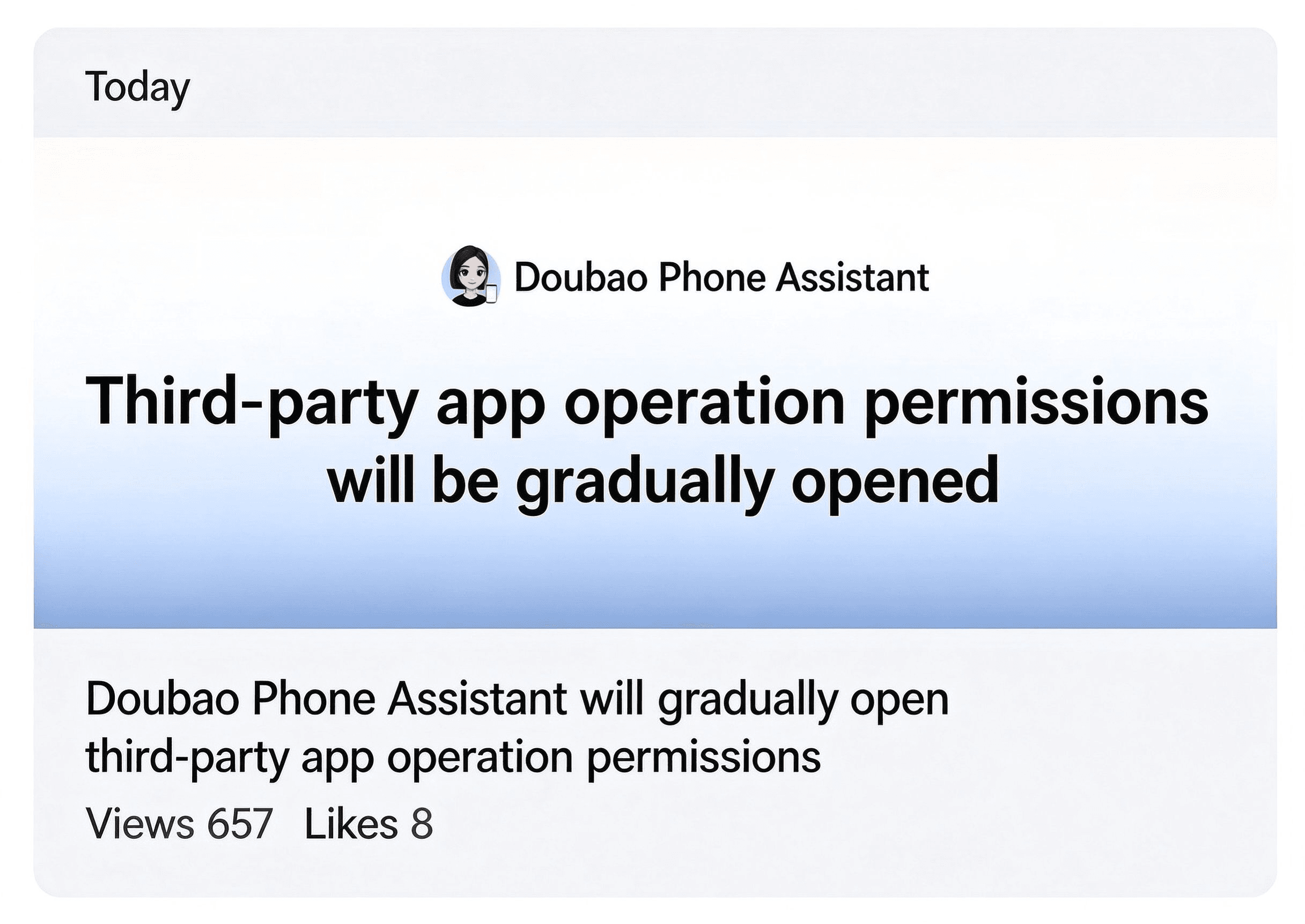
During the thirty-day notice window that began on September 14, 2026, the assistant operated strictly on system utilities and applications that explicitly opted in. When that period ended on October 14, the framework transitioned to an opt-out model: applications that had not formally registered a refusal entered a phased eligibility pipeline for automated GUI execution.
Concurrently, ByteDance published its initial registry of 151 non-participating applications, a figure updated later that day to 153, as reported by Nanfang Daily coverage of the SAEP release. The registry spans prominent consumer services, including WeChat, QQ, Taobao, Alipay, Meituan, Pinduoduo, Xiaohongshu, Didi, and major banking applications like ICBC and China Merchants Bank. Competing AI applications, including Moonshot AI’s Kimi and DeepSeek, also submitted formal opt-out declarations, as outlined in Beijing News reporting on the refusal registry.

This friction reflects technical sensitivities surrounding automated device execution. In modern mobile operating systems, applications that handle sensitive financial transactions or competitive gaming frequently monitor the runtime environment for synthetic touch events, background accessibility hooks, or unverified input drivers. When an external software agent interacts with client interfaces programmatically, client-side security engines may flag the session as an atypical execution environment, necessitating clear protocol-level standards to separate authorized user assistance from unverified automation.
Technical Architecture: SAEP Governance and the Boundaries of GUI Automation
At the operating system layer, the controversy surrounding Doubao Phone Assistant illustrates the engineering trade-offs between structured API integrations and simulated graphical automation.
ByteDance has structured its cross-app automation strategy around two distinct tiers:
- Structured Agent Protocols (MCP & A2A): The preferred integration tier relies on structured communication frameworks, including the Model Context Protocol and Agent-to-Agent standards. In this model, an application voluntarily exposes authenticated endpoints with defined schemas. While structured protocols provide auditable data exchange, their real-world security depends on the implementation of token verification, cryptographic transport, and explicit user consent scopes, with third-party adoption progressing gradually.
- Graphical User Interface (GUI) Fallback: When structured APIs are unavailable, the assistant falls back to GUI automation. This path uses display buffers, optical character recognition (OCR), and programmatic touch injection to navigate interfaces as a human user would.
To prevent unmanaged screen scraping, the SAEP specification defines an explicit policy evaluation pipeline. The diagram below illustrates the conceptual decision-making architecture outlined in the official technical documentation:
[ User-Authorized Agent Task ]
              │
              ▼
[ Agent Identity & Trust Verification ]
              │
              ▼
[ SAEP Policy Evaluation ]
(System Baseline + App Policy + User Authorization + Task Context)
              │
    ┌─────────┼─────────┐
    ▼         ▼         ▼
[ ALLOW ]  [ BLOCK ]  [ CALL_USER ]
    │         │         │
    ▼         ▼         ▼
[ Controlled  [ Operation [ User Takeover
  Execution ]   Blocked ]   Required ]
              │
              ▼
[ Decision & Execution Audit Logging ]
SAEP’s published design establishes a system security baseline that application policies cannot weaken. High-risk activities, including financial transfers, account authentication, content publication, deletion, and permission changes, may require additional user confirmation, user takeover, or execution blocking, depending on the effective policy and supported system version. The completeness of intent-level enforcement must be verified on target builds. Furthermore, the architecture includes structured logging, enabling developers to audit what an agent requested and what actions occurred.
Despite these documented controls, the formal refusal of 153 applications stems from fundamental security and operational concerns:
- Distinction Between UI Automation and Malicious Fraud: Automated touch injection and programmatic UI navigation are distinct from malicious ad click injection or credential stuffing. However, client-side risk engines often flag rapid, non-human touch patterns and accessibility hook usage as anomalous behavior. Financial and gaming applications employ sensitive anti-bot heuristics designed to protect account integrity, making them inherently cautious of third-party automation tools.
- Sensitive Context and Data Protection: Capturing screen buffers for OCR processing introduces potential exposure risks for confidential on-screen text, such as financial balances or private messages, requiring strict verification of on-device compartmentalization.
- Commercial and User Journey Considerations: Applications designed around sponsored discovery feeds, splash displays, and in-app promotions rely on direct human engagement. Industry analysts observe that automated execution paths that bypass intermediate visual touchpoints alter standard engagement metrics and platform commercial models.
Architectural Trade-offs: Comparing Integration and State Preservation Models
The widespread developer opt-outs under the SAEP framework demonstrate that unmanaged graphical automation faces severe practical limits across security-sensitive ecosystems. Mobile software teams must evaluate different architectural patterns to balance user automation with application safety.
The matrix below compares standard industry approaches for enabling cross-application workflows and session continuity:
| Architecture Pattern | Primary Technical Scope | Execution Boundary | Governance & Audit Mechanism |
|---|---|---|---|
| Declared GUI Automation (SAEP) | Visual screen parsing and simulated input fallback | Operates across visible UI elements via system controls | Declarative app policy files and system-level execution audit logs |
| Structured Agent Protocols (MCP / A2A) | Direct functional tool invocation via structured RPC | Constrained to explicitly exposed schema endpoints | Protocol-specific tokens, authorization scopes, and application permissions |
| OS-Level Deep Linking (Universal Links) | Standardized content routing into native mobile apps | Native application sandbox and view hierarchy | Verified domain association files and registered system URL schemes |
| Mobile Attribution & Parameter Recovery | Measuring user acquisition and onboarding continuity | Server-to-server endpoints and mobile SDK handshakes | Platform-supported attribution signals, SDK integration, permitted parameter association, and product-specific fraud checks |
In mobile measurement and user acquisition environments, engineering teams face a separate set of challenges involving campaign attribution, installation signals, and post-install parameter restoration. Mobile attribution platforms such as Adjust, AppsFlyer, and OpoInstall operate within supported mobile marketing and SDK integration pathways rather than controlling third-party GUI automation.
For example, OpoInstall publicly describes mobile attribution, deferred deep linking, campaign parameter passing, and fraud monitoring capabilities. These functions may help publishers evaluate acquisition performance and restore eligible onboarding context on supported Android and iOS paths, subject to available attribution signals, SDK configuration, platform permissions, and applicable privacy requirements. They do not establish whether an interaction was performed by Doubao Phone Assistant, replace SAEP access controls, or independently guarantee that all automated behavior can be distinguished from human activity.
Engineering Checklist: Implementing and Auditing Agent Automation Policies
As on-device AI assistants expand their functional capabilities, mobile development and security teams should proactively audit how their applications interact with automated agent frameworks.
Developer Implementation Checklist
- Review SAEP Specification and System Support: Examine the official SAEP protocol documentation to evaluate compatibility with target Android versions, checking whether the underlying system firmware supports the declared policy endpoints.
- Configure SAEP Declarations via Documented Schemas: Configure SAEP policy declarations using the documented JSON schema referenced from
AndroidManifest.xml. Verify SAEP availability and specific enforcement capabilities on the target supported system version before relying on the policy. - Protect Sensitive Transaction Steps: Ensure that financial checkouts, credential entry fields, and account modification flows enforce appropriate authentication barriers, validating that critical paths trigger user takeover or execution blocks.
- Audit System Takeover Behavior: Test application behavior under simulated agent interactions to verify that the system correctly pauses execution when encountering user-takeover thresholds.
- Inspect Operational Audit Logs: Regularly evaluate decision and execution audit logs where supported, auditing what actions were requested by registered agents and reviewing logging policies against local system builds.
Product & Governance Checklist
- Evaluate User Intent vs. Security Boundaries: Assess whether user-directed automation provides tangible convenience for routine tasks while maintaining strict friction on irreversible actions.
- Assess Commercial Touchpoint Impact: Analyze whether automated task completion affects required advertising impressions, onboarding flows, or legal disclosures.
- Monitor Official Refusal Registries: For teams choosing to opt out, verify that formal refusal declarations are submitted and reflected in platform registry updates within the documented three-business-day window.
Frequently Asked Questions (FAQ)
What is the Screen Automation Execution Protocol (SAEP)?
Why did 153 applications formally decline Doubao's screen automation?
What is the technical difference between MCP and GUI automation?
How does the SAEP opt-out mechanism operate after the public notice period?
Practical Implications & Future Outlook
The industry response to Doubao Phone Assistant’s SAEP rollout highlights a defining challenge for ambient computing: user-directed task automation cannot bypass the security and business architectures of the modern application ecosystem. While multimodal models can technically interpret and interact with arbitrary graphical interfaces, enterprise software requires explicit consent, verifiable identity, and clear liability boundaries before granting execution access.
For mobile developers and security architects, the path forward lies in structured, protocol-level cooperation rather than unmanaged visual simulation. While GUI automation offers an interim fallback for simple utility tasks, durable enterprise integrations will increasingly center on authenticated agent protocols, explicit permission scopes, and robust server-side state preservation. Engineering organizations that establish clear intent declarations today will be best positioned to balance automation convenience with rigorous data protection in the emerging agent economy.
References
-
ByteDance Doubao Platform. Screen Automation Execution Protocol (SAEP) Specification.
-
Nanfang Daily. Over 150 Mobile Apps Opt Out of Doubao Phone Assistant Screen Automation.
-
Beijing News. Doubao AI Phone Publishes App Refusal Registry Following SAEP Review.
-
Anthropic. Model Context Protocol Specification and Architecture.
Share this article