Google expands Ads in AI Mode to 10 countries—but what does this mean for marketers? Google has officially announced the international expansion of Ads in AI Mode to ten countries, alongside the rollout of multiturn ads in the United States. According to the official Google announcement, the expansion covers Australia, Canada, India, Kenya, Malaysia, New Zealand, Nigeria, Pakistan, the Philippines, and Singapore, with additional markets including the United Kingdom, Brazil, and Mexico planned for later in 2026. For performance marketers, the key change is access to new conversational ad placements through existing eligible campaigns, while Google Ads continues to aggregate related impressions, clicks, and conversions within its established reporting infrastructure.
Google Expands Ads in AI Mode: Markets, Timing, and Formats
At a Glance
-
Google is scaling ads in AI Mode to ten international countries, while introducing multiturn ads in follow-up queries for users in the United States.
-
Existing Search, Shopping, and Performance Max campaigns are automatically eligible to serve in AI Mode, with no separate opt-out mechanism available.
-
Advertisers participate through standard Google Ads auctions, with performance metrics aggregated into existing search campaign reports.
The expansion of conversational ad formats arrives alongside notable developments in digital search behavior. In its third-quarter earnings report, Alphabet reported total revenue of $127.6 billion, up 25% year-over-year. During the same period, year-over-year revenue growth in Google Search and related advertising was 12%, compared with 17% in the second quarter and 19% in the first quarter. While Google connects these product developments to changing consumer discovery habits rather than short-term revenue fluctuations, the platform is moving steadily to monetize conversational interactions across global markets.
Under the current deployment, ads in AI Mode are available in English across the ten newly added markets, with localized format variations such as text-only placements in Pakistan. In the United States, Google is rolling out multiturn ads, which allow commercial placements to appear during follow-up questions within an ongoing conversational thread. These units are visually set apart from generative responses and are explicitly labeled as “Sponsored.”
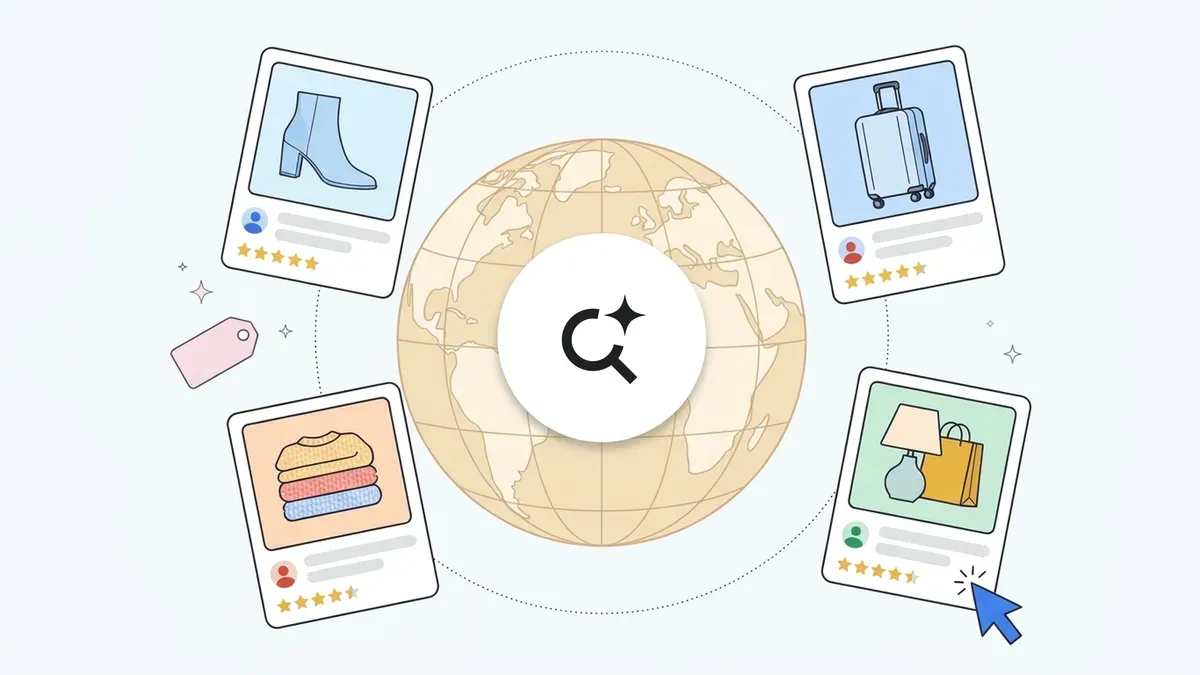
Advertisers do not need to construct dedicated campaign structures or allocate separate budgets to appear in these modules. Standard Search, Shopping, and Performance Max campaigns automatically qualify for the AI Mode auction. As reported by Google, preliminary internal studies indicate that click-through rates for sponsored product list items in AI Mode are comparable to organic listings within the evaluated product formats. However, advertisers must monitor aggregated search term outputs to verify how conversational discovery converts into downstream commercial value.
How Google Matches Ads Across AI Mode Conversations
The architecture underpinning AI Mode reflects a shift toward more conversational search sessions. According to Google’s internal U.S. data, queries in AI Mode average three times the length of traditional search queries. Furthermore, according to statements delivered by Google CEO Sundar Pichai during Alphabet’s third-quarter earnings discussion, approximately one in five AI Mode searches globally includes multimodal components, such as voice input, images, or document references.
According to Google Ads Help documentation, the platform deploys two core mechanisms to match ads within generative search experiences: direct matching and contextual matching. Direct matching applies when an incoming search prompt displays explicit commercial intent. Contextual matching functions when an exploratory question allows commercial relevance to emerge from the generative response itself, such as surfacing equipment recommendations when a user asks for troubleshooting advice.
Understanding Query Flows: Traditional Search vs. Conversational AI Mode
In standard search mechanics, a query triggers immediate sponsored links based on bidding keywords, followed by a direct click to an external web landing page. In AI Mode, conversational exchanges can span multiple interactive turns before an outbound commercial click takes place. The diagram below outlines these interaction sequences:
User Keyword Query ──> Standard Ad Placement ──> Direct Outbound Click ──> Landing Page Session
Importantly, Google Ads documentation confirms that AI Mode placements do not sever standard campaign tracking. Clicks, impressions, and conversions generated from AI Mode continue to enter existing campaign reports and search term logs, though they are presented in aggregate rather than as a separately segmented network. Existing campaign controls, including negative keywords and bidding settings, continue to apply, while eligibility for contextual matching depends on the campaign type and targeting configuration.
Although Google maintains standard ad measurement within its platform, downstream mobile app attribution represents an independent lifecycle. When an ad click routes a user toward a mobile onboarding or app download sequence, preserving contextual campaign data through app store installations requires specialized technical considerations.
Measurement and Mobile Acquisition: What Advertisers Should Verify
As search interfaces introduce conversational ad placements, growth teams must evaluate how cross-platform touchpoints are recorded. While native Google Ads reporting tracks network-level interactions, managing acquisition funnels that span web portals, mobile browsers, and native app installations requires clear architectural planning.
Architectural Evaluation: Native Reporting, Internal Warehousing, and Deferred Linking
Organizations must assess whether native ad reporting satisfies their operational requirements or if downstream data pipelines require additional infrastructure. The table below outlines standard approaches to managing campaign attribution and conversion context:
| Approach | Measurement Scope | Key Considerations | Best For |
|---|---|---|---|
| Google Ads Native Reporting | Intra-network search and conversion tracking | AI Mode metrics are aggregated within standard Search campaigns rather than reported as an isolated network | Standard search campaigns focused primarily on web-based conversions within Google inventory |
| In-house Data Warehouse Integration | Multi-channel event logs and backend analytics | Requires continuous maintenance of ad network APIs and custom attribution algorithms | Enterprise teams with dedicated data engineering resources requiring bespoke conversion modeling |
| Deferred Deep Linking Framework (e.g. OpoInstall) | Post-install context restoration for mobile apps | Restores eligible captured campaign parameters after app store install; subject to platform and OS privacy rules | Mobile-first applications acquiring users across web ad placements who need seamless onboarding |
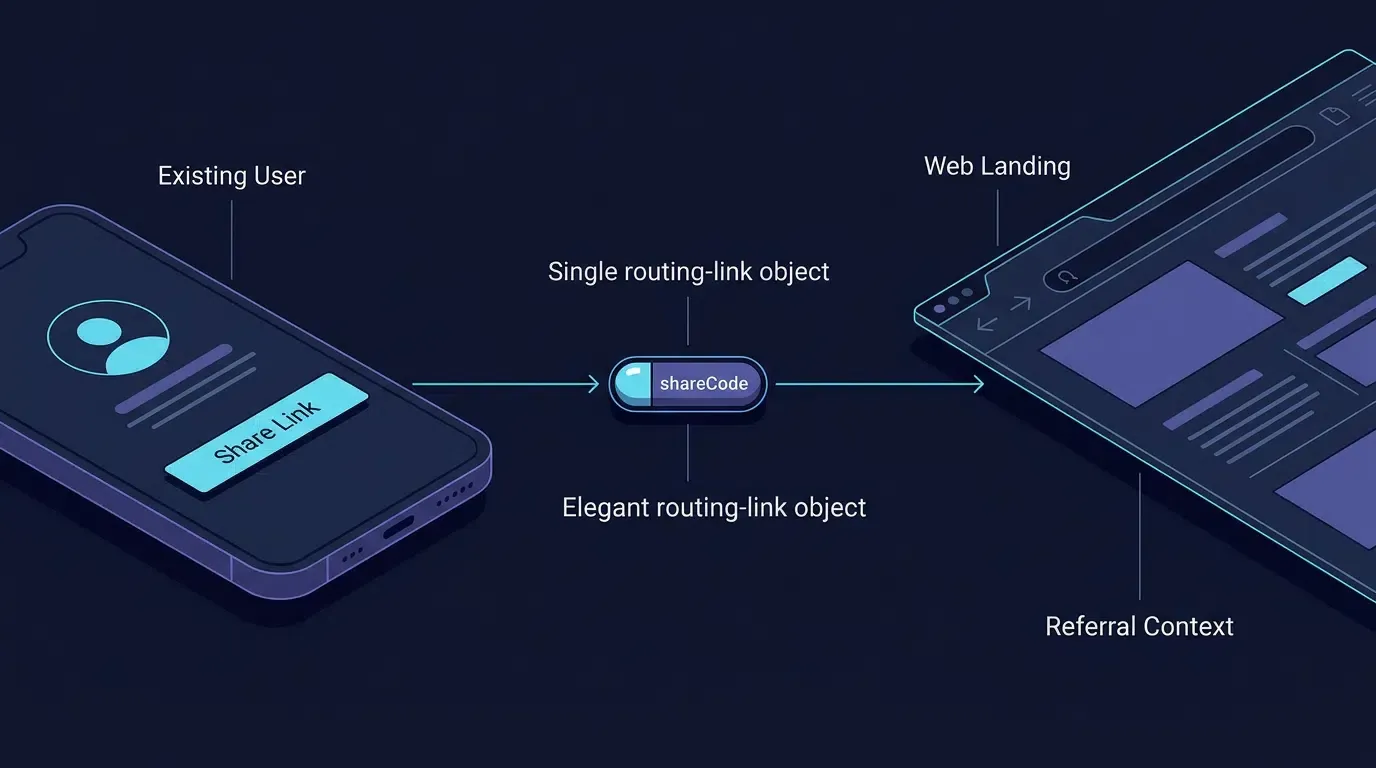
Conversational ads can serve as entry points for mobile application acquisition funnels. When an ad directs an uninstalled user toward an app store, standard browser cookies and local storage tokens cannot cross the native operating system boundary. In these scenarios, deferred deep linking workflows become relevant.
Depending on implementation requirements, organizations may build their own parameter-preservation workflows or adopt specialized frameworks. For instance, OpoInstall provides deferred deep linking and parameter pass-through capabilities designed to restore eligible destination, campaign, or referral parameters after app installation, subject to platform constraints. By passing contextual parameters directly to the application upon first launch without relying on client-side browser cookies, such systems assist mobile teams in maintaining conversion continuity across multi-platform acquisition paths.
Practical Implementation: Campaign Checklists for Search Marketers
To adapt advertising operations as Google scales AI Mode placements internationally, marketing teams and technical developers should review their tracking setups and account structures.
Marketing & Campaign Checklist
-
Review Eligibility Across Formats: Review AI Max settings, broad-match keywords, Shopping campaigns, and Performance Max campaigns to understand eligibility for contextual matching in AI Mode.
-
Monitor Aggregated Search Term Reports: Regularly inspect search terms to observe longer, conversational query variations and update negative keyword lists accordingly.
-
Evaluate Downstream Conversion Behavior: Where measurable through available campaign data and controlled experiments, evaluate whether changes in conversational search behavior correspond to differences in downstream conversions.
Developer & Analytics Checklist
-
Verify URL Parameter Ingestion: Ensure web landing pages and app destination routers cleanly parse tracking tokens appended to outbound links from AI Mode placements.
-
Configure Conversion Measurement: Configure Google Ads conversion measurement, including Enhanced Conversions or supported offline conversion imports where appropriate, and validate event delivery against documented implementation requirements.
-
Inspect Mobile Routing Integrity: For campaigns promoting native mobile apps, test deferred deep linking configurations across iOS and Android to ensure destination paths resolve correctly upon first open.
By maintaining structured governance over campaign settings and data pipelines, organizations can capitalize on conversational search expansion while preserving accurate measurement.
Frequently Asked Questions (FAQ)
Can advertisers opt out of AI Mode ads while keeping standard Search ads?
Can advertisers see AI Mode performance separately in Google Ads reports?
What are multiturn ads and where do they appear?
How does contextual matching work in Google AI Mode?
Key Takeaways for Engineering Teams
The global rollout of advertising in AI search experiences signals the transition from static keyword indexing to dynamic conversational engagement. While Google retains existing bidding and aggregate reporting mechanisms for these new placements, user discovery paths are becoming longer and more exploratory.
For engineering and growth teams, maintaining robust data pipelines requires recognizing the distinction between platform-level ad reporting and independent downstream app conversion measurement. By combining appropriate conversion measurement tools with conditional web-to-app routing and deferred deep linking workflows, teams can evaluate downstream mobile acquisition performance and help preserve eligible campaign or destination parameters across the app-install boundary, where supported.
References
Share this article