Huawei Reaches 100M HarmonyOS Devices? On November 24, 2026, Huawei announced that more than 100 million smartphones, tablets, and PCs were running HarmonyOS 5, 6, or 7. The company also reported more than 460,000 available apps and services and over 12 million registered developers. For engineering and product teams serving mainland China, the milestone makes native HarmonyOS support worth evaluating, including how users open installed apps, reach AppGallery, and recover first-launch context after installation.
Breaking Down the 100M HarmonyOS Devices Milestone and Market Scope
At a Glance
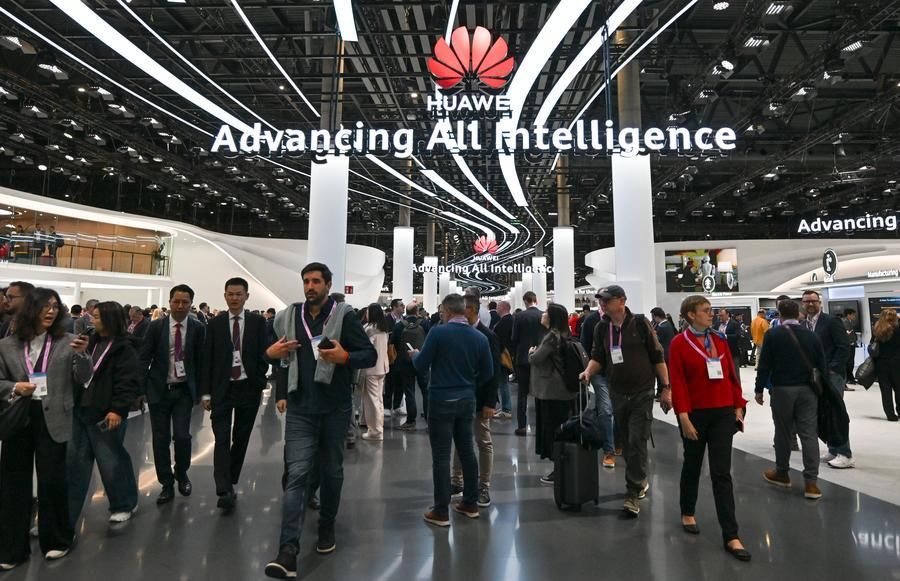
- Huawei announced on November 24, 2026, that more than 100 million smartphones, tablets, and PCs are running Android-free HarmonyOS 5, 6, or 7, roughly 25 months after launching HarmonyOS 5 in October 2024.
- The 100-million tally excludes earlier Android-compatible HarmonyOS versions; in late September, Huawei had reported more than 90 million devices running HarmonyOS 6 or 7 specifically.
- Quarterly smartphone sales share figures from Counterpoint Research show HarmonyOS holding 24% of China smartphone sales in Q2 2026 and 22% in Q3 2026, while holding a 5% global share in both quarters.
The 100-million figure reflects an architectural break rather than Huawei’s historical installed base. Beginning in October 2024 with HarmonyOS 5 (also marketed as HarmonyOS NEXT), Huawei transitioned to an independent kernel, programming language, and AI framework without the Linux kernel or Android Open Source Project code, dropping native Android app compatibility from version 5 onward and taking roughly 25 months from commercial launch to surpass 100 million devices across versions 5, 6, and 7, according to Xinhua.
Comparing prior figures requires noting the difference in covered OS versions. In late September, Huawei’s roundtable summary reported more than 90 million devices running HarmonyOS 6 or 7, whereas the November milestone spans HarmonyOS 5, 6, and 7 combined. Ahead of Huawei’s official disclosure, TechNode cited a November 16 third-party estimate from Qimiao Toolbox—derived from AppGallery data—indicating that HarmonyOS 5 and later had crossed 100 million installations. Huawei’s announcement did not break down the 100-million total individually across phones, tablets, and PCs.
Market-share tracking illustrates the gap between domestic and global sales volume. Based on quarterly smartphone sales share—which measures new device purchases rather than total active devices—Counterpoint Research reported HarmonyOS capturing 24% of China smartphone sales in Q2 2026 (ahead of iOS at 18% and behind Android at 58%) and 22% of Mainland China smartphone sales in Q3 2026. Globally, HarmonyOS held 5% of quarterly smartphone sales across both Q2 and Q3 2026, trailing Android (75% in Q2, 74% in Q3) and iOS (20% in Q2, 21% in Q3). The South China Morning Post also noted Huawei’s long-term intent to gradually expand HarmonyOS internationally.
HarmonyOS 5, 6, and 7 device milestone (phones, tablets, and PCs) alongside total ecosystem apps, services, and registered developers reported on November 24, 2026.
Alongside consumer devices, Global Times and Huawei reported that the open-source OpenHarmony foundation now involves more than 14,000 contributors and over 120 industry distributions across power, water management, and manufacturing, while Xinhua noted Huawei’s group-wide H1 2026 R&D expenditure reached 121.38 billion yuan (about $18.1 billion, up 25.2% year on year).
App Linking, Deferred Routing, and OAID on HarmonyOS 5 and Later
Because HarmonyOS 5, 6, and 7 do not run Android APKs natively, Android intent filters and Google Play Install Referrer calls do not apply to those devices. Instead, Huawei documents dedicated routing and ad measurement primitives for HarmonyOS 5 and later, alongside both ArkTS and Native C++ (NDK) development paths.
Under Huawei’s App Linking Kit overview and AppGallery Connect App Linking documentation, verified HTTPS app links and atomic service links handle installed app launch directly into target screens or fall back to a web page in the system browser by default. When an app is not installed, teams can configure Direct Access to AppGallery or the Deferred Link capability (@kit.AppLinkingKit).
Official documentation sets specific prerequisites and boundary differences across portals:
- API version and device scope: The deferred-link guide documents support from HarmonyOS 5.0.3 (API 15) for phones and tablets, and from 6.1.0 (API 23) for PC/2-in-1 devices. The two documents list different device coverage: the AppGallery Connect Service Introduction lists deferred links for phones and tablets only, whereas the HarmonyOS guide includes PC/2-in-1 devices from API 23. Basic app links cover phones, tablets, PC/2-in-1 devices, and TVs.
- Direct Access to AppGallery prerequisites: Direct store redirection is documented for phones, tablets, and PC/2-in-1 devices starting from API 15, requiring the app to be released on AppGallery with App Linking domain verification completed.
- Domain verification and one-time cache: Deferred links cache only domain-verified links for up to 10 minutes (maximum 50 links, evicting the oldest entry if exceeded). Calling
popDeferredLink()on first launch—advised after the user accepts the privacy agreement—performs a one-time read: once retrieved, the system deletes the link from cache and returns empty on subsequent calls. - Regional, signing, and simulator boundaries: App Linking for HarmonyOS 5 or later is documented as available only in the Chinese mainland and requires manual signing. The AppGallery Connect Service Introduction states that the DevEco Studio Emulator is unavailable, whereas the HarmonyOS App Linking Kit overview lists emulator support alongside real devices. Teams should validate AppGallery redirection and first-launch recovery on target physical devices and OS versions.
Conditional HarmonyOS deferred-link workflow for verified links when the app is not installed (API 15+ phone/tablet, API 23+ PC/2-in-1).
Ad identifier access relies on a separate permission-gated interface. Through the HarmonyOS OAID service (@ohos.identifier.oaid), apps can request a UUID-formatted OAID (Open Anonymous Device Identifier) shared across apps on phones, tablets, and PC/2-in-1 devices (subject to Ads service version prerequisites), with TV support added starting at API 20. Under Huawei’s guide, developers must first obtain explicit user authorization before calling OAID when ohos.permission.APP_TRACKING_CONSENT is permitted. If the user declines consent, the app skips OAID collection; if app tracking access is denied or unconfigured, the API returns an all-zeros string (00000000-0000-0000-0000-000000000000). OAID also resets upon manual reset or factory restore and by itself is not sufficient to complete ad measurement.
Authorization paths for HarmonyOS OAID retrieval separating user refusal from denied or unconfigured app permissions.
Multi-OS Routing Comparison: Android, iOS, and HarmonyOS 5+
Engineering teams maintaining apps across Android, iOS, and HarmonyOS 5+ must separate app launch, fallback routing, first-launch context recovery, ad measurement, and advertising identifiers across five distinct layers.
Illustrative Comparison — Not an Official Platform Topology
| Routing & Measurement Layer | Android (Google Play Ecosystem) | Apple iOS (App Store Ecosystem) | Huawei HarmonyOS 5, 6, and 7 |
|---|---|---|---|
| App Launch (Installed) | Android App Links (assetlinks.json) |
iOS Universal Links (apple-app-site-association) |
HarmonyOS App Linking Kit (domain verification in AppGallery Connect) |
| Not-Installed Fallback | Opens target HTTPS URL in browser by default; landing page can guide users to Google Play | Opens target HTTPS URL in default browser; webpage may guide to App Store | Opens target HTTPS URL in browser or optional Direct Access to AppGallery (API 15+ phone, tablet, PC/2-in-1) |
| First-Launch Context Recovery | Google Play Install Referrer returns referral data for eligible Play installs; data is available for 90 days | Use an explicit user handoff, such as reopening the link after installation, or transfer context through a configured App Clip shared container (Apple prohibits device fingerprinting) | App Linking Deferred Link (API 15+ phone/tablet, API 23+ PC/2-in-1; up to 10-min / 50-link cache; one-time read) |
| Ad Measurement | Google Play Install Referrer as an install attribution signal (Google has deprecated Privacy Sandbox on Android, with Android Attribution Reporting scheduled for phase-out) | AdAttributionKit / SKAdNetwork (privacy-preserving postbacks) | Authorized OAID can serve as an attribution signal, while App Linking campaign parameters provide link context |
| Advertising Identifier | GAID (user-resettable and opt-out controlled) | IDFA (gated by App Tracking Transparency consent) | UUID-formatted OAID (ohos.permission.APP_TRACKING_CONSENT; skip on refusal, all-zeros when denied or unconfigured) |
How to Plan Routing Across Three Platforms
Planning web-to-app and campaign routing across Android, iOS, and HarmonyOS 5+ requires designing around each operating system’s verified mechanics:
- Separate installed app launch from first-launch context recovery: Android App Links, iOS Universal Links, and HarmonyOS App Linking all rely on verified HTTPS domains when an app is already installed, yet they diverge once an app must be downloaded first. Web landing pages should maintain standalone functionality when post-install context is unavailable.
- Keep iOS first-launch onboarding distinct from ad measurement: Under Apple’s User Privacy and Data Use rules, developers may not derive device or browser signals to fingerprint and uniquely identify a device or user. Use an explicit user handoff—such as reopening the link after installation—or transfer context through a configured App Clip shared container for onboarding, while using AdAttributionKit or SKAdNetwork for ad measurement.
- Scope HarmonyOS 5+ routing to mainland China and documented APIs: Because HarmonyOS App Linking Kit is documented for the Chinese mainland and enforces a 10-minute, one-time-read deferred cache, teams targeting HarmonyOS 5+ should use native App Linking for app launch and first-launch context while ensuring clean onboarding fallback whenever
popDeferredLink()expires or returns empty.
Implementation Checklist for Multi-OS App Teams
As mobile teams evaluate native HarmonyOS 5+ support alongside Android and iOS, engineering leads can structure readiness checks around five operational tasks:
- Distinguish Legacy Android Builds from HarmonyOS 5+ Targets: Audit analytics telemetry to separate older Android-compatible HarmonyOS devices from Android-free HarmonyOS 5, 6, and 7 hardware before scoping native HarmonyOS packages (ArkTS or Native C++ NDK), SDKs, and AppGallery release pipelines.
- Verify Region, Prerequisites, and API Level for App Linking: Confirm that campaigns using HarmonyOS App Linking target the Chinese mainland, meet Direct Access to AppGallery prerequisites (API 15+, released app on AppGallery, verified domain), check deferred-link minimums (
5.0.3 / API 15phone/tablet;6.1.0 / API 23PC/2-in-1), and callpopDeferredLink()only after first-launch privacy consent. - Validate End-to-End Flows on Target Hardware: Given documented differences between AppGallery Connect and HarmonyOS kit guides regarding simulator support—and the manual-signing requirement—validate AppGallery redirection and first-launch context recovery on target physical devices and OS versions.
- Handle Missing Deferred Context Without Breaking App Launch: Route users safely to the standard home or onboarding screen when
popDeferredLink()expires or returns empty, without discarding valid installed-app deep links. - Separate User OAID Refusal from Unavailable Identifiers: Skip OAID collection when a user declines tracking consent and continue normal onboarding; if the API returns an all-zeros string because app tracking permission is denied or unconfigured, treat the identifier as unavailable in ad measurement without disrupting user navigation.
Frequently Asked Questions (FAQ)
Does the 100 million HarmonyOS count include older Android-compatible Huawei phones?
How do deep linking and deferred linking work on HarmonyOS 5 and later?
Can developers use Huawei App Linking for HarmonyOS apps outside the Chinese mainland?
Key Takeaways for Engineering Teams
Crossing 100 million devices across HarmonyOS 5, 6, and 7 establishes a substantial domestic software ecosystem operating independently of Android and iOS. Combined with more than 460,000 apps and services alongside a 22% to 24% quarterly smartphone sales share in China during mid-to-late 2026, native HarmonyOS support has become a concrete engineering decision for teams serving users in mainland China.
Configure verified domains for each platform, test app launch and post-install context recovery on target devices, and keep onboarding functional when link context or ad identifiers are unavailable. Apply Huawei’s OAID authorization requirements and Apple’s App Tracking Transparency rules where applicable.
References
-
Huawei: Together, Toward the Future: HarmonyOS Terminal Devices Exceed 100 Million (Nov. 24, 2026)
-
Xinhua: Huawei’s homegrown HarmonyOS tops 100 million devices (Nov. 24, 2026)
-
Huawei Roundtable Transcript: Continuous Innovation, Securing Our Competitive Edge Through Technological Breakthroughs (Sept. 29, 2026)
-
South China Morning Post: Huawei’s home-grown HarmonyOS passes 100 million device mark in ‘landmark moment’ (Nov. 25, 2026)
-
Global Times: Huawei’s HarmonyOS powers more than 100m devices (Nov. 24, 2026)
-
TechNode: Huawei’s native HarmonyOS tops 100 million installations, third-party tracker estimates (Nov. 16, 2026)
-
Counterpoint Research: Global Smartphone OS Market Share (Nov. 25, 2026)
-
HUAWEI Developer: App Linking Kit Introduction
-
HUAWEI Developer: AppGallery Connect App Linking Service Introduction
-
HUAWEI Developer: Direct Access to AppGallery
-
HUAWEI Developer: Redirecting to an App Details Page Using the Deferred Link Capability
-
HUAWEI Developer: Open Anonymous Device Identifier (OAID) Service Guide
-
HUAWEI Developer: HarmonyOS NDK Development Overview
-
Apple Developer Documentation: Allowing apps and websites to link to your content
-
Apple Developer Documentation: Sharing data between your App Clip and your full app
-
Apple Developer Documentation: AdAttributionKit
-
Apple Developer Documentation: App Tracking Transparency
-
Apple Developer: User Privacy and Data Use
-
Android Developers: Android App Links
-
Android Developers: Google Play Install Referrer Library
-
Google Developers: Privacy Sandbox on Android
-
Google Privacy Sandbox: Privacy Sandbox Feature Status
Share this article