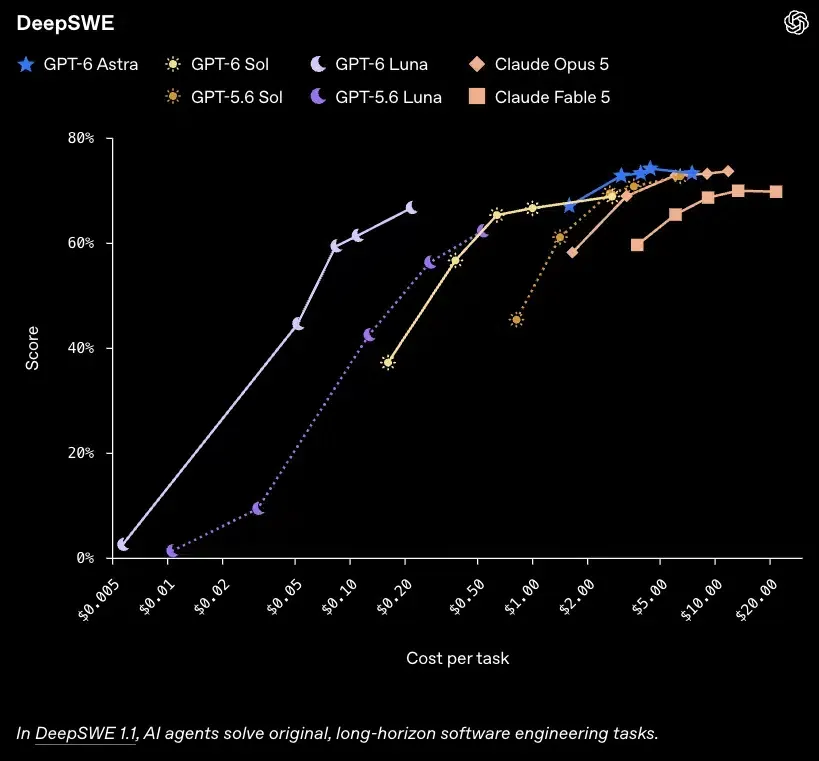
OpenAI halves Sol API costs? OpenAI officially announced the commercial availability of GPT-6 Sol and GPT-6 Luna on September 22, 2026, lowering API token rates by 50% or more compared with earlier GPT-5.6 promotional pricing on standard endpoints. For Standard processing of prompts with up to 272K input tokens, GPT-6 Sol is priced at $2.00 per million input tokens and $10.00 per million output tokens, while the smaller GPT-6 Luna model lands at $0.10 input and $0.50 output per million tokens. When OpenAI Halves Sol API Costs across standard developer tiers, structural compute deflation shifts the operational constraints of generative software. Lower unit pricing makes recursive agentic loops, background batch extraction, and autonomous multi-step workers economically viable at scale. For systems architects, reliability engineers, and backend developers, however, reduced financial friction exposes downstream scalability challenges, moving engineering focus from token budgets to rate-limit boundaries, concurrency limits, telemetry pipelines, and backpressure bottlenecks.
The Operational Problem & Financial Bottlenecks
Throughout the early phases of production enterprise LLM adoption, nominal token fees served as an informal architectural governor. High inference costs forced development teams to treat model invocations as discrete, user-initiated transactions. Applications relied heavily on human-in-the-loop approvals, bounded conversational history, and strictly throttled scheduled workers to ensure monthly provider bills remained predictable. The introduction of permanent mid-tier model reductions challenges these historical trade-offs, moving systems engineering concerns from model pricing to backend infrastructure resilience.
At a Glance
- Baseline Price Reduction: On September 22, 2026, OpenAI introduced GPT-6 Sol at $2.00 input / $10.00 output and GPT-6 Luna at $0.10 input / $0.50 output per million tokens for Standard processing on prompts up to 272K tokens, representing a 50% or greater nominal reduction compared with GPT-5.6 promotional API pricing.
- Task-Level Benchmark Economics: On AutomationBench 1.0.6, OpenAI reports that GPT-6 Sol configured at xhigh reasoning effort achieved a 33.2% workflow score at an average reported cost of $0.27 per attempted task, shifting developer evaluation from raw token pricing to cost per attempted unit of work.
- Prompt Caching Dynamics: The platform delivers an automated 90% discount on cached input-token reads (billed at 0.1× the base input-token rate), while initial cache writes are billed at 1.25× the uncached input-token rate, requiring careful prefix normalization to maintain high cache hit rates across dynamic multi-step runs.
As detailed across the official OpenAI Developer API Pricing Reference and the OpenAI Community Announcement, these pricing structures stem from continuous improvements across low-level inference pipelines and KV caching systems. However, when the cost of executing automated task sequences falls significantly, engineering teams expand the scope of their background tasks. The economic floor that previously discouraged background workers from running continuous polling, automated code review passes, or multi-stage document extraction pipelines has lowered.

Across the market, multiple foundation-model providers have lowered or restructured API prices across developer tiers. Anthropic released Claude Opus 5.5 alongside updated specifications on the Anthropic Claude Opus 5.5 Platform Specification, quoting $4 per million input tokens, $0.20 per million cached input reads, and $20 per million output tokens, highlighting reduced token consumption on code refactoring benchmarks. Concurrently, Google maintains its promotional introductory pricing for Gemini 3.8 Flash documented on Google AI for Developers, and open-weight releases such as Xiaomi’s MiMo-V2.6-Pro provide self-hosting teams with aggressive token-cost options under permissive software licenses.

When model costs drop, development behaviors change. Engineering teams deploy deeper recursive loops, inject comprehensive enterprise documentation into system prompts, and configure automated retry logic across complex task graphs. What begins as cost relief at the API layer can shift latency and traffic spikes to internal services. If an orchestration worker issues dozens of sequential or parallel model calls for a single user transaction, internal database pools, auxiliary storage clusters, telemetry pipelines, and rate limiters must absorb the resulting load.
Systemic Root Causes & Non-Visual Request Chains
When client applications transition from interactive chat interfaces to non-visual background automation, upstream request profiles change dramatically. A single business event can trigger an autonomous pipeline that inspects schemas, evaluates environment variables, calls external tools, and verifies outputs across multiple continuous passes.
+-----------------------------------------------------------------------------------------+
|                  RECURSIVE AGENT EXECUTION & BACKPRESSURE BOTTLENECK                    |
+-----------------------------------------------------------------------------------------+
|                                                                                         |
|  [ User Web / App Trigger ]                                                             |
|         |                                                                               |
|         v                                                                               |
|  [ Ingestion API Gateway ]                                                              |
|         |                                                                               |
|         +---> Spawns Autonomous Worker Instance                                         |
|         |                                                                               |
|         v                                                                               |
|  [ Autonomous Orchestration Loop (GPT-6 Sol / Luna) ]                                   |
|         |                                                                               |
|         +--- Step 1: Query Context (Cache Read) -----------------+                      |
|         |                                                        |                      |
|         +--- Step 2: Tool Execution (Uncached Call)              |                      |
|         |                                                        |                      |
|         +--- Step 3: Self-Correction Validation                  |                      |
|         |                                                        v                      |
|         +--- Step 4: Recursive Execution Fork ----> [ Bursting Internal RPCs ]          |
|                                                                  |                      |
|  [ Downstream System Bottlenecks ]                               |                      |
|         |                                                        |                      |
|         +--- Internal Microservices <-- (Connection Starvation) -+                      |
|         +--- PostgreSQL / Cache Stores <-- (Connection Pool Saturation)                 |
|         +--- Distributed Telemetry Stream <-- (Lossy Drop Buffer Applied)               |
|         +--- Audit Compliance Store <-- (Durable / Replayable Queue Lag)                |
|         +--- Upstream Provider Thresholds <-- (HTTP 429 Rate Limit Exhaustion)          |
|                                                                                         |
+-----------------------------------------------------------------------------------------+
Recursive Agent Execution and Concurrency Multiplying
In traditional interactive web systems, request volume mirrors human interaction rhythms. Each HTTP thread typically maps to an explicit user interaction, with lower overall fan-out and pacing bounded by human think-time. The client runtime sends a payload, awaits a response, and pauses before initiating subsequent interactions.
Conceptual Request Profile Comparison: Interactive vs. Agentic
| Architectural Metric | Interactive User Flow | Autonomous Agent Loop |
|---|---|---|
| Concurrency Model | Human-paced request fan-out is typically lower | 1 Ingestion Event = N Chained Child Calls |
| Execution Timing | Paced by user response and think-time | Proceeds automatically until policy limits intervene |
| Context Invalidation | Fresh payloads per session | Relies heavily on cached context |
| Error Handling | User retry on error | Automated programmatic retries |
| System Bottlenecks | Frontend gateway bandwidth | Internal database pool limits |
| Failure Cascades | Isolated to single session | Can trigger queue saturation |
When systems integrate autonomous agents, this pacing uncouples. A single triggered event can generate an uninterrupted sequence of automated calls. If an agent encounters a transient error or malformed tool output, naive retry logic can generate rapid bursts of requests against backend services. Because reduced token costs make longer execution runs affordable, automated workflows can scale background request volume significantly, even with a flat active user base.

Prompt Cache Mechanics: KV Reuse, Write Overheads, and Prefix Stability
OpenAI paired the Sol and Luna releases with optimizations across its prompt caching subsystem. As documented in the OpenAI Prompt Caching Specification, input tokens matching a cached prefix receive a 90% discount on read pricing. Prompt caching primarily reduces model-side recomputation rather than functioning as a general-purpose network-payload compression mechanism. In standard stateless interactions, the client application transmits the request context, and the provider skips recomputing the KV tensors for the matching prefix, significantly reducing time-to-first-token latency and input billing.
Crucially, writing an initial prefix into the server-side cache is billed at 1.25× the uncached input-token rate. Maximizing cost efficiency requires maintaining prefix stability across multiple queries.
Selected Public API List Prices — Not Directly Comparable Across Providers
| Model Identifier | Input ($/1M Tok) | Output ($/1M Tok) | Cache Read Policy |
|---|---|---|---|
| OpenAI GPT-6 Luna (Std) | $0.10 | $0.50 | 90% discount (0.10×) |
| OpenAI GPT-6 Sol (Std) | $2.00 | $10.00 | 90% discount (0.10×) |
| OpenAI GPT-6 Astra (Std) | $10.00 | $50.00 | Dynamic Tiered Pricing |
| Anthropic Opus 5.5 | $4.00 | $20.00 | $0.20/1M Read (0.05×) |
| Anthropic Sonnet 5 | $2.00 | $10.00 | Up to 90% on cache |
| Google Gemini 3.8 Flash | $0.75 (Intro) | $3.75 (Intro) | $0.075/1M Cached Read |
| Xiaomi MiMo-V2.6-Pro | $0.435 | $0.87 | $0.0036/1M Cached Read |
Note: Standard rates apply to short-context tiers (prompts up to 272K input tokens for OpenAI). Providers enforce varying cache-write overheads, context limits, and time-bound promotional terms.
Prefix preservation requires careful handling of API configuration options. In OpenAI’s API architecture, changing reasoning effort parameters directly or altering tool definition arrays will change the rendered prompt prefix and invalidate earlier cached states.
To preserve cached context during multi-turn sessions, developers must keep tool schemas and baseline instructions in a consistent order. If runtime adjustments are needed, developers should update parameters via structured session controls (such as configuration_update) or toggle tool execution using tool_choice or allowed_tools rather than modifying the tool definitions array directly.
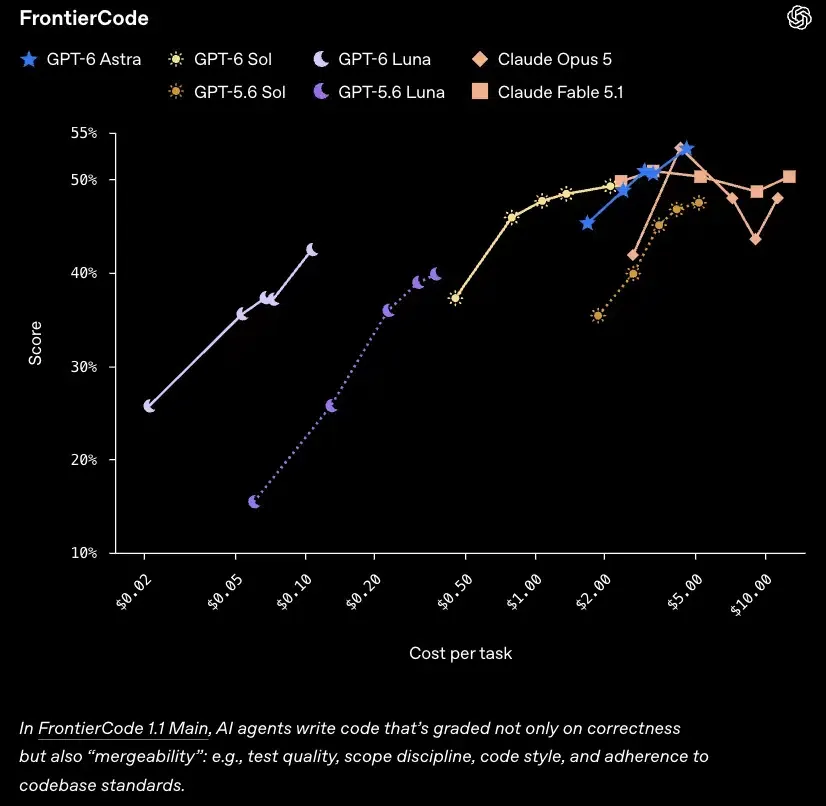
When cache misses occur, the upstream provider reprocesses the input sequence without the 90% read discount. At scale, this can increase inference latency and timeout pressure. For multi-step task execution, cost evaluation moves from simple token multipliers to completed task expenditures, as seen in the VentureBeat Reporting on GPT-6 Sol and Luna Benchmarks, where GPT-6 Sol achieved a 33.2% score on AutomationBench 1.0.6 at an average of $0.27 per attempted task.
Telemetry Architecture: Decoupling Operational Metrics from Compliance Audits
A surge in automated LLM requests places significant strain on backend observability and compliance pipelines. High-concurrency agent workflows require clear architectural separation between operational telemetry and legal audit trails.
Enterprise compliance policies often require recording session metadata, tool execution proofs, and transaction records. Treating operational telemetry and compliance data identically creates serious engineering trade-offs:
- Compliance and Security Audit Channels: Must provide durable, replayable delivery with explicit retry, persistence, and failure handling into write-once, access-controlled audit stores. Payloads should capture structured metadata, caller identity, and cryptographic state while systematically sanitizing personally identifiable information (PII) and secret keys. Under high load, these pipelines must apply backpressure or queue tasks durably rather than discarding records.
- Operational Telemetry Channels: Track performance metrics such as token counts, prompt cache hit ratios, and upstream response latencies. Because these traces are used for real-time monitoring and debugging, they can be processed through bounded, lossy drop buffers. If downstream collectors slow down, the application can safely shed excess operational telemetry to preserve core service availability.
When external providers return HTTP 429 rate-limit errors, poorly configured retry policies can cause severe operational issues. Immediate retries or synchronized exponential backoff routines without randomized jitter create retry waves that can cascade through intermediate microservices, consuming thread pools and database connections.
Solution Comparison: Build vs. Buy Trade-offs
Managing the operational load resulting from lower inference costs requires organizations to evaluate their AI gateway and proxy architectures. Teams must decide whether to develop custom routing, rate-limiting, and telemetry proxies in-house or deploy specialized third-party infrastructure.
+-----------------------------------------------------------------------------------------+
|                 SYSTEM RESILIENCY PIPELINE WITH DECOUPLED TELEMETRY                     |
+-----------------------------------------------------------------------------------------+
|                                                                                         |
|  [ Inbound Application Requests ]                                                       |
|         |                                                                               |
|         v                                                                               |
|  [ Sliding-Window Rate Limiter ] <--- Local In-Memory or Distributed Cache              |
|         |                                                                               |
|         +---> Rejects / Delays Excess Concurrency (HTTP 429 Protection)                 |
|         |                                                                               |
|         v                                                                               |
|  [ Prompt Normalization & Cache Alignment Engine ]                                      |
|         |                                                                               |
|         +---> Pins Static System Prompts & Tool Definitions to Base Prefix              |
|         +---> Uses Structured Controls to Modify Session Parameters                     |
|         |                                                                               |
|         v                                                                               |
|  [ Upstream Provider Dispatch (OpenAI / Anthropic / Local API) ]                         |
|         |                                                                               |
|         +---------------------------------------+---------------------------------------+
|         |                                       |                                       |
|         v (Synchronous Fast Path)               |                                       |
|  [ Client Response Assembly ]                   |                                       |
|         |                                       v (Asynchronous Dual Path)              |
|         v                               +-----------------------------------------------+
|  [ Return Payload to App ]              |                                               |
|                                         v (Lossy Ring Buffer)   v (Durable Outbox)      |
|                                    [ Operational Metrics ]  [ Compliance Audit Store ]  |
|                                    (Drops on Congestion)    (Durable / Replayable)      |
|                                                                                         |
+-----------------------------------------------------------------------------------------+
Custom In-House Resiliency Pipelines
Developing custom infrastructure gives engineering teams complete control over networking policies, data sanitization, and routing strategies. Organizations can build edge proxies tailored to their exact internal microservice topologies.
// Reference implementation: Synchronized Token Bucket with fractional remainder and bounded saturation
package com.example.ai.resilience;

import java.math.BigInteger;
import java.time.Duration;

public final class TokenBucketLimiter {
    private final long maxTokenCapacity;
    private final long refillPeriodNanos;
    private long availableTokens;
    private long lastRefillNanos;
    // Scaled remainder numerator in the range [0, refillPeriodNanos)
    private long scaledRemainder;

    public TokenBucketLimiter(long maxTokens, Duration refillPeriod) {
        if (maxTokens <= 0 || refillPeriod.isZero() || refillPeriod.isNegative()) {
            throw new IllegalArgumentException("Invalid boundary configuration for TokenBucketLimiter.");
        }
        this.maxTokenCapacity = maxTokens;
        this.refillPeriodNanos = refillPeriod.toNanos();
        this.availableTokens = maxTokens;
        this.lastRefillNanos = System.nanoTime();
        this.scaledRemainder = 0L;
    }

    public synchronized boolean tryAcquire(long requestedUnits) {
        if (requestedUnits <= 0) {
            return false;
        }
        refillTokens();
        if (requestedUnits > availableTokens) {
            return false;
        }
        availableTokens -= requestedUnits;
        return true;
    }

    private void refillTokens() {
        long nowNanos = System.nanoTime();
        long elapsedNanos = nowNanos - lastRefillNanos;

        if (elapsedNanos <= 0) {
            return;
        }

        // Advance baseline timestamp monotonically
        this.lastRefillNanos = nowNanos;

        // If bucket is already full, discard unconsumed fractional credits to prevent timing drift
        if (this.availableTokens >= this.maxTokenCapacity) {
            this.scaledRemainder = 0L;
            return;
        }

        long wholePeriods = elapsedNanos / refillPeriodNanos;
        long remElapsedNanos = elapsedNanos % refillPeriodNanos;

        // Fast-path: if at least one complete period has elapsed, the bucket fully replenishes to capacity.
        // This eliminates the multiplication overflow surface (wholePeriods * maxTokenCapacity).
        if (wholePeriods > 0) {
            this.availableTokens = maxTokenCapacity;
            this.scaledRemainder = 0L;
            return;
        }

        // Under sub-period micro-intervals, calculate exact fractional tokens using BigInteger arithmetic
        BigInteger bigRemNanos = BigInteger.valueOf(remElapsedNanos);
        BigInteger bigCapacity = BigInteger.valueOf(maxTokenCapacity);
        BigInteger bigRemainder = BigInteger.valueOf(scaledRemainder);
        BigInteger bigPeriod = BigInteger.valueOf(refillPeriodNanos);

        // totalWork = (remElapsedNanos * maxTokenCapacity) + scaledRemainder
        BigInteger totalWork = bigRemNanos.multiply(bigCapacity).add(bigRemainder);
        BigInteger[] divAndRem = totalWork.divideAndRemainder(bigPeriod);

        long tokensGenerated = divAndRem[0].longValue();
        this.scaledRemainder = divAndRem[1].longValue();

        if (tokensGenerated > 0) {
            long spaceLeft = maxTokenCapacity - availableTokens;
            if (tokensGenerated >= spaceLeft) {
                this.availableTokens = maxTokenCapacity;
                this.scaledRemainder = 0L;
            } else {
                this.availableTokens += tokensGenerated;
            }
        }
    }
}
However, internal development requires ongoing engineering maintenance. Teams must manually adapt to provider API updates, handle evolving rate limits across multiple vendors, and manage distributed telemetry queues. This maintenance overhead can redirect internal developer resources away from core product features.
Commercial Gateways and Infrastructure Tooling
To avoid building these capabilities from scratch, many enterprises deploy managed API proxies, LLM gateways, and edge control planes. Some managed gateways provide provider-aware rate-limit coordination, observability, policy controls, and cache-aware routing; exact capabilities vary by vendor, and prefix optimization often still requires application-level request discipline.
Commercial platforms allow engineering teams to enforce cost quotas per environment, configure automated fallback routing across model families, and strip sensitive customer information before logging request metadata. Purpose-built gateways manage concurrency spikes, audit API consumption trends, and protect downstream microservices across complex application environments.
Decision Matrix: In-House Pipeline vs. Managed Platforms
| Evaluation Criteria | In-House Resiliency Tooling | Managed Routing Infrastructure |
|---|---|---|
| Upfront Dev Effort | High (3-6 engineering weeks) | Low (Integrates via standard API) |
| Protocol Maintenance | Ongoing team responsibility | Handled by vendor updates |
| Operational Control | Complete stack visibility | Bounded by vendor interface |
| Prompt Cache Tuning | Requires custom proxies | Vendor-dependent; usually requires application cooperation |
| Telemetry Isolation | Custom queue management | Vendor-dependent |
| Financial Cost Profile | Engineering payroll overhead | Recurring SaaS / usage fees |
Integration Checklists & Governance Schedules
Organizations scaling up their model usage following the GPT-6 Sol and Luna price reductions can use this operational framework to prevent systemic overloads:
+-----------------------------------------------------------------------------------------+
|                  ENTERPRISE LLM INFRASTRUCTURE READINESS CHECKLIST                      |
+-----------------------------------------------------------------------------------------+
| [ ] Audit client applications to identify unbounded recursive model calling loops       |
| [ ] Set hard timeout limits and non-linear retry backoffs with randomized jitter        |
| [ ] Implement local and edge token-bucket rate limiters ahead of upstream calls          |
| [ ] Organize prompt structures to maximize prompt caching prefix reuse                   |
| [ ] Separate lossy operational telemetry from durable, replayable audit trails           |
| [ ] Add runtime sampling to strip raw prompt bodies from high-frequency traces          |
| [ ] Monitor HTTP 429 status trends and set automated backpressure triggers              |
| [ ] Configure cost alerts and circuit breakers to catch runaway automated jobs          |
+-----------------------------------------------------------------------------------------+
Telemetry Pipeline Configuration
Observability systems must decouple prompt logging from real-time request paths. When processing high-frequency agent workloads, applications should write telemetry metadata to memory-bounded asynchronous queues, preventing I/O stalls if downstream telemetry collectors slow down.
// Reference implementation: Memory-bounded telemetry logger with lossy load shedding
package com.example.ai.resilience;

import java.util.concurrent.ArrayBlockingQueue;
import java.util.concurrent.BlockingQueue;
import java.util.concurrent.atomic.AtomicLong;

public final class BoundedTelemetryQueue {
    public static final class LogPayload {
        public final String traceId;
        public final String modelId;
        public final long promptTokens;
        public final long completionTokens;
        public final boolean cacheHit;

        public LogPayload(String traceId, String modelId, long pTokens, long cTokens, boolean hit) {
            this.traceId = traceId;
            this.modelId = modelId;
            this.promptTokens = pTokens;
            this.completionTokens = cTokens;
            this.cacheHit = hit;
        }
    }

    private final BlockingQueue<LogPayload> internalQueue;
    private final AtomicLong droppedEvents = new AtomicLong(0);

    public BoundedTelemetryQueue(int maxQueueCapacity) {
        if (maxQueueCapacity <= 0) {
            throw new IllegalArgumentException("Queue capacity must be positive.");
        }
        this.internalQueue = new ArrayBlockingQueue<>(maxQueueCapacity);
    }

    public boolean recordEvent(LogPayload payload) {
        if (payload == null) {
            return false;
        }
        // Non-blocking submission: drops telemetry under load to preserve app stability
        boolean accepted = internalQueue.offer(payload);
        if (!accepted) {
            droppedEvents.incrementAndGet();
        }
        return accepted;
    }

    public LogPayload pollEvent() {
        return internalQueue.poll();
    }

    public long getDroppedEventCount() {
        return droppedEvents.get();
    }
}
Frequently Asked Questions (FAQ)
What are the official API rates for GPT-6 Sol and Luna?
How does prompt caching lower costs on long conversations?
Why do cheaper tokens increase backend operational risk?
Key Takeaways for Engineering Teams
The launch of GPT-6 Sol and Luna accelerates a broader trend: frontier intelligence is becoming cheaper and more accessible. As unit token costs fall sharply, financial constraints cease to be an effective control mechanism for software architectures.
As organizations adopt high-frequency agents and multi-tier model topologies, operational engineering becomes critical to enterprise success. Teams must move beyond evaluating models solely by nominal token prices or benchmark scores. Long-term reliability will depend on how effectively systems manage concurrency, align prompt contexts for cache reuse, handle upstream rate limits gracefully, and decouple telemetry from critical application paths. Organizations that build resilient infrastructure will successfully scale their automated agent workflows without sacrificing application uptime or system stability.
Primary Sources & Reference Documentation
-
OpenAI Developer API Pricing Reference: Official developer rate cards, context window constraints (≤272K standard threshold), and cache read/write pricing schedules for GPT-6 Sol, Luna, and Astra.
-
OpenAI Community Announcement: Public disclosure confirming the 50% baseline price reduction relative to GPT-5.6 promotional tiers and milestone rollout details.
-
OpenAI Prompt Caching Specification: Architectural documentation on server-side Key-Value prefix reuse, cache write overheads, and configuration invalidation rules.
-
Anthropic Claude Opus 5.5 Platform Specification: Official release specification confirming $4 input / $20 output / $0.20 cache read token rates and benchmark performance.
-
Anthropic Claude Sonnet 5 Overview: Official developer rate card and prompt caching efficiency metrics ($2 input / $10 output / up to 90% cache discount).
-
Google AI for Developers Rate Card: Overview of developer rate cards and introductory pricing policies for Gemini 3.8 Flash.
-
Xiaomi MiMo Official API Pricing & Rate Schedule: Canonical overseas pay-as-you-go token rates for MiMo-V2.6-Pro inference ($0.435 input / $0.87 output / $0.0036 cache hit).
-
VentureBeat Reporting on GPT-6 Sol and Luna Benchmarks: Coverage of release economics, permanent pricing guarantees, and AutomationBench 1.0.6 task cost figures ($0.27 per attempted task).
Share this article