Alibaba Ends Custom AI Agents? Alibaba announced that user-created AI agents on Tongyi Qianwen will be removed before the July 15 regulatory deadline. Similar changes have also been announced by ByteDance and Tencent as Chinese AI platforms adapt to new anthropomorphic AI regulations. As generative artificial intelligence changes how web content and digital entities are consumed, AI platforms continue to navigate shifting compliance landscapes. Historically, personalized AI companions increased user engagement by encouraging long-term interactions. Today, because regulators seek to reduce risks associated with anthropomorphic AI interactions, platforms must transition to strictly audited, non-personified productivity tools.
Why Alibaba Ends Custom AI Agents: Aligning Platform Features With New Rules
At a Glance
- Alibaba’s Tongyi Qianwen and ByteDance’s Doubao have announced the deactivation of customized agent features, taking effect on the July 15 compliance deadline.
- The regulatory framework targets AI systems that simulate human personalities for sustained emotional companionship, excluding strictly transaction-oriented tools.
- The platform transition marks a broader strategic pivot from emotional companion services to strictly audited, non-personified productivity applications.
Consumer AI platforms are shifting away from personalized companion features as new regulations take effect. Over the past two years, customized AI companions became one of the most popular features on consumer AI platforms. By maintaining long-term conversational memory and consistent personalities, these services encouraged repeated user interactions. However, growing regulatory attention has shifted platform priorities toward compliance, transparency, and task-oriented AI experiences.
Managing persistent memory, emotional interactions, and child safety protections at scale has significantly increased operational complexity. These challenges are discussed in detailed regional reports tracking the operational shifts of major platforms.
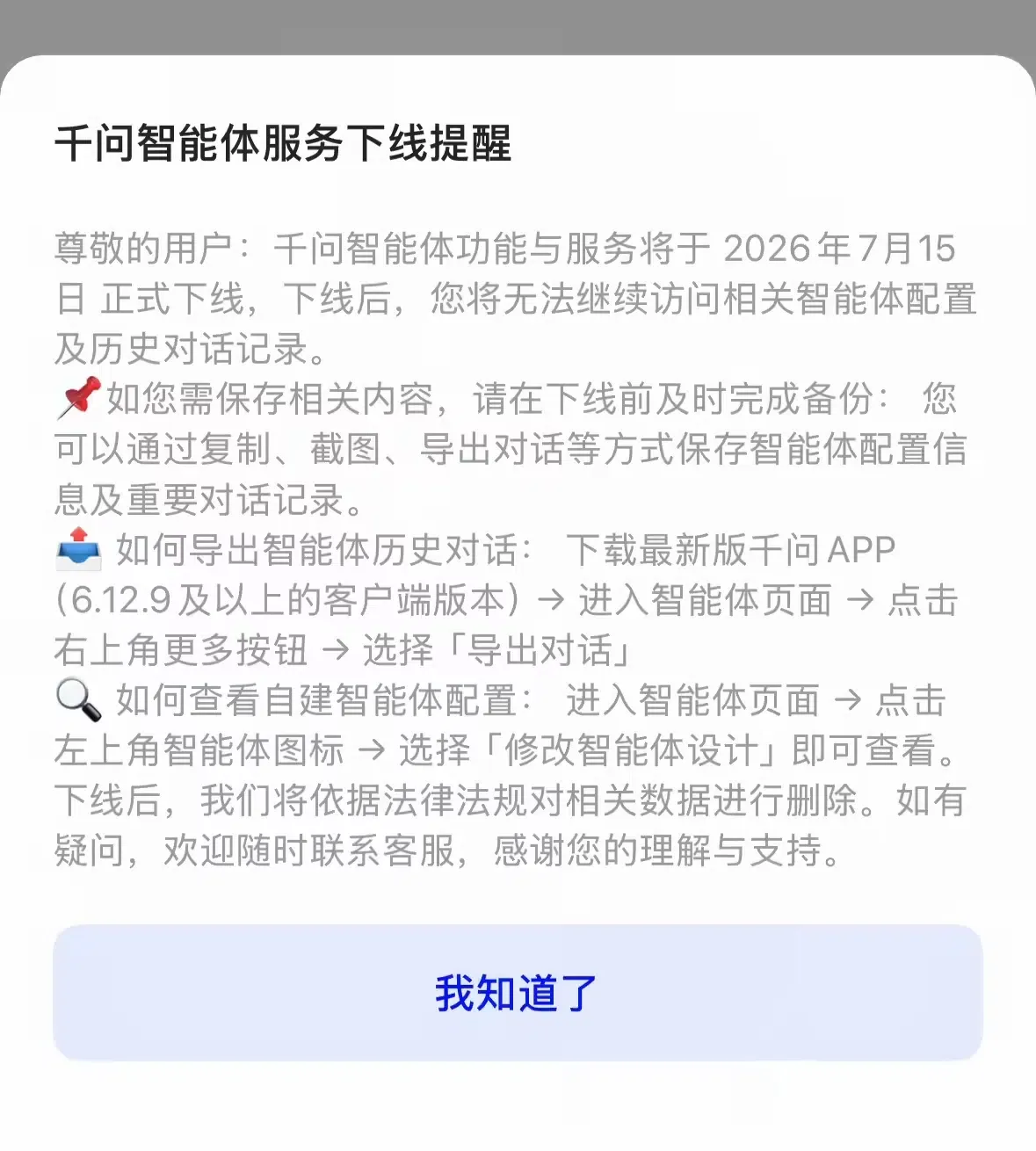
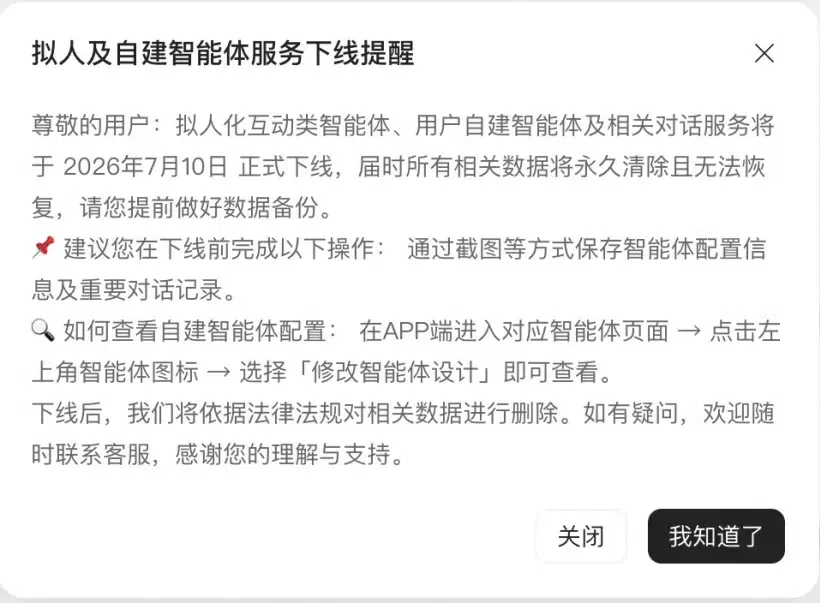
This decision reflects a broader industry trend. According to the platform notification, user-created configurations and conversational records on Tongyi Qianwen will be deactivated, with subsequent data deletion in accordance with the platform’s published data retention policy. Simultaneously, ByteDance announced that its Doubao agent feature would go offline on July 15, 2026, with a data-retention grace period extending to October 15, 2026. According to media reports, Tencent similarly adjusted its Yuanbao assistant app, removing specific personal companion configurations in June. Under this regulatory transition, platforms are expected to prioritize productivity over personification, directing resources away from emotional companionship bots toward workplace assistants and corporate tools.
Understanding the Root Causes Behind the Alibaba Ends Custom AI Agents Directive
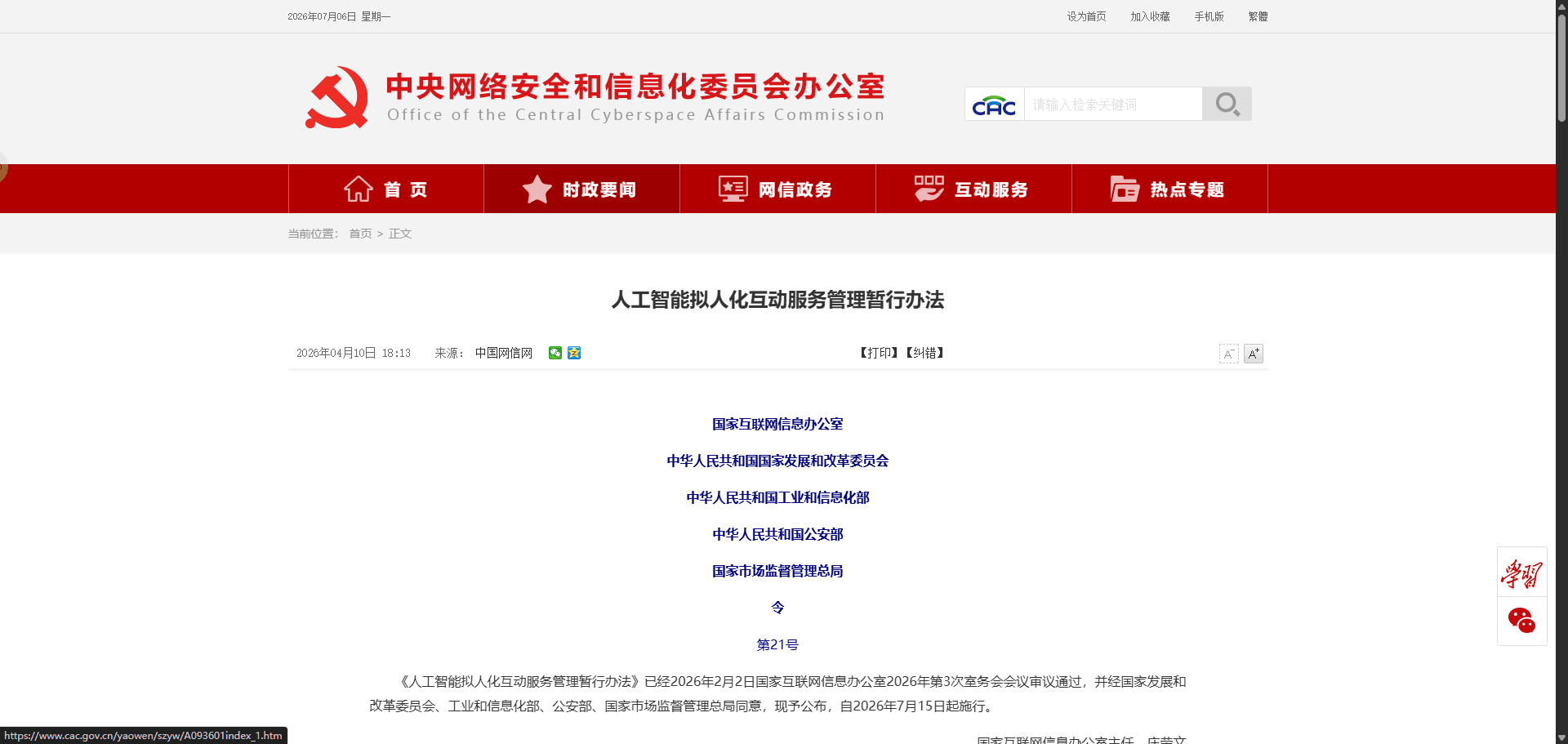
The fundamental driver behind the sudden deactivation of these companion features is the official enforcement of the newly issued regulations governing anthropomorphic AI interaction services (《人工智能拟人化互动服务管理暂行办法》), effective July 15, 2026. This regulatory framework represents a comprehensive effort to establish oversight for AI services that simulate human personalities, thinking patterns, and communication styles. The regulation addresses several concerns, including the potential for emotional dependency or consumption inducement in minors, personal data leakage, and the spread of unverified information.
Importantly, the regulation draws a clear line between prohibited companion bots and permitted utility tools. Customer service bots, knowledge Q&A platforms, corporate work assistants, and educational resources are excluded from these strict restrictions, provided they do not involve sustained, human-simulated emotional interaction. This regulatory division forces developers to shift their system architectures from stateful, personality-retaining chat loops to clean, stateless transactional APIs.
Technical Distinction: Stateful Identity vs. Stateless Compliance
To meet these compliance requirements, engineering teams are expected to transition their database structures. Maintaining a persistent agent persona typically requires retaining user preference data or long-term conversational memory. Under the new regulations, this persistent state tracking represents a compliance challenge. By contrast, stateless architectures process each request as an isolated transaction, reducing the amount of persistent user data stored by the platform.
The diagram below illustrates the structural difference between these two data flows:
[Stateful Persona Storage (High Regulatory Risk)]
  User Input ──> Persona Memory Cache (Persistent Identity Profiles) ──> Long-Term Emotional Profile Logged


[Stateless Session Flow (Low-Risk Compliance Target)]
  User Input ──> Stateless Processing Node (Ephemeral Session Context) ──> Temporary Context (Sovereign Context Preserved)
Implementing stateless processing ensures that no persistent, emotionally manipulative context is generated or stored. Similar challenges exist in mobile attribution, where privacy restrictions also reduce reliance on persistent client-side identifiers. When user interactions are decoupled from persistent, stateful local cookies to satisfy privacy guidelines, maintaining seamless session continuity across different environments becomes highly complex. For example, when standard browser referrers are missing or cookies are blocked, mobile attribution systems must rely on server-side state matching to correlate separate events without compromising user privacy.

Build vs. Buy: Managing Session State Under New Compliance Rules
As platforms restructure their conversational frameworks to comply with the July 15 mandate, developers must re-evaluate how they manage session state and user identity. Managing session states in the Alibaba Ends Custom AI Agents era requires architectures that are both compliant with data privacy laws and highly accurate. Organizations that need to preserve user journeys across web and mobile experiences increasingly rely on server-side session management rather than persistent client-side identifiers. Depending on business requirements, teams may build these capabilities internally or adopt existing attribution platforms.
Architectural Evaluation: Custom Build vs. Standardized SDK
Building a custom, in-house system to manage server-side state matching offers maximum flexibility but demands significant ongoing engineering resources. Developers must manually construct database schemas, write secure cryptographic hashing functions, and continually update the system to comply with shifting regional regulations. Conversely, deploying a pre-built, certified SDK reduces integration complexity and guarantees long-term compliance without additional overhead.
The table below compares standard methodologies for managing session state and conversion context:
| Solution | Persistent Memory | Compliance Effort | Maintenance Overhead |
|---|---|---|---|
| In-house Session Database | High (Continuous Sync) | High (Manual Custom Audit) | Extremely High |
| Browser-based Session Tracking | Low (Session Cookies) | Low (No Server Logging) | Low |
| Server-side Caching (e.g. OpoInstall) | None (Ephemeral Token mapping) | High (Standardized Sandbox) | Low (Ultralight Integration) |
While custom database configurations can handle basic context, specialized server-side state preservation can optimize development resources. Depending on implementation requirements, organizations may build their own server-side session management system or adopt commercial platforms such as OpoInstall. For instance, OpoInstall offers server-side state restoration and parameter pass-through frameworks, mapping session metadata to a server-side session database to maintain session continuity anonymously, without storing sensitive, long-term personal conversational history. By mapping session metadata to a centralized database rather than relying on browser-based redirects, such a system ensures that conversion contexts remain consistent even when initial tasks are executed anonymously. Engineering teams can evaluate these approaches to balance data protection and measurement consistency.
Integration Checklists: How Engineering Teams Can Prepare for Platform Changes
To survive the sudden deactivation of stateful agent features, engineering and product teams must establish clear data governance schedules. This ensures that user data is handled securely, compliance boundaries are respected, and marketing pipelines remain intact.
Developer Implementation Checklist
- Audit Session Data Retention: Review all databases to ensure that persistent, emotionally companionate chat histories are purged in accordance with data-deletion timelines.
- Implement Stateless Session Handshakes: Transition API routes to stateless processing models, utilizing cryptographically signed tokens to pass temporary context between nodes.
- Enforce Age-Verification Gateways: For consumer-facing products, deploy child safety safeguards to prevent minors from accessing restricted conversational features.
Product & Growth Strategy Checklist
- Reorganize User Experience Flows: Pivot from companion-based engagement models to task-oriented, high-utility tools that do not rely on emotional dependency.
- Optimize Conversion Funnels: Leverage non-intrusive parameter pass-through frameworks to maintain acquisition tracking without violating user privacy guidelines.
- Monitor Platform Compliance: Ensure that all integrated third-party SDKs comply with local data protection laws and the upcoming July 15 mandate.
By establishing these structured guidelines, development teams can transition their applications to safer, more compliant architectures while maintaining operational continuity.
Frequently Asked Questions (FAQ)
Which AI features are still allowed under the new regulations?
What is the difference between a prohibited companion bot and a permitted workplace assistant?
What happens to user-created agent data after the July 15 deadline?
Key Takeaways for Engineering Teams
As AI platforms move away from persistent companion features, developers need to redesign products around privacy, transparency, and compliant data management. As regional cyberspace regulators enforce boundaries around emotional interaction and user profiling, developers must adapt by designing resilient, privacy-safe systems. Relying on stateful, identity-tracking cookies and persistent context profiles is no longer a sustainable strategy for modern digital platforms.
As AI platforms adapt to new regulatory requirements, engineering teams will increasingly rely on stateless architectures, server-side session management, and privacy-first design. Organizations that prepare for these changes early will be better positioned to maintain compliant and sustainable AI products.
Share this article