Walmart Introduces Agent Gateway? On October 21, 2026, Walmart announced the introduction of its Agent Gateway, a planned feature called Agent Profiles, and updated commercial terms for artificial intelligence assistants. Speaking at the Masters of Scale Summit in San Francisco, company leadership outlined a structured framework designed to support machine-to-machine commerce for Walmart and Sam’s Club. Rather than offering an open, fully public platform immediately, Walmart is piloting the gateway through an invitation-only beta for approved developer partners. The initiative marks an alternative to competitor approaches that restrict automated bots, establishing an authorized integration path using the Model Context Protocol (MCP) while scheduling consumer permission controls for rollout in the coming month.
The Strategic Shift: Why Walmart Introduces Agent Gateway Amidst Scraper Blocks
At a Glance
- Walmart announced the Agent Gateway, an MCP-based platform currently available in an invitation-only beta for companies and developers building automated shopping integrations.
- The retailer unveiled plans for Agent Profiles, an account feature scheduled to roll out in the coming month to provide spending limits and separate order tracking.
- The programmatic initiative contrasts with policies at competitors such as Amazon, which have restricted third-party AI assistants from transacting across consumer web portals.
The retail industry is experiencing a divergence in how platforms manage automated digital traffic. As consumer-facing artificial intelligence assistants expand from basic conversational search into multi-step task execution, online shoppers increasingly ask agents to locate products, verify availability, and execute recurring purchases. These workflows shift user interaction away from manual browsing toward automated execution.
However, standard retail websites are engineered primarily for human visual interaction. When automated assistants attempt to complete transactions through traditional web browsers, they must parse dynamic web elements and navigate interactive checkout scripts. This web automation approach can be slow and unpredictable, leading to elevated server requests and abandoned sessions.
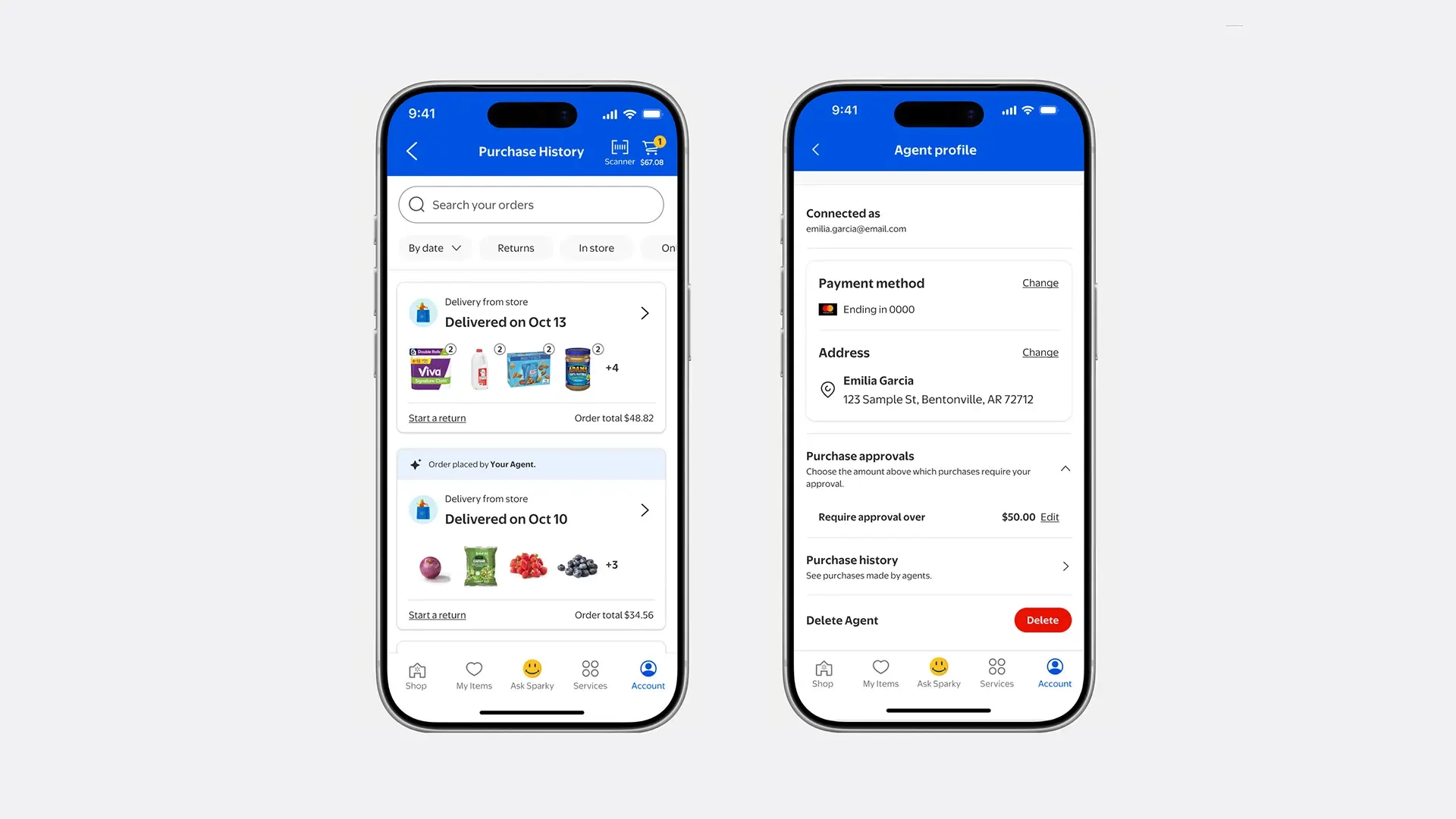
This operational challenge explains the contrasting policies across major retailers. While Amazon has restricted third-party AI assistants from placing orders on behalf of shoppers, Walmart’s authorized gateway strategy tests an open, structured integration model. As reported in TechCrunch coverage of retail agentic strategies, Walmart chose to pilot a direct programmatic channel rather than relying solely on web application firewalls. By providing structured technical access, the retailer aims to provide verified inventory and fulfillment data directly from core enterprise systems.
Technical Architecture: Inside the Model Context Protocol Gateway
The technical foundation of Walmart’s initiative relies on the Model Context Protocol (MCP) basic specification, an open framework developed to connect AI models with external tools, APIs, and enterprise data sources. By implementing an MCP server, Walmart enables authorized assistants to query catalog data and initiate orders using structured machine-readable requests rather than scraping public HTML pages.
According to details published on the official Walmart Agent Gateway beta page, the gateway is currently operating as an early-access program. Access is restricted to invited developers, and technical capabilities remain subject to modification as the platform evaluates system performance, request volume, and category constraints.Documented Capabilities vs. Planned Governance Workflows
To prepare for consumer adoption, Walmart outlined Agent Profiles, a governance mechanism detailed in the Walmart corporate announcement on AI agent shopping. Functioning similarly to adding an authorized user on a consumer credit card, Agent Profiles are designed to let customers link specific assistants to their retail accounts, designate discretionary spending limits (such as $50, $100, or $200), or require manual authorization for individual purchases.
The diagram below separates the documented connectivity of the gateway from the planned governance and order processing models:
[Documented Walmart Agent Discovery & Service Layer]
  Customer Shopping Request
      │
      ▼
  Authorized AI Agent
      │
      ▼
  Walmart Agent Gateway (Limited Beta via MCP)
      │
      ▼
  Product Discovery / Shopping Services

[Planned Governance & Retailer Fulfillment Architecture]
  Customer Approval & Agent Profile Controls (Planned)
      │
      ▼
  Retailer-Owned Order Processing & Fulfillment
Under the announced Walmart.com Terms of Use and Agentic Access Terms, participating agents must operate under strict consumer protections. Assistants do not receive plain-text payment card numbers and cannot modify a customer’s stored payment methods. Furthermore, Walmart confirmed that standard return policies will apply to purchases initiated by agents, including instances where an assistant makes an unintended purchase.
The expansion of programmatic agent shopping also alters how digital platforms measure traffic. When an AI assistant interacts directly with an enterprise MCP server, traditional client-side browser cookies, tracking pixels, and visual landing-page scripts do not run. However, in hybrid workflows—such as when an agent presents a link for manual user confirmation or redirects into a mobile application—standard client-side measurement and deep-linking mechanisms continue to operate.
System Layers and Operational Boundaries in Agentic Commerce
As commerce platforms explore machine-readable interfaces, engineering teams must evaluate how different components of the software stack interact. Establishing clear operational boundaries ensures that order processing, identity verification, and marketing analytics remain manageable across evolving retail channels.
Architectural Boundaries Across the Commerce Stack
Building a scalable e-commerce infrastructure requires distinguishing between the roles of conversational frontends, security gateways, and transactional ledgers. Specialized gateways manage agent authentication and rate limits, while merchant order management systems retain definitive records of inventory allocations, payments, and fulfillment statuses.
The table below summarizes common functional layers in an agent-enabled commerce environment:
| System Layer | Primary Technical Responsibility | Typical Operational Scope | Architecture & Integration Considerations |
|---|---|---|---|
| Retailer Agent Gateway (e.g., Walmart) | Access governance, permission controls, and API mediation | Invitation-only beta for verified partner agents | Centralizes retailer policy enforcement and shields sensitive customer credentials |
| Autonomous Agent Client (e.g., ChatGPT, Muse) | Natural language task decomposition and tool execution | End-user conversational interface | Interacts with supported retailer endpoints; cannot directly access user payment cards |
| Client-Side Web Analytics | Pageview, click-stream, and DOM interaction tracking | Browser and hybrid webview sessions | Natively observes interactive web sessions, but lacks visibility into headless API requests |
| Merchant Order & Ledger Backend | Order validation, payment settlement, and fulfillment | Core enterprise transaction processing | Maintains definitive financial records and manages returns under standard retailer policies |
Maintaining these structural distinctions allows technical organizations to adopt emerging agent protocols without compromising the security of core financial ledgers or disrupting existing web and mobile acquisition channels.
Integration Readiness Checklist for Retailers and Engineering Teams
To prepare systems for emerging agentic commerce workflows, engineering and product teams should audit their service architecture against documented platform policies.
Developer Implementation Checklist
- Review Scoped API Permissions: Structure API endpoints to follow the principle of least privilege, ensuring shopping assistants access only product discovery and checkout endpoints without exposing account management credentials.
- Implement Idempotent Transaction Listeners: Configure order ingestion routes to process unique transaction identifiers, preventing duplicate orders during automated agent retries.
- Audit Bot Traffic and Access Controls: Evaluate whether automated requests originate from authorized developer partners via verified protocols or from unverified scraping bots attempting visual DOM parsing.
- Validate Financial Data Isolation: Ensure automated agents cannot access raw payment-card credentials or modify stored payment methods without authorization. Retailers should select and independently validate payment-tokenization or credential-isolation mechanisms appropriate to their own infrastructure; Walmart has not publicly disclosed its complete internal payment-processing implementation.
Product & Growth Strategy Checklist
- Monitor Transaction Outcomes by Interface: Analyze conversion, cancellation, and return rates across orders initiated by automated agents versus traditional human-driven web and mobile app checkouts.
- Review Customer Control Interfaces: Prepare account settings interfaces that allow shoppers to view, configure, and revoke assistant permissions and spending limits as features launch.
- Audit Marketing and Referral Workflows: Ensure that promotional links and marketing parameters resolve cleanly across web landing pages and native mobile applications, maintaining measurement accuracy across user-directed touchpoints.
Following these engineering guidelines enables organizations to test automated commercial channels while maintaining reliable system performance and strong data protection standards.
Frequently Asked Questions (FAQ)
Why is Walmart opening an MCP gateway while Amazon blocks AI shopping agents?
How do Walmart Agent Profiles protect customer payment data and spending limits?
Do customers need a paid Walmart+ membership to use AI agent shopping?
Key Takeaways for Engineering Teams
Walmart’s announcement of the Agent Gateway marks an important phase in the development of conversational and programmatic retail. As consumer AI assistants become more capable, retailers face an ongoing architectural choice between blocking automated traffic and building structured machine-to-machine interfaces.
For software engineers and technology leaders, building adaptable systems requires establishing clear protocol boundaries. Decoupling user discovery, agent permission mediation, and back-office order processing allows platforms to explore new commercial interfaces without introducing unnecessary security risks. By prioritizing standards-based protocols, robust identity verification, and sound data governance, organizations can prepare their technical foundations as autonomous shopping models develop.
References
Share this article