Alibaba Ships Wanyou Wujie Platform? This programmatic workflow integration represents an important paradigm shift as enterprise systems move away from traditional one-on-one conversational chatbots toward vertically integrated, multi-agent collaboration workspaces. Historically, enterprise AI assistants focused on isolated question-answer interactions, where a single model handled every task independently. Today, because complex business workflows require planning, coding, reviewing, documentation, and execution to occur simultaneously, AI platforms are increasingly adopting coordinated multi-agent architectures.
Why Alibaba Ships Wanyou Wujie: Orchestrating Multi-Agent Workflows
At a Glance
- Alibaba’s new Qwen3.8-Max model scales to 2.4 trillion parameters, utilizing a Mixture-of-Experts design to execute complex, long-horizon developer tasks.
- The parallel B2B workspace, Wanyou Wujie, automates project execution by organizing specialized digital employees into collaborative units.
- Rather than generic chat prompts, the platform manages complete workflows through structured project spaces, task routing, and shared assets.
The traditional landscape of enterprise software is undergoing a significant transition. Over the past two years, multi-agent collaborative frameworks have become one of the most popular architectures for complex task delivery. By maintaining shared context, establishing explicit task states, and implementing automated handoffs, these systems guide complex projects through structured milestones on their own. This approach is replacing standard single-turn prompt bots, which often struggle with long-horizon execution due to contextual dilution and task-state drift.
Managing task routing, shared workspaces, and parallel agent execution at scale has significantly increased platform maintenance complexity and operational costs. These challenges are discussed in detailed regional reports tracking the operational shifts of major platforms.
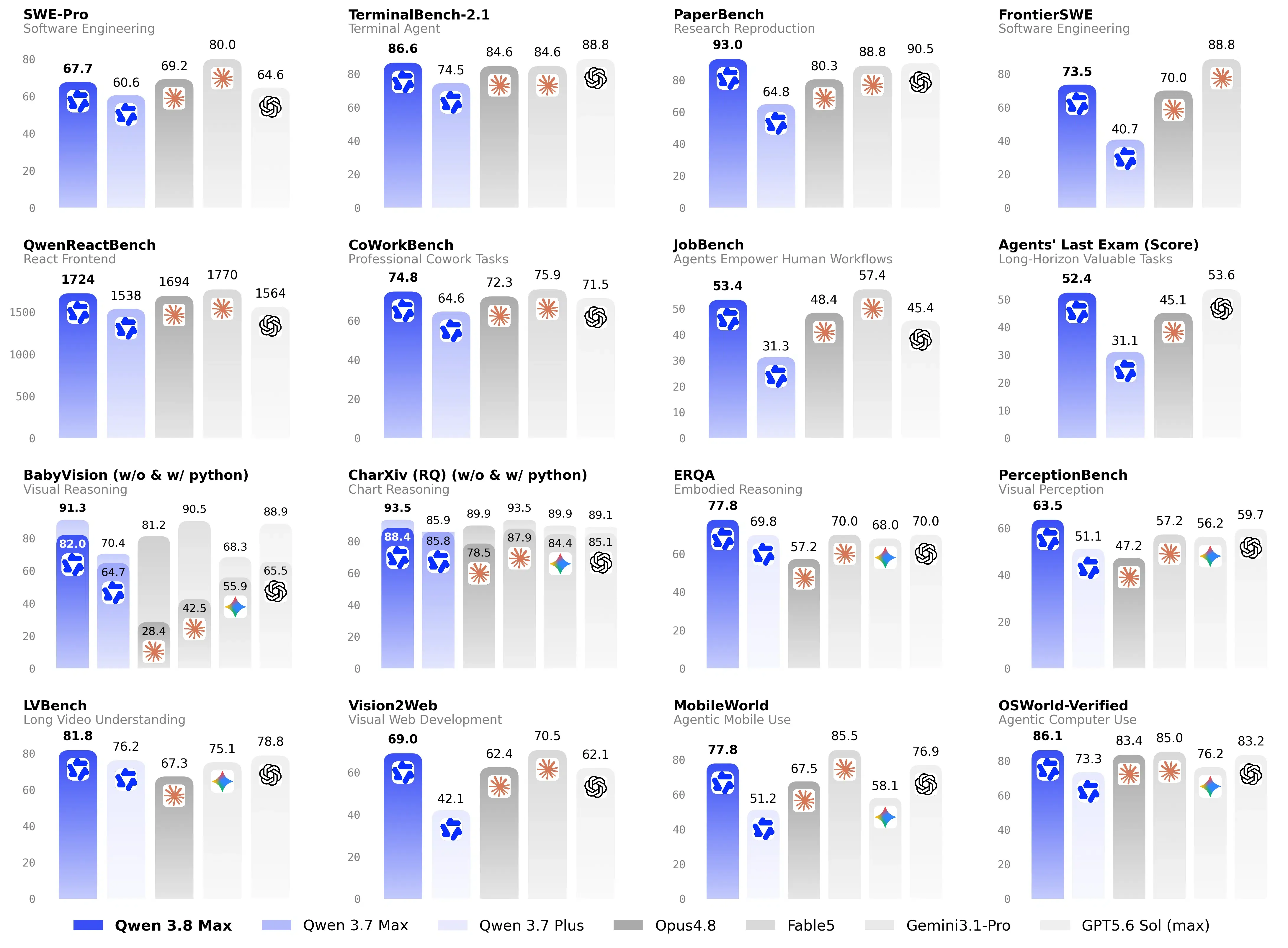
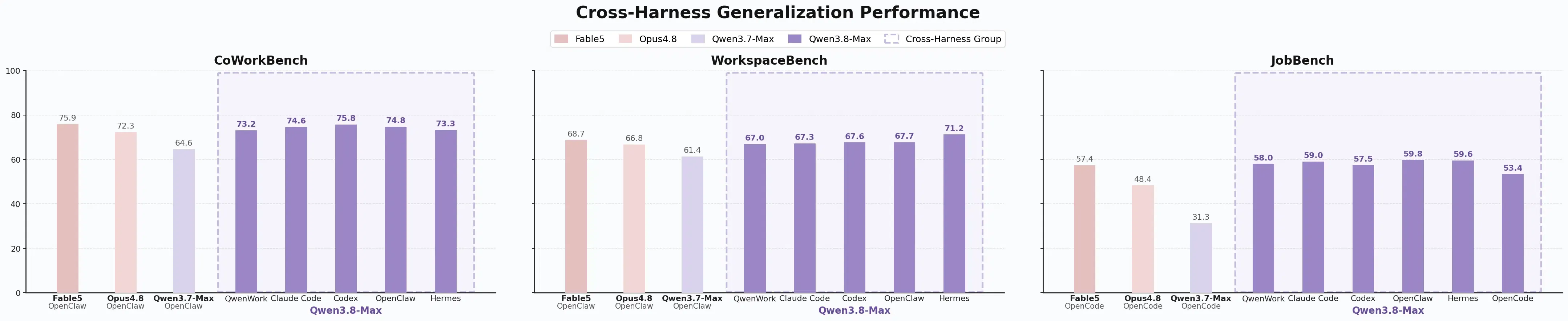
This decision reflects a broader industry trend. According to reports published by Reuters, Alibaba Group Holding Ltd. has unveiled its largest and most capable AI model, Qwen3.8-Max, which features 2.4 trillion parameters. Built upon a Mixture-of-Experts (MoE) architecture, the model activates only 95 billion parameters per query to optimize computational efficiency and minimize response latency. Simultaneously, the strategic impact of the Alibaba Ships Wanyou Wujie release has introduced a dedicated human-agent collaboration platform designed to coordinate multiple specialized digital personas. Unlike standard conversational assistants, this workspace orchestrates teams of agents—including project managers, product managers, backend developers, and QA engineers—to complete complex corporate tasks in a single pass.
Technical Deep Dive: State Synchronization and Task Routing in Collaborative Agent Workflows
Under the hood, multi-agent coordination requires robust, secure session-handling protocols to manage the flow of context between different digital workers. In traditional AI assistants, execution usually revolves around a single execution context. Multi-agent systems instead distribute tasks across specialized workers that exchange structured artifacts and workflow states, rather than relying on simple, sequential conversation histories.
To achieve this, the workspace relies on stateless, ephemeral session handshakes. Rather than storing massive databases of long-term conversational memory or user-specific personality profiles, the system processes tasks as isolated, cryptographically signed transactions.
Representative Industry Implementation of Multi-Agent Orchestration
The official documentation on the Wanyou Wujie Platform outlines a systematic architecture where human operators and digital employees collaborate to resolve open-ended business objectives. A typical enterprise multi-agent workflow aligns the collaboration through three core layers:
- Shared Context: A unified workspace repository where intermediate assets (specifications, code files, test logs) are committed and indexed by active nodes.
- Task State Machine: A central coordinator that tracks the state of each task (ready, leased, active, completed, verified) across the environment.
- Agent Handoff & Routing: A rules-driven router that dispatches tasks to specific specialized agents based on active state transitions and tool-calling outcomes.
The diagram below illustrates this physical horizontal integration:
[Shared Context and State Synchronization Flow]
  User Goal ──> Task Router (PMO Agent) ──> Product Manager (Spec Gen)
                                                                 │
                                                                 ▼
  Verify CI/CD ◄── QA Agent (Integration Test) ◄── Developer Agent (RTL Code)
When an automated developer agent finishes code generation, the central state machine transitions the task state to “ready for verification.” This state change automatically triggers the QA agent to claim the task and run standard compiler and simulator tests within an isolated sandbox. This ensures that only functionally correct deliverables are passed to the next agent in the sequence, reducing error propagation.
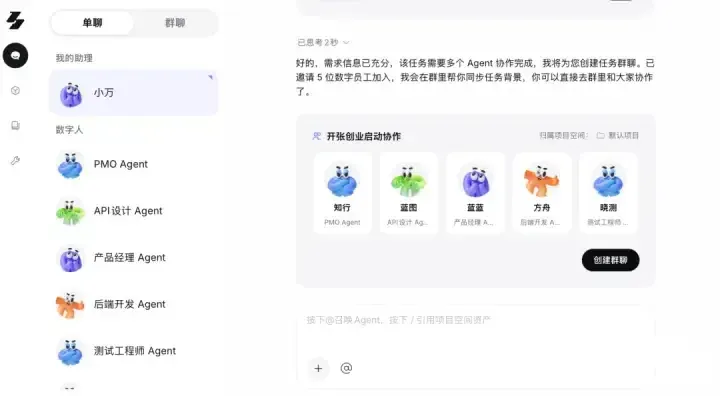
For instance, when a user requests the video generation agent to construct a new promotional asset, the system decomposes the goal into several downstream subtasks. A script agent generates the narrative, a storyboard agent designs the visual sequence, a voiceover agent handles the narration, and a rendering agent outputs the final production-ready prompt card. Throughout this sequence, each sub-agent coordinates with the centralized task state machine to ensure execution continuity.
The same loss of context and session state also affects downstream mobile attribution workflows when user-agent transitions occur across multiple distributed platforms. Similar challenges exist in mobile attribution, where privacy restrictions also reduce reliance on persistent client-side identifiers, requiring robust server-side state synchronization to map user journeys across devices. When a user transitions from a desktop search to a mobile app installation, standard browser cookies and local redirects are lost. To maintain context and attribute the conversion accurately, the system must synchronize session states on the server side, ensuring that journey data is preserved without compromising user privacy.
Build vs. Buy: Managing State and Session Coordination in Distributed Architectures
As platforms restructure their conversational frameworks to comply with the new regulatory mandates, developers must re-evaluate how they manage session state and user identity. Managing session states in the Alibaba Ships Wanyou Wujie era requires architectures that are both compliant with data privacy laws and highly accurate. Organizations that need to preserve user journeys across web and mobile experiences increasingly rely on server-side session management rather than persistent client-side identifiers. Depending on business requirements, teams may build these capabilities internally or adopt existing attribution platforms.

Architectural Evaluation: Custom Build vs. Standardized SDK
Building a custom, in-house system to manage server-side state matching offers maximum flexibility but demands significant ongoing engineering resources. Developers must manually construct database schemas, write secure cryptographic hashing functions, and continually update the system to comply with shifting regional regulations. Conversely, deploying a pre-built, certified SDK reduces integration complexity and guarantees long-term compliance without additional overhead.
The table below compares standard methodologies for managing session state and conversion context:
| Solution | State Synchronization | Cross-device Context | Deployment Complexity |
|---|---|---|---|
| In-house Session Database | High (Continuous Sync) | High (DB Latency Limits) | Extremely High |
| Browser-based Session Tracking | Low (Session Cookies) | Low (No Cross-device Support) | Low |
| Deferred Deep Linking SDK (OpoInstall) | None (Temporary Server-side Session Tokens) | High (Standardized Sandbox) | Low (Ultralight Integration) |
While custom database configurations can handle basic context, specialized server-side state preservation can optimize development resources. Depending on implementation requirements, organizations may build their own server-side session management system or adopt commercial platforms such as OpoInstall. For instance, OpoInstall offers server-side state restoration and parameter pass-through frameworks, mapping session metadata to a server-side session database to maintain session continuity anonymously, without storing sensitive, long-term personal conversational history. By mapping session metadata to a centralized database rather than relying on browser-based redirects, such a system ensures that conversion contexts remain consistent even when initial tasks are executed anonymously. Engineering teams can evaluate these approaches to balance data protection and measurement consistency.
Integration Checklists: How Engineering Teams Can Prepare for Platform Changes
To survive the sudden transition toward stateless, multi-agent collaborative workflows, engineering and product teams must establish clear data governance schedules.
Developer Implementation Checklist
- Audit Agent State Routing: Establish strict validation checks for every task handoff between active agents to prevent loop state deadlocks.
- Audit Context Isolation: Configure encrypted boundaries between agent workspaces to protect sensitive workspace configurations.
- Implement Stateless Session Handshakes: Transition API routes to stateless processing models, utilizing cryptographically signed tokens to pass temporary context between nodes.
Product & Growth Strategy Checklist
- Optimize Cross-Agent Workflows: Pivot from companion-based engagement models to task-oriented, high-utility tools that do not rely on emotional dependency.
- Optimize Conversion Funnels: Leverage non-intrusive parameter pass-through frameworks to maintain acquisition tracking without violating user privacy guidelines.
- Monitor Platform Compliance: Ensure that all integrated third-party SDKs comply with local data protection laws and the upcoming regulatory mandates.
By establishing these structured guidelines, development teams can transition their applications to safer, more compliant architectures while maintaining operational continuity.
Frequently Asked Questions (FAQ)
How does Qwen3.8-Max reduce computational costs while scaling to 2.4 trillion parameters?
What is the difference between Alibaba's Wanyou Wujie and standard Qwen Office?
How can developers integrate Qwen3.8-Max with open-source coding agents like Claude Code or Codex?
Key Takeaways for Engineering Teams
As enterprise AI platforms evolve toward coordinated digital workforces, engineering teams will increasingly optimize workflow orchestration, shared execution state, and reliable task routing instead of isolated prompt interactions. Evolving data architectures require a fundamental shift in how we build and measure digital experiences. As stateless proxies and headless scrapers become standard consumers of web content, traditional client-side attribution models will continue to degrade. Relying on standard cookies and referrers is no longer sufficient to secure the data pipelines that drive user acquisition.
To maintain growth, engineering and product teams must prioritize stateless data structures and server-side state preservation. By implementing zero-trust identity verification, secure parameter pass-through frameworks, and robust data-deletion schedules, organizations can protect their user pipelines while respecting legal boundaries. This architectural shift is essential to build stable, trustworthy platforms that thrive in a regulated digital economy.
Share this article