Anthropic Launches Claude Fable 5.1? Anthropic officially introduced Claude Fable 5.1 and Claude Mythos 5.1 on September 1, 2026, pairing major coding and knowledge-work performance gains with a seventy-five percent reduction in Fable 5.1 prompt cache read pricing. As artificial intelligence models handle increasingly complex multi-turn developer sessions, API token costs have emerged as a primary operational bottleneck for engineering teams. Historically, maintaining extensive conversational context required paying full input rates on every subsequent turn. Today, because frontier providers are aggressively discounting cached context reads, developers can maintain long-running agent loops and extensive codebases at substantially lower operational expense.
The Business Milestone & Financial Bottlenecks: Claude Fable 5.1 Release and Cache Price Reductions
At a Glance
- Anthropic released Claude Fable 5.1 and Claude Mythos 5.1 on September 1, 2026, sharing the same underlying model across dual-track safeguard tiers.
- Prompt cache read pricing for Fable 5.1 drops by seventy-five percent, falling from one dollar to twenty-five cents per million tokens while base rates remain unchanged.
- Overall API expenditure decreases by approximately twenty-five percent for typical workloads and up to forty-five percent for context-heavy agentic workflows.
The unit economics of frontier artificial intelligence development are shifting toward aggressive cost reduction on static context. For software teams building autonomous coding agents and deep analytical tools, context accumulation can become a major contributor to monthly cloud bills. As an agent inspects files, runs unit tests, and maintains conversation state, the input token volume expands with every step. When models bill each conversational turn at full input rates, multi-turn agent execution quickly becomes cost-prohibitive for production environments.
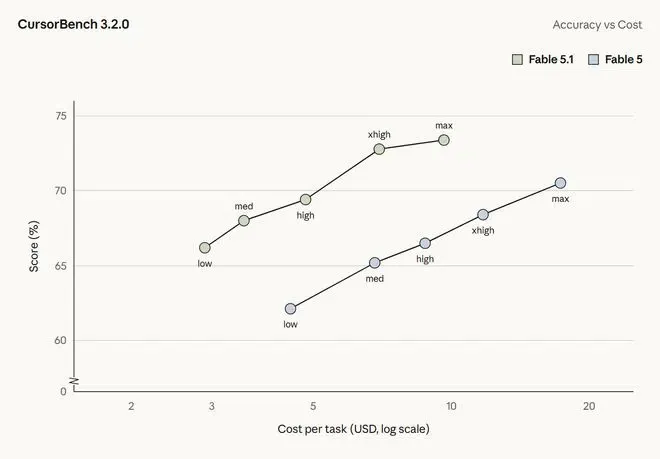
The commercial restructuring introduced as Anthropic Launches Claude Fable 5.1 addresses this cost barrier directly. Claude Fable 5.1 and Claude Mythos 5.1 share the same underlying model but diverge in their safeguard configurations: Fable 5.1 is generally available across commercial cloud providers, while Mythos 5.1 is restricted to vetted cybersecurity and life-sciences organizations under trusted access programs. In addition to setting benchmark records—including 52.6 percent on the Terminal-Bench-Science 0.1 evaluation suite—Fable 5.1 slashes cache read pricing from one dollar to twenty-five cents per million tokens, as detailed in the official Anthropic launch announcement.
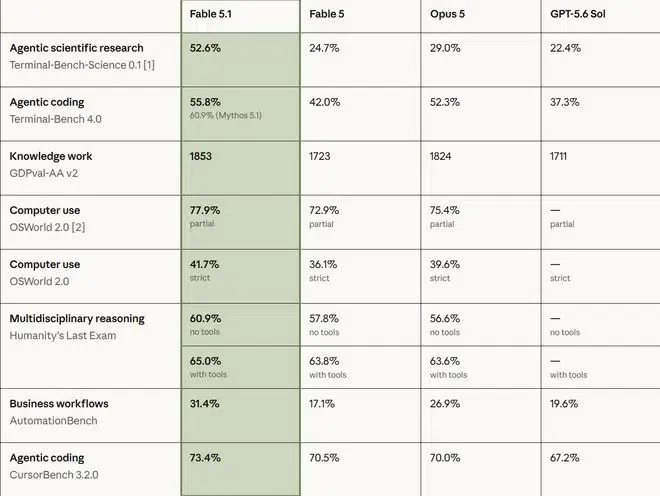
While base input and output rates remain constant at ten dollars and fifty dollars per million tokens respectively, discounting cached reads by seventy-five percent alters the economics of agentic loops. For workloads that frequently reference static system prompts, large API schemas, and stable codebase repositories, overall inference expenses drop by twenty-five to forty-five percent. This shift allows engineering teams to deploy context-dense developer workflows at lower operating cost, as reported by TechCrunch industry coverage.
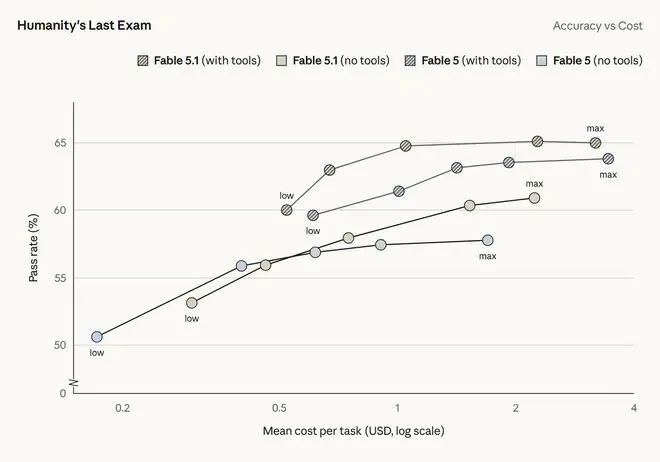
Systemic Root Causes & Technical Mechanics of Token Inflation in Multi-Turn Agents
At the API and application layer, multi-turn agentic workflows inherently generate repetitive context processing. In an interactive programming environment, an assistant must repeatedly evaluate the same repository structure, project instructions, and previous tool execution outputs. Without effective prompt caching, repeated conversation context may be processed and billed again at the standard input rate on subsequent turns, multiplying token consumption over long sessions.
Prompt caching resolves this redundancy by allowing the API to reuse previously processed context instead of billing repeated input tokens at the full rate. However, taking advantage of these cost reductions with Fable 5.1 requires developers to navigate several breaking API changes that affect how conversational context is structured.
Breaking API Changes in Multi-Turn Agent Loops
Fable 5.1 introduces several API behavior changes affecting tool selection, thinking-block compatibility, and conversation-history handling, as documented in the Claude Platform developer documentation:
- Removal of Forced Tool Choice: Setting
tool_choicetoanyortoolnow returns an HTTP 400 error. Developers must transition toautomode combined with structured output schemas or strict system prompt instructions. - Model-Bound Thinking Blocks: Fable 5.1 can parse thinking blocks generated by earlier models, but older models cannot interpret reasoning blocks from Fable 5.1. Multi-model router setups that fall back to smaller models will lose reasoning context upon switching.
- Context Invalidation on Edited Turns: Modifying or injecting system reminders into previous conversational turns now invalidates subsequent thinking blocks for accounts created on or after August 31, 2026. Teams must adopt turn-scoped system messages or handle context updates on the server side.
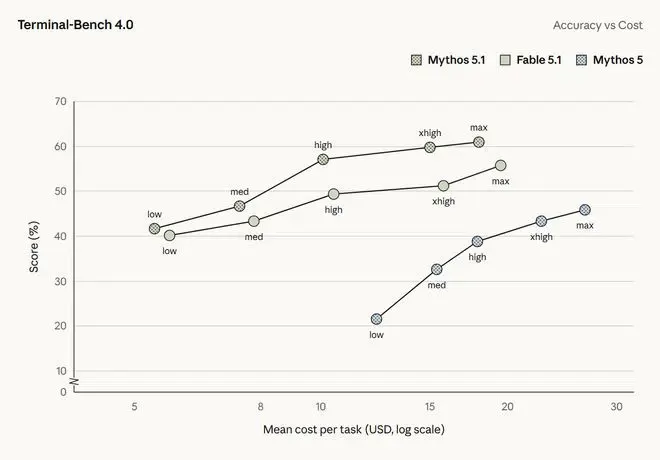
The diagram below contrasts standard linear token billing with prompt-cached context optimization:
[Linear Token Billing Flow (High Cumulative Cost)]
  Turn 1 (System Prompt + Codebase) ──> Full Input Token Rate ($10/M)
  Turn 2 (Accumulated History + Tool Call) ──> Full Context Re-evaluation ($10/M)

[Prompt-Cached Context Architecture]
  Turn 1 (Static System & Tool Definitions) ──> 5-Minute Cache Write ($12.50/M)
  Turn 2 (Incremental Tool Output) ──> Discounted Cache Read ($0.25/M) + Incremental Tokens ($10/M)
By structuring API payloads to maximize cache hits on static prefixes, engineering teams can maintain long-running reasoning loops while keeping unit costs predictable across complex execution graphs.
Architectural Evaluation: Context Management and FinOps for Multi-Turn Agents
As backend architectures incorporate prompt caching and context-heavy agents, engineering leaders must optimize context management across their software pipelines. Developers must evaluate how context reuse impacts per-task costs and model performance across different workload categories.
Workload Economics: Evaluating Official Cost Guidance
The table below outlines the estimated financial impact across different operational profiles based on official model benchmarks and pricing guidance:
| Workload Profile | Official Cost Guidance | Primary Driver |
|---|---|---|
| Typical Workloads (API / Enterprise / Claude Code) | ~25% lower estimated cost | 75% cheaper repeated cache reads on static prefixes |
| Highly Agentic Workloads (Context-Heavy / Multi-Turn) | Up to ~45% lower estimated cost | Frequent context reuse across extended tool and reasoning loops |
| Custom Production Workloads | Benchmark required | Actual savings depend on uncached input, output volume, and write frequency |
Alongside pricing updates, enterprise compliance requirements are driving architectural changes in data governance. To support organizations operating in highly regulated environments, Anthropic announced Enterprise Frontier Safeguards (EFS), which will roll out to customers in phases beginning later this fall, as detailed in the official Anthropic EFS announcement.
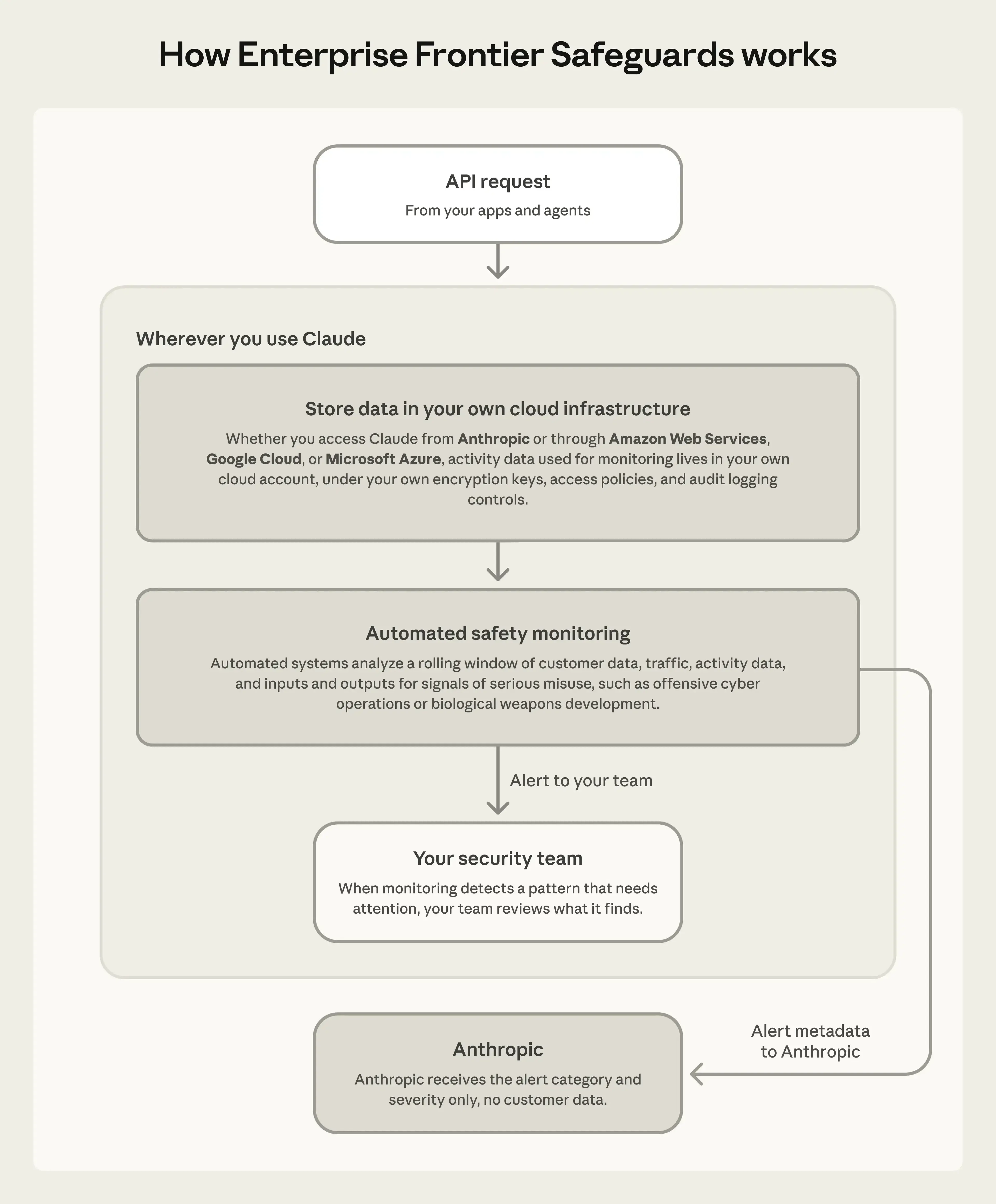
EFS allows enterprise customers to maintain the privacy benefits of zero data retention while deploying automated safety monitoring. Under this architecture, activity data used for monitoring is stored within customer-managed cloud infrastructure on Amazon Web Services, Google Cloud, or Microsoft Azure, keeping monitoring data within customer-controlled infrastructure.
Integration Checklists & Governance Schedules: Adapting to New Pricing and API Constraints
To maximize the economic advantages of reduced prompt cache pricing while maintaining enterprise compliance, engineering and FinOps teams can follow structured implementation guidelines.
Developer Implementation Checklist
- Establish Prompt Caching Breakpoints: Structure API payloads so that large, static system prompts, codebase definitions, and tool schemas are placed before dynamic conversational turns to maximize cache hit rates.
- Refactor Tool Selection Schemas: Remove deprecated forced
tool_choiceparameters, updating client libraries to useautomode alongside structured output validation. - Adopt Turn-Scoped System Messages: Ensure dynamic instructions are passed via turn-scoped parameters rather than editing prior conversation turns, preventing thinking block invalidation.
Product & FinOps Strategy Checklist
- Recalculate Unit Economics for High-Context Features: Model feature margins based on the $0.25/M cache read rate, evaluating the feasibility of expanding default context windows.
- Track Production Cache Hit Ratios: Monitor cache read frequencies across agentic workflows to ensure system prompts remain stable across multi-turn sessions.
- Prepare for Watermarking Verification: Evaluate Anthropic’s private-preview watermark detection API to align output verification with EU AI Act transparency requirements, as documented in Anthropic’s watermarking overview.
By aligning API consumption patterns with modern caching infrastructure, development teams can scale autonomous agent capabilities while maintaining strict control over operating expenses.
Frequently Asked Questions (FAQ)
How does a 75 percent reduction in cache read pricing affect overall API spend?
What breaking API changes in Claude Fable 5.1 impact multi-turn agent loops?
What is Enterprise Frontier Safeguards and how does it support zero data retention?
Key Takeaways for Engineering Teams
The release of Claude Fable 5.1 demonstrates that compute deflation is accelerating across frontier artificial intelligence platforms. As foundational model providers optimize caching architectures and introduce enterprise-governed safety frameworks, the barrier to deploying autonomous, long-running agent workflows is declining rapidly.
For software architects, sustainable AI deployment requires optimizing context management at every layer of the system. Pairing efficient API prompt caching with modular application-level design ensures that systems remain responsive, cost-effective, and compliant with emerging global standards. As token economics continue to improve, organizations that structure their data pipelines around efficient state preservation will be best positioned to lead the next generation of intelligent software services.
References
- Anthropic. Claude Fable 5.1 and Claude Mythos 5.1 Announcement. https://www.anthropic.com/claude-fable-and-mythos-5-1
- Claude Platform. Claude Fable 5.1 Overview and Migration Guide. https://platform.claude.com/docs/en/models/fable-5-1/overview
- Anthropic. Developing Enterprise Frontier Safeguards with Our Customers. https://www.anthropic.com/news/enterprise-frontier-safeguards
- Anthropic. How Claude’s Text Watermarking Works. https://www.anthropic.com/news/claude-text-watermark
- TechCrunch. Anthropic’s New Fable Release Is Cheaper, Less Restrictive. https://techcrunch.com/2026/09/01/anthropics-new-fable-release-is-cheaper-less-restrictive/
- ITHome. Anthropic Releases Claude Fable 5.1 and Mythos 5.1. https://www.ithome.com/0/997/193.htm
Share this article