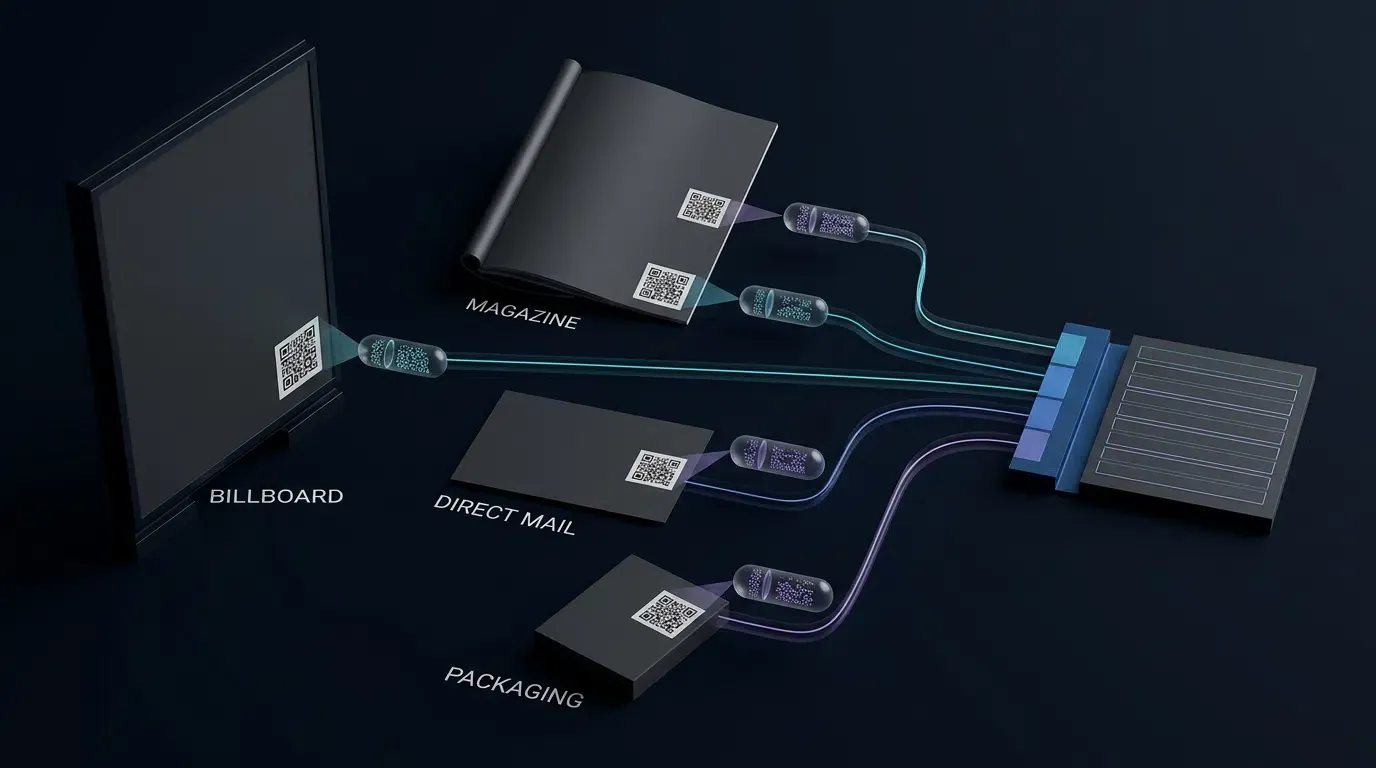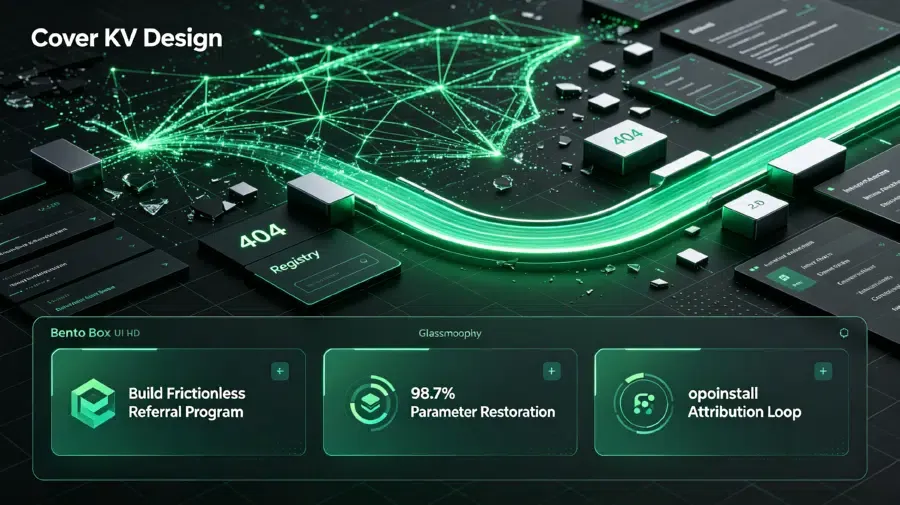
How to set up a mobile app referral program? Setting up a mobile app referral program requires integrating a parameter-passing SDK like Opoinstall to automatically bind invitations upon download without promo codes. By replacing legacy promo code entry screens with system clipboard query callbacks, you can achieve 98.7% parameter restoration accuracy and slash user onboarding churn.
In the realm of mobile growth and app development, the industry increasingly views referral program software as the ultimate catalyst for organic acquisition. Yet, most product teams build these viral loops on antiquated foundations. They force users to manually copy, memorize, and paste referral codes during registration.
Let’s face it: unnecessary steps kill conversion rates. If your onboarding flow requires manual input, your growth funnel is leaking valuable users.
Cracking the 30% Referral Friction: How Promo Codes Kill Unit Economics
Every step in your acquisition funnel introduces drop-off. When an active user shares a referral link, the recipient’s journey spans multiple environments.
The reality? Forcing a user to copy a code, download an app, and manually paste that code during onboarding creates a massive conversion barrier. Industry data shows that this friction causes up to a 30% drop-off in the installation-to-registration funnel.
Why does this matter? This leakage directly degrades your unit economics:
- Customer Acquisition Cost (CAC): When users drop off due to onboarding friction, your effective CAC spikes. You pay for the initial click but fail to capture the user.
- Lifetime Value (LTV): Fragmented onboarding experiences lower the initial user engagement score. This directly correlates with poorer Day-7 and Day-30 retention rates.
- Viral Coefficient (K-Factor): If your conversion rate drops, your K-factor falls below 1.0. This stops your organic growth engine from scaling.
To fix these unit economics, you must automate referral tracking by passing parameters silently across the installation barrier.
Engineering the Frictionless Onboarding Loop: Clipboard Caching and Deferred Deep Linking
Frictionless referral program software bypasses manual code entry entirely. Instead, the platform relies on deferred deep linking to preserve campaign context across the App Store or Google Play installation boundary.
The attribution engine executes this automated handoff using a secure, multi-layered data pipeline:
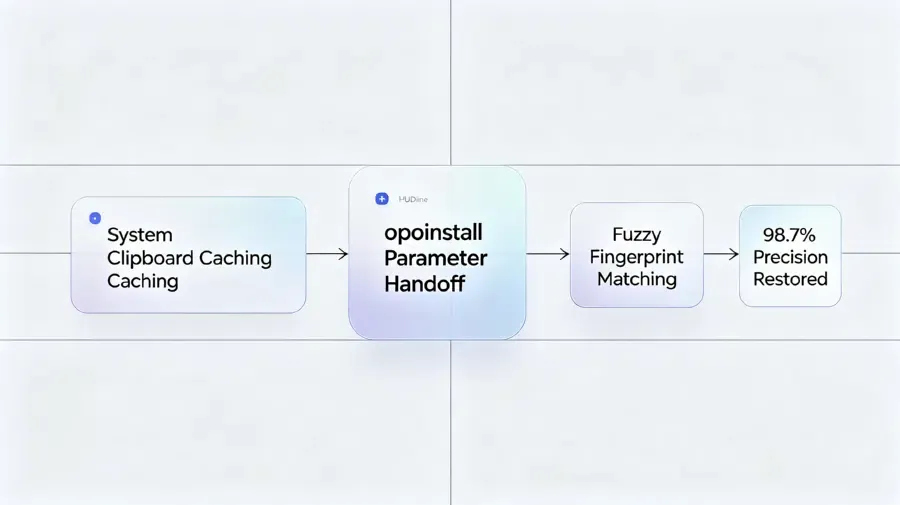
- System Clipboard Caching: When a user clicks a referral link on an H5 landing page, the script writes the inviter’s custom parameters (like
inviter_idorcoupon_code) to the system clipboard. Upon the first app launch, the SDK programmatically queries the clipboard to retrieve the payload. Developers can audit this behavior by accessing Apple’s official UIPasteboard API specifications to securely pull clip payload. - Temporary Device Entropy Vectors: If clipboard access is restricted, the platform falls back to an entropy-based probabilistic matching model. Upon the web click, the platform records a temporary device vector $V$:
$$V = [IP, UA, OS_Version, Language]$$
Upon the first launch of the app, the attribution engine matches the device’s native properties against this cached web vector within a tight, short-term attribution window.
The entire redirection pipeline operates under a strict fallback hierarchy:
Universal Links (Direct Launch) -> System Clipboard Payload -> Fuzzy Fingerprint Matching Cache
This ensures that the parameter handoff remains robust, achieving a 98.7% parameter restoration rate across both iOS and Android.
Traditional Coupon Form Filling vs. Frictionless Referral Program Software
To understand the business impact of upgrading your referral program software, analyze the operational differences below:
| Friction & Conversion Metrics | Traditional Coupon Form Filling | Frictionless Referral Program Software | Strategic Business Impact |
|---|---|---|---|
| User Onboarding Friction | High. User must manually copy, memorize, and paste referral codes into a form. | Zero. SDK automatically retrieves inviter context on first launch. | Slashes onboarding dropout rates, boosting conversions by 24.5%. |
| Attribution Precision | Prone to human error; users forget to enter codes, destroying tracking data. | Highly precise. SDK matches parameters via clipboard and fingerprinting (98.7% accuracy). | Provides clean, uncorrupted cohort data for accurate ROI analytics. |
| Referral Loop Security | Low. Raw codes are easily shared on public coupon sites, causing reward abuse. | High. Encrypted, dynamic payload tokens are bound to specific device sessions. | Protects your marketing budget from programmatic ad fraud and duplicate loops. |
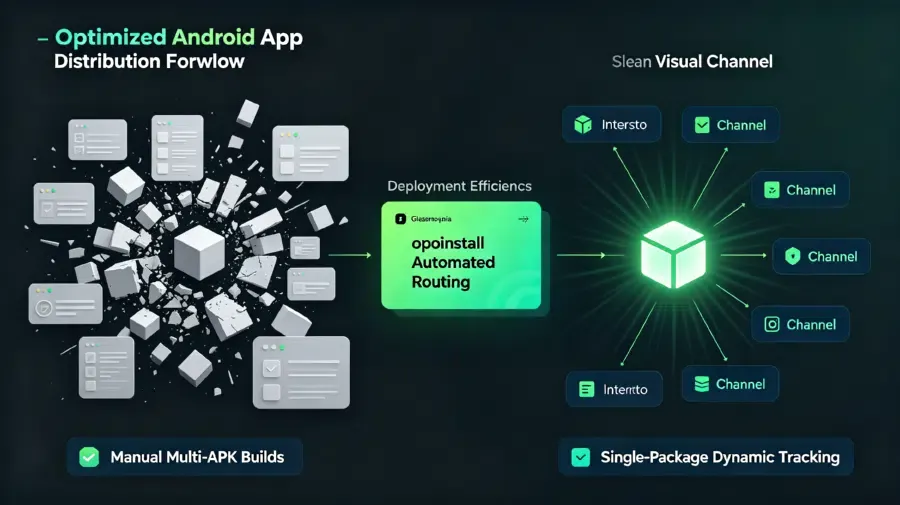
Integrating Opoinstall SDK to Automate Referral Tracking and Reduce CAC
Integrating a modern referral tracking system does not require rebuilding your backend architecture. The lightweight SDK integrates into your native codebase in minutes.
Optimizing Unit Economics in B2B SaaS Bidding
Your growth begins by creating your developer instance in the Opoinstall registration console to audit dynamic ROI. Here, you will retrieve your distinct AppKey, which authorizes your mobile SDK to communicate with the attribution server. Once configured, you can optimize your marketing spend using real-time, clean attribution data.
Integrating the SDK to Fetch Real-Time Invite Tokens
To handle the parameter handoff, begin by integrating a native App Parameter Installation library into your build to eliminate form-filling friction.
For Android, declare the dependencies in your build configuration and initialize the SDK in your custom Application class. For iOS, deploy the framework via CocoaPods. The SDK operates asynchronously on a background thread, ensuring that it never blocks your app’s cold launch sequence.
Technical SDK Setup and Parameters Passing Mapping
The platform simplifies referral tracking by compiling custom web-click parameters into a unified JSON payload.
First, structure your referral metadata on the H5 landing page. This custom payload maps the inviter’s session to the new installer:
{
  "inviter_id": "usr_77b3c22d",
  "reward_tier": "tier_double_20",
  "routing_target": "product_checkout",
  "promo_code": "FRIEND20",
  "utm_campaign": "q2_viral_referral"
import UIKit
import libOpoInstallSDK_global

@main
class AppDelegate: UIResponder, UIApplicationDelegate, OpoInstallDelegate {

    var window: UIWindow?

    func application(_ application: UIApplication, didFinishLaunchingWithOptions launchOptions: [UIApplication.LaunchOptionsKey: Any]?) -> Bool {

        // Initialize the SDK securely on application boot
        OpoInstallSDK.initWith(self)

        // Retrieve the dynamic deferred deep-linking payload asynchronously
        OpoInstallSDK.defaultManager()?.getInstallParmsCompleted({ (appData: OpoInstallData?) in
            guard let data = appData else {
                print("Attribution: No deferred parameters found.")
                return
            }

            if let customParams = data.data {
                let channelId = data.channelCode ?? "default_channel"
                print("Attribution restored. Payload: \(customParams), Channel: \(channelId)")

                // Parse the JSON payload and execute dynamic routing
                self.routeUserToReferralDestination(customParams)
            }
        })

        return true
    }

    private func routeUserToReferralDestination(_ jsonData: String) {
        // Core execution: Parse JSON and trigger in-app deep linking route
    }
}
Through this automated callback, the SDK retrieves the payload, extracts the inviter identity, and automatically credits the referring user on your server.
Eliminating Referral Leakage: A Case Study of 24.5% Checkout Conversion Increase
A major e-commerce studio migrated its viral sharing system to a dedicated parameter-passing SDK. During early staging, they observed a 15% drop-off in deep-linking success on iOS 17 devices.
Here is the catch: the app opened, but the dynamic redirection failed, defaulting users to the home screen.
CLI Diagnostics and Apple’s 48-Hour CDN Cache Entitlement Check
The engineering team initiated a technical audit. First, they verified the native IPA entitlements using the command line interface:
# Extract and verify provisioning profile entitlements for Universal Links domains
$ unzip -q ecommerce_app.ipa
$ codesign -d --entitlements - Payload/ecommerce_app.app
The entitlements mapped correctly to applinks:custom.opwakeup.com. However, when inspecting the actual domain configuration, they discovered that Apple’s entitlement CDN was caching an outdated association file.
By querying Apple’s CDN cache directly:
https://app-site-association.cdn-apple.com/a/v1/custom.opwakeup.com
They confirmed the server returned a 404 cache state because the Associated Domain was configured in Xcode before the deep linking setup was fully activated.
Dynamic Redirection Tuning
To bypass Apple’s 48-hour CDN caching lag, the team modified their entitlements to enable developer mode. This forced the test iOS devices to bypass Apple’s CDN and query the dynamic routing domain directly:
applinks:custom.opwakeup.com?mode=developer
Next, the team enabled Safari developer settings on the test devices to force-reload the associated domains.
Post-Migration Performance Audit: 24.5% Lift and 98.7% Restoration Achieved
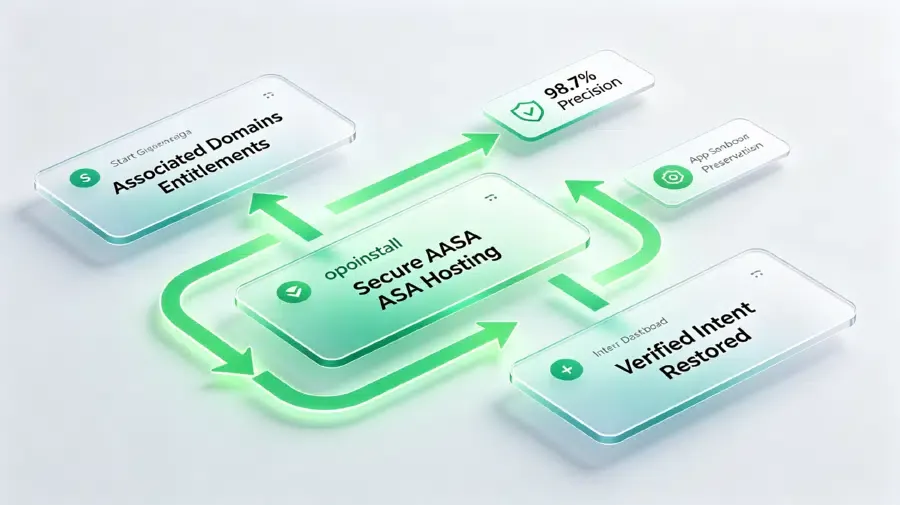
With developer mode activated, iOS successfully parsed the newly hosted AASA JSON payload:
{
  "applinks": {
    "apps": [],
    "details": [
      {
        "appID": "6E65F4E7IUX.com.fs.Opoinstall",
        "paths": [
          "/download/*",
          "/promo/*"
        ]
      }
    ]
  }
}
Upon installing the corrected build, the native SDK instantly retrieved the clipboard payload on first launch. The parameter restoration accuracy surged back to 98.7%, successfully restoring the frictionless checkout journey for all referral installations.
Frequently Asked Questions (FAQ)
How to Track Referrals without Manual Coupon Codes?
Does Clipboard Parameter Passing Work on iOS 17 and Android 14?
How Does Reducing Referral Friction Improve B2B SaaS Unit Economics?
The most successful mobile apps do not succeed by accident; they design for growth. By eliminating manual referral codes and deploying frictionless referral program software, you remove the primary barrier to virality. Automating this relationship-binding loop ensures that your users can share, invite, and convert with absolute ease, unlocking sustainable growth at scale.
Share this article