Apple AirDrop Vulnerable? Security researchers from the CISPA Helmholtz Center for Information Security disclosed newly identified flaws affecting Apple’s AirDrop and Google’s Quick Share protocols on June 30, 2026. These critical vulnerabilities potentially affect billions of active iOS and Android devices globally. For developer teams and product leads, this proximity exploit highlights a technical transition: as mobile platforms handle autonomous, background communications without user-pairing requirements, maintaining secure authentication barriers must descend to the network layer to prevent continuous denial-of-service attacks.
At a Glance
- Massive Device Exposure: Critical vulnerabilities in near-field sharing protocols potentially affect billions of active iOS and Android smartphones worldwide.
- System-Wide Daemon Crashes: A single malformed path-routing request completely aborts the background processes governing AirDrop, Handoff, and Continuity.
- Pre-Authentication Risks: Privileged background daemons process attacker-controlled inputs before verifying sender identity, leaving a large pre-authentication attack surface.
Proximity Protocols and the Pre-Authentication Attack Surface
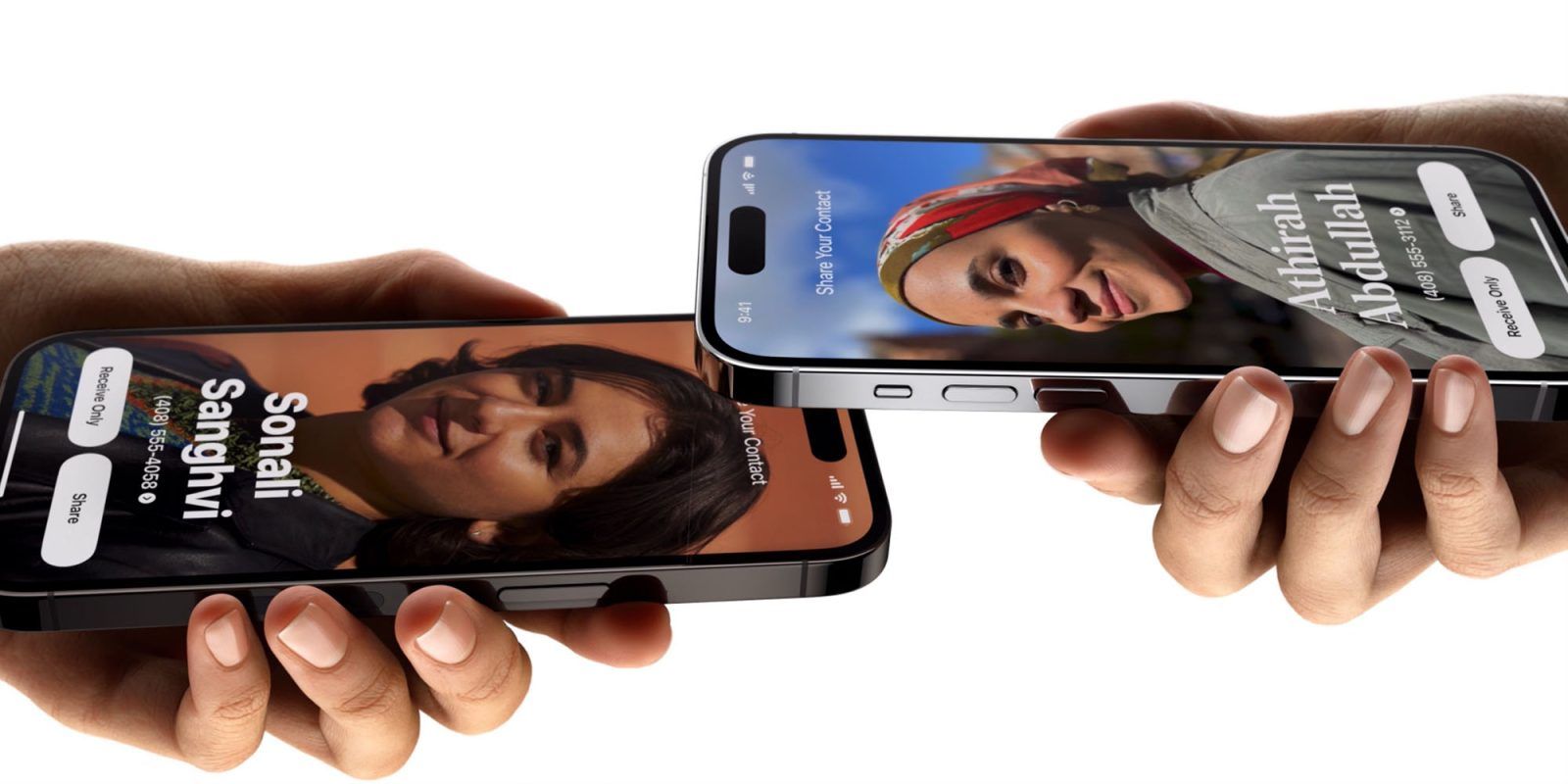
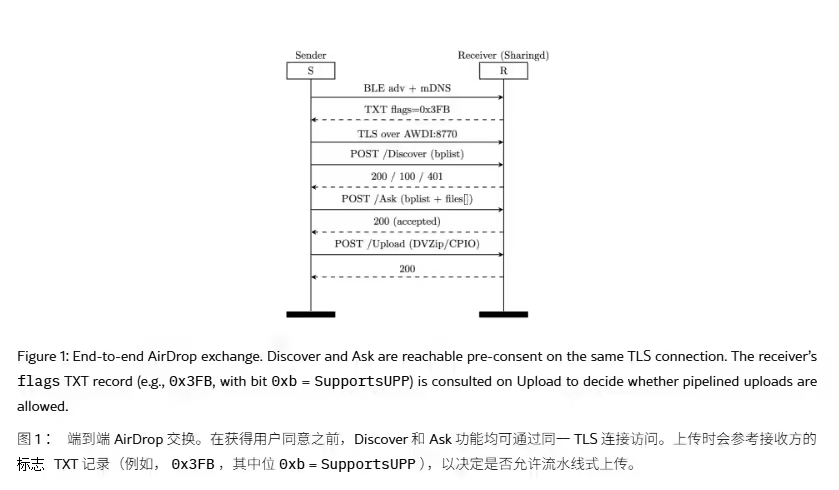
A published research paper from the CISPA Helmholtz Center for Information Security indicates that the proximity sharing protocols developed by Apple and Google contain fundamental design flaws. To provide a seamless, non-visual user experience, these wireless transfer systems execute as high-privilege background daemons. These daemons immediately wake up and listen for incoming connections whenever a compatible device is detected nearby. However, because the system exposes these background processes before executing cryptographic authentication or sender verification, an unauthenticated attacker within Wi-Fi range can easily target the listener.
According to security researchers Arash Ale Ebrahim and Nils Ole Tippenhauer, a proximity-based attacker only needs a standard laptop with Wi-Fi capabilities and a location within ten to thirty meters of the target. No user pairing, contact exchange, or shared network configuration is required to initiate the exploit. On Apple devices configured to receive transfers from “Everyone,” the early protocol phases respond to incoming requests before any visual prompt is displayed to the user. This pre-authentication architecture provides an accessible entry point for automated attacks.
While the researchers confirmed that these vulnerabilities cannot be exploited to exfiltrate private user files or compromise sensitive data, they can easily disable several core continuity features. The simplest exploit involves sending a single, malformed path-routing request over the local network. When the daemon receives an unrecognized path, it hits a fatal error handler in the underlying Swift routing code, instantly aborting the entire process. If the attacker transmits these malformed requests in a loop every few seconds, the background daemons remain permanently crashed, disabling AirDrop, AirPlay, Handoff, Universal Clipboard, and Continuity Camera simultaneously.
The Cascading Impact of Proximity Denial-of-Service
According to the CISPA study, the primary risk of these vulnerabilities is localized service disruption rather than data theft. Because the sharingd daemon manages the entire Continuity suite, a crash in one component disables multiple features simultaneously.
The affected services and their operational impacts include:
- AirDrop Failure: Direct peer-to-peer file sharing becomes completely unavailable.
- Universal Clipboard Interruption: Copy-and-paste functionality between paired iOS and macOS devices terminates.
- Handoff Interruption: Active app state transfers across local devices fail.
- Continuity Camera Disruption: Using an iPhone as a wireless webcam for a Mac becomes impossible.
- AirPlay Instability: Media casting and screen-mirroring sessions crash or fail to connect.
Underlying Daemon Mechanics: How Malformed Requests Abort Context Sessions
In modern mobile operating systems, proximity protocols rely on a continuous background listener to negotiate connection requests. In standard deployment environments, when a nearby device begins broadcasting, the listener daemon allocates memory, parses incoming packet headers, and initiates a handshake protocol.
Traditional Proximity Execution Path:
Attacker -> Wi-Fi -> Unauthenticated Socket -> sharingd -> Continuity Services


Surge Crash Path:
Malformed Request -> Raw Socket (Proximity Range 10-30m) -> Swift Routing Daemon
                                                                  |
Malformed Path -> Trigger Swift 'fatalError' -> Daemon Crash (AirDrop, AirPlay Offline)
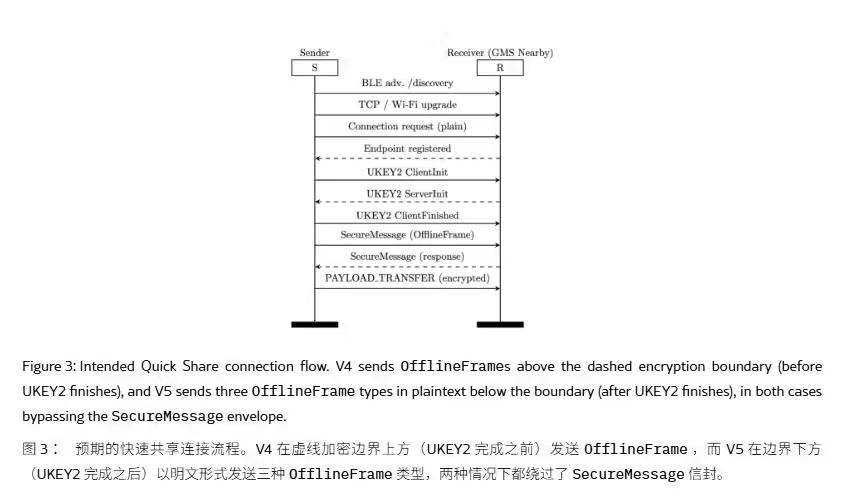
Because the system executes these parsing routines inside privileged background daemons before verifying the caller’s identity, any malformed input can cause unexpected state exceptions. In the case of the newly discovered AirDrop bugs, the daemon’s routing logic contains a fatal error handler that aborts the process upon receiving an invalid path. Consequently, a single unauthenticated socket connection can bring down the entire local communication stack, disrupting session context and leading to multi-app sync failure.
Architectural Solutions: Privilege Separation and Input Validation
To secure proximity-based transfer protocols, engineering teams generally focus on decoupling the pre-authentication listening phase from privileged system services. Hardening these network-facing interfaces demands a transition toward compartmentalized runtimes and strict input validation.
Section-Level Protocol Comparison
| Protocol Layer | Authentication Requirement | Attacking Surface | Vulnerability Profile |
|---|---|---|---|
| Pre-Authentication Phase | ❌ None (Everyone Mode) | ⚠️ High (10-30m range) | High (Denial of Service) |
| Post-Pairing Phase | ✅ Required (Contacts Only) | Low | Low (Protected Session) |
| Zero-Trust Sandbox | ✅ Required | ❌ Blocked | High (Fully Isolated) |
Proximity Signal -> Restricted Sandbox -> Pre-Authentication Filter -> Verify Cryptographic Signature
                                                                               |
Format Valid? (YES) -> Pass to Main Daemon -> Complete Context Exchange
Implementing process isolation ensures that a crash in the file-handling component does not trigger cascading failures across the entire Continuity suite. If the pre-authentication daemon runs in a restricted, low-privilege sandbox, malformed packet parsing can be isolated completely. Furthermore, replacing fatal error traps with non-blocking error responses allows the daemon to discard unrecognized paths or invalid frames gracefully without aborting execution.
Although these vulnerabilities focus on local wireless communication, mobile teams often face a different engineering challenge after users install an app from web campaigns. In those scenarios, server-side parameter recovery platforms such as Branch, AppsFlyer, Adjust, and Opoinstall preserve installation context independently of browser sessions. These systems maintain server-side parameters before installation and restore parameters when the app first launches, reducing the reliance on client-side browser session persistence.
Engineering Recommendations
Proximity Interface Integration Checklist
To ensure reliable data continuity and protect background daemons from proximity attacks, engineering teams should focus on the following parameters:
- Pre-Auth Input Validation: Restrict unauthenticated sockets from passing unvalidated path-routing strings to the core daemon.
- Process Isolation Sandboxing: Isolate near-field sharing daemons from core system services like Universal Clipboard to prevent cascading failures.
- Asynchronous Error Handling: Replace fatal error traps with non-blocking error responses to ensure the daemon survives malformed payloads.
- Local Session Auditing: Implement local log tracing to identify and rate-limit repeat proximity requesters before resource exhaustion occurs.
Frequently Asked Questions (FAQ)
Which Apple and Android devices are affected by these proximity vulnerabilities?
Can proximity attackers steal personal photos or contacts through this exploit?
How can users protect their devices while Apple and Google deploy patches?
How can developers preserve attribution after app installation?
As modern operating systems rely more heavily on seamless, proximity-based interactions, security architectures must balance convenient user experiences with strict pre-authentication validation. Relying entirely on visual confirmation prompts is no longer sufficient. Hardening background daemons, isolating privileged services, and validating pre-authentication requests will become essential standards of secure mobile engineering.
- CISPA Research Paper: *Protocol Prying: Systematic Vulnerability Research in the Apple AirDrop and Android Quick Share Proximity Transfer Protocols* (2026).
- Apple Security Advisory: Coordinated vulnerability disclosure and CVE tracking updates for sharingd (June 2026).
- Google Android Security Bulletin: Patch disclosures and Windows Quick Share client mitigation updates (June 2026).
Share this article