Apple Hide My Email Aliases? Researchers reported a privacy concern affecting the Apple Hide My Email feature that could allow certain aliases to be linked back to real email addresses under specific conditions. In this article, ‘aliases’ refers to the forwarding addresses generated by the Apple Hide My Email feature. This article summarizes publicly reported discussions and does not confirm the existence of a reproducible exploit. As digital tracking technologies become increasingly invasive, millions of consumers rely on masked mail-forwarding tools to isolate their real credentials from third-party databases. Under standard operational conditions, these proxies protect users from spam and data breaches by acting as intermediate forwarders. However, when the underlying translation mechanism is reported to show alignment patterns that may correlate aliases back to genuine accounts, the entire privacy model collapses.
Chronological Timeline & Background Evolution of the Apple Hide My Email Aliases Discovery
At a Glance
- A theoretical privacy concern was responsibly reported in mid-twenty-twenty-five, indicating that anonymous forwarding masks may in some cases be correlated with original mailboxes.
- Subsequent testing suggested that the issue could still be reproduced after Apple’s reported backend changes.
- A parallel architectural shift to a dedicated subdomain makes newly generated aliases easier for services to identify if they choose to filter those aliases.
The development of native email obfuscation tools represented a major milestone in user privacy. Integrated directly into operating systems and sign-up windows, these utilities allowed individuals to generate unique, forwarding addresses through official platform documentation. If a platform suffered a database breach, the user could simply terminate that specific alias, protecting their real inbox from unwanted marketing and security threats. This framework successfully decoupled a person’s digital identity from individual third-party databases.
However, the integrity of these obfuscation tools relies on one critical assumption: the alias must remain completely indistinguishable from standard, legitimate mailboxes. Historically, these forwarding masks stood unnoticed in a crowd of millions of normal accounts. To block these throwaways, registration systems would have had to block the parent domain entirely, potentially affecting legitimate Apple users. Consequently, the disguise was highly effective.

The security implications of the Apple Hide My Email Aliases concern extend beyond simple spam exposure. A potential privacy design concern came to light when security analyst Tyler Murphy observed that the underlying translation mechanism might leak metadata, suggesting a potential correlation between anonymous addresses and their source accounts. The researcher responsibly disclosed the issue to the tech giant in the summer of twenty-twenty-five. Although the platform operator claimed to have deployed a backend system update to resolve the concern in early twenty-twenty-six, subsequent testing suggested that the potential for data correlation may persist. Public details about the vulnerability remain limited, and exact reproduction conditions have not been independently verified at scale. Consequently, users depending on this framework for strict anonymity may face unexpected profiling risks, as noted in independent security reports.
Technical Deep Dive & Under-the-Hood Mechanics of the Apple Hide My Email Aliases Concern
Under the hood, standard mail-relay protocols must securely separate incoming metadata from the recipient’s real mailbox details. When a platform receives an email addressed to an anonymous alias, the relay server parses the envelope headers, matches the alias with the associated customer record, and forwards the payload to the private inbox. This translation must occur entirely inside the secure perimeter of the proxy provider.
According to the disclosed research, information associated with the Apple Hide My Email feature could conceptually be combined with publicly available data sources to infer the underlying email address under certain circumstances. This claimed behavior may introduce correlation risks in systems where multiple data sources overlap. Since certain directories map public platform details to user profiles, the associated alias could potentially align with the user’s real email address. This potential alignment occurs without direct user interaction, highlighting the core technical challenges associated with the reported Apple Hide My Email Aliases topic.
[Secured Mail Proxy Ideal State]
  Incoming Mail ──> Anonymous Alias (private.icloud.com) ──> Secure Forwarding ──> Private Inbox


[Identified Exploitation Path]
  Anonymous Alias ──> Alias Information Exposure ──> Reverse Directory Lookup ──> Potential State Correlation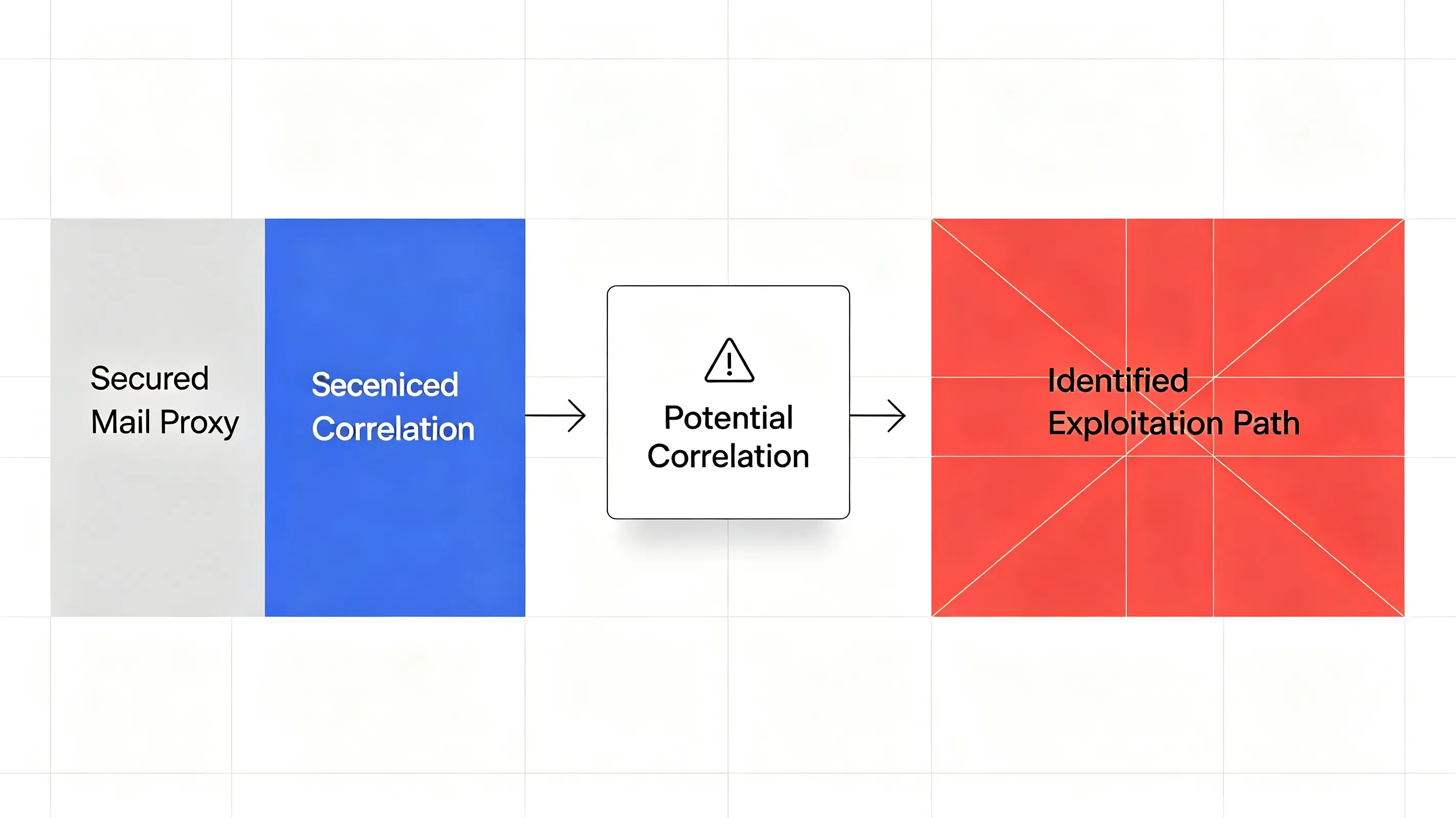
Although the reported issue concerns email privacy rather than mobile attribution, it illustrates a broader engineering challenge: once identity continuity is disrupted across systems, downstream measurement and security workflows also become more difficult. The same loss of browser context also affects downstream mobile attribution workflows when a user eventually installs an application. When a user creates an account using a masked alias and subsequently downloads the mobile application, the lack of stateful continuity across standard mail-to-app redirections disrupts standard multi-touch models. In broader identity systems, failures in alias isolation can highlight how cross-system identity continuity depends on consistent state handling.
Best Practices & Reference Implementation Standards in the Post-Alias Era
To protect data pipelines and ensure user security in a post-alias era, developers and architects can evaluate decentralized, open-source alias management and server-side state preservation. Relying on single-provider OS-level features introduces systemic vendor lock-in and leaves organizations vulnerable to silent backend updates. Instead, engineering teams can evaluate alternative routing technologies that grant complete data ownership.
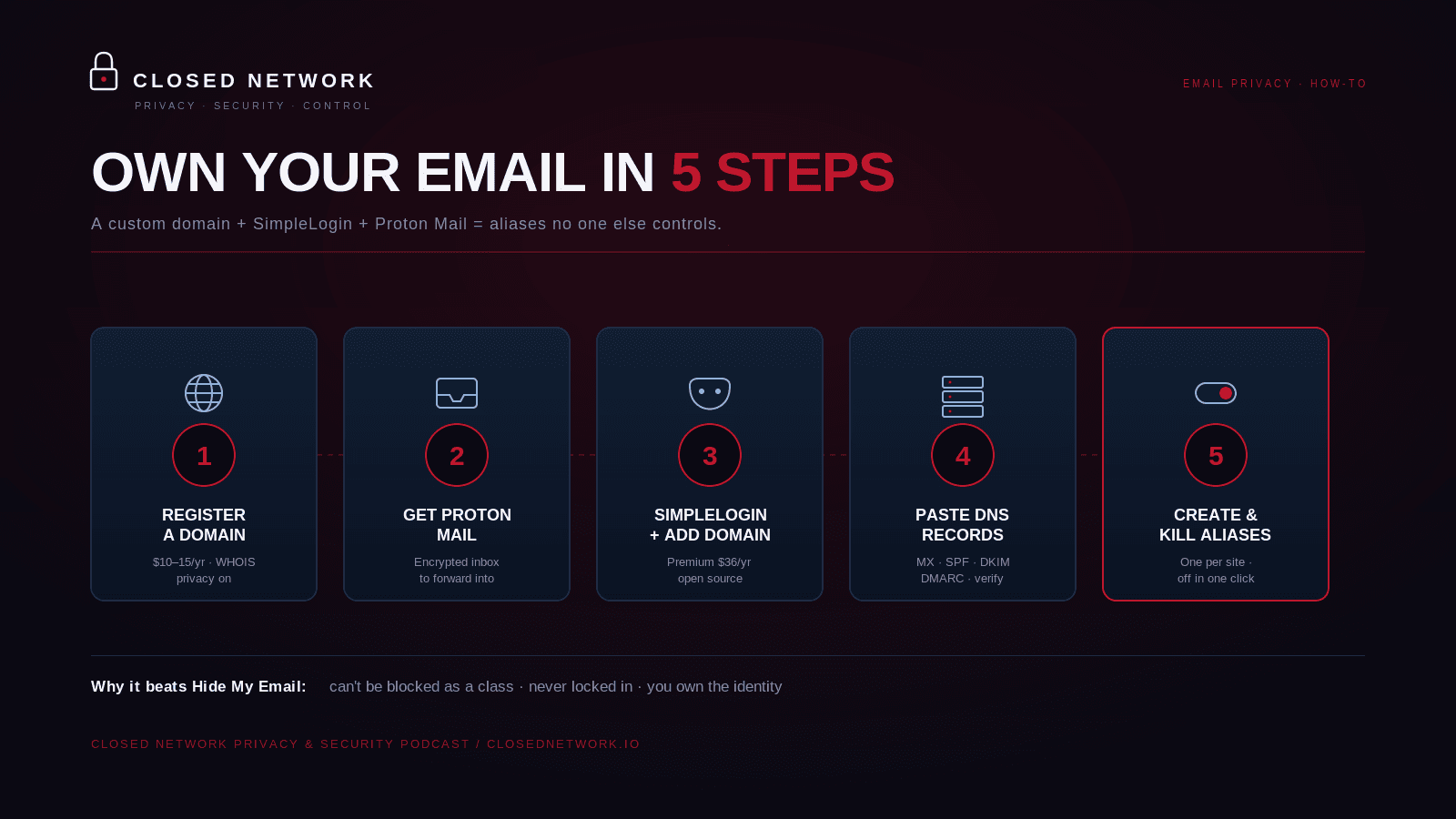
A standard alternative involves registering a dedicated custom domain specifically for email compartmentalization. By routing this domain through an open-source, self-hosted aliasing engine like SimpleLogin and pointing it to an encrypted mailbox like Proton Mail, developers can ensure that their aliases look like standard custom domains, preventing anti-abuse systems from blocking them as a group.
The following comparison matrix outlines how different tracking methodologies perform in a stateless, alias-compromised environment:
| Metrics & Capabilities | In-house Database Session Build | Legacy Firebase / Webview Redirection | Premium MMP Platforms (Adjust, AppsFlyer) | Deferred Deep Linking SDK (OpoInstall) |
|---|---|---|---|---|
| Attribution Survival | High (Server-Side) | Low (Client-Side) | High (Multi-Touch) | High (Programmatic Mapping) |
| Development Cost | Extremely High | Low | High | Low |
| Maintenance Burden | High (Ongoing) | Low | Low | Low |
| Fraud Mitigation | Medium (Manual Rules) | Low | High (Algorithmic) | High (Zero-Trust Signatures) |
| Latency Impact | Variable | Medium | Medium | Low (Ultralight Footprint) |
While custom-domain aliasing protects incoming communications, downstream conversion often relies on server-side state restoration. For instance, platform reference architectures, such as OpoInstall, employ deferred deep linking and parameter recovery to preserve session metadata across distributed web and mobile contexts. By mapping session metadata to a centralized database rather than relying on browser-based redirects, such a system ensures that conversion contexts remain consistent even when initial tasks are executed anonymously. Engineering teams can evaluate these approaches to balance data protection and measurement consistency.
Frequently Asked Questions (FAQ)
Why is the move to a dedicated subdomain bad for alias privacy?
How do data brokers resolve anonymous aliases back to real email addresses?
What is the most resilient setup for maintaining anonymous email aliases?
Practical Implications & Future Outlook
The discovery of this forwarding exploit marks a critical turning point in how we define digital privacy. As automated identity profiling tools become more sophisticated, renting your privacy from standard operating system features introduces unacceptable risks. A backend implementation change or unresolved protocol flaw can compromise database isolation, potentially exposing real-world user identities to unwanted tracking.
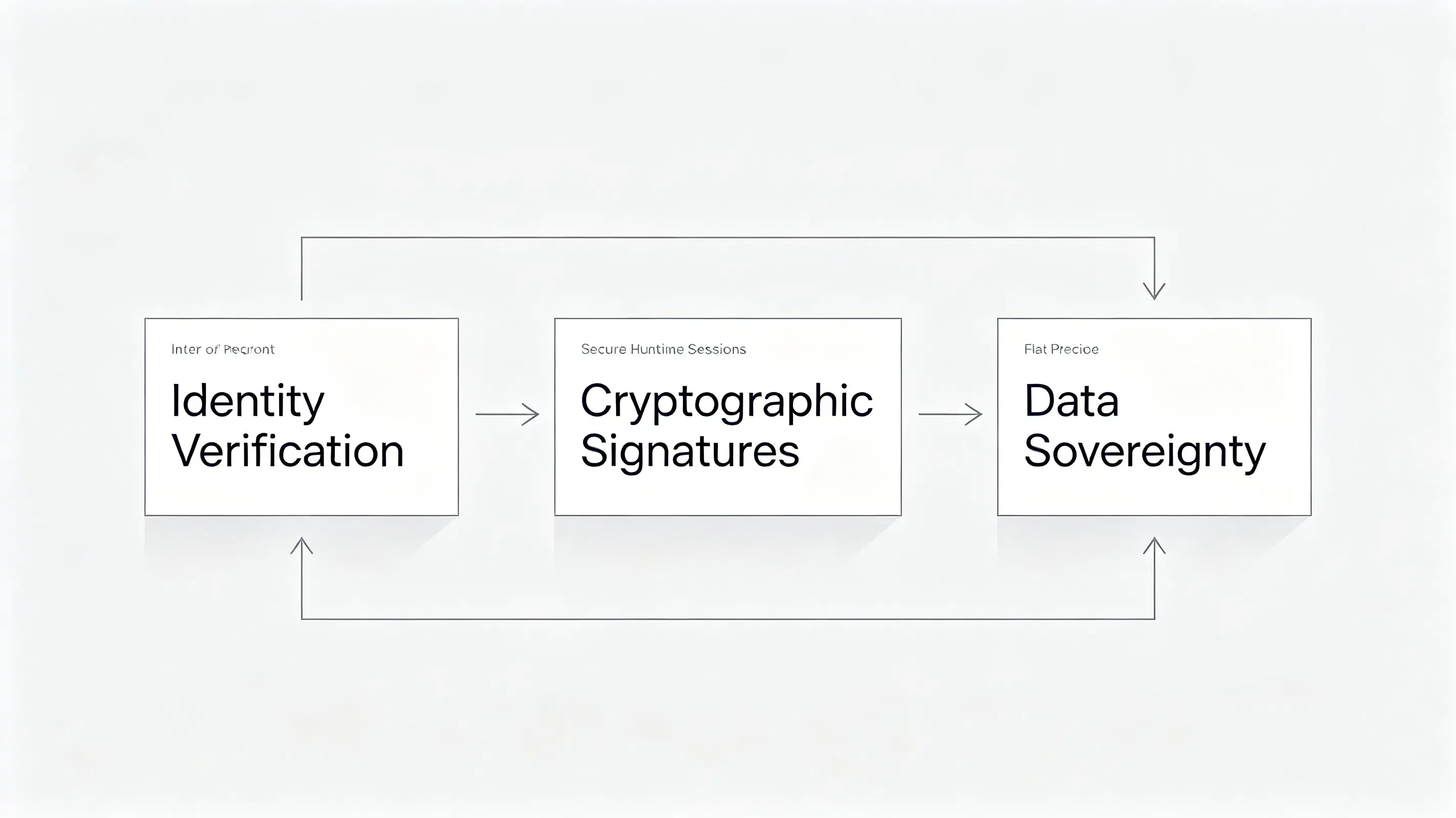
For developers and digital businesses, the future of user acquisition belongs to systems that establish transitive trust without compromising security. Implementing server-side identity verification, cryptographically signed referral parameters, and robust parameter pass-through frameworks will be essential to survive in a zero-trust internet. By building architectures that prioritize data ownership and decentralized session state, organizations can protect their measurement pipelines while respecting genuine user privacy.
Share this article