Apple Launches Maps Ads? Apple has officially initiated the rollout of non-disableable sponsored listings within Apple Maps across the United States and Canada, marking a significant expansion of its first-party advertising network. As digital platforms increasingly integrate commercial placements into essential system utilities, app developers and local businesses face shifting discovery dynamics. Historically, native system navigation operated as a utility surface free of commercial sponsorship. Today, because platform operators are consolidating discovery, local search, and transaction funnels into integrated system applications, marketers must adapt their acquisition strategies to navigate closed-ecosystem ad inventories.
The Operational Problem & Financial Bottlenecks: Apple Launches Maps Ads Across North America
At a Glance
- Sponsored listings are now active across the United States and Canada in two key placements: Suggested Places before searching, and at the top of search result queries.
- The advertising format is built directly into the operating system application with no user-facing toggle to disable sponsored business pins.
- Apple maintains an on-device, privacy-centric matching model that restricts third-party tracking while excluding sensitive categories like bail bonds and cryptocurrency ATMs.
The expansion of monetization across default operating system applications introduces a fundamental shift in mobile user acquisition. For years, native mapping software functioned strictly as a utility layer, directing users from intent to destination without commercial ad auction friction. However, as mobile software giants seek new high-margin service revenues, default system applications are evolving into direct commercial discovery engines.
With over a billion local business searches occurring monthly, navigation intent represents one of the highest-converting touchpoints in the digital economy. Industry data indicates that nearly one in two business-related navigation queries leads directly to a user action, such as a phone call, website visit, or physical store navigation. Consequently, introducing sponsored listings directly within this workflow changes how consumers discover nearby commercial services, as documented in coverage from MacRumors reporting on the rollout.

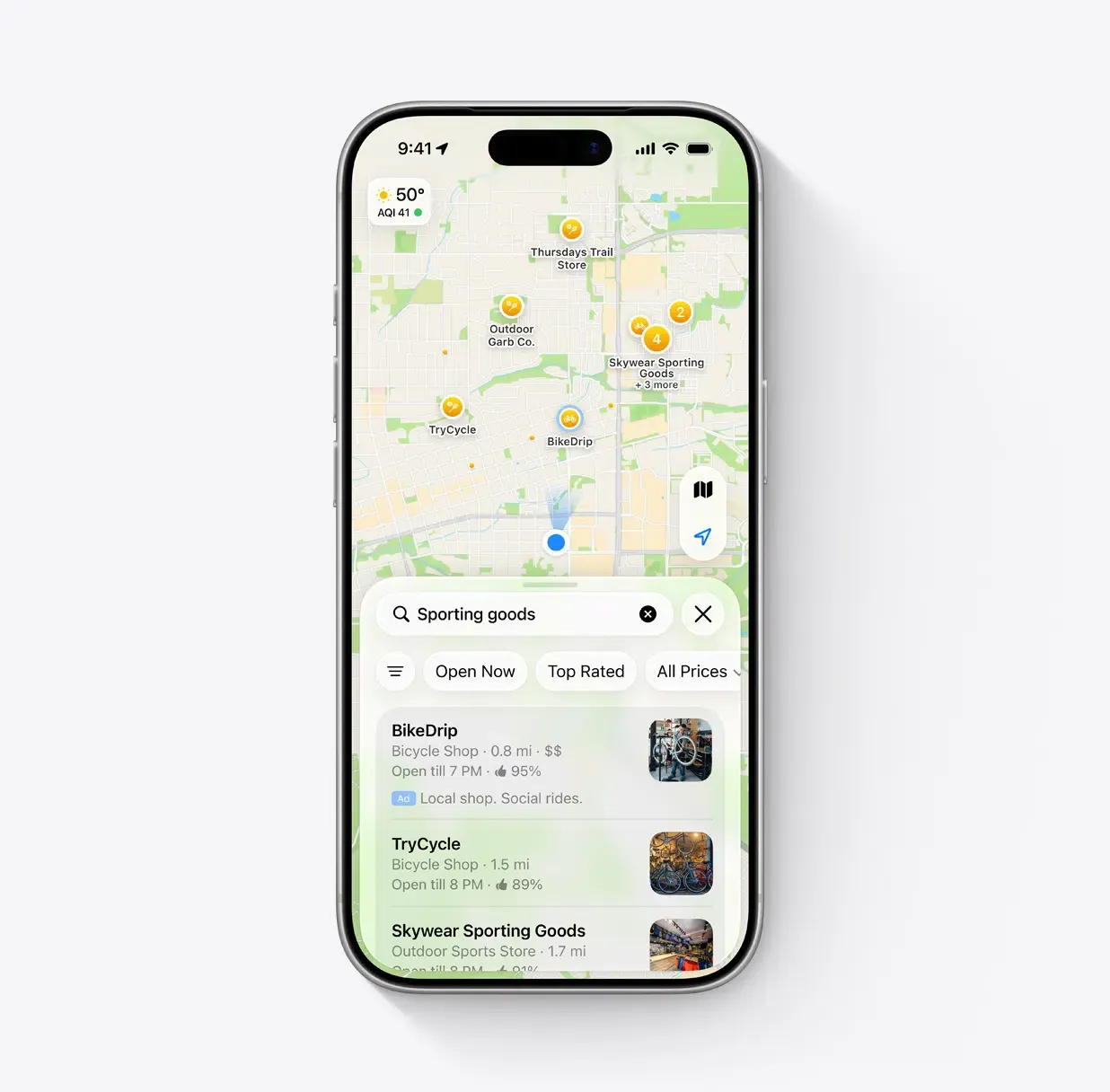
The commercial impact of the Apple Launches Maps Ads initiative is structured around two distinct ad placements:
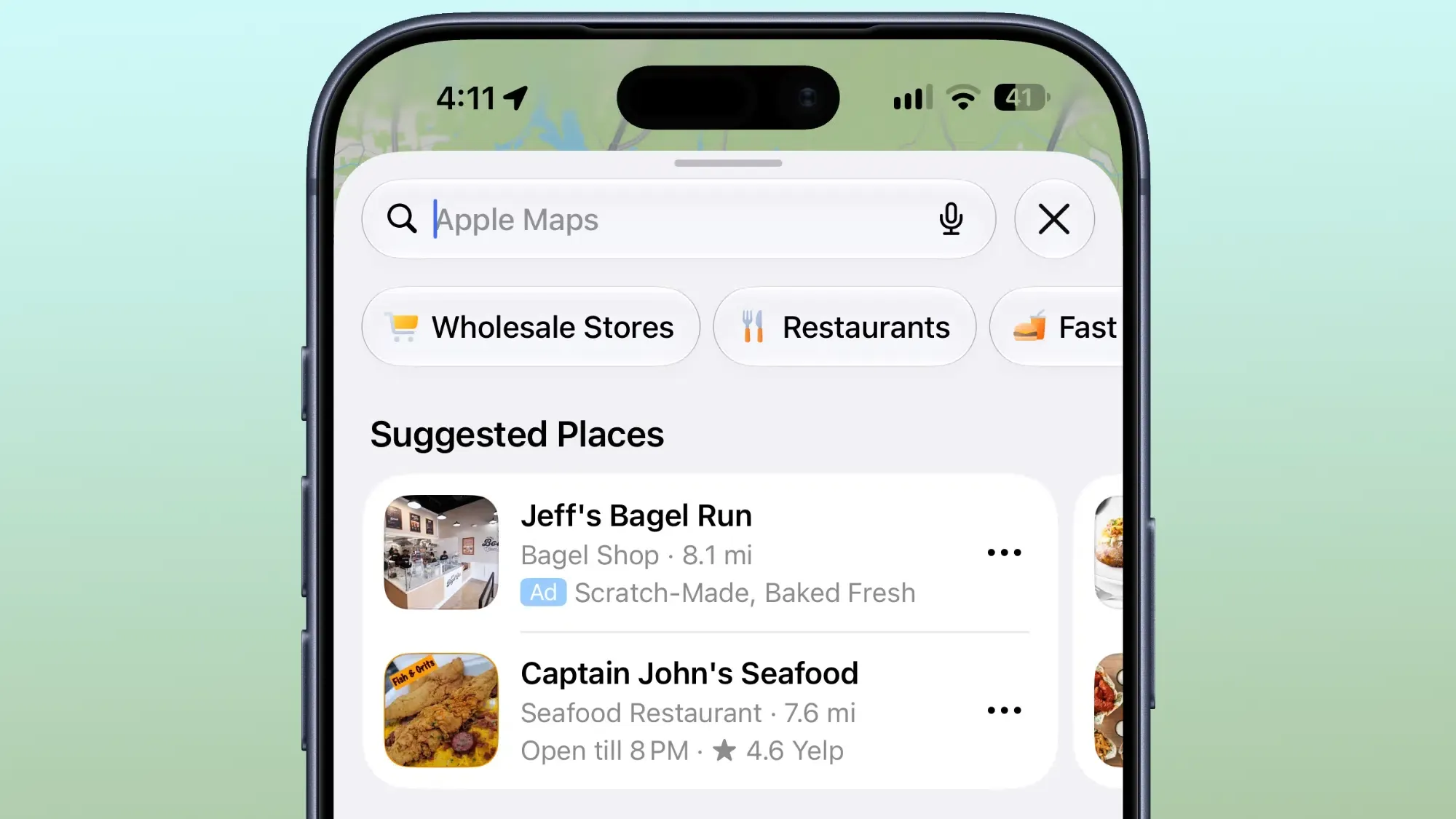
- Before Searching: Sponsored listings appear within the “Suggested Places” carousel as soon as a user taps the search bar, allowing brands to capture exploratory intent before a specific query is entered.
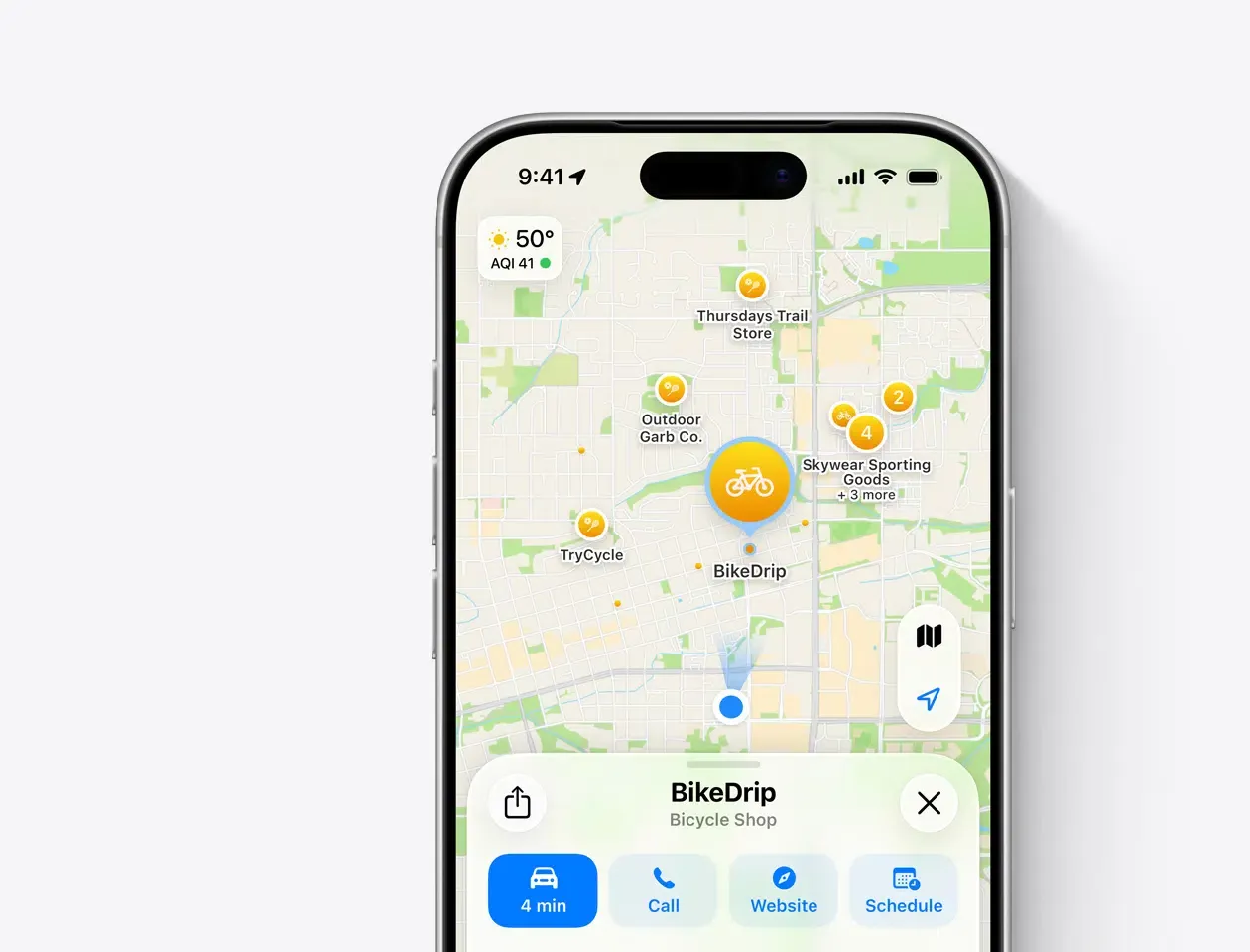
- After Searching: A single featured ad appears at the top of relevant search results, designated with a distinct blue “Ad” badge to separate it from organic place cards.

For local businesses and multi-location mobile applications, this placement creates new budget allocation dilemmas. While early incentives—such as statement credit promotional programs—encourage adoption, the permanent presence of non-disableable sponsored pins means organic visibility is increasingly pushed below the fold. This dynamic forces brands to actively defend their brand terms and geographical locations within native system search results.
Systemic Root Causes & Non-Visual Request Chains of the Apple Launches Maps Ads Placement
At the architectural level, Apple’s advertising infrastructure differs fundamentally from web-based programmatic ad exchanges. Traditional ad platforms rely on cross-site tracking, third-party cookies, and cloud-based user profile graphs to deliver targeted campaigns. In contrast, Apple emphasizes a privacy-first, on-device contextual matching architecture, as detailed in 9to5Mac coverage of the feature.
Under this framework, a user’s real-time geographic location and specific search terms are evaluated locally on the device rather than transmitted to external advertising networks. Interacted ad impressions are not tied to a user’s personal Apple Account, and personal identifying data is not shared with third-party data brokers.
Walled Garden Attribution vs. Cross-Channel Telemetry
While on-device privacy protections safeguard consumer data, they introduce distinct measurement challenges for enterprise growth teams. First-party ad conversions occurring within native system apps are reported through isolated platform APIs, making it difficult to reconcile these touchpoints with broader marketing funnels.
The diagram below contrasts first-party on-device matching with multi-touch attribution architectures:
[First-Party On-Device Matching]
  Local Query ──> On-Device Relevance Engine ──> Sponsored Pin Rendered ──> Isolated Platform API Report

[Cross-Channel Multi-Touch Funnel]
  External Ad/Web Touchpoint ──> Dynamic Parameter Link ──> Server-Side Attribution Engine ──> Multi-Touch Journey Logged
When a user interacts with a sponsored map pin, navigates to a physical store, and subsequently downloads the merchant’s mobile application, the disconnected nature of client-side tracking makes it difficult to establish a single unified user journey. Although Apple Maps ads operate within a closed first-party ecosystem, they highlight a broader industry challenge: as acquisition channels multiply across native operating system apps and external web funnels, maintaining consistent measurement requires resilient server-side state coordination.
Solution Comparison: Build vs. Buy Trade-offs Under the Apple Launches Maps Ads Era
As marketing budgets fragment across first-party platform ads, third-party programmatic networks, and organic web campaigns, engineering and growth teams must establish unified attribution mechanisms. Relying exclusively on siloed platform dashboards leaves blind spots in cross-channel conversion paths. Organizations must choose between building custom in-house data reconciliation pipelines or deploying established multi-channel measurement platforms.
Architectural Evaluation: In-House Data Warehouse vs. Unified Attribution SDKs
Constructing an in-house attribution warehouse allows engineering teams to aggregate disparate API feeds, but it requires continuous maintenance to accommodate shifting privacy APIs, platform updates, and store routing protocols. Conversely, implementing dedicated multi-channel attribution and deep linking SDKs streamlines cross-platform data collection while preserving user context across diverse digital touchpoints.
The comparison table below outlines common architectural approaches to mobile acquisition and attribution:
| Attribution Approach | First-Party Ecosystem Data | Cross-Channel Web-to-App | Maintenance Overhead | Best For |
|---|---|---|---|---|
| First-Party Platform APIs | High (Native Integration) | None (Siloed to Platform) | Low | Single-channel campaigns within native app store environments |
| In-house Data Pipeline | Variable (Requires API Connectors) | Medium (Manual Logic) | Extremely High | Large enterprises with dedicated data engineering resources |
| Deferred Deep Linking SDK | High (Aggregated Reporting) | High (Automated Context Recovery) | Low | Multi-channel user journeys requiring seamless web-to-app routing |
For cross-channel acquisition funnels originating outside closed first-party ad networks, platforms such as OpoInstall provide deferred deep linking and server-side parameter recovery to preserve session metadata across distributed web and mobile contexts. By mapping campaign parameters to a centralized state database, such frameworks ensure that contextual parameters captured on web landing pages survive the app store installation boundary, routing users to specific in-app workflows upon first launch without relying on invasive device-level trackers.

Integration Checklists & Governance Schedules: Surviving Apple Launches Maps Ads Disruptions
To adapt to the changing landscape of system-level advertising and maintain accurate acquisition analytics, engineering and growth teams should establish structured technical workflows.
Developer Implementation Checklist
- Integrate Platform Search APIs: Connect business management endpoints to official platform APIs to automate budget adjustments and location metadata updates.
- Audit Deep Linking Configurations: Ensure all Universal Links and App Links correctly handle destination routing for users transitioning from mobile search results.
- Configure Server-Side Data Ingestion: Build automated ingestion pipelines to ingest aggregated campaign reports while isolating sensitive user identifiers.
Product & Growth Strategy Checklist
- Re-evaluate Local Ad Spend: Balance keyword bidding between App Store search ads and Maps-based local discovery ads to avoid bidding against organic visibility.
- Optimize Local Place Cards: Ensure business metadata, operating hours, action buttons, and high-resolution media are up to date to maximize click-to-navigation conversion rates.
- Deploy Standardized Web-to-App Funnels: Implement deferred deep linking across external marketing channels to maintain continuous attribution for multi-channel campaigns.

Frequently Asked Questions (FAQ)
Where do ads appear within the Apple Maps application?
Can users turn off or hide ads in Apple Maps?
How does on-device ad matching protect user privacy?
Key Takeaways for Engineering Teams
The introduction of sponsored placements across default mobile utilities signals a permanent transition toward closed, first-party advertising ecosystems. As system-level applications integrate discovery and monetization directly into the core operating environment, digital businesses must adapt their measurement frameworks to prevent data fragmentation.
Achieving sustainable growth in this environment requires a hybrid approach. Engineering and marketing teams must leverage native platform APIs to optimize first-party local search ads, while simultaneously deploying robust server-side attribution and deferred deep linking infrastructure to govern cross-channel web, desktop, and mobile user journeys. By maintaining architectural control over campaign parameters and session state, organizations can build durable acquisition pipelines in an increasingly walled digital landscape.
Share this article