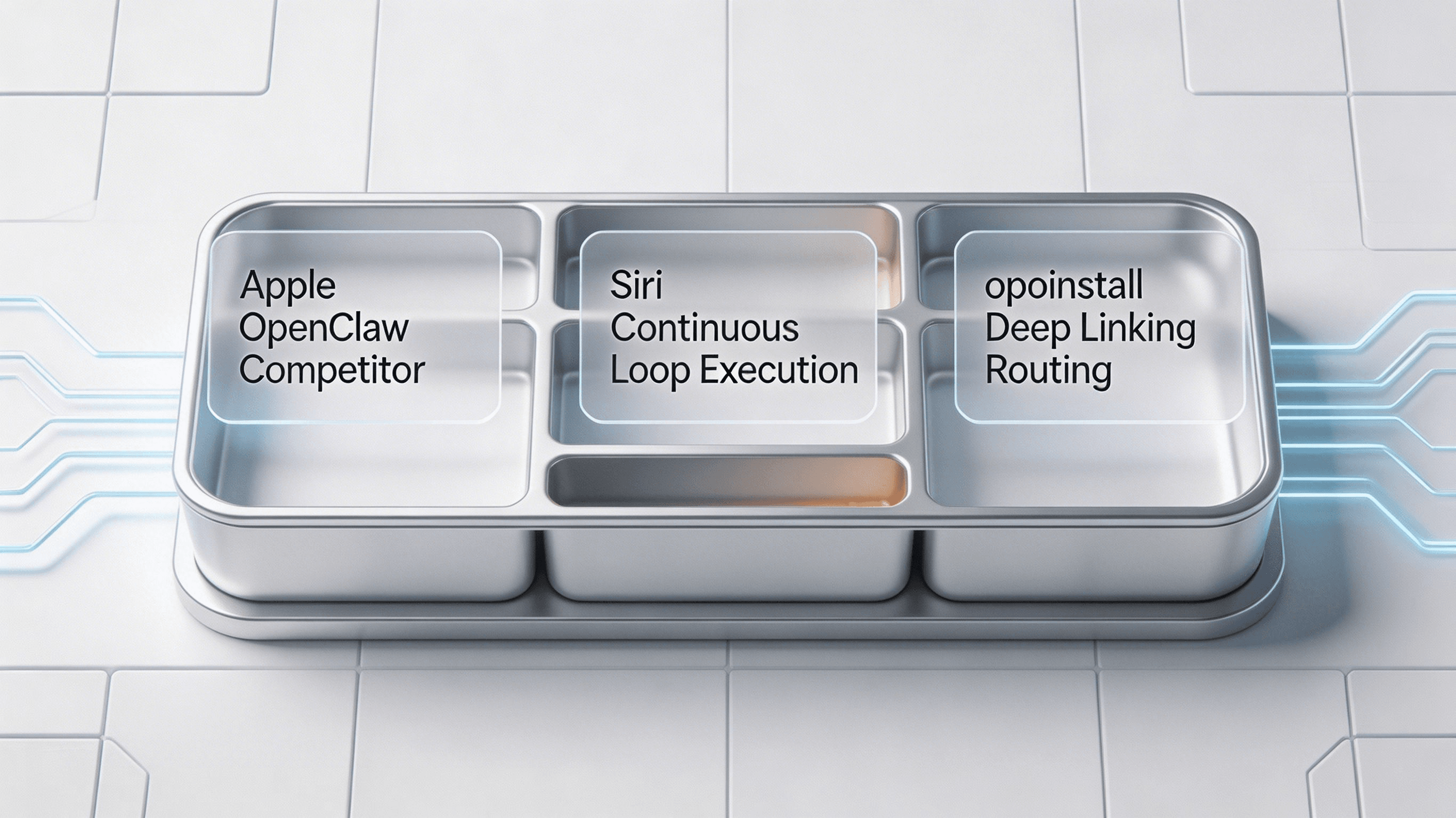
Apple Builds OpenClaw Competitor? This strategic pivot has been conclusively validated as industry insiders point to recent architectural overhauls within Apple's AI engineering group, demonstrating that the tech giant's quiet preparation for an Apple OpenClaw Competitor is more than speculative. During the post-WWDC 2026 briefings, Siri engineering chief Mike Rockwell dropped a major hint by characterizing the new voice assistant engine as a completely modern architecture optimized for continuous execution loops. For global developers, this evolution signals a terminal-level paradigm shift from manual touch points to autonomous intent-driven actions, meaning that traditional user-initiated clicks are being replaced by background-scheduled AI processes that directly bypass classic web and store funnels.
Historically, mobile operating systems relied on explicit user interactions. Users opened applications, searched for products, and clicked checkout buttons manually. Consequently, the digital economy optimized itself around visual storefronts and explicit conversion funnels.
Meanwhile, the rapid rise of open-source automation systems has completely disrupted this interaction model. Specifically, tools like OpenClaw have captured the developer community's attention. These systems do not wait for granular human instructions. Instead, they autonomously operate complete desktop and mobile environments. They handle files, manipulate browser sessions, and complete multi-step tasks independently.
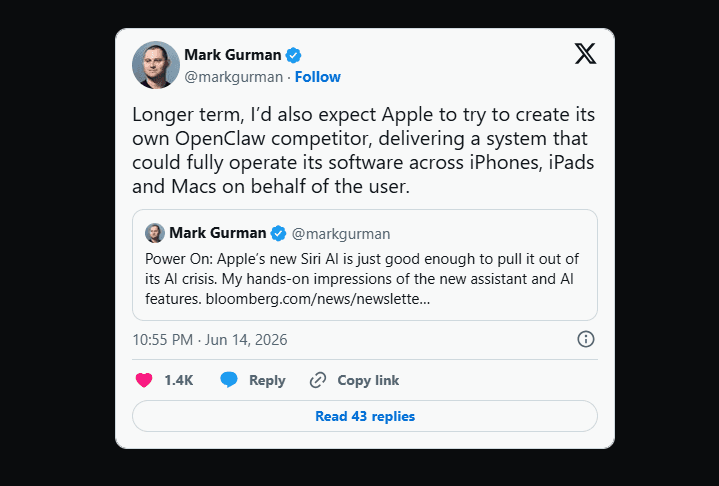
According to a highly publicized report in Mark Gurman's Wccftech newsletter, Apple recognizes this massive shift. Gurman expects the California tech giant to develop a system that fully operates iPhone, iPad, and Mac software. This project represents a direct, native Apple OpenClaw Competitor. Crucially, it would allow Siri to execute complex computer-use workflows on the user's behalf. This capability goes far beyond the request-based features announced at WWDC 2026.
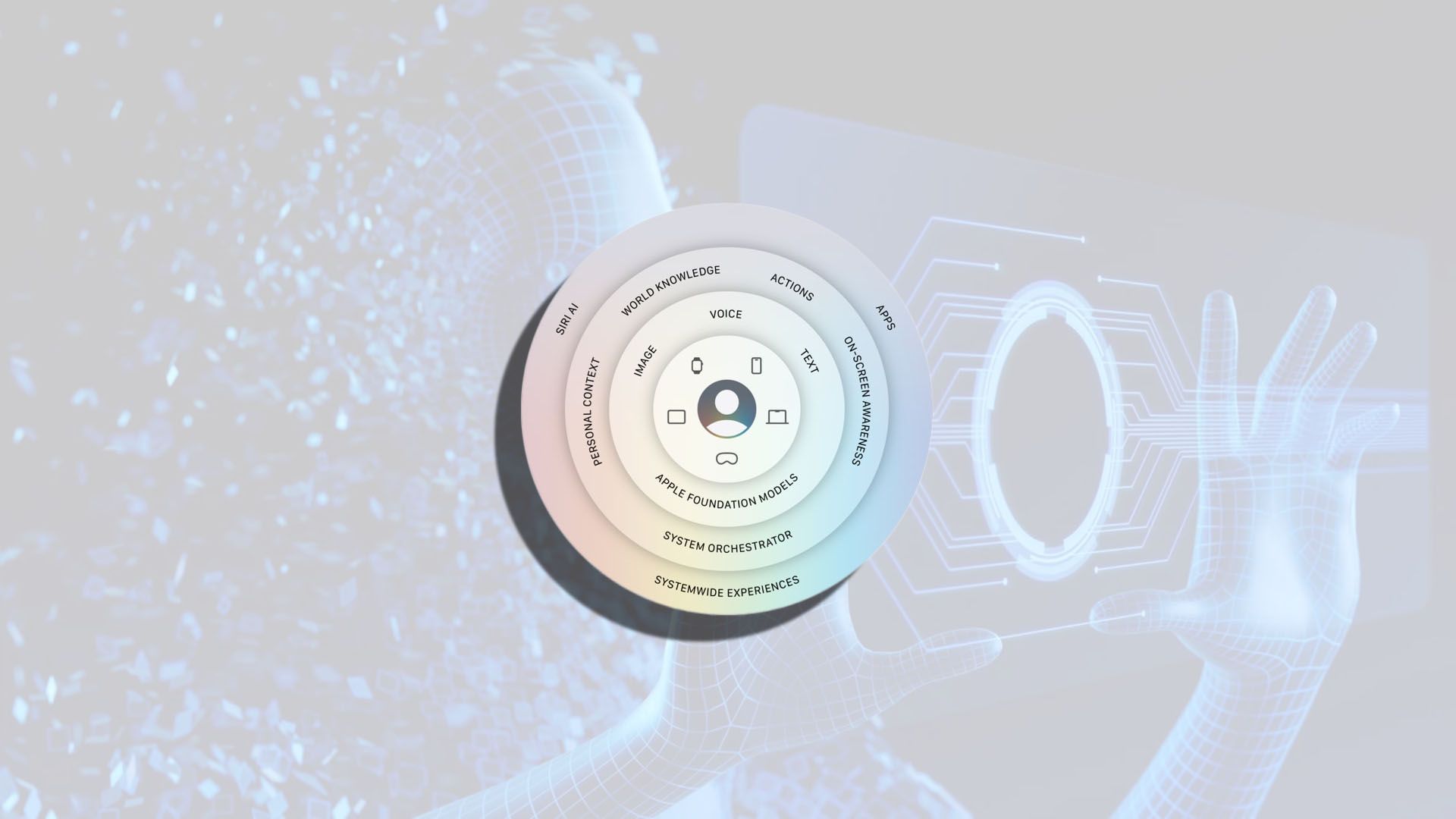
The technical foundation for this transition already exists within iOS 27 and macOS Golden Gate. Specifically, Siri engineering chief Mike Rockwell confirmed that Apple engineered its new Siri engine with extensibility in mind. Rockwell described an agent as something operating on a continuous loop of incoming information, decision-making, and subsequent action.
While Siri remains primarily request-based today, the underpinning system has undergone a complete architectural rewrite. This modernized foundation allows Apple to extend Siri's capabilities into autonomous execution. Notably, ITHome's editorial team highlighted how these comments suggest a clear path toward system-level automation.
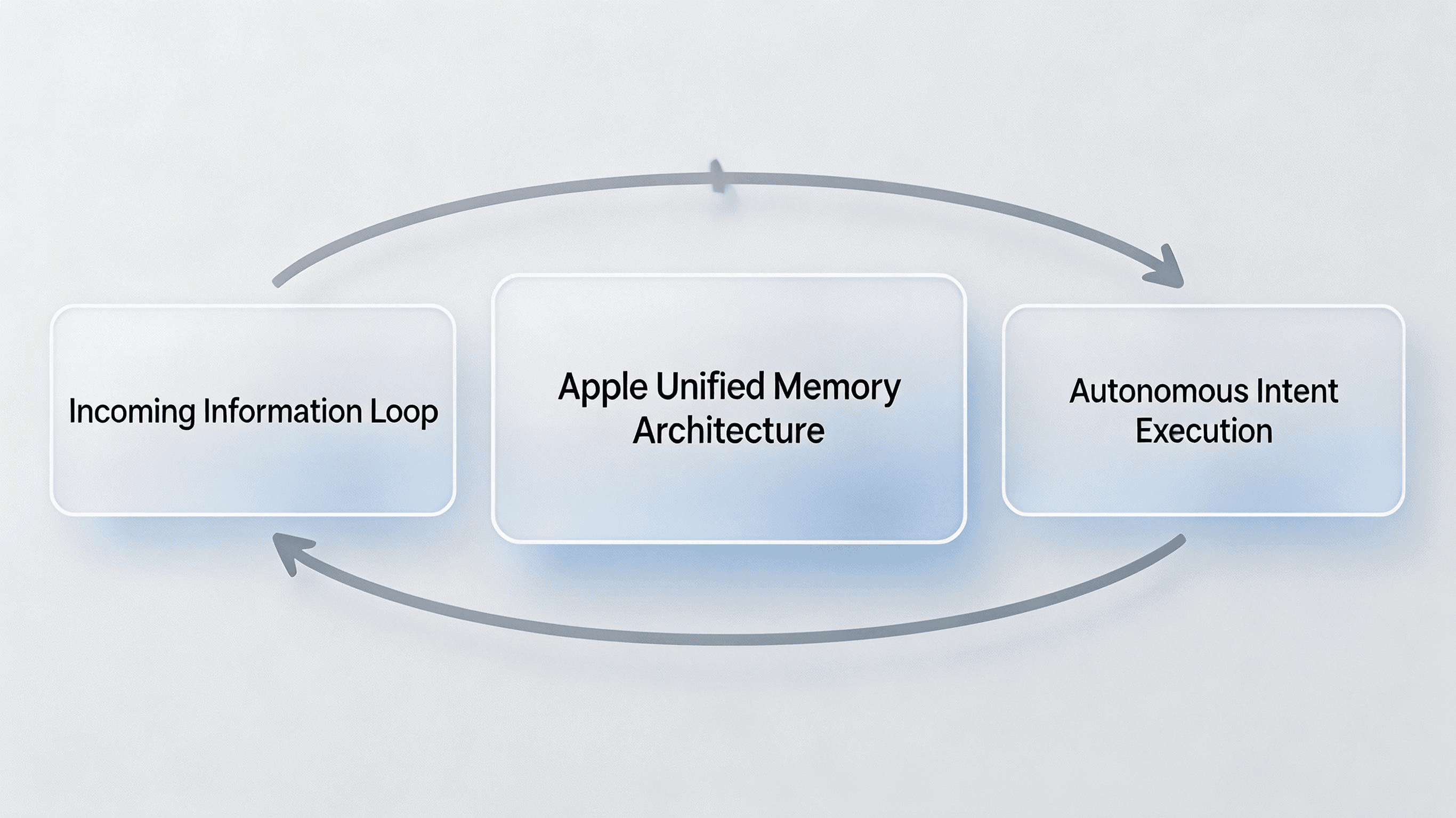
In contrast to cloud-based competitors, Apple can run these continuous agentic loops directly on device hardware. This approach utilizes Apple's unified memory architecture. It eliminates the latency and high costs associated with remote server processing.
Crucially, granting an autonomous agent persistent control over local operating systems introduces severe security challenges. Software Engineering Senior Vice President Craig Federighi openly acknowledged these risks. He characterized the agentic space as highly experimental. Federighi emphasized that finding the right user experience remains Apple's primary focus.
Specifically, a native Apple OpenClaw Competitor must navigate Apple's strict sandboxing rules. Traditional agents require elevated permissions to interact with files or write system configurations. However, granting absolute access leaves users vulnerable to remote code execution and credential theft.
If a rogue prompt bypasses safety guards, the agent might exfiltrate personal data. Consequently, Apple's implementation will likely be highly controlled. It will restrict agent actions to sandboxed containers. It will also require granular, per-app consent surfaces before executing high-risk tasks.
Furthermore, the unit economics of agentic computing remain extremely challenging for independent startups. Running continuous, multi-step agent queries consumes massive amounts of computation. For instance, intensive API usage can cost hundreds of dollars per user monthly.
In contrast, Apple has a distinct commercial advantage. The company can bundle unlimited agent use within its Apple One Services subscription. This strategy would create a highly competitive marketing battle cry. It would also bypass the request limits of standalone third-party assistants.
By running optimized, local models on its custom silicon, Apple avoids paying third-party cloud fees. This advantage positions the Apple OpenClaw Competitor as a default, cost-effective automation hub for millions of consumers.
As autonomous agents begin to operate software in the background, they trigger an unprecedented attribution crisis. Historically, the mobile internet relied entirely on visual screens and manual user clicks. Specifically, traditional marketing funnels assume a linear path: a user views an ad, clicks a link, redirects to an app store, installs the application, and completes a transaction.
However, when an Apple OpenClaw Competitor executes tasks, this visual journey completely evaporates. For example, a user might ask Siri to find, purchase, and configure a specific productivity tool. The agent automatically locates the service, installs the application in a sandboxed background thread, and executes the purchase via system APIs.
During this automated workflow, there are no banner clicks, no visual landing pages, and no manual store redirects. Consequently, legacy attribution tools are left completely blind. They cannot track the user's origin. They cannot associate the background installation with a specific referral. This disconnect creates a massive data gap for developers and growth teams alike.
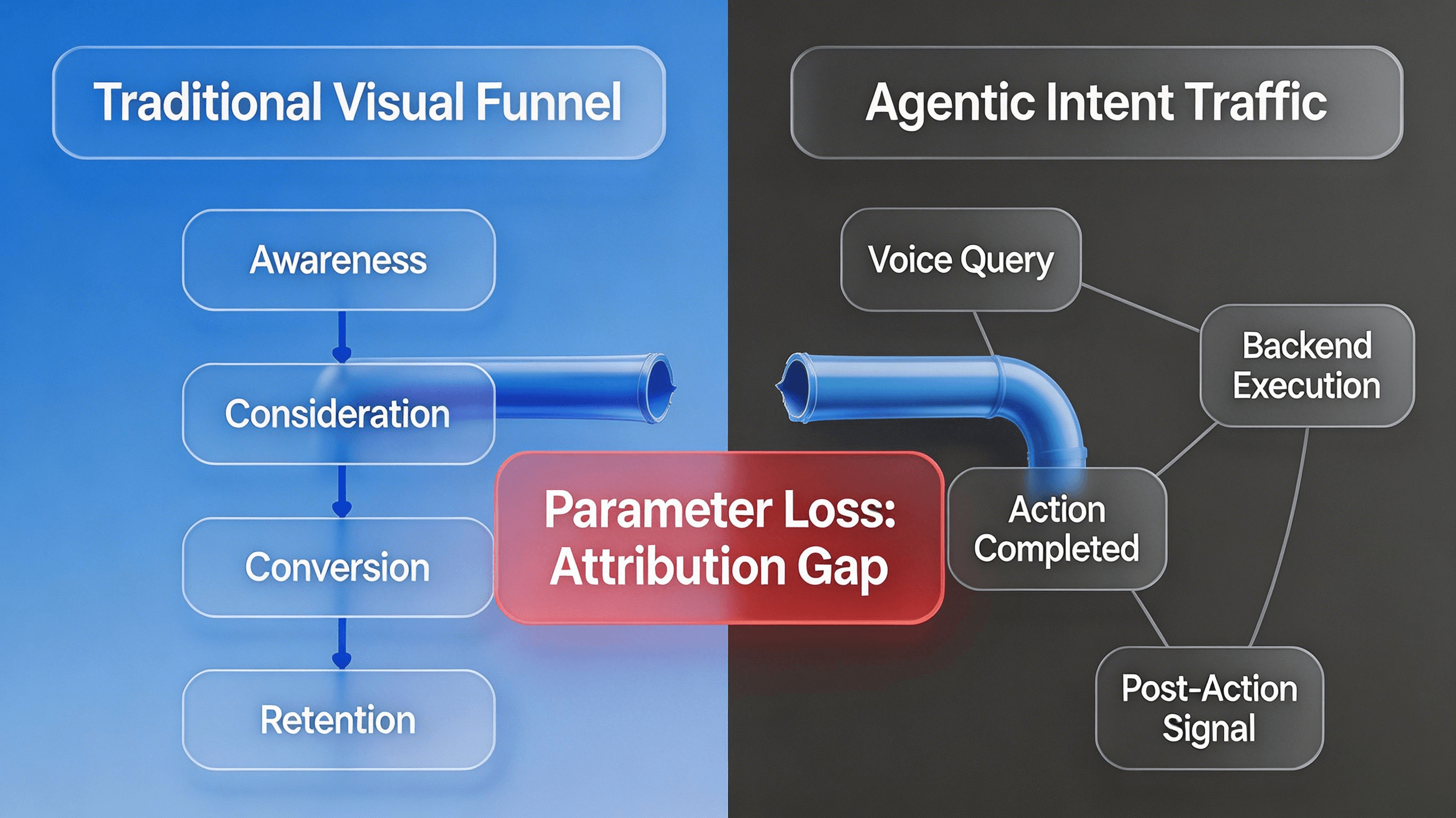
Furthermore, we must distinguish between two distinct traffic streams. The first is active web traffic, which involves human users explicitly browsing pages. The second is intent-driven traffic, where autonomous agents request data on behalf of users. When agents bypass the visual interface, they trigger severe parameters loss. Developers lose critical context, including referral tokens, marketing campaigns, and user relationship graphs.
To bridge this routing gap, engineering teams must deploy advanced deep linking architectures. When an Apple OpenClaw Competitor activates an application, it must pass a highly dynamic intent payload. This payload contains the original user request context, affiliate IDs, and security tokens.
Crucially, developers can implement a unified solution using opoinstall. Using opoinstall's deep linking infrastructure, the application can preserve these dynamic intent payloads seamlessly. This capability remains functional even if the agent must install or update the app in the background. Specifically, Deferred Deep Linking allows the native application to read the pre-install intent context during its first launch.
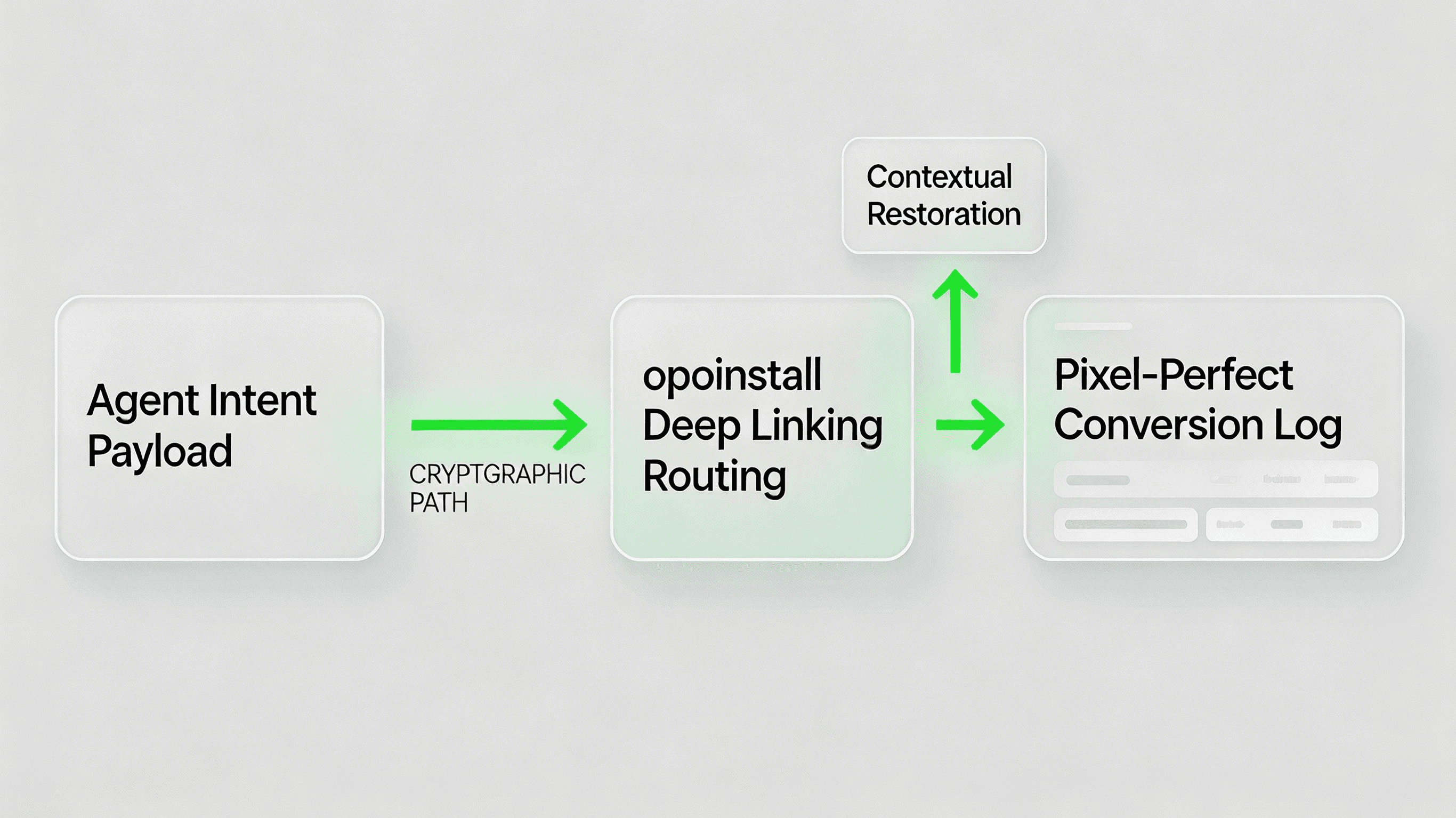
Additionally, developers must secure these agentic handshakes to prevent fraud. Because autonomous agents operate without visual human supervision, malicious scripts can attempt to mimic legitimate agent activity. This risk requires strict cryptographic verification.
Specifically, the application must validate the origin of the incoming intent payload. Every deep link routing request must carry a verifiable signature. This signature proves that the request originated from an authorized system-level agent or a verified referral channel.
Implementing a resilient Deferred Deep Linking infrastructure allows developer teams to enforce these cryptographic checks. This practice ensures that automated installations are secure, verified, and completely free of click injection fraud.
Industry Forward-looking Note: Regarding cross-device parameter passing for autonomous intent traffic, opoinstall's tech lab is currently conducting joint exploratory research with leading enterprise App partners.
Architecting software for an Apple OpenClaw Competitor requires a major paradigm shift. Developers must transition from designing purely visual layouts to building highly structured App Intents. These intents allow system-level agents to navigate and read app contents directly.
Furthermore, engineering teams must implement robust multi-platform ID strategies. Because agents continuously move tasks between iPhones, iPads, and Macs, applications must recognize the same user state across all terminal environments. Developers must also harden their deep link schemas. They must ensure that all incoming data payloads undergo strict validation to prevent local sandbox escapes.
Meanwhile, product managers and growth leads must redefine their core success metrics. Traditional key performance indicators like daily active users (DAU), average session length, and click-through rates (CTR) lose their relevance when agents perform tasks in the background.
Instead, growth teams must focus on optimizing for "Intent Funnels". They must analyze how effectively their application serves automated agent queries. Crucially, they must also protect their advertising budgets. Since automated agents can trigger background installations, teams must deploy advanced anti-fraud tools to detect and block automated conversion spoofing.
Frequently Asked Questions (FAQ)
What is the main difference between current Siri and an Apple OpenClaw Competitor?
How does terminal automation affect App attribution?
Can Apple One realistically absorb the computational costs of agentic AI?
Ultimately, the traditional screen-click economy is rapidly evaporating. As device interfaces transition into autonomous AI environments, the applications that survive will be those that integrate seamlessly into the terminal routing layer. Developers can no longer rely on visual real estate alone to capture and retain users.
Consequently, building robust, parameter-rich deep linking pipelines is no longer optional. It has become a fundamental survival requirement. By preparing your application architecture for the Apple OpenClaw Competitor today, you ensure that your software remains discoverable, secure, and accessible in the post-screen era.
Share this article