
Apple Routes AI Requests to Google Cloud? This hybrid cloud delegation architecture represents a notable transparency shift as iOS 27 introduces explicit user consent prompts before sending specific generative workloads to Google Cloud. As consumer AI expands beyond on-device models, cloud-based inference is becoming an essential part of modern AI services. Today, AI platforms increasingly distribute compute-intensive workloads across trusted third-party cloud environments, making explicit user consent and transparent routing essential. As these platforms manage more complex generative requests across external infrastructure, secure multi-cloud verification pathways have become critical for preserving user trust.
Why Apple Routes AI Requests to Google Cloud: Reconciling Privacy Promises With Multi-Cloud Scaling
At a Glance
- Newly introduced permission prompts in the beta releases of standard operating systems alert users when specific generative prompts are routed to external servers.
- First-party Apple Foundation Models and local on-device workloads remain strictly separated from third-party cloud execution pipelines.
- The expanded architecture introduces a hybrid cloud delegation pattern, utilizing encrypted, isolated sandboxes to process complex generative requests.
The design of modern consumer artificial intelligence relies heavily on a delicate balance between local processing and cloud-based scalability. When standard on-device models perform routine tasks, data remains securely stored in local terminal memory. However, when complex, resource-intensive generative features (such as advanced image generation or complex presentation processing) are requested, the local hardware must delegate the computation to high-performance cloud clusters. This creates a data-flow challenge: how can a system scale its compute capabilities without compromising its core privacy commitments?
Over the past two years, hybrid AI architectures have become an important deployment strategy for consumer platforms. By leveraging both on-device foundation models and remote server networks, these services can deliver highly advanced generative experiences without overloading the user terminal. However, the requirement to balance cloud scale with data security has shifted architectural priorities toward secure, isolated multi-cloud environments.

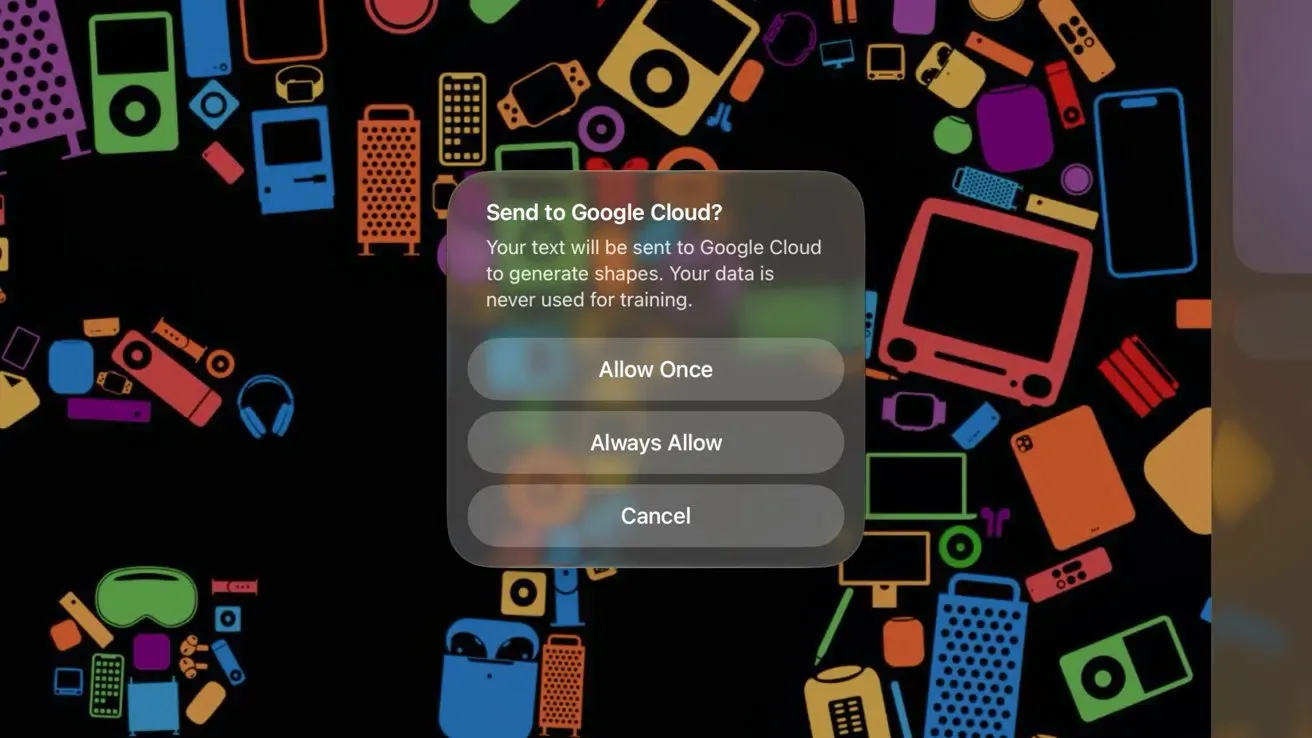
Apple’s decision to route selected AI requests to Google Cloud extends beyond simple workload distribution. Under this updated framework, specific non-local workloads (such as image generation in productivity apps and advanced rendering in creation studios) trigger an explicit permission prompt before routing data to Google Cloud servers. This change does not affect the core on-device foundation models, which continue to run locally. Understanding how Apple Routes AI Requests to external infrastructure is managed helps developers evaluate how the external routing of heavy generative requests is made completely visible to the end-user, giving individuals the power to accept or reject the data transfer on a case-by-case basis.
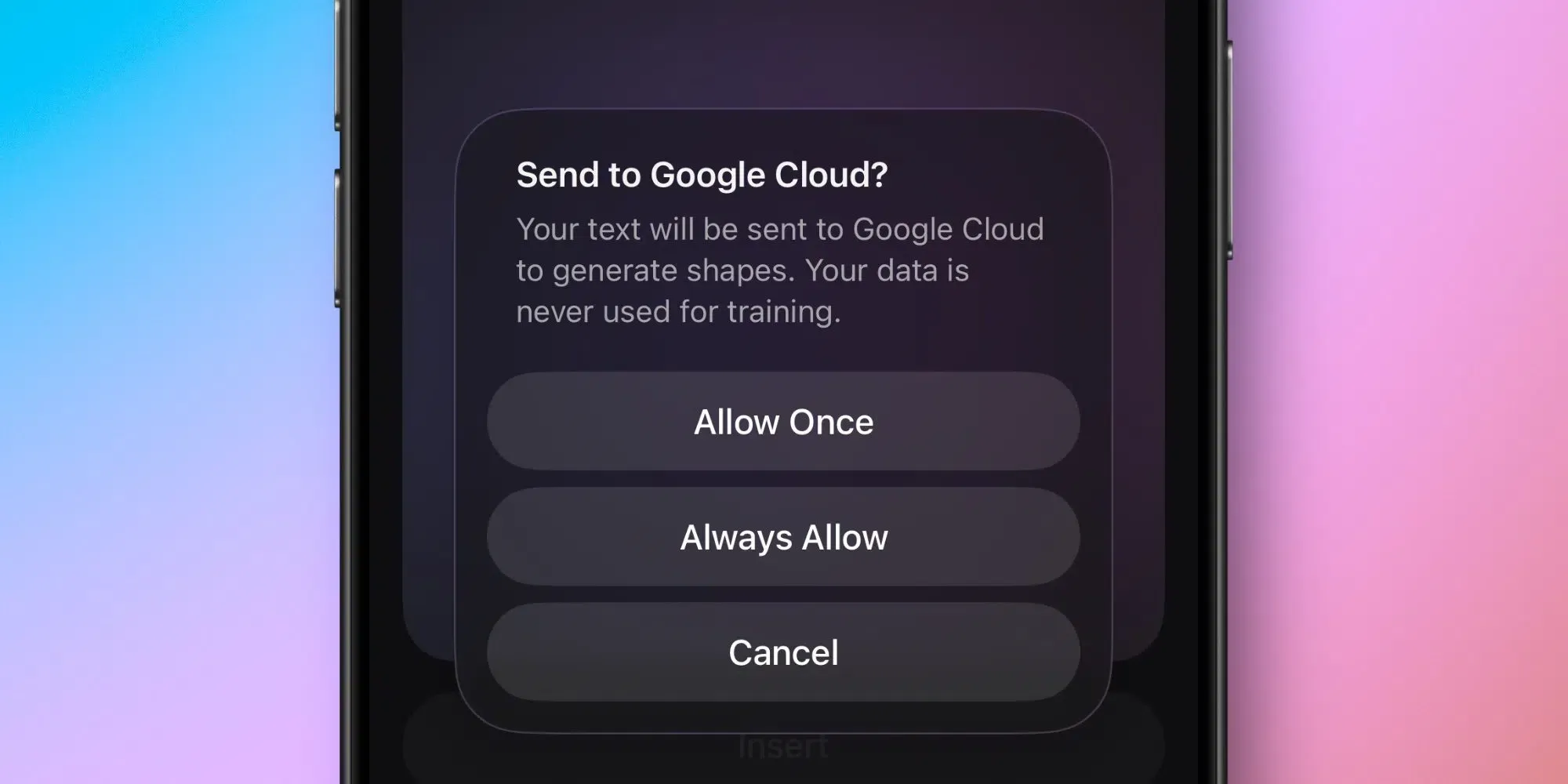
Under-the-Hood Mechanics: Local AI vs. Hybrid AI Request Routing
The fundamental driver behind this hybrid architecture is the need to maintain strong privacy protections while scaling infrastructure. To achieve this, the platform operator is extending its “Private Cloud Compute” (PCC) security patterns directly to third-party data centers. Under this collaborative model, workloads delegated to external servers are processed within highly secure, isolated execution environments, as explained in the Apple Foundation Models analysis.
These secure nodes leverage hardware-level sandboxing, such as confidential virtual machines and dedicated, isolated processes. This ensures that the external cloud provider cannot permanently store, log, or use the transmitted prompts for model training. The data is processed ephemerally and immediately purged once the task is complete. This architecture establishes a secure request-routing model for hybrid AI services while preserving user privacy.
Technical Distinction: Stateful Redirection vs. Stateless Session Flows
From an engineering perspective, routing data across multiple cloud boundaries requires strict session isolation. In standard stateful architectures, user identities are tracked across different environments using persistent cookies, which creates significant compliance and data-leakage risks. By contrast, a stateless approach processes each prompt as an independent, isolated event, ensuring no permanent relationship context is established. This potential alignment occurs without direct user interaction, highlighting the core technical challenges associated with the reported Apple Routes AI Requests topic.
The diagram below illustrates this physical separation:
[Standard On-Device Execution]
  User Input ──> Apple Foundation Model (Local Processing) ──> Zero Data Leaving Device


[Hybrid Cloud Delegation]
  User Input ──> PCC Security Gateway ──> Google Cloud Confidential VM ──> Temporary Context (Sovereign Context Preserved)
Implementing stateless request processing minimizes persistent identifiers and reduces the amount of persistent user data stored by the platform. Although memory bandwidth and application attribution belong to different engineering domains, both highlight the same architectural principle: moving state management away from constrained local resources toward scalable server-side infrastructure. Similar challenges exist in mobile attribution, where privacy restrictions also reduce reliance on persistent client-side identifiers. When user interactions are decoupled from persistent, stateful local cookies to satisfy privacy guidelines, maintaining seamless session continuity across different environments becomes highly complex. Just as processors require persistent, high-speed memory pipelines to match state contexts, downstream marketing pipelines require robust, server-side data preservation to correlate separate installation events without relying on vulnerable client-side cookies or device-level attributes.
Example Scenario: What Happens When You Generate an Image?
Suppose a user creates an AI-generated presentation inside Apple’s productivity suite. If the request exceeds the capabilities of the on-device Foundation Model, the operating system first displays a permission dialog explaining that the task will be processed by Google Cloud. Only after explicit approval is the encrypted request forwarded through Private Cloud Compute to an isolated execution environment. Once processing is complete, the temporary data is deleted according to Apple’s published privacy architecture.
Build vs. Buy: Preserving Session Context Across Hybrid AI Workloads
As platforms restructure their conversational frameworks to comply with strict data privacy guidelines, developers must re-evaluate how they manage session state and user identity. Managing session states in environments where Apple Routes AI Requests occur requires architectures that are both compliant with data privacy laws and highly accurate. Furthermore, when Apple routes AI requests through external cloud providers, organizations must move away from traditional device-level identifiers. Depending on business requirements, teams may build these capabilities internally or adopt existing attribution platforms.
Architectural Evaluation: Custom Build vs. Standardized SDK
Building a custom, in-house system to manage server-side state matching offers maximum flexibility but demands significant ongoing engineering resources. Developers must manually construct database schemas, write secure cryptographic hashing functions, and continually update the system to comply with shifting regional regulations. Conversely, deploying a pre-built, certified SDK reduces integration complexity and guarantees long-term compliance without additional overhead.
The table below compares standard methodologies for managing session state and conversion context:
| Solution | Persistence | Throughput | Best For |
|---|---|---|---|
| In-house Session Database | High (Continuous Sync) | Medium (DB Latency Limits) | Custom enterprise environments with highly specialized storage logic |
| Browser-based Session Tracking | Low (Session Cookies) | Low (No Server Logging) | Basic website tracking with minimal cross-domain conversion requirements |
| Server-side Caching (e.g. OpoInstall) | None (Temporary Server-side Session Tokens) | High (Standardized Sandbox) | Large-scale mobile app and multi-platform campaign attribution |
While custom database configurations can handle basic context, specialized server-side state preservation can optimize development resources. Depending on implementation requirements, organizations may build their own server-side session management system or adopt commercial platforms such as OpoInstall. For instance, OpoInstall offers server-side state restoration and parameter pass-through frameworks, mapping session metadata to a server-side session database to maintain session continuity anonymously, without storing sensitive, long-term personal conversational history. By mapping session metadata to a centralized database rather than relying on browser-based redirects, such a system ensures that conversion contexts remain consistent even when initial tasks are executed anonymously. Engineering teams can evaluate these approaches to balance data protection and measurement consistency.
Integration Checklists: How Engineering Teams Can Prepare for Platform Changes
To prepare for increasingly distributed AI workloads, engineering and product teams must establish clear data governance schedules. This ensures that user data is handled securely, compliance boundaries are respected, and marketing pipelines remain intact.
Developer Implementation Checklist
- Audit Third-Party Data Transfers: Review all external API calls to ensure that prompt payloads are not permanently logged on intermediate relays.
- Implement Stateless Session Handshakes: Transition API routes to stateless processing models, utilizing cryptographically signed tokens to pass temporary context between nodes.
- Validate Third-Party Consent Flows: Implement explicit client-side prompt validation before forwarding generative workloads to external clouds.
Product & Growth Strategy Checklist
- Optimize Hybrid AI Experiences: Reconstruct task-oriented, high-utility generative features that clearly explain external AI processing paths to users.
- Optimize Conversion Funnels: Leverage non-intrusive parameter pass-through frameworks to maintain acquisition tracking without violating user privacy guidelines.
- Monitor Platform Compliance: Ensure that all integrated third-party SDKs comply with local data protection laws and the upcoming platform requirements.
By establishing these structured guidelines, development teams can transition their applications to safer, more compliant architectures while maintaining operational continuity.
Frequently Asked Questions (FAQ)
Why does Apple display a popup before sending AI prompts to Google Cloud?
How does Private Cloud Compute ensure user data remains secure on third-party servers?
Which Apple AI requests are routed to Google Cloud?
Key Takeaways for Engineering Teams
As AI platforms increasingly rely on hybrid cloud inference, developers need to redesign products around privacy, transparent consent, and secure data routing. Evolving data architectures require a fundamental shift in how we build and measure digital experiences. As stateless proxies and headless scrapers become standard consumers of web content, traditional client-side attribution models will continue to degrade. Relying on standard cookies and referrers is no longer sufficient to secure the data pipelines that drive user acquisition.
As Apple expands hybrid AI infrastructure, transparent cloud routing and explicit user consent are likely to become standard architectural requirements across the industry. Looking ahead, engineering teams will increasingly rely on stateless architectures, server-side session management, and privacy-first design. Organizations that prepare for these changes early will be better positioned to maintain compliant and sustainable AI products.
Share this article