Apple Sees More Premium Games? In an interview published during the App Store’s Indie Games Week in October 2026, Carson Oliver, head of App Store Worldwide, reported that more premium paid games launched on iOS this year than in 2025. Oliver noted that Apple supports diverse commercial models, emphasizing that standalone upfront downloads and the Apple Arcade subscription service can coexist without being mutually exclusive. For game studios and mobile publishers, this trend highlights evolving monetization options on mobile platforms, though it reflects platform editorial support and observed developer submissions rather than a formal restructuring of App Store commission tiers or ranking algorithms.
Why Apple Highlights Premium Games: Executive Perspectives on Ecosystem Trends
At a Glance
- App Store Worldwide head Carson Oliver reported an increase in premium game releases in 2026 compared with the prior year during Indie Games Week.
- Apple confirmed that Apple Arcade and standalone paid downloads remain complementary distribution avenues for studios evaluating business models.
- Independent industry reporting has also described growing interest in premium mobile releases, although Apple has not published a directly comparable breakdown of its internal App Store figures.
The mobile gaming ecosystem encompasses a wide variety of commercial structures. While free-to-play titles utilizing optional in-app purchases and digital advertising continue to generate the majority of overall storefront volume, developer interest in self-contained, buy-to-play titles has shown measurable resilience.
As reported in TheNextWeb’s coverage of App Store executive leadership, Carson Oliver assumed day-to-day management of the App Store in August 2026, reporting to Services Chief Eddy Cue following Phil Schiller’s transition to an advisory role. Speaking during Apple’s Indie Games Week editorial feature, Oliver pointed out that independent studios represent a notable portion of new premium entries, observing that for an entire generation of players, touchscreen smartphones served as their initial introduction to gaming.

Oliver’s observations align with broader industry discussion about premium mobile publishing. However, the figures he cited were not accompanied by a public, independently comparable breakdown of Apple’s internal App Store data. Platforms highlighted that narrative adventures, simulation titles, and deck-building games have performed well within the premium segment, referencing prominent releases such as Balatro, Stardew Valley, Slay the Spire, and Bloons TD 6 as examples of complete titles finding an audience on iOS.
Monetization Mechanics: Upfront Purchases, Subscriptions, and Tooling Realities
At the commercial level, distributing games on Apple platforms involves evaluating distinct publishing avenues: direct paid downloads through the standard App Store catalog and participation in curated subscription libraries such as Apple Arcade. Platform leadership described these models as parallel channels designed to serve different consumer preferences.
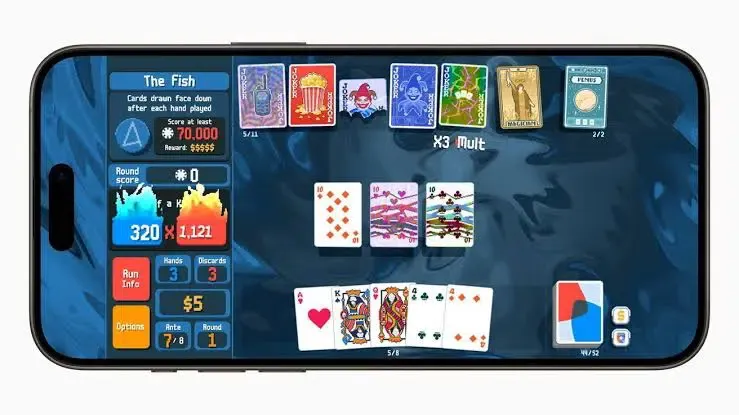
A specific example referenced by leadership is the card-based roguelike Balatro. The game is distributed as an upfront paid download on the open App Store while simultaneously being offered to subscribers within Apple Arcade. This multi-track approach illustrates that commercial packaging can vary according to developer objectives and platform licensing agreements.
Comparative Monetization Structures in Mobile Gaming
Different commercial frameworks introduce distinct operational and architectural considerations for engineering teams. The diagram below outlines the structural differences across primary mobile gaming distribution pathways:
[ In-App Purchase / Free-to-Play Structure ]
  Initial Free Download ──> Player Engagement ──> Optional Microtransactions / Battle Passes

[ Upfront Paid / Curated Catalog Structure ]
  Upfront Purchase / Arcade Subscription ──> Direct Full Access ──> Self-Contained Gameplay Loops
To assist developers in porting titles from desktop and console environments, Apple provides dedicated graphics and evaluation tools. Game Porting Toolkit 4 enables developers to evaluate existing graphics pipelines and shader code on macOS, while Metal 3 and MetalFX upscaling assist in optimizing performance on Apple silicon. However, while these tools reduce prototyping friction, production deployment still requires dedicated mobile interface adaptation and thermal profiling.
Additionally, Apple introduced Creative Assets, a storefront configuration tool allowing developers to customize visual imagery across product pages, search result headers, and In-App Events. While this feature gives studios greater visual control over their promotional presentation, it functions as a marketing configuration tool rather than an algorithmic guarantee of editorial featuring or ranking elevation.
Evaluating Commercial Models on the Modern App Store
Game studios evaluating how to publish on Apple platforms must assess technical and financial trade-offs. The choice of monetization framework directly impacts how teams approach initial onboarding, backend server dependencies, and storefront discovery.
The table below outlines the primary native commercial models on the App Store:
| Commercial Dimension | Premium Upfront Purchase | Free-to-Play with In-App Purchases | Apple Arcade Subscription | Hybrid Unlock (Free + Full IAP) |
|---|---|---|---|---|
| Initial User Payment | Required before download | Free initial installation | Requires active subscription | Free initial download |
| Revenue Mechanics | Single upfront transaction | In-app consumables, passes, or ads | Governed by individual developer agreements | Single non-consumable unlock purchase |
| Acquisition Challenges | Overcoming upfront payment hurdle | Converting active players post-install | Discoverability within subscription catalog | Converting trial users after demo content |
| Core Engineering Focus | Local state storage and asset delivery | Telemetry, live-ops, and receipt validation | Framework compliance and catalog integration | StoreKit entitlement verification logic |
Each model serves different game genres and audience demographics. By evaluating these options early in development, teams can align their technical architecture with their preferred business model.
Implementation Considerations for Multi-Model Game Distribution
When supporting multiple distribution models or evaluating hybrid monetization options, development teams must implement appropriate storefront verification logic:
Storefront Configuration and Engine Optimization Checklist
- Align Storefront Art with Creative Assets: Configure custom banners and product page headers that accurately represent gameplay mechanics and art direction.
- Optimize Shaders and Pipeline Translation: Use Game Porting Toolkit to identify non-standard DirectX calls early, translating core graphics routines to native Metal pipelines.
- Manage Package Size and Resource Streaming: Use On-Demand Resources (ODR) to keep initial download sizes manageable across cellular connections.
For hybrid models where a game is offered as a free trial download with a single in-app purchase for the full experience, developers can verify user entitlements using StoreKit 2 transaction verification. It is important to note that upfront paid App Store downloads are validated by the operating system upon installation, whereas the following implementation specifically handles non-consumable in-app purchase unlocks:
// Illustrative implementation — specifically demonstrates verifying a non-consumable full-game unlock IAP via StoreKit 2.
// Note: Upfront paid App Store downloads are validated automatically at the OS level upon installation.
import StoreKit

final class GameEntitlementManager {
    static let shared = GameEntitlementManager()
    private let fullGameUnlockProductId = "com.developer.game.fullunlock"

    /// Verifies whether the user has purchased the non-consumable full game unlock.
    func verifyFullGameUnlock() async -> Bool {
        for await result in Transaction.currentEntitlements {
            guard case .verified(let transaction) = result else {
                continue
            }

            if transaction.productID == fullGameUnlockProductId {
                return true
            }
        }
        return false
    }
}
State Management and Compliance Checklist
- Support Local Game State Persistence: Ensure gameplay progress, inventory, and unlocked features are saved to persistent local storage without requiring active network connectivity for offline titles.
- Integrate Standard GameController Frameworks: Support external physical gamepads (MFi, Xbox, and PlayStation controllers) to enhance player comfort across iPad and Mac viewports.
- Review Platform Entitlement Guidelines: Ensure entitlement checks account for family sharing permissions and offline receipt validation where supported by the platform.
Frequently Asked Questions (FAQ)
Did Apple officially change its App Store commission rates or ranking algorithms for premium games?
Can a game be sold as a standalone paid download and featured on Apple Arcade at the same time?
How does StoreKit 2 verify full-game unlocks in hybrid mobile games?
Practical Considerations for Game Publishing Teams
The recent commentary from App Store leadership highlights that commercial gaming on Apple platforms accommodates diverse distribution models. While free-to-play structures remain dominant in overall revenue volume, premium paid downloads and subscription catalog placement continue to offer viable pathways for focused, self-contained game designs.
For independent studios and established publishers, navigating the App Store requires a clear understanding of commercial trade-offs. Successful distribution depends on aligning game mechanics with the right business model, leveraging native platform tools like MetalFX and Game Porting Toolkit, and presenting transparent value propositions to players.
References
Share this article