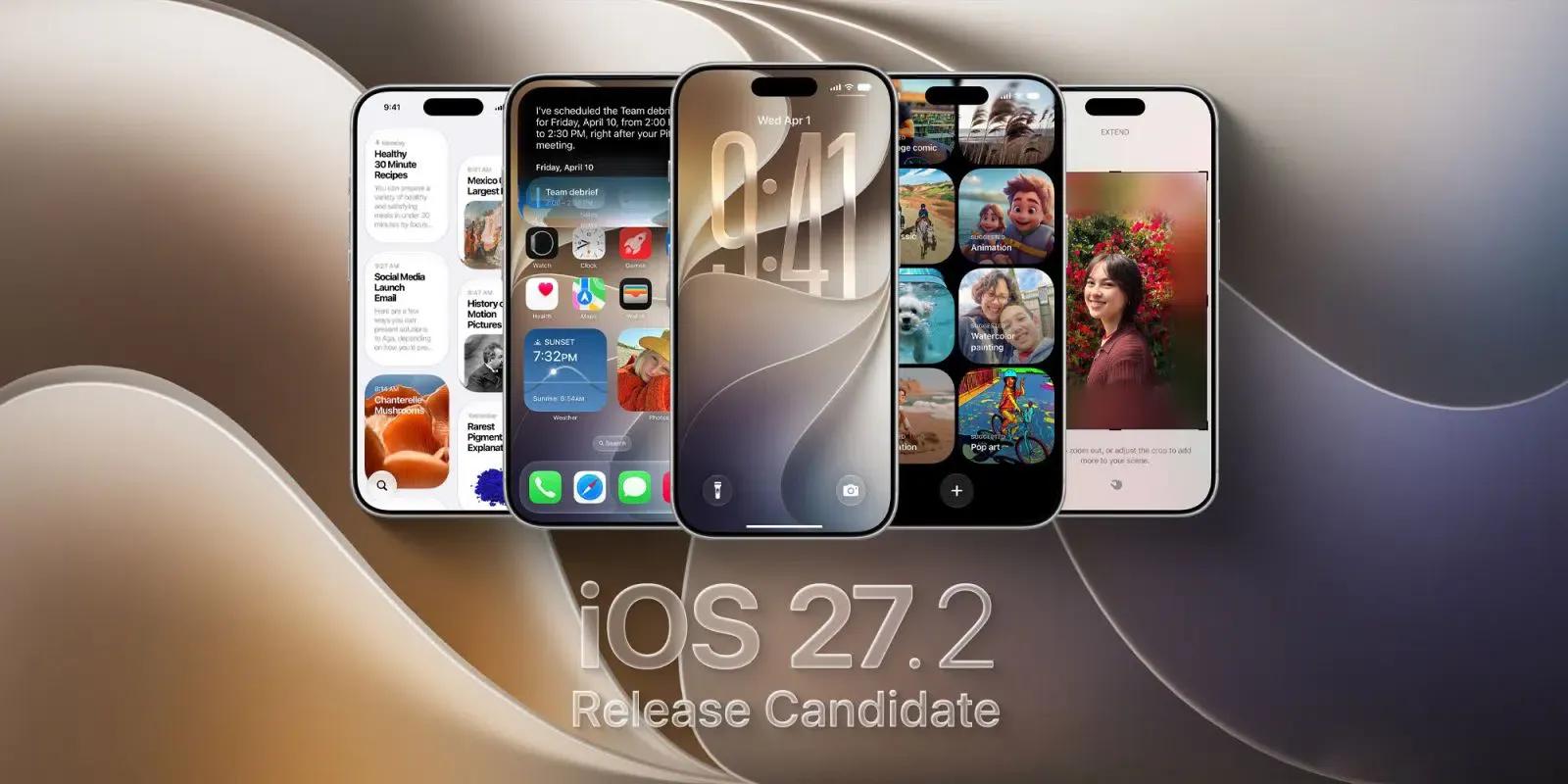
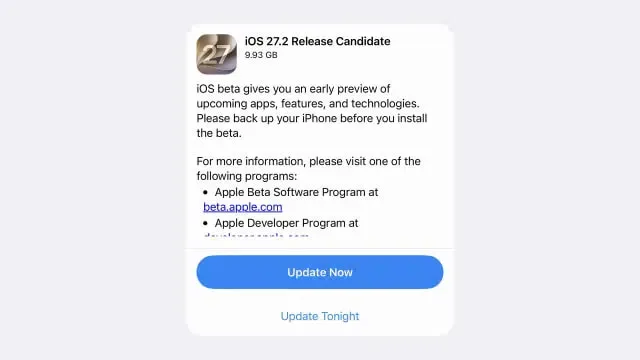
Apple Ships iOS 27.2 RC? Apple officially seeded the first release candidate of iOS 27.2 and iPadOS 27.2 to developers on October 19, 2026, marking the final testing phase before a worldwide public rollout. Carrying build number 24B115, the update expands Siri AI localization to five additional languages, refines native application interfaces, and introduces technical adjustments to the AppTrackingTransparency (ATT) framework in designated European Union territories. For mobile software engineers and technical product teams, this release candidate establishes concrete implementation considerations: development teams must verify language assets across updated Siri locales, evaluate UIKit layout margin defaults, and audit how tracking authorization requests behave under newly supported regional interface options.
Core Features and Release Candidate Milestones in iOS 27.2
At a Glance
- Apple released iOS 27.2 and iPadOS 27.2 Release Candidate 1 (build 24B115) to developers on October 19, 2026, following four beta cycles.
- Siri AI expands localization to French, Japanese, Korean, Portuguese, and Spanish, continuing the language rollout previewed by Apple earlier in the autumn.
- Beginning with iOS 27.2, Apple supports an alternative ATT prompt in the European Union and permits eligible apps to request tracking authorization again one year after the user’s previous decision, subject to system settings and Apple’s tracking policies.
The release candidate stage signals that the underlying system binaries have reached feature completeness, allowing engineering teams to test production builds against final APIs. While major point-one updates typically deliver initial post-launch refinements, Apple designated iOS 27.1 specifically for the iPhone Duo hardware line, allowing the broader iPhone family to move directly to 27.2. As outlined in 9to5Mac’s coverage of the iOS 27.2 release candidate, the build arrives alongside release candidates for iPadOS, macOS, watchOS, and tvOS.
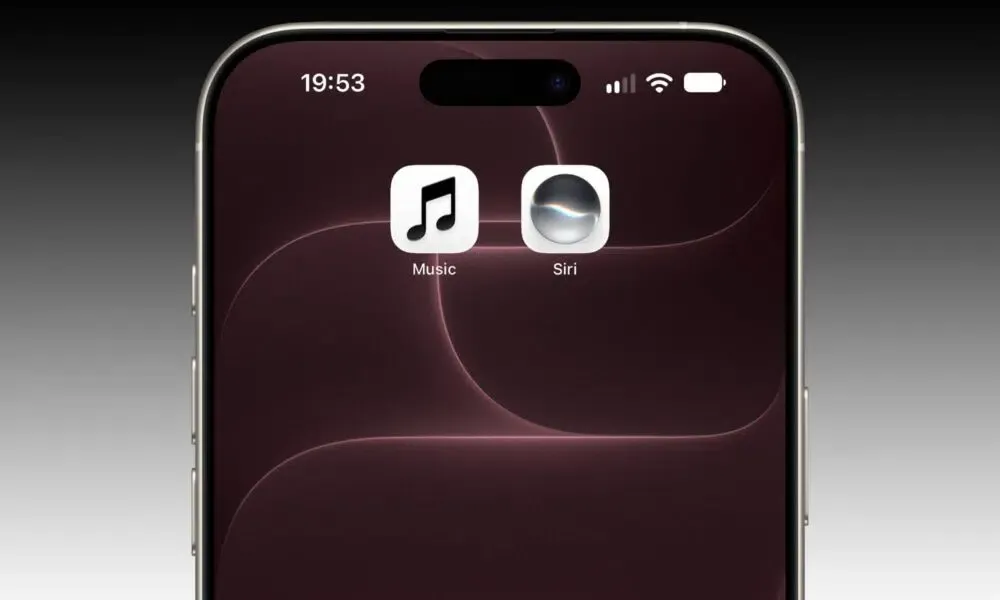
Consumer-facing adjustments across the beta cycle include Group FaceTime support for dual-camera capture, user profile switching in the Apple TV app, and reorganizations to the Apple Podcasts queue. In Apple Music, a monochrome icon replaces the red gradient, accompanied by blue accent styling for active navigation tabs. Apple also adjusted its testing scope during the cycle: an overhauled Health app that appeared in early builds was removed in beta 4 and deferred to a subsequent software update.
Coverage from MacRumors on the iOS 27.2 release candidate highlights that developer attention is focused on internationalization and privacy compliance. In parallel, platform reporting from AppleInsider on the 27.2 software cycle notes that Xcode 27.2 includes updated SDK declarations that development teams should evaluate prior to store submission.
Under-the-Hood Architectural Changes: ATT Framework and Interface Revisions
Technical modifications delivered in the release candidate are documented in the official iOS and iPadOS 27.2 Release Notes. The most notable framework adjustment centers on AppTrackingTransparency, where Apple has introduced structural changes to address regional regulatory discussions in Europe, previously announced in the Updates to App Tracking Transparency in the European Union developer bulletin.
According to Apple’s SDK documentation, the ATT framework now supports an alternative expanded prompt for users in France, Germany, Italy, Poland, and Romania. Additionally, the system allows eligible applications to request tracking authorization again twelve months after a user’s previous decision. This is not a mandatory annual renewal requirement for every app or user; rather, it allows applications to re-prompt eligible users after a one-year interval, provided the user has not disabled tracking requests at the operating system level.
Regional Compliance Flow and Authorization Handling
When an application invokes tracking authorization, the underlying system determines the appropriate prompt presentation based on regional store distribution and platform policies. In standard jurisdictions, the operating system serves the established single-dialog prompt. In designated EU member states, the system can present an alternative expanded interface providing supplementary policy context.
The diagram below illustrates this architectural decision path:
[ Application Requests ATT Authorization ]
                     │
                     ▼
     [ System / Regional Eligibility Check ]
           /                       \
          ▼                         ▼
[ Standard Global Territory ]   [ Designated EU Jurisdictions ]
          │                         │
          ▼                         ▼
[ Standard ATT Dialog ]        [ Alternative Expanded Interface ]
          │                         │
          ▼                         ▼
[ Single Decision State ]      [ Eligible Annual Re-prompting Permitted ]
Beyond privacy controls, the SDK includes updates to foundational layout behavior. On iOS 27.1 and later, default layout margins for standard UIView instances evaluate to zero. While top-level view controllers continue providing systemMinimumLayoutMargins, subviews requiring inherited spacing must explicitly set preservesSuperviewLayoutMargins to true.
Developers updating applications that request tracking authorization should review the revised API signature in Xcode 27.2, which accounts for the expanded interface parameter:
// Illustrative implementation — validate against the installed Xcode 27.2 SDK.
// Note: Demonstrates requesting tracking authorization with the updated expanded interface parameter.
import AppTrackingTransparency

final class TrackingAuthorizationManager {
    static let shared = TrackingAuthorizationManager()

    /// Requests tracking authorization utilizing the expanded interface parameter where supported.
    func requestTrackingPermission() {
        // Invoke updated iOS 27.2 API structure supporting the alternative expanded interface
        ATTrackingManager.requestTrackingAuthorization(
            preferExpandedInterface: true,
            additionalInformationAction: nil
        ) { status in
            // Handle authorization status in compliance with Apple's User Privacy and Data Use policies
            switch status {
            case .authorized:
                break
            case .denied, .restricted, .notDetermined:
                break
            @unknown default:
                break
            }
        }
    }
}
Measurement Strategies and Privacy Architecture Boundaries
The framework adjustments in iOS 27.2 underscore the ongoing evolution of mobile privacy governance. When Apple Ships iOS 27.2 RC, engineering teams operating in European markets must navigate two distinct considerations: updating user-facing consent interfaces and ensuring that analytics pipelines conform to platform data policies.
To maintain robust measurement, developers must understand the technical and legal boundaries separating consent-based tracking from privacy-preserving aggregation frameworks.
Framework Comparison: Attribution and Privacy Standards Under iOS 27.2
Mobile measurement architectures operate under distinct technical constraints depending on whether they rely on device-level identifiers, aggregated platform postbacks, or first-party functional context.
The table below contrasts primary measurement approaches against Apple’s data governance standards:
| Measurement Approach | Identifier Dependency | ATT Relationship | Operating Parameters and Limits | Primary Use Case |
|---|---|---|---|---|
| Traditional IDFA Tracking | Requires device-level IDFA access | Requires explicit user opt-in | Prohibited if user denies consent; cannot be circumvented via fingerprinting | User-level advertising attribution across external properties |
| EU Alternative ATT Prompt | Unlocks IDFA only if user authorizes | Alters presentation format | Permits eligible annual re-prompting; respects system-level toggle settings | Regional consent acquisition in designated EU member states |
| Apple AdAttributionKit / SKAN | Zero IDFA required | Operates independently of ATT prompt | Output constrained by conversion windows, privacy thresholds, and tiered postbacks | Privacy-preserving campaign measurement on Apple platforms |
| First-Party Context Restoration | Utilizes internal session tokens | Governed by intended data use | Permitted for functional in-app continuity; requires ATT if shared for cross-company ad tracking | Preserving user onboarding state, deep link routing, and internal analytics |
Under Apple’s User Privacy and Data Use guidelines, linking user or device data collected from an application with third-party data for targeted advertising or advertising measurement constitutes tracking. Operating server-to-server data pipelines or omitting IDFA usage does not exempt an application from ATT requirements if cross-company data linkage occurs. Furthermore, Apple explicitly prohibits the use of device fingerprinting to bypass user consent choices.
Consequently, engineering teams must clearly distinguish between internal functional session management—such as deep link routing and user state restoration—and third-party advertising measurement, ensuring that data pipelines adhere to appropriate regulatory and platform standards.

Engineering Checklist for iOS 27.2 Compliance and App Intents Adaptation
To prepare application codebases for the public release of iOS 27.2, technical teams should conduct the following framework and interface audits:
Privacy Framework and SDK Compliance
- Review ATT API Signatures: Verify that tracking authorization calls conform to the Xcode 27.2 SDK method signature
requestTrackingAuthorization(preferExpandedInterface:additionalInformationAction:completionHandler:). - Validate Annual Re-prompt Logic: Ensure application code does not permanently assume a one-time authorization state, allowing eligible annual re-prompting where permitted by system settings.
- Audit Third-Party SDK Data Usage: Verify that integrated analytics libraries do not collect hardware signals for fingerprinting, ensuring compliance with App Store Review Guidelines.
Voice Intent Localization and View Hierarchies
- Test Localized App Intents: Validate Siri voice triggers and App Intents entity resolution against French, Japanese, Korean, Portuguese, and Spanish language locales.
- Verify Regional Feature Availability: Account for regional limitations, noting that generative Siri AI features remain unavailable on iOS and iPadOS within the European Union.
- Audit UIKit Layout Margins: Inspect custom view hierarchies to confirm
preservesSuperviewLayoutMarginsis set appropriately where subviews depend on system margins.
Frequently Asked Questions (FAQ)
What new Siri AI languages are supported in iOS 27.2, and are they available in the EU?
How does the alternative expanded App Tracking Transparency prompt function in the EU?
What technical adjustments are required for the updated requestTrackingAuthorization API?
Key Takeaways for Engineering Teams
The release candidate of iOS 27.2 highlights the dual priorities shaping modern mobile platforms: the progressive internationalization of system-level voice interfaces and the continuous refinement of regional privacy controls. As Apple Ships iOS 27.2 RC, development organizations must maintain vigilance over both feature opportunities and compliance obligations.
Engineering teams should approach platform updates by building adaptable software architectures. By decoupling internal state management from third-party tracking identifiers, verifying SDK compliance against Apple’s privacy guidelines, and localizing application intents for expanding voice platforms, developers can deliver durable and compliant experiences across global software ecosystems.
References
-
Apple Developer Documentation: iOS & iPadOS 27.2 Release Notes
-
Apple Developer Documentation: AppTrackingTransparency Framework
-
Apple Developer: Updates to App Tracking Transparency in the European Union
-
MacRumors: Apple Releases iOS 27.2 Release Candidate to Developers
-
AppleInsider: Release Candidates of iOS 27.2 Land as Public Version Nears
-
iDrop News: iOS 27.2 Nears Launch With Monochrome Music Icon and More Siri AI
Share this article