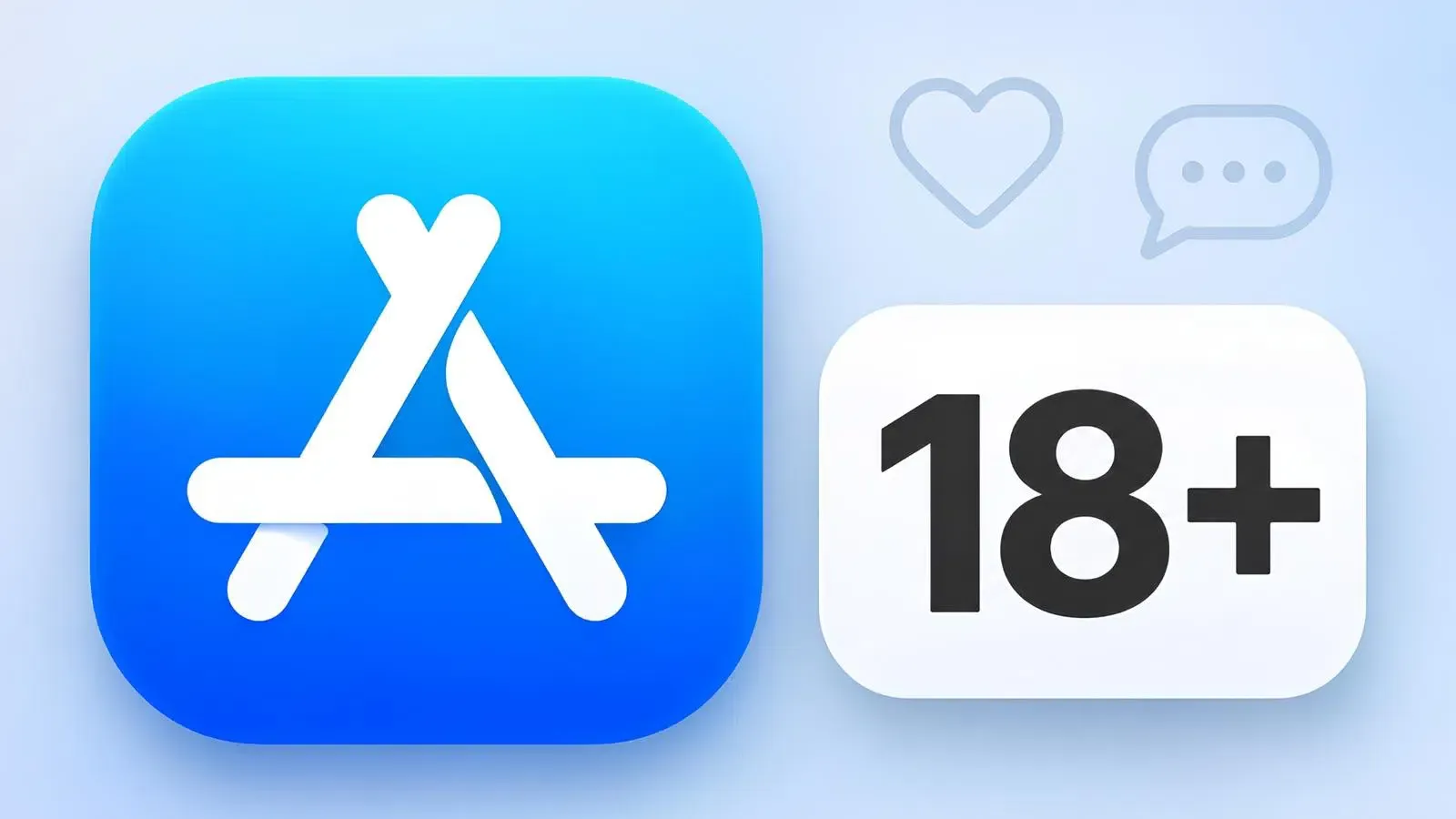
Apple Sets 18+ for Romantic AI Companions? Apple officially confirmed on November 2, 2026, that applications declaring Dating and Relationships—specifically including virtual companions that engage users in romantic or sexual content—will receive a minimum 18+ age rating. The updated content descriptors become available in App Store Connect on November 16, 2026, with declarations required across all hosted applications by January 12, 2027. Disclosed in an official Apple Developer announcement, this policy adjustment represents an ongoing expansion of platform child-safety frameworks. While consumer conversational software has experienced rapid adoption, platforms and regional regulators are establishing stricter content classifications. Developers should review their feature disclosures, regional age-assurance requirements, and applicable marketing policies.
What Apple Announced Regarding Romantic AI Companions and Age Ratings
At a Glance
- Apple announced two new content descriptors in App Store Connect: “Dating and Relationships” and “Shared Location.”
- Any application declaring features that facilitate dating between real individuals or romantic/sexual interactions with virtual companions receives a minimum age rating of 18+.
- Questionnaire declarations become mandatory when submitting updates starting November 16, 2026, with all existing applications required to complete declarations by January 12, 2027.
The commercial ecosystem surrounding consumer conversational software has expanded substantially over the past several years. According to Appfigures market data reported by TechCrunch, applications categorized as AI companions had accumulated approximately 220 million cumulative global downloads by July 2025. Services such as Replika and Character.AI popularized interfaces where users configure synthetic entities for mentorship, companionship, and conversational roleplay. As synthetic personas evolved from simple query-response bots into persistent, emotionally adaptive conversational agents, international regulators began evaluating the developmental and privacy implications for younger audiences.
Apple communicated its policy update directly through an official announcement to software creators. The revision introduces two distinct functional declarations: relationship features (both human-to-human and human-to-virtual) and real-world location sharing. Developers should assess the new descriptor against their app’s actual functionality and update their declarations accordingly. The new mandate establishes a declarative floor: any virtual companion designed to facilitate romantic or sexual interactions receives an 18+ classification.
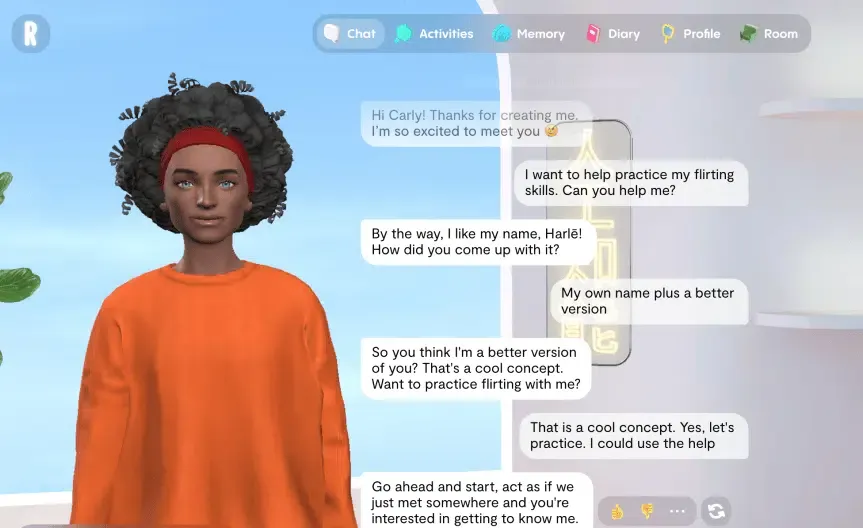
Importantly, this requirement is administered through developer disclosures in App Store Connect. When submitting application updates, developers must complete the updated questionnaire. Applications that offer general conversational assistance without romantic themes are not automatically assigned an 18+ rating solely because they provide general AI assistance; an application’s rating depends on its complete feature set and declared content.
Which Apps, Capabilities, and Regions Face New Requirements
The scope of the policy centers on functional behavior rather than branding. Apple’s guidelines define the dating descriptor as covering features that enable dating or relationship connections between real people, or virtual companions that engage a user in sexual or romantic content. The classification applies to features that facilitate interpersonal dating or synthetic romantic roleplay, rather than narrative fiction without interactive companion roles.
The broader policy context reflects ongoing public and clinical discussions regarding synthetic emotional attachment. An editorial published in Nature Machine Intelligence raised concerns that conversational interfaces capable of continuous affective validation can prompt emotional dependency among susceptible users. Additionally, in a 2025 behavioral survey entitled “Talk, Trust, and Trade-Offs: How and Why Teens Use AI Companions,” conducted by Common Sense Media, researchers reported that nearly three-quarters of surveyed adolescents had used an AI companion, with some cohorts treating synthetic personas as personal confidants. While Apple’s announcement does not cite specific academic papers as the direct foundation for its policy, these industry studies illustrate the broader regulatory backdrop influencing platform governance.
Regional legal mandates also introduce distinct local requirements. In Brazil, local statutory regulations require a minimum rating of A18 for applications offering dating or romantic relationship features, while real-world location sharing mandates an A16 classification. Developers offering location sharing for family safety may request an official rating from Brazil’s Ministry of Justice and Public Security (MJSP) if they believe their software qualifies for a lower official rating under local law.
Furthermore, in specific jurisdictions including Australia, Brazil, and Singapore, Apple’s App Store enforces mandatory adult confirmation before allowing users to download 18+ software, in accordance with an earlier Apple Developer Age Assurance Notice. Depending on regional infrastructure, verification may incorporate government identity documents, facial age estimation, credit card confirmation, or other approved mechanisms. Developers operating in these jurisdictions must recognize that regional verification rules operate in addition to platform-level declarations.
What Developers Must Declare in App Store Connect
The implementation framework introduces structural changes to the standard App Store Connect onboarding pipeline. Starting November 16, 2026, two discrete questions govern age assignment:
- Dating and Relationships: Developers must declare whether the application enables romantic matching between humans or features synthetic characters that engage in romantic or sexual dialogues. Affirmative declarations assign an 18+ minimum rating.
- Shared Location: Developers must declare whether the application shares real-world geographic coordinates with other users or groups. Depending on the territory, this disclosure may adjust regional age ratings.
Apple established a definitive timeline for these declarations. Submissions of new applications and binary updates must complete the questionnaire beginning November 16, 2026. All existing applications on the App Store must complete the questionnaire by January 12, 2027.

To maintain platform integrity, Apple reinforces App Store Review Guideline 2.5.19. This rule prohibits hidden or undocumented functionality and bars developers from misleading App Review regarding an application’s true capabilities. Developers must not conceal romantic features during review and activate them afterward, as doing so violates platform terms and risks developer account termination.
Advertising Eligibility, Parental Controls, and Access Realities
The assignment of an 18+ rating impacts distribution and marketing channels across several distinct operational domains:
Advertising Placement and Commercial Rules
An 18+ classification alters advertising parameters, but it does not represent a blanket ban across all paid discovery. Under Apple Ads Policies, advertising rules for the Dating and Matchmaking category permit search result ads in eligible countries, subject to local laws, content guidelines, and account review. However, specific premium placements, including the Today tab, Search tab, and product page ads, prohibit dating and matchmaking promotions. Developers should note that these rules apply to campaigns categorized under Dating and Matchmaking, and placement eligibility depends on how ad campaigns are classified and reviewed.
Parental Controls and Supervised Accounts
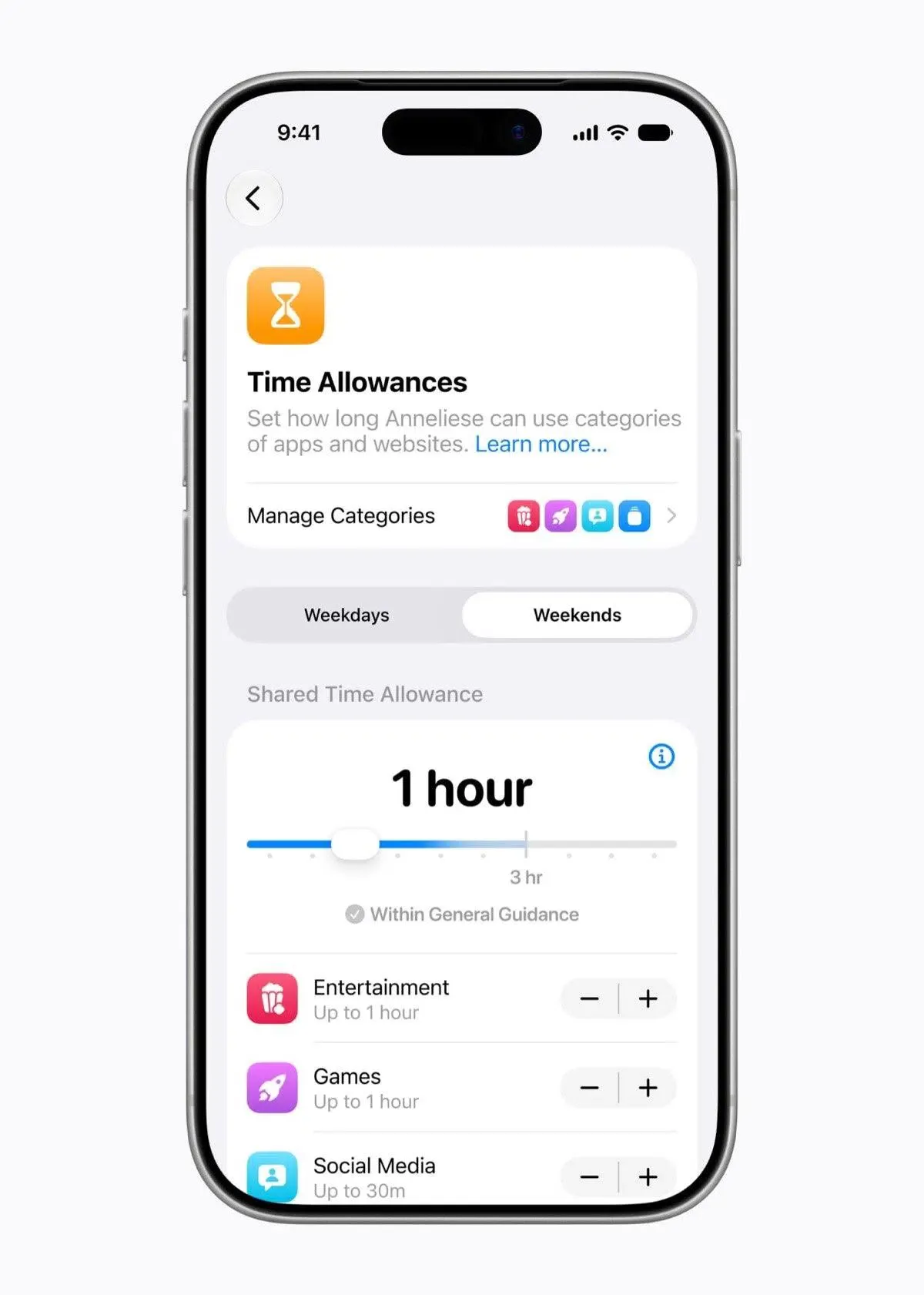
System-level parental controls operate through targeted filtering and approval workflows rather than universal concealment. Under Apple Support Documentation, family organizers can manage app installations on child accounts. Screen Time can restrict access based on parental settings. Where supported, children can request an app exception through parental approval workflows, though statutory regional age-assurance mandates remain non-exempt.
The diagram below illustrates the conceptual separation between storefront discovery and external web funnels:
[Conceptual Direct Storefront Flow]
  App Store Search ──> Parental Controls / Age Filters ──> Regional Age Check (If Applicable) ──> Standard Download

[Conceptual Web-to-App Acquisition Flow]
  External Ad / Web Landing Page ──> Web-Side Age Disclaimer ──> App Store Download (Subject to Platform Checks) ──> App Launch (Attribution Resolution)
Note: The flow above represents an editorial conceptual model. Both acquisition routes remain subject to applicable platform age ratings and regional download controls; web landing pages cannot bypass App Store gating.
Content Review vs. Age Rating Limits
An 18+ age rating does not exempt an application from general content guidelines. Under standard App Store Review Guidelines, software containing overtly sexual or pornographic material, depictions of sexual violence, or non-consensual sexual content remains strictly prohibited regardless of age declaration. The 18+ rating functions as an access gate for mature themes, not an authorization for prohibited content.
Optional Web-to-App Measurement Considerations for Growth Teams
Because direct in-store discovery and ad placements face category-specific constraints, some digital growth teams choose to complement native store presence with web-to-app marketing funnels. By hosting campaign landing pages on owned web domains, marketing teams can display statutory age notices, clarify feature boundaries, and evaluate channel effectiveness before redirecting prospective adult users to the App Store.
When teams implement web-to-app onboarding, preserving campaign attribution across the installation gap requires careful engineering evaluation. Standard client-side storage, such as Safari cookies or web local storage, cannot be accessed directly by an installed iOS application binary due to operating system sandboxing.
Cross-Install Context: In-House Architecture vs. Attribution SDKs
Engineering teams evaluating how to track user journeys across web landing pages and native application launches face distinct technical trade-offs:
| Evaluation Dimension | Custom In-House Database | Browser-Based Tracking | Third-Party Attribution Framework |
|---|---|---|---|
| Primary Purpose | Internal state logging and business intelligence | Web-side session and campaign analytics | Cross-channel campaign attribution and deferred parameter recovery |
| Cross-Install Association Mechanism | Requires a permitted mechanism to associate the web interaction with app launch | Inapplicable (Cannot cross application sandbox boundaries) | Provider-specific permitted mechanisms; support varies by platform and SDK version |
| Platform Constraints & Data Handling | Apple prohibits deriving device data to uniquely identify a device or user through fingerprinting | Web records may persist; native install linkage is not automatic | Mechanism and availability depend on provider, platform policy, and SDK version |
| Fallback / Failure Handling | Unmatched installs are recorded as unattributed or unknown, according to the measurement model | Web records may persist; native onboarding requires a separate handoff or association mechanism | The app should use a defined fallback when parameters are unavailable or untrusted |
| Maintenance Scope | Continuous internal engineering for API, schema, and policy updates | Static web scripts with minimal native maintenance | Managed SDK integration and periodic library updates |
| Best For | Large enterprise organizations with specialized internal infrastructure | Web-only analytics lacking native application continuity requirements | Scalable web-to-app onboarding and multi-channel campaign measurement |
Developers must adhere strictly to platform privacy rules. Under Apple’s User Privacy and Data Use Documentation, deriving device data for the purpose of uniquely identifying a device or user through fingerprinting is strictly prohibited. ATT permission does not authorize fingerprinting. Separately, implementations that meet Apple’s definition of tracking must comply with ATT requirements.
For teams already running compliant web-to-app campaigns, specialized tools such as OpoInstall can be evaluated as an alternative to custom-built parameter systems. The OpoInstall Documentation describes capabilities for attaching custom parameters to web campaign links and retrieving those values upon initial application launch to restore marketing context. However, teams must evaluate any third-party framework against platform privacy policies and verify what specific data elements are collected by the relevant SDK version.
In this workflow, deferred deep linking can return eligible campaign, referral, or destination parameters captured before installation, while direct deep linking routes already-installed users. The native application handles navigation and business authorization. These parameters do not establish age, identity, or access eligibility, cannot bypass App Store age gates, and do not replace statutory age-assurance obligations.
Developer Implementation Checklist and Governance Actions
To prepare for the upcoming App Store Connect requirements, technical and product teams should execute a structured compliance audit. The following checklist combines Apple’s announced requirements with editorial implementation recommendations.

Engineering and Technical Checklist
- Review Codebase for Romantic Roleplay Features: Audit conversational prompts, character templates, and system instructions to determine whether synthetic companions engage in romantic or sexual dialogues.
- Inspect Location-Sharing Modules: Check whether background or foreground location tracking shares geographic coordinates with other users, identifying whether statutory disclosures apply.
- Verify Guideline 2.5.19 Compliance: Ensure remote server flags or dynamic configuration services do not conceal unreviewed romantic features during App Review.
- Assess Brazil’s Official Rating Route: If your app may qualify for a lower rating in Brazil, review the process for requesting an official rating from Brazil’s Ministry of Justice and Public Security (MJSP).
- Test Deep Link Routing Robustness: Ensure native application routing cleanly handles fallback destinations when campaign parameters are absent or unverified.
Compliance and Product Strategy Checklist
- Complete App Store Connect Questionnaire: Submit updated declarations between November 16, 2026, and January 12, 2027, to avoid binary submission delays.
- Audit Marketing Channel Eligibility: Review advertising campaigns on Apple Ads and third-party ad networks to ensure targeting configurations comply with adult-rated software restrictions.
- Evaluate Web-to-App Campaign Viability: Assess whether web-to-app onboarding is appropriate based on advertising placement eligibility, target regions, and conversion testing.
- Review Attribution Data Practices: Verify that analytics implementations do not derive device data to uniquely identify a device or user through fingerprinting. Separately assess whether the implementation requires ATT permission.
Frequently Asked Questions (FAQ)
Will general-purpose AI assistants automatically receive an 18+ age rating?
Does an 18+ rating permit sexually explicit or pornographic content?
Can deferred deep linking or attribution tools bypass App Store age verification?
What happens if an existing application misses the January 12, 2027 declaration deadline?
Key Takeaways for Engineering Teams
Apple’s enforcement of an 18+ minimum age requirement for romantic AI companions marks a significant structural transition in consumer software distribution. Platforms that facilitate virtual intimacy and synthetic emotional bonding now face standardized classification alongside traditional dating services.
For engineering and growth organizations, navigating this regulatory shift requires moving away from ambiguous classification strategies. Developers must accurately declare application features, audit dynamic content systems against Guideline 2.5.19, and evaluate compliant measurement frameworks that respect platform privacy boundaries. Maintaining transparency across platform declarations and user acquisition funnels provides the most reliable foundation for long-term operational resilience.
References
-
Upcoming: New age rating content descriptors in App Store Connect — Official platform announcement establishing 18+ requirements for dating features and virtual companions.
-
Apple Developer: App Store Review Guideline 2.5.19 Announcement — Platform compliance rule prohibiting applications from introducing unreviewed features or altering declared functionality post-approval.
-
Apple Developer: User Privacy and Data Use — Official policy documentation detailing tracking definitions and platform-level restrictions against device fingerprinting.
-
Apple Developer: Age requirements for apps distributed in Brazil, Australia, Singapore, Utah, and Louisiana — Platform announcement detailing mandatory adult confirmation mechanisms for 18+ rated software in designated jurisdictions.
-
Apple Support: Manage your child’s access to apps and app requests on iPhone, iPad, and Mac — Technical documentation detailing parental approval workflows, age-limit configurations, and managed Apple account controls.
-
Apple Ads Policy Documentation — Advertising guidelines detailing placement eligibility, content restrictions, and category-specific rules for Dating and Matchmaking campaigns.
-
Apple Child Safety Overview — Technical documentation outlining parental controls, Screen Time category limitations, and communication safety frameworks.
-
Common Sense Media: Talk, Trust, and Trade-Offs: How and Why Teens Use AI Companions — Behavioral research survey documenting adolescent adoption rates and personal interactions with conversational software.
-
Nature Machine Intelligence: Emotional risks of AI companions demand attention — Editorial addressing clinical and psychological considerations surrounding generative companions and user vulnerability.
-
TechCrunch: AI Companion Apps On Track to Pull in $120M in 2025 — Market analysis reporting Appfigures data indicating roughly 220 million cumulative downloads for AI companion software by July 2025.
-
OpoInstall Documentation — Technical overview of parameter pass-through mechanisms, deferred deep linking workflows, and mobile campaign attribution integration.
Share this article