Apple tests Siri model delegation? On September 14, 2026, Apple officially deployed iOS 27 and introduced the next generation of Siri AI, while concurrent reverse-engineering disclosures revealed internal code plumbing that allows the operating system to delegate conversational reasoning to third-party models, including Anthropic’s Claude and OpenAI’s ChatGPT. For mobile architects and platform engineers, the emergence of Siri model delegation within private frameworks highlights an architectural shift toward modular assistant orchestration. While regulatory dynamics surrounding the European Union’s Digital Markets Act provide a relevant institutional backdrop for system-level interoperability, external model delegation introduces operational variance into mobile intent execution. Rather than expecting a single foundation model with predictable behavior, mobile engineering teams must treat App Intents as defensive domain boundaries, enforcing strict schema validation, robust entity disambiguation, and explicit side-effect safety.
iOS 27 Architecture and the Model Delegation Plumbing in Private Frameworks
The official rollout of iOS 27 establishes a split-runtime infrastructure for Apple Intelligence. Siri AI draws on Apple’s family of on-device and server-side foundation models, including the AFM Core Advanced model for supported on-device experiences such as systemwide dictation and expressive voices, alongside server models running through Private Cloud Compute clusters. Within this shipping environment, Siri AI functions as an orchestrator across native apps, utilizing personal context across Mail, Messages, and Photos, onscreen awareness via View Annotations, and semantic indices powered by Spotlight.
At a Glance
- Internal Delegation Plumbing: Disclosures from leaked iOS 27 and macOS 27 builds identify internal mechanisms—specifically a Model Delegation mechanism and an Inference Providing protocol within Model Manager Services—designed to route requests to third-party models such as Claude and ChatGPT.
- Unreleased System Entitlements: These multi-model delegation capabilities remain restricted to private system frameworks; Apple has not made external delegation entitlements publicly available to third-party developers or end users.
- App Intents as the Supported Contract: Regardless of whether an upstream prompt is parsed by Apple Foundation Models or an external reasoning agent, App Intents remain Apple’s documented programmatic boundary for exposing third-party app actions to the system.
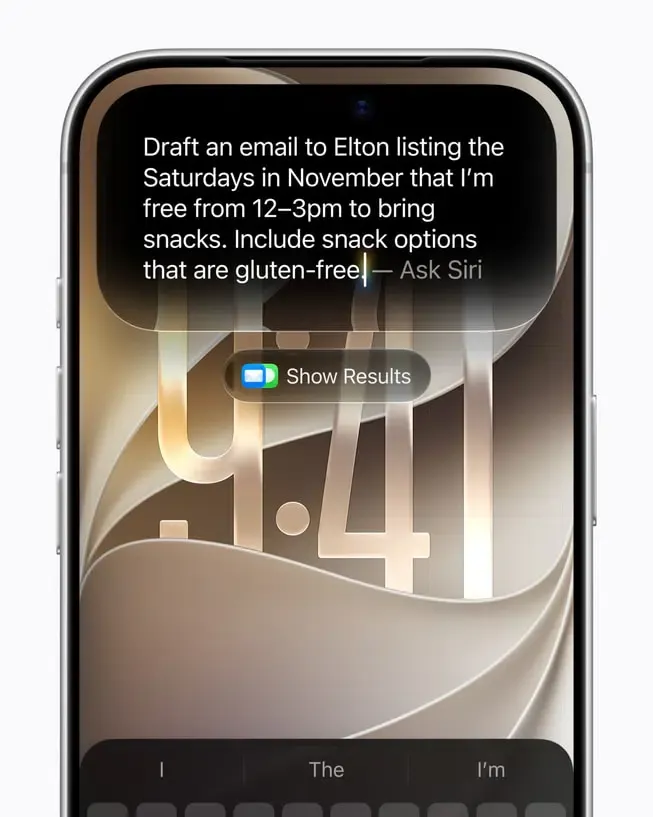
Technical analysis published by MacRumors highlights that developers examining the private frameworks discovered two distinct architectural tiers. The first is a Model Delegation mechanism that enables third-party models like Claude to operate as an integrated assistant extension. In recorded technical demonstrations, Claude interprets an unconstrained natural language prompt and extracts the user’s operational goal, but when the task requires access to system data or local application execution, the external model delegates the structured action back to Siri. The second, deeper mechanism involves an Inference Providing protocol in the operating system’s Model Manager Services, which contains code paths capable of substituting Apple’s server-side reasoning backend with an alternate foundation model.
The regulatory environment in Europe presents an important institutional backdrop for these developments. Under Article 6(7) of the EU Digital Markets Act (DMA), gatekeeper operating systems are subject to interoperability mandates requiring equal access to core platform features. While Apple has temporarily withheld consumer-facing Siri AI features from the European Union market pending regulatory alignment on data privacy and security, the presence of model-agnostic orchestration hooks inside system binaries indicates that Apple’s engineering teams are testing technical modularity that could prove useful if broader cross-model interoperability requirements emerge.
Engineering Scope Note: Public evidence confirms the private model-delegation mechanisms and separately confirms App Intents as Apple’s supported interface for exposing third-party app actions. Apple has not publicly documented the exact internal bridge connecting these two layers. The topology below represents an illustrative reference boundary model.
+-------------------------------------------------------------------------+
| REFERENCE MODEL: PUBLIC APP INTENTS BOUNDARY AROUND PRIVATE DELEGATION  |
+-------------------------------------------------------------------------+
|                                                                         |
|  [ User Natural Language Input (Voice / Dynamic Island / Type to Siri) ]|
|                                |                                        |
|                                v                                        |
|  [ System Orchestrator: Context Resolution & Spotlight Semantic Index ] |
|                                |                                        |
|         +----------------------+----------------------+                 |
|         |                                             |                 |
|         v                                             v                 |
|  [ Primary System Intelligence ]            [ Private Delegation Path ] |
|  - On-Device AFM Core Models                - Model Delegation Path     |
|  - Private Cloud Compute                    - Model Manager Services    |
|         |                                     (Claude / GPT Paths)      |
|         |                                             |                 |
|         +----------------------+----------------------+                 |
|                                |                                        |
|                                v                                        |
|             [ Undocumented Internal Action Bridge ]                     |
|                                |                                        |
|                                v                                        |
|  [ Public App Intents Boundary: Application AppIntent & EntityQuery ]   |
|                                |                                        |
|         +----------------------+----------------------+                 |
|         |                                             |                 |
|         v                                             v                 |
|  [ Typed Native Validation ]                [ Parameter Disambiguation ]|
|  (Bounds Check, Actor Isolation)            (User Dialog & Selection)   |
|                                                                         |
+-------------------------------------------------------------------------+
Dissecting the Model Delegation Layer: System Orchestration vs. App Intent Contracts
The architectural distinction between natural language reasoning and application execution is central to understanding how iOS processes assistant workflows. In traditional mobile assistant implementations, speech processing and functional dispatch were coordinated through static domain classes under SiriKit. Over successive developer releases, Apple has transitioned this interface toward the declarative App Intents framework.
Under this modern paradigm, native applications do not parse audio streams or maintain phoneme dictionaries. Instead, an app exposes two fundamental artifacts to the system’s runtime registry:
AppEntityDeclarations: Typed representations of internal business models (such as an order record, an account profile, or a document reference). Apps can additionally expose eligible entities to Spotlight search or onscreen-awareness mechanisms through dedicated indexing and view annotation APIs.AppIntentSpecifications: Executable routines containing strongly typed parameters, localized prompt summaries, and return contracts.
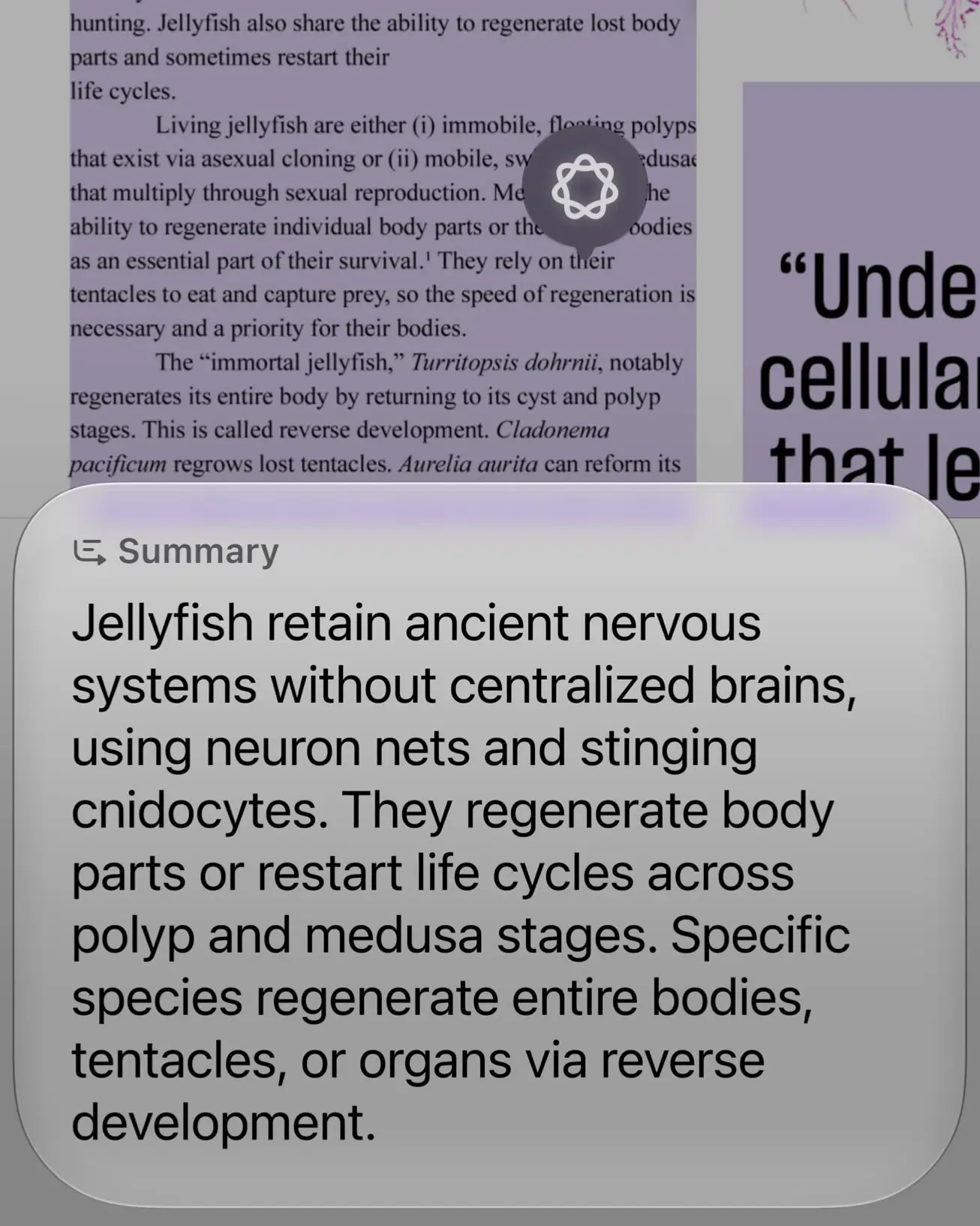
When internal frameworks route user speech through an external reasoning model, the delegation layer separates prompt comprehension from action execution. In the demonstrated workflows, the external model functions as an upstream semantic interpreter and can return actions to Siri. For third-party apps, Apple’s documented App Intents framework separately defines the typed contracts through which supported actions are exposed to the system.
SIMPLIFIED CONCEPTUAL COMPARISON: ASSISTANT EVOLUTION

Classical Pattern-Matching Dispatch:
User Input -> Grammatical Domain Rules -> Slot Filling -> Handler Invocation

Multi-Model Orchestration Pipeline:
User Input -> Active Model Provider (AFM / Claude / GPT)
            -> Semantic Parameter Synthesis
            -> Formal Swift AppIntent Contract
            -> Defensive Validation & Entity Resolution
            -> Domain Business Logic
This structural separation exposes an important engineering reality: natural language reasoning models introduce semantic variance. Apple documents App Intents as the typed contract through which supported app actions are exposed to Siri and Apple Intelligence. Different upstream reasoning models may still vary in how they interpret equivalent user language before reaching that contract, introducing distinct tokenization nuances and differing semantic assumptions. In hypothetical multi-model architectures, one model might synthesize an exact alphanumeric reference code, while another delivers an indirect descriptive string or a partial entity title.
Consequently, mobile developers cannot assume that an upstream model handoff guarantees valid domain inputs. The App Intents framework provides the structural interface, but the responsibility for verifying that incoming arguments conform to realistic operational invariants remains entirely within the native application code.
Defensive Engineering Standards for Swift AppIntents
Adapting iOS applications to an environment where upstream intents may originate from multiple reasoning models requires defensive programming techniques. Rather than treating incoming intent invocations as pre-validated system events, engineering teams should design intent handlers with the same rigor applied to external REST API controllers or public RPC endpoints.
App Intents may execute in foreground or background modes depending on their declared runtime configuration. Developers should therefore avoid assuming an active window hierarchy or presenting synchronous UI view controllers unless an intent explicitly requires a foreground execution context. For intents that mutate shared or remote state, isolating domain logic behind asynchronous, thread-safe domain services is a robust defensive pattern.
| Engineering Dimension | Illustrative Minimal Pattern | Defensive Multi-Model App Intent Pattern |
|---|---|---|
| Parameter Ingestion | Assumes matching string or primitive types | Validates character sets, string length, and domain invariants |
| Entity Resolution | Direct key lookup via EntityQuery |
Implements EntityStringQuery for normalized text search |
| Disambiguation Flow | Throws generic system error on failure | Distinguishes missing values (needsValueError) from choices (needsDisambiguationError) |
| Side-Effect Control | Executes state mutations immediately | Incorporates requestConfirmation() for destructive or high-impact actions |
| Concurrency Model | Unconstrained asynchronous task | Isolated domain actor preventing race conditions during retries |
To maintain operational integrity when handling inputs synthesized across varied model providers, architectures must incorporate four defensive implementation patterns:
- Identifier and String-Based Entity Resolution: Implement
EntityStringQueryto support both unique identifier lookup and arbitrary text searches. When an external model supplies a descriptive label instead of an exact key, normalized string matching handles partial phrases gracefully. - Interactive Parameter Clarification: If a required parameter is omitted by the upstream reasoning provider, handlers should invoke interactive value prompts (
needsValueError). When multiple entities match an ambiguous phrase, the system must trigger disambiguation (needsDisambiguationError). - Durable Mutation Idempotency: Because conversational assistants may reissue requests following network timeouts or ambiguous user confirmations, transactional intents should accept or derive durable operation tokens to prevent duplicate side effects.
- Explicit Confirmation for High-Impact Mutations: For actions involving financial commitments, account modifications, or irreversible deletions, utilize
requestConfirmation()to ensure explicit user consent before executing state changes.
// Engineering Scope Note: The following Swift example is a reference architecture
// illustrating defensive AppIntent validation, entity query disambiguation, and
// idempotent domain execution. It is not an Apple-prescribed implementation for
// unreleased Model Delegation private frameworks.

import Foundation
import AppIntents

// MARK: - Semantic App Entity Representation
public struct BookingEntity: AppEntity {
    public static var defaultQuery = BookingQuery()
    public static var typeDisplayRepresentation: TypeDisplayRepresentation = "Service Reservation"

    public var id: String
    public var serviceName: String
    public var referenceCode: String

    public var displayRepresentation: DisplayRepresentation {
        DisplayRepresentation(
            title: "\(serviceName)",
            subtitle: "Reference: \(referenceCode)"
        )
    }
}

// MARK: - Defensive Entity Query Resolver (ID & String Search)
public struct BookingQuery: EntityStringQuery {
    public init() {}

    // 1. Resolves exact unique identifiers supplied by the system or persistent cache
    public func entities(for identifiers: [String]) async throws -> [BookingEntity] {
        var resolvedEntities: [BookingEntity] = []
        for id in identifiers {
            if let entity = await BookingDataSource.shared.fetchBooking(byId: id) {
                resolvedEntities.append(entity)
            }
        }
        return resolvedEntities
    }

    // 2. Handles natural-language search strings synthesized by upstream reasoning models
    public func entities(matching string: String) async throws -> [BookingEntity] {
        return await BookingDataSource.shared.searchBookings(matching: string)
    }

    // 3. Returns initial candidate suggestions when no query parameter is provided
    public func suggestedEntities() async throws -> [BookingEntity] {
        return await BookingDataSource.shared.fetchAllActiveBookings()
    }
}

// MARK: - Reference Defensive AppIntent Pattern
public struct ConfirmBookingIntent: AppIntent {
    public static var title: LocalizedStringResource = "Confirm Reservation"
    public static var description = IntentDescription(
        "Confirms an active appointment or reservation using a verified booking entity.",
        categoryName: "Bookings"
    )

    // Configured for interactive runtime disambiguation if omitted or ambiguous
    @Parameter(
        title: "Target Reservation",
        description: "The specific active booking entity to be confirmed."
    )
    public var targetBooking: BookingEntity?

    // Caller-supplied durable idempotency key to prevent redundant side effects
    @Parameter(
        title: "Client Mutation Token",
        description: "Durable client token to enforce mutation idempotency across conversational retries."
    )
    public var mutationToken: String?

    public init() {}

    public init(targetBooking: BookingEntity, mutationToken: String? = nil) {
        self.targetBooking = targetBooking
        self.mutationToken = mutationToken
    }

    // Headless execution isolated from foreground UI hierarchies
    public func perform() async throws -> some IntentResult & ReturnsValue<Bool> & ProvidesDialog {
        // Defensive validation: prompt system orchestrator if entity parameter is omitted
        guard let booking = targetBooking else {
            throw $targetBooking.needsValueError(
                "Which active reservation would you like to confirm? Please specify the reference code or service title."
            )
        }

        // Domain validation: verify required operational parameters
        guard !booking.id.trimmingCharacters(in: .whitespacesAndNewlines).isEmpty else {
            throw BookingDomainError.invalidIdentifier
        }

        // For destructive or high-impact state mutations, invoke the documented confirmation API:
        // try await requestConfirmation()

        // Enforce durable idempotency: reject duplicate mutations if a token was supplied
        if let token = mutationToken {
            let alreadyProcessed = await BookingStateManager.shared.isTokenProcessed(token)
            if alreadyProcessed {
                return .result(
                    value: true,
                    dialog: "This reservation has already been confirmed. No further action was taken."
                )
            }
        }

        // Execute core domain logic inside an isolated actor
        do {
            let confirmationSuccess = try await BookingExecutionService.shared.executeConfirmation(
                bookingId: booking.id
            )

            // Persist token upon successful state mutation
            if let token = mutationToken, confirmationSuccess {
                await BookingStateManager.shared.recordToken(token)
            }

            return .result(
                value: confirmationSuccess,
                dialog: "Successfully confirmed your reservation for \(booking.serviceName)."
            )
        } catch let domainError as BookingDomainError {
            // Propagate typed domain failures conforming to LocalizedError
            throw domainError
        }
    }
}

// MARK: - Supporting Domain Actors and Isolated Infrastructure
public enum BookingDomainError: Error, LocalizedError {
    case invalidIdentifier
    case reservationExpired
    case networkUnavailable

    public var errorDescription: String? {
        switch self {
        case .invalidIdentifier:
            return "The booking identifier provided is invalid or malformed."
        case .reservationExpired:
            return "This reservation has expired and can no longer be confirmed."
        case .networkUnavailable:
            return "Unable to connect to the reservation service. Please verify your connection."
        }
    }
}

public actor BookingStateManager {
    public static let shared = BookingStateManager()
    private var processedTokens = Set<String>()

    public func isTokenProcessed(_ token: String) -> Bool {
        return processedTokens.contains(token)
    }

    public func recordToken(_ token: String) {
        processedTokens.insert(token)
    }
}

public actor BookingExecutionService {
    public static let shared = BookingExecutionService()

    public func executeConfirmation(bookingId: String) async throws -> Bool {
        // Simulates an asynchronous remote service mutation
        try await Task.sleep(nanoseconds: 80_000_000)
        return true
    }
}

public actor BookingDataSource {
    public static let shared = BookingDataSource()

    public func fetchBooking(byId id: String) -> BookingEntity? {
        if id == "TC-2026-01" {
            return BookingEntity(id: id, serviceName: "Technical Consultation", referenceCode: "TC-2026-01")
        }
        return nil
    }

    public func searchBookings(matching query: String) -> [BookingEntity] {
        let all = fetchAllActiveBookings()
        let normalized = query.trimmingCharacters(in: .whitespacesAndNewlines).lowercased()
        return all.filter {
            $0.serviceName.lowercased().contains(normalized) ||
            $0.referenceCode.lowercased().contains(normalized)
        }
    }

    public func fetchAllActiveBookings() -> [BookingEntity] {
        return [
            BookingEntity(id: "TC-2026-01", serviceName: "Technical Consultation", referenceCode: "TC-2026-01"),
            BookingEntity(id: "HD-2026-88", serviceName: "Hardware Diagnostics", referenceCode: "HD-2026-88")
        ]
    }
}
System Action Boundaries and Intent Disambiguation
A foundational challenge in multi-model orchestration is managing ambiguity when user requests do not map cleanly to unambiguous application state. When an assistant delegates interpretation to an external foundation model, the risk of semantic divergence increases: a user request such as “confirm my appointment” may yield an intent parameter containing a relative date string, a business name, or an informal service description.
Within Apple’s App Intents architecture, the system orchestrator handles parameter resolution through a continuous feedback loop between the app’s published schemas and the active assistant interface. Without appropriate clarification or disambiguation hooks, the system may be unable to reliably resolve the intended entity and can fall back to a failed or degraded interaction.
+-------------------------------------------------------------------------+
|               DEFENSIVE PARAMETER DISAMBIGUATION SEQUENCE               |
+-------------------------------------------------------------------------+
|                                                                         |
|  [ Upstream Model Synthesizes Candidate Parameters ]                     |
|         |                                                               |
|         v                                                               |
|  [ Native App EntityStringQuery Evaluates Input Identifier / Search ]   |
|         |                                                               |
|         +---------------------------------------+                       |
|         | Exact Identifier Match Found          | Ambiguous or Multiple |
|         v                                       v                       |
|  [ Proceed to Validation ]             [ Query Yields Multiple Matches ]|
|         |                                       |                       |
|         |                                       v                       |
|         |                        [ Throw needsDisambiguationError() ]   |
|         |                                       |                       |
|         |                                       v                       |
|         |                              [ System Presents Selection Menu]|
|         |                                       |                       |
|         |                                       v                       |
|         |                              [ User Selects Target Entity ]   |
|         |                                       |                       |
|         +<--------------------------------------+                       |
|         |                                                               |
|         v                                                               |
|  [ Perform Side-Effect Intent with Confirmed Entity Context ]           |
|                                                                         |
+-------------------------------------------------------------------------+
To build predictable disambiguation, developers must leverage the interactive capabilities of the App Intents framework:
- Structured Candidate Presentation:
EntityStringQuery.entities(matching:)should return an array of candidateAppEntityinstances populated with descriptive titles and subtitles. If multiple candidates remain semantically plausible at runtime, throwingneedsDisambiguationError(among:dialog:)instructs the system to render a native selection dialogue. - Intent Dialog Integration: Handlers should utilize
ProvidesDialogto supply conversational context back to the orchestrator. When an operation succeeds or encounters a recoverable business condition, returning tailored dialogue containers ensures that the user receives accurate feedback regardless of which model handled the initial prompt. - Graceful Domain Error Propagation: When an action cannot be completed due to backend business rules (such as an expired booking window or depleted inventory), throwing typed Swift errors conforming to
LocalizedErrorensures that the assistant delivers actionable, localized explanations rather than opaque system codes.
By investing in granular query resolution and communicative error propagation, developers ensure that their applications remain resilient whether invoked by Apple’s integrated models or future third-party delegated assistants.
Frequently Asked Questions (FAQ)
What is the difference between Siri Model Delegation and the existing ChatGPT integration?
Does the EU Digital Markets Act mandate that Apple allow third-party AI models to replace Siri?
Can third-party models access private app data directly when handling a delegated intent?
Strategic Guidance for Mobile Engineering Teams
To prepare application codebases for increasingly modular operating system intelligence, engineering organizations should adopt the following technical milestones:
-
Audit and Modernize App Intent Coverage: For supported use cases, prioritize modern Swift
AppIntentschemas when exposing new capabilities, and audit legacy SiriKit integrations for migration opportunities. Every primary action should be accompanied by clear, descriptive semantic metadata. -
Implement Identifier and String-Based Entity Resolution: Use
EntityStringQueryto support both identifier retrieval inherited fromEntityQueryand arbitrary text matching. Resolvers should handle normalized, lowercased, and partial string inputs to accommodate diverse parameter formats generated by different reasoning engines. -
Isolate State Mutations Behind Background Actors: Refactor business execution methods so that intents operate against headless, thread-safe domain services. Intent execution should not assume an active window scene unless its declared execution mode explicitly requires or transitions into a foreground context.
-
Enforce Two-Phase Mutation Verification: For sensitive actions involving financial commitments, account modifications, or irreversible deletions, utilize
requestConfirmation()to ensure explicit user consent before executing state changes. -
Establish End-to-End Intent Testing Suites: Build automated unit and integration tests verifying that
AppIntenthandlers behave correctly when supplied with boundary-case inputs, empty strings, and malformed entity references.
References
-
Apple. (2026). Siri AI, a profoundly more capable and personal assistant powered by the next generation of Apple Intelligence, is here. Apple Newsroom.
-
Apple Developer Documentation. (2026). Integrating your app with Siri and Apple Intelligence using App Intents. Apple Developer.
-
European Commission. (2022). Regulation (EU) 2022/1925 on contestable and fair markets in the digital sector (Digital Markets Act). Official Journal of the European Union.
-
MacRumors. (2026). Apple’s Siri AI Can Be Swapped Out for Claude, ChatGPT, Code Shows.
Share this article