OPPO Launches ColorOS 17? On September 17, 2026, OPPO officially introduced ColorOS 17 during the OPPO Developer Conference in China, expanding its proactive AI service strategy around platform technologies including the existing Agent Matrix framework alongside updates based on Android 17. The platform release reflects a broader industry movement toward proactive, context-driven service delivery, connecting the Xiaobu Assistant across more than 700 life scenarios in partnership with over 40 ecosystem service providers. For mobile architects and engineering teams, the emergence of proactive system-level agents highlights the growing operational necessity of making application capabilities addressable outside conventional navigation flows, adapting to intelligent background resource allocation, and maintaining state continuity across complex service handoffs.
Core Platform Realignment: Inside the Android 17 and ColorOS 17 Transition
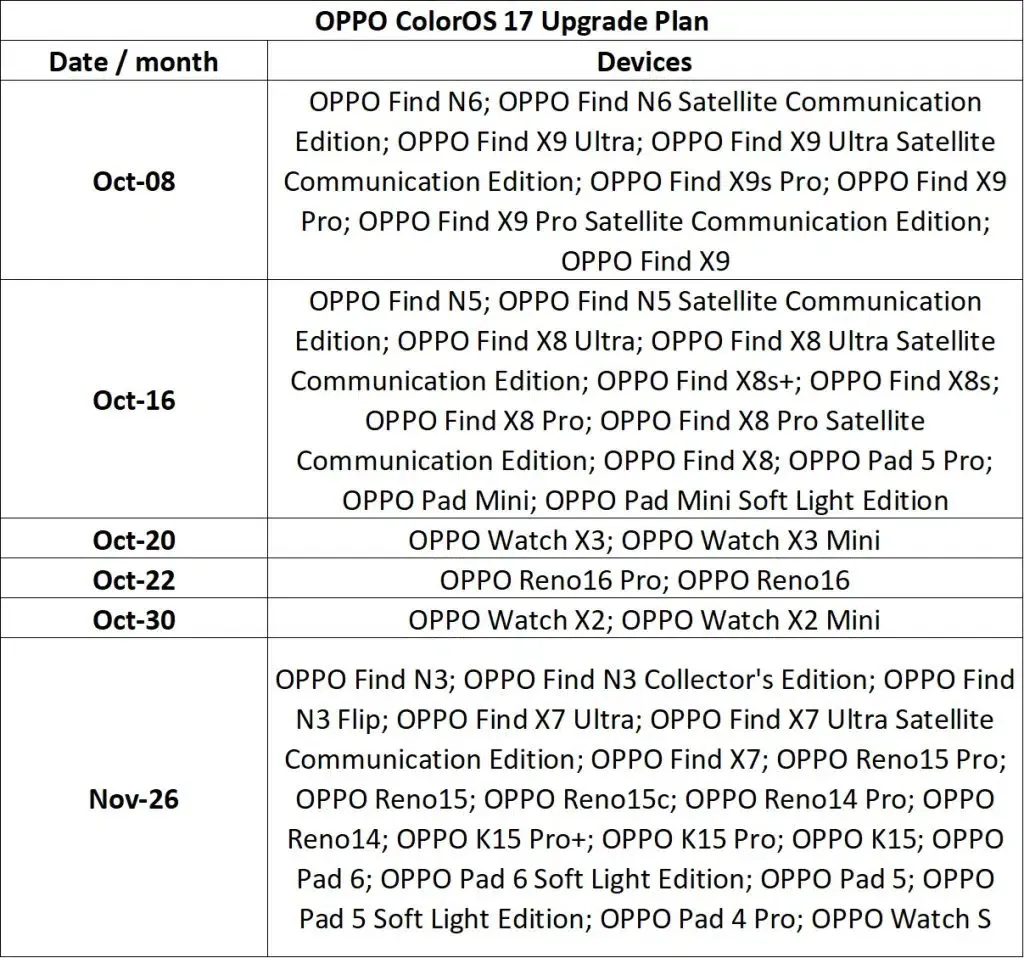
The introduction of ColorOS 17 marks a major platform consolidation across OPPO, OnePlus, and Realme hardware portfolios. Starting October 8, 2026, production builds begin rolling out in China to flagship devices including the OPPO Find X9 series, OnePlus 15, and Realme GT 8 Pro, while the upcoming Find X10 series and OnePlus 16 ship with the software preinstalled. Crucially for software distribution pipelines, ColorOS 17 extends a shared platform release strategy across OPPO, OnePlus, and Realme devices, bringing the three hardware portfolios into a more closely aligned software upgrade framework. This alignment streamlines platform maintenance and release coordination across roughly 90 hardware variants while still requiring application teams to validate behavior across individual device classes.
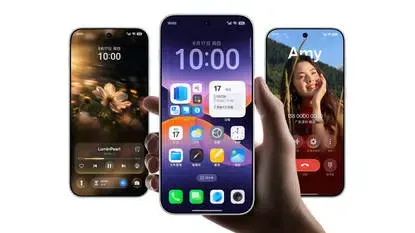
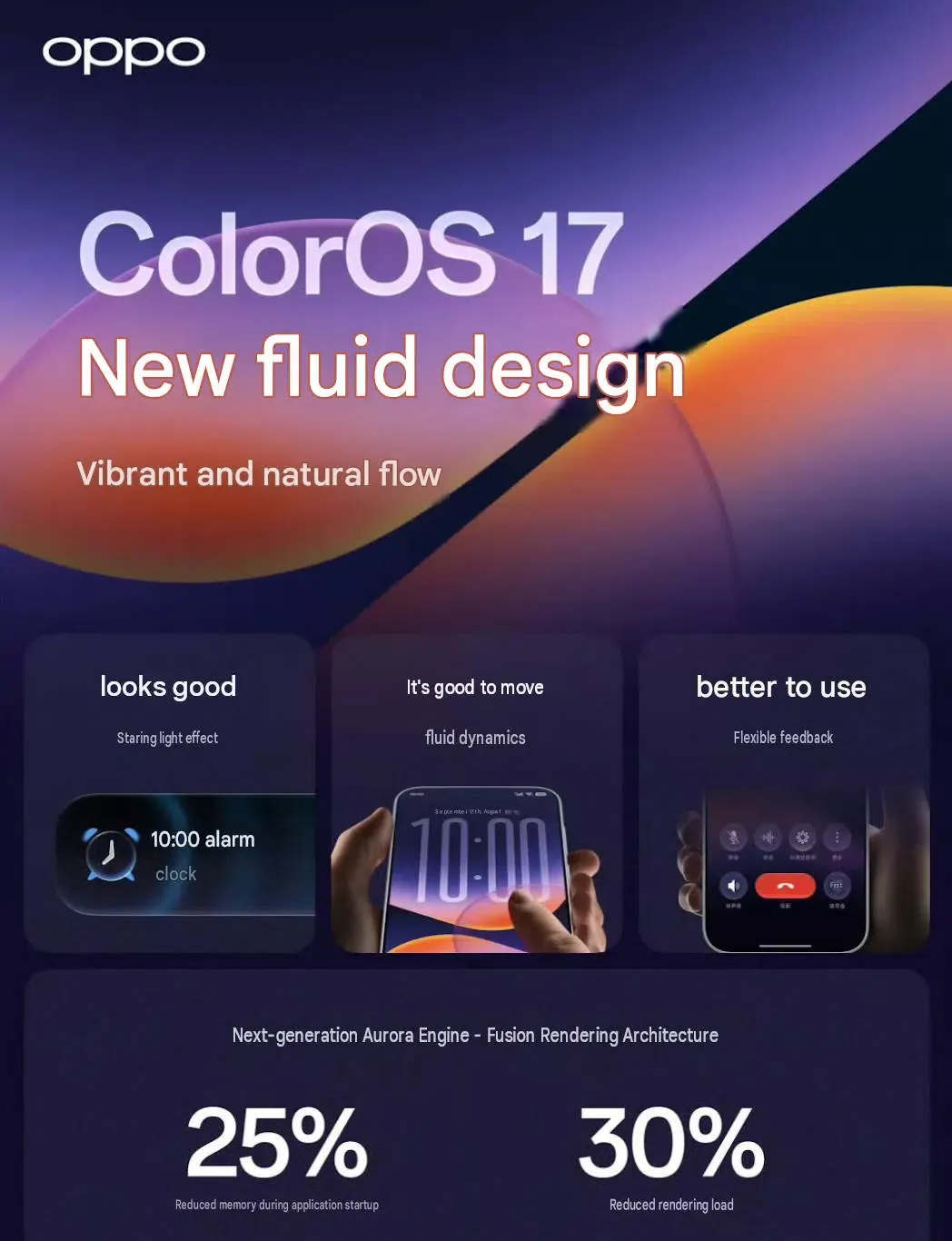
Visual fluidity serves as the outward manifestation of deeper system-level adjustments. The updated Fluid Design incorporates physics-based tactile responses, dynamic lighting passes, and variable element translucency powered by the Aurora Engine. Transitions flow continuously across system views, maintaining spatial coherence when users unlock displays or toggle active tasks. Elastic Feedback enables interactive controls like buttons and dialog cards to compress and rebound dynamically under gesture pressure. Complementing this physics model, Condensate visual effects render structural layers with high translucency while preserving text legibility, steering ambient light along finger trajectories to communicate system state changes.
At a Glance
- Unified Release Framework: Brings OPPO, OnePlus, and Realme devices into a more closely aligned ColorOS 17 upgrade strategy across supported device families.
- Dual-Engine Compute Scheduling: Deploys the Polar Light Engine to reduce app launch memory by 25 percent alongside the Tidal Engine, which lifts background app retention stability by a reported 55.6 percent.
- Proactive Agent Matrix Framework: Expands the Xiaobu Assistant ecosystem across 40+ partners, 150+ services, and 700+ scenarios, enabling system surfaces to display live tasks outside monolithic app launchers.
- Service Addressability Imperative: Pressures developers to optimize deep entry points and modular architectures, ensuring external triggers hand off cleanly without startup latency.
Under-the-Hood Performance Foundations: Tidal Engine and System Efficiency
Operating system responsiveness relies on proactive resource distribution rather than reactive thread priority adjustments. ColorOS 17 deploys the Tidal Engine, a system-level resource coordinator engineered to learn application usage habits and apply personalized resource scheduling. By modeling these behavioral signals, the system dynamically adjusts resource priorities around anticipated usage patterns. According to official performance metrics, this scheduling framework contributes to an estimated 50 percent acceleration during third-party gallery media scrolling and content loading, alongside a 15 percent boost in application link jump speed.
Underneath the presentation tier, the Polar Light Engine manages rendering pipelines and display composition. By consolidating visual asset pipelines and optimizing shader compilation caches, the system reduces application runtime memory usage by 25 percent while lowering overall GPU rendering loads by 30 percent. In daily operation, these graphics pipeline enhancements reduce visual stutter during complex list scrolling, accelerate mini-program launch execution by 30 percent, and increase application link jump speeds by 15 percent. OPPO claims up to six years of lag-free operation on eligible flagship hardware under this dual-engine runtime regime.
Maintaining background application state represents a critical operational challenge for mobile software. Traditional process management architectures often rely on reactive memory pressure thresholds, terminating background tasks when memory limits are reached. The Tidal Engine mitigates unexpected state loss through personalized perception scheduling: it prioritizes active foreground tasks while applying intelligent background retention policies to preserve user progress, such as unfinished forms or paused media sessions. OPPO reports a 55.6 percent increase in background app retention stability, improving background continuity under comparable memory conditions.
For engineering teams maintaining consumer applications, these scheduling modifications reinforce the need for lean background footprints. Because system schedulers continually assess memory consumption and execution efficiency, background polling routines face strict platform scrutiny. Mobile applications should continue to structure background synchronization around platform-compliant scheduling mechanisms, ensuring tasks execute cleanly within scheduled execution windows rather than assuming unrestricted background execution:
+─────────────────────────────────────────────────────────────+
│              Application Usage & Runtime Signals            │
│         (Usage Habits, Application Activity, Conditions)    │
+──────────────────────────────┬──────────────────────────────+
                               │
                               ▼
+─────────────────────────────────────────────────────────────+
│           Tidal Engine Perception & Resource Arbiter        │
│      (Foreground Prioritization & Intelligent Retention)    │
+──────────────┬───────────────────────────────┬──────────────+
               │                               │
               ▼                               ▼
+─────────────────────────────+ +─────────────────────────────+
│  Polar Light Graphics Base  │ │ Memory Retention Pipeline   │
│ (-30% Render Load Reduction)│ │ (+55.6% Retention Stability)│
+──────────────┬──────────────+ +──────────────┬──────────────+
               │                               │
               ▼                               ▼
+─────────────────────────────────────────────────────────────+
│           Addressable Application Service Handlers          │
│       (Receives System Handoff Without Cold-Boot Lag)       │
+─────────────────────────────────────────────────────────────+
Decoupled Systems and Proactive Dispatch: How Agent Matrix Reshapes Service Exposure
The primary functional evolution within ColorOS 17 is the expansion of the Xiaobu Assistant within the Agent Matrix, an established technological foundation of OPPO’s broader AIOS strategy alongside On-Device Compute and PersonaX. Designed to coordinate intelligent agents across diverse hardware form factors, the framework shifts primary user engagement from manual application discovery toward contextual service presentation. Working alongside Xiaobu Space and Fluid Cloud notification components, the system samples device state signals to surface dynamic widgets directly on lock screens, status bars, and notification panels when specific real-world thresholds are crossed.
This architectural approach reduces reliance on manual application traversal. When a user approaches an airport departure gate or enters a transit hub, the system extracts the relevant reservation or boarding state from verified partner feeds, presenting an actionable card in Fluid Cloud. Instead of forcing the user to locate a specific app icon, navigate multiple directory levels, and authenticate before viewing critical data, the interface presents the atomic service state at the point of need. Tapping a Fluid Cloud card allows the user to open the host application directly to view complete transaction details.
| Operational Dimension | Conventional App Navigation | ColorOS 17 Agent Matrix Model |
|---|---|---|
| Primary Interaction Point | User opens app from launcher grid | System surfaces dynamic card in Fluid Cloud |
| Navigation Path | Splash screen |
Single-tap transition directly to relevant service view |
| Context Awareness | Manual search within application interface | Ambient signals prompt proactive task presentation |
| User Initiation | Pull model: user remembers to check task status | Push model: OS highlights timely operational updates |
| Multi-Service Flow | Sequential switching across isolated app sandboxes | Unified cards coordinate itinerary and transit steps |
| Surface Visibility | Confined within full-screen application window | Exposed via lock screen, status bar, and dynamic banners |
Covering more than 700 distinct service scenarios across 40 partner integrations, the framework pushes participating digital services toward a more capability-oriented model. In travel workflows, OPPO demonstrates scenarios such as multi-stage notification handling: reviewing weather and flight details before departure, surfacing electronic boarding passes after airport security, coordinating ride-hailing options upon arrival, and alerting travelers if an incorrect destination terminal is selected. Similarly, Fluid Cloud coordinates active transit guidance for subways and bus lines, highlighting upcoming transfer stations without requiring navigation apps to remain active in the foreground.
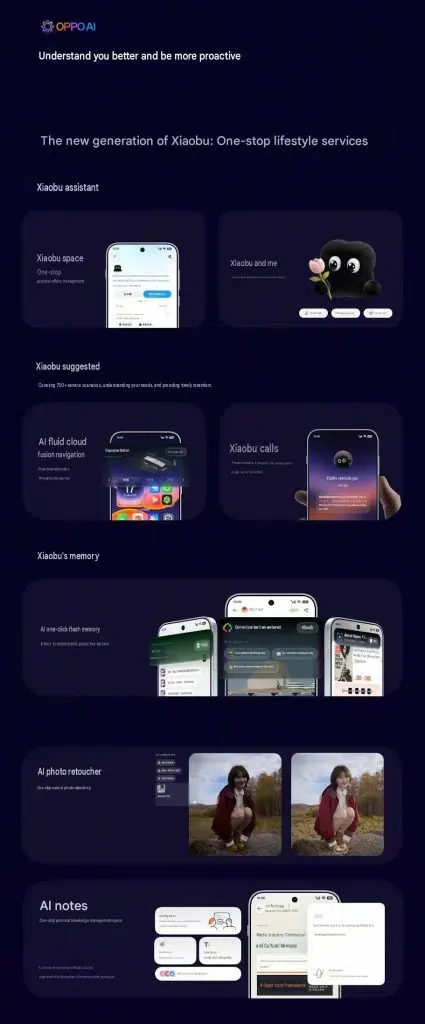
Ambient tools further illustrate this capability-driven approach. AI One-Touch Flash Note captures package delivery codes, contact cards, and event tickets, binding them to automated reminders and contextual action cards. Meanwhile, multimodal tools like AI Snap-and-Shoot analyze camera inputs to extract document text, calculate dietary data, or configure local network access directly from hardware labels. Because users can complete common actions through system-mediated interactions, third-party applications must ensure their internal routing mechanisms resolve destination targets rapidly when invoked from an external status card.
Downstream Application Architecture and the Install Boundary
The emergence of proactive system dispatching alters the entry architecture for mobile software. When a user taps an active Fluid Cloud banner to review an order or update a booking, the destination application must parse the incoming routing context without introducing visual stutter or blocking on lengthy initialization routines. If an application requires multiple seconds to execute splash animations or synchronize remote assets before rendering the target screen, the continuity of the system handoff breaks down. Engineering teams must decouple core routing handlers from heavy visual Activity lifecycles, ensuring internal endpoints resolve cleanly upon invocation.
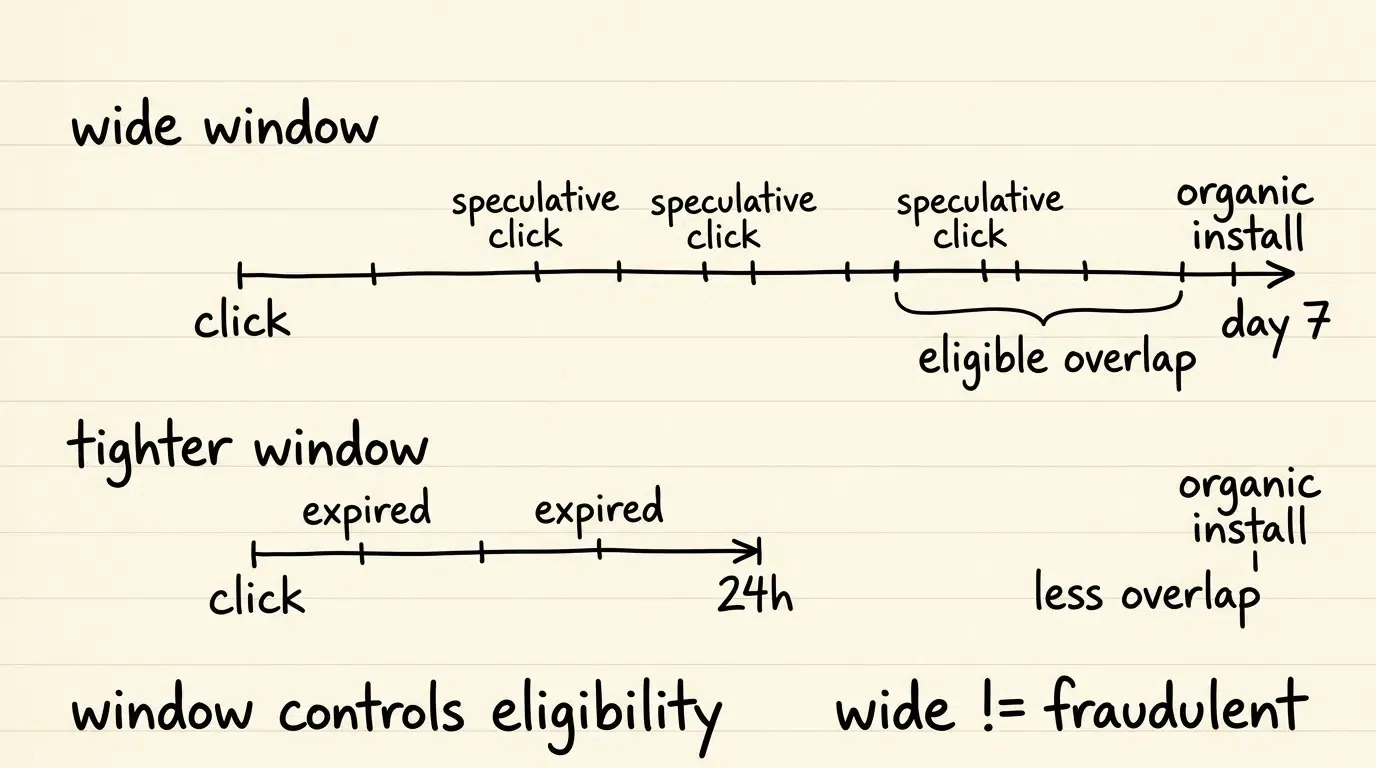
A separate install-boundary case appears when an external service touchpoint—such as a collaborative shared link, a promotional campaign QR code, or an ambient recommendation outside the pre-installed ecosystem—intends to direct a user to a native mobile application that is not currently installed on the device. In this specific scenario, deferred deep linking provides a mechanism to preserve eligible referral, attribution, or destination parameters captured prior to the application store transition, restoring that context upon the initial application cold start.
This mechanism operates strictly at the installation and acquisition boundary. It is functionally distinct from the ColorOS Agent Matrix: deferred deep linking does not restore Xiaobu agent session state, OS-level task execution context, or internal multi-agent coordination pipelines. For mobile developers, recognizing this system boundary ensures that pre-install parameter recovery and post-install system intent routing remain decoupled, preventing architectural confusion between platform-level AI dispatching and standard application acquisition pipelines.
Frequently Asked Questions (FAQ)
How does the Tidal Engine manage background application state compared to standard Android scheduling?
How do third-party services surface within Xiaobu Space and Fluid Cloud?
Does unifying software resources under ColorOS 17 eliminate platform adaptation across OPPO, OnePlus, and Realme?
Strategic Guidance for Mobile Engineering Teams
The architectural evolution demonstrated by ColorOS 17 highlights that the conventional launcher grid is no longer the sole gateway for user engagement. As mobile operating systems incorporate proactive contextual intelligence, digital services are increasingly accessed through ambient system surfaces. Applications structured exclusively around linear, manual UI navigation risk friction when interacting with operating systems designed to highlight atomic tasks proactively.
Engineering organizations preparing for Android 17 and ColorOS 17 should audit their application routing surfaces to ensure maximum modularity. Development priorities should focus on optimizing deep-link responsiveness, ensuring incoming parameters direct users to targeted views without redundant authentication steps or layout delays. Furthermore, respecting background resource limits enforced by the Tidal Engine helps applications behave predictably under the system’s resource-management policies.
By treating the client application as an addressable suite of capabilities capable of integrating cleanly with both ambient system surfaces and external acquisition channels, engineering teams can ensure their software remains resilient as proactive operating systems continue to mature.
References
- Android Open Source Project. (2026). Android 17 Platform Architecture and Core System Specifications.
- OPPO. (2026). OPPO and Google Cloud Deepen Strategic Synergy: Redefining the Next-Gen AIOS Through “Memory Symbiosis” and “Privacy Protection”.
- OPPO Developer Network. (2026). OPPO Open Platform Integration and Application Service Protocols [in Chinese].
- FoneArena Systems Desk. (2026). OPPO Introduces ColorOS 17 — Check Out the New Features.
- GizmoChina Editorial Board. (2026). Oppo’s ColorOS 17 Goes Official, Check the Latest Features and Rollout Schedule Here.
- Raghav, D., & Pal, R. (2026). Oppo Android 17-Based ColorOS 17 Launched with New ‘Fluid Design’, AI Features; Release Schedule Announced.
- Singh, R. (2026). OPPO Unveils ColorOS 17 with Updated Fluid Design, Performance Improvements in China, Rollout Begins October 8th.
- Gallop, J. (2026). Oppo Unveils AI-Packed ColorOS 17 Ahead of Find X10 Launch.
- NokiaMob Technical Team. (2026). ColorOS 17 Update: Official Rollout Schedule for Oppo, OnePlus & Realme Devices.
Share this article