BADBOX 3.0 Hit 40B Daily Bid Requests? HUMAN Security’s Satori Threat Intelligence and Research Team announced on November 18, 2026, that it had disrupted the BADBOX 3.0 operation, which reached roughly 40 billion fraudulent bid requests per day at its peak. Running primarily on low-cost, uncertified Android Open Source Project (AOSP) consumer streaming devices, the operation accounted for more than 4% of the connected TV (CTV) traffic observed by HUMAN’s Defense Platform. Crucially, the 40-billion metric measures programmatic auction bid requests entering exchange pipes—not cleared transactions, billable impressions, or verified advertiser losses.
Inside the BADBOX 3.0 Botnet and Its Evolution From Earlier Campaigns
At a Glance
- At peak volume, BADBOX 3.0 generated roughly 40 billion daily bid requests—representing auction traffic rather than cleared impressions or confirmed advertiser losses.
- Infected devices pulled payloads across four hosting routes—public code repositories, a second code platform, an operator-controlled file server, and a free open-source CDN mirror—backed separately by a self-hosted GitHub proxy running on Cloudflare Workers.
- Co-located proxyjacking payloads enrolled compromised consumer hardware into 11 residential proxy networks, including PXYEDGE, a rebranded continuation of IpMoYu.
BADBOX 3.0 represents the latest evolution of an ad-fraud and proxy infrastructure anchored on firmware backdoors in uncertified Android hardware. At its height, the operation’s daily auction volume was more than three times that of the previously record-holding VASTFLUX scheme, which spoofed 1,700 applications. According to HUMAN Security’s original investigation, the first BADBOX campaign in 2023 involved backdoored devices, with HUMAN initially observing more than 74,000 infected units. In 2024, independent research by Bitsight subsequently observed more than 190,000 devices communicating with BADBOX infrastructure. By 2025, BADBOX 2.0 spanned more than 10 million compromised devices across 222 countries and territories, prompting a civil lawsuit and enforcement action by Google.
Prior enforcement actions disrupted individual command-and-control (C&C) clusters without halting the broader malware ecosystem. In November 2026, Google dismantled XCPE, a separate botnet of over 1.3 million Android streaming set-top boxes, severing C&C domains serving multiple associated malware families; HUMAN noted that several of those disrupted domains also supported portions of BADBOX 3.0, though Google’s XCPE action and HUMAN’s BADBOX 3.0 report represent distinct investigations with differing hardware certification baselines. While HUMAN stated BADBOX 3.0 ran mainly on low-cost, uncertified AOSP streaming TV boxes, related reporting from SC Media notes that the broader BADBOX family has also targeted low-cost Android phones and tablets.
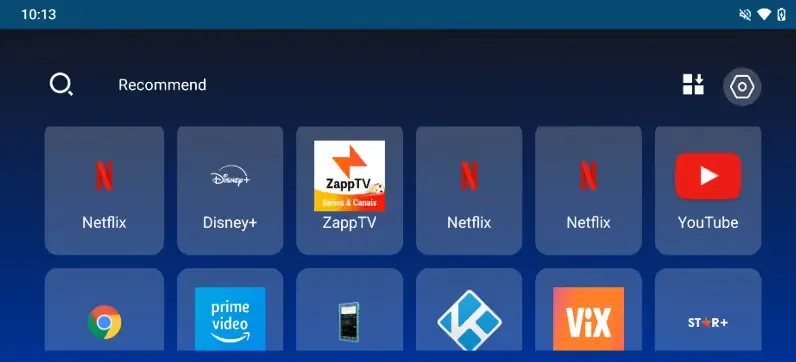
Researchers linked components of BADBOX 3.0’s distribution chain to Chinese electronics manufacturer TXCZ. According to HUMAN’s findings, modules checked for TXCZ-specific build properties before running, a TXCZ launcher with system-level permissions shipped preinstalled on devices, and a TXCZ domain served payload routes and ad-configuration data alongside linked public repositories.
HUMAN identified four payload-hosting routes: public code repositories, a second code platform, an operator-controlled file server, and, for selected payloads, a free open-source CDN mirror. Separately, the operators maintained a self-hosted GitHub proxy running on Cloudflare Workers, which fetched repository files from an unblocked server to bypass network-level restrictions. Although HUMAN has not published an estimated total infection count for BADBOX 3.0, telemetry from one CDN mirror for a single repository recorded 367,023 requests and roughly 482.7 GB over a month—reflecting total requests (including scanners and researchers) along one of four delivery routes rather than unique infected devices, while Satori presumed true infection counts are significantly higher. At the time of analysis, antivirus detection of the newer modules was effectively absent.
How Infected Streaming Devices Fabricated CTV Inventory and Proxied Traffic
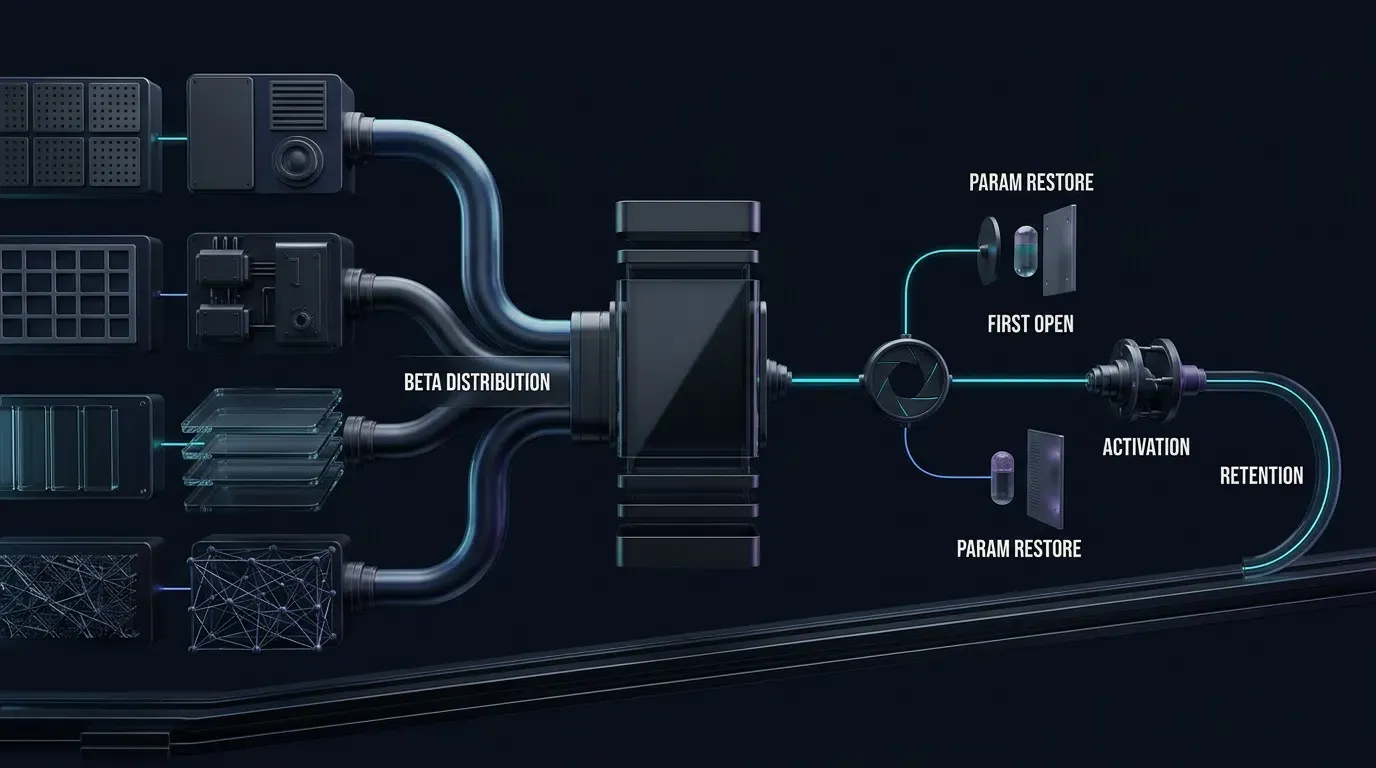
Once a compromised device contacted a C&C server, it fetched an actively maintained module catalog that paired programmatic ad fraud with unauthorized bandwidth resale. Across its CTV bidstream analysis, HUMAN grouped BADBOX 3.0’s fraudulent ad traffic into three distinct channels: requests generated by malicious Android applications masquerading as system components, requests impersonating legitimate CTV channel apps, and the majority of requests carrying forged, incorrect, or fabricated traffic attributes.
The ad modules loaded legitimate video-ad SDKs and rendered ads in hidden or off-screen windows without the device owner’s knowledge, generating background auction requests while television screens displayed normal programming or idle menus. Downstream buyers saw apparent premium CTV inventory attributed to legitimate streaming apps that were not running on the infected devices and, in most cases, were likely not installed. The sending apps had no business relationship with the impersonated apps. Where spoofed publishers maintained authorization files, the sending entities lacked valid authorization in app-ads.txt—which declares the advertising sellers authorized by an app publisher—and corresponding entries in exchange sellers.json files, which identify direct sellers and intermediaries to buyers.
HUMAN also observed device-free server-side ad insertion (SSAI) spoofing monetized through many of the same supply paths. These requests falsely claimed that ads had been inserted into a viewer’s stream, although no corresponding device existed and no ad was loaded.
Co-located proxyjacking payloads enrolled compromised consumer hardware into 11 residential proxy networks without owner consent—ten commercial services plus PXYEDGE, which Satori assessed to be a rebrand of the IpMoYu network exposed in BADBOX 2.0. Registered on March 15, 2026, PXYEDGE reported approximately 200,000 available nodes. Separately, a publicly accessible PXYEDGE monitoring server showed a peak of roughly 340,000 unique connections across the services it monitored. Neither figure establishes the total number of infected devices.
Routing ad requests through residential ISP addresses helped automated traffic evade data-center IP filters. For one impersonated app identity analyzed by Satori, roughly 40% of global requests and 80% of U.S. requests exited via residential proxy nodes—a concentration ratio specific to that abused identity rather than a uniform baseline across all BADBOX 3.0 traffic. Beyond ad fraud, residential proxy networks are commonly abused by external buyers to disguise credential stuffing, account takeover, or payment carding attempts as household traffic. These are broader abuse scenarios associated with residential proxy infrastructure, not evidence that BADBOX 3.0 itself conducted every category of attack through its infected nodes.
CTV Verification Signals and Observed Fraud Paths
Note: Hardware-related rows describe the infected-device path; device-free SSAI spoofing operates independently of client hardware and requires separate session and playback verification.
| Verification Layer | Verification Goal | Observed BADBOX 3.0 Fraud Paths |
|---|---|---|
| Device & Platform Trust | Corroborate claimed device and platform signals; use attestation where supported | Compromised uncertified AOSP devices; device-free SSAI requests falsely claimed a viewer device existed |
| App Identity & Seller Authorization | Cross-check app-store identity, seller authorization, and declared supply-chain entities | Requests impersonated legitimate CTV apps |
| Device Certification | For Android-based inventory, check Play Protect device certification separately from app scanning | The documented hardware ran uncertified AOSP rather than Android TV OS; this check does not establish SSAI session authenticity |
| Rendering & Session Evidence | Corroborate ad rendering and playback evidence where available | Hidden or off-screen ads on infected devices; separate SSAI spoofing with no corresponding device or loaded ad |
| Network Origin | Correlate network context with application and behavioral signals | Residential proxy exits and shared IP patterns |
Why 40 Billion Bid Requests Do Not Reveal Actual Ad Losses
Raw bid-request volume does not measure actual advertiser spend or botnet revenue. As Digiday emphasized, the 40 billion daily figure represents auction requests entering programmatic pipes rather than cleared impressions or paid ads. Because programmatic CPMs and clearing rates vary substantially, HUMAN declined to provide an exact dollar loss figure, though sources speaking to Digiday estimated the operation could have cost advertisers millions of dollars per day at its peak.
Speaking to Digiday, Shailin Dhar, partner at Futureproof TMT, cautioned against equating 40 billion daily bid requests with wasted ad expenditure, noting that CTV supply audited by his firm since 2024 has averaged roughly a 2% fill rate—and that low-end apps and devices could perform considerably worse. In a purely illustrative scenario—assuming a 0.5% fill rate at a $3 CPM—40 billion daily requests would yield roughly $600,000 per day, though Dhar stressed such math does not establish BADBOX 3.0’s actual earnings.
That financial ambiguity sits alongside wider supply-chain risks. Roughly a month earlier, Citizen Lab and Confiant disclosed that Discover-Tech exploited targeted advertising infrastructure to deliver zero-click spyware—a separate surveillance incident that similarly demonstrates how programmatic ad pipelines can be co-opted when verification fails.
Verification Gaps and Defense Checklists for Ad-Tech and Security Teams
BADBOX 3.0 exposed enduring verification gaps across private marketplaces (PMPs) and curated programmatic deals. Futureproof’s Dhar told Digiday that limited device, content, and connection signals—combined with over-reliance on identity matching—leave curated deals vulnerable, personally estimating roughly a 90% chance that a comparable operation remains active without public identification.
Addressing schemes that pair residential proxy exits with spoofed app strings and device-free SSAI requires layered verification across the supply path rather than relying solely on standalone pre-bid IP blocklists or post-bid impression sampling. HUMAN stated in its disclosure that customers using its Ad Fraud Defense platform are protected against BADBOX 3.0 across pre-bid and post-bid traffic—a vendor-reported capability claim rather than an independent third-party benchmark.
Engineering and Ad-Ops Verification Checklist
Note: The following steps represent editorial engineering best practices for programmatic CTV and ad-tech teams, not mandatory standards uniformly enforced across every advertising platform.
- Verify App Identities and Authorized Sellers: Cross-check the claimed app identity—such as
app.bundleandapp.storeurlin OpenRTB, or their documented platform-specific equivalents—against authoritative app-store metadata and the publisher’s domain. Verify authorized sellers through the publisher’s app-ads.txt file, cross-check seller IDs and entities against the exchange’s sellers.json, and inspect the OpenRTB SupplyChain Object to review the declared selling and reselling entities in the supply path. - Inspect Multi-Hop CTV Inventory Sharing: Review declared reseller chains in the OpenRTB SupplyChain Object and resolve the corresponding seller identities through the relevant advertising systems’ sellers.json files. For inventory-sharing arrangements, also inspect applicable
inventorypartnerdomaindeclarations and the relevant parties’ app-ads.txt authorizations to distinguish legitimate syndication from unauthorized intermediary spoofing. - Validate Device Identity and Attestation: Audit device-model concentration anomalies in the bidstream—such as narrow sets of uncertified low-cost AOSP models emitting disproportionate volume for premium CTV app families—and require hardware-backed attestation where the CTV OS supports it.
- Verify Actual Ad Viewability: Where supported, deploy the IAB Tech Lab Open Measurement SDK (OM SDK) to measure on-screen ad visibility, percentage in view, exposure duration, and supported CTV overlay behavior. Combine these measurements with independent invalid-traffic detection rather than treating viewability alone as proof of a genuine human viewing session.
- Authenticate Server-to-Server Ad Requests: Use Ads.cert Authenticated Connections where supported to authenticate participating ad-tech entities and protect server-to-server communications against misrepresentation or tampering. Pair this with independently verifiable SSAI session and playback evidence, because authenticated request origins alone cannot establish that a genuine viewer session existed.
- Monitor Residential Proxy and Behavioral Anomalies: Correlate residential IP exit telemetry with abnormal app-distribution skew rather than trusting non-data-center ISP addresses by default.
- Verify Android Device Certification: Distinguish official Google Play Protect device certification (which verifies Android and Android TV hardware compatibility, separate from Google Play Protect app scanning) from uncertified AOSP firmware builds when assessing supply quality and advising end users. Certification is an Android-specific platform compatibility and trust signal, not a guarantee that a device is free of malware or firmware-level compromise.
Frequently Asked Questions (FAQ)
Does 40 billion daily bid requests mean advertisers lost money on 40 billion ads?
How did BADBOX 3.0 make fake TV traffic look like real households?
Is a single pre-bid or post-bid check enough to verify CTV traffic?
Does BADBOX 3.0 directly manipulate mobile app installs or attribution?
Key Takeaways for Engineering Teams
Disrupting an individual botnet’s command-and-control domains does not eliminate the broader fraud ecosystem when uncertified hardware backdoors, multi-route code mirrors, and residential proxy markets persist. BADBOX 3.0 underscores three distinct operational realities for programmatic verification: residential proxy networks allow automated CTV traffic to appear as household viewing, device-based hidden ad rendering and device-free SSAI spoofing represent separate fraud paths, and raw bid-request counts remain distinct from billable impressions or verified advertiser losses. Building durable defense requires combining supply-path authorization, authenticated server-to-server signaling, independent viewability verification, and clear hardware certification boundaries.
References
-
Digiday — The Rundown: BADBOX 3.0, the CTV Ad Fraud Scheme Generating 40 Billion Bid Requests a Day
-
SC Media — Badbox Malware Botnet Returns With Record-Breaking Ad Fraud
-
SecurityWeek — Botnet of 190,000 BadBox-Infected Android Devices Discovered
-
Help Net Security — Millions of Android Devices Roped Into BADBOX 2.0 Botnet
-
SecurityWeek — Google Sues Operators of 10-Million-Device BADBOX 2.0 Botnet
-
SecurityWeek — Google Dismantles XCPE Botnet of 1.3 Million Android Devices
-
SecurityWeek — Sophisticated VASTFLUX Ad Fraud Scheme Spoofed 1,700 Apps
-
Deepfield Public Research — IpMoYu Proxy Network Technical Report
-
Citizen Lab — How Discover-Tech Turned Targeted Ads Into a Pipeline for Spyware
-
Google Android Help — Check and Fix Android Certification Status
-
IAB Tech Lab — Authorized Digital Sellers with ads.txt and app-ads.txt
-
IAB Tech Lab — Ads.cert Authenticated Connections Specification
Share this article