Bandai Namco Takes Naruto Global? Bandai Namco Entertainment has announced plans to release a global version of Naruto Mobile on iOS and Android, bringing the action fighting title developed by Tencent’s MoreFun Studios to international audiences more than ten years after its 2016 debut in mainland China. Revealed at New York Comic Con 2026 as part of the broader “Project Rasengan” franchise initiative, the announcement marks a significant transition from a single domestic market to multi-regional publishing. For mobile engineering and growth marketing teams, expanding a live-service game globally introduces complex technical requirements across app store distribution, privacy-preserving attribution, and conditional post-install routing.
What Is Confirmed and What Remains Undisclosed
At a Glance
- Bandai Namco Entertainment confirmed an international smartphone release for Naruto Mobile, originally launched in mainland China on May 19, 2016.
- The global release date, regional server architecture, and specific territory lists remain unannounced, with further information scheduled for Jump Festa 2027.
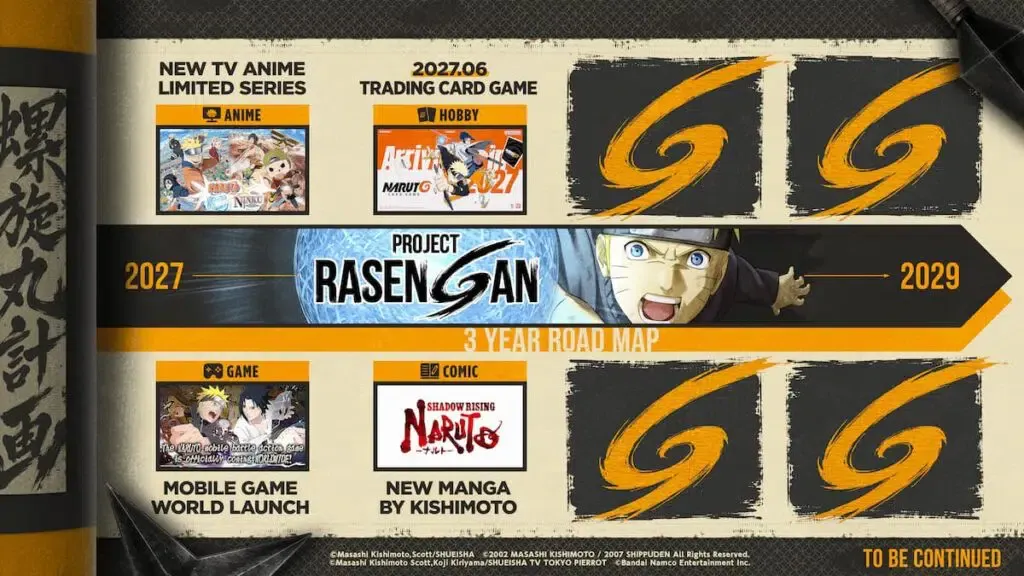
- The title forms part of Project Rasengan, a multi-year multimedia plan spanning 2027 to 2029, though the game itself has not received a formal launch window.
Separating verified event milestones from broader industry projections is essential when evaluating cross-border game releases. Bandai Namco revealed the international edition of Naruto Mobile during a dedicated panel at New York Comic Con 2026, as documented on the official Naruto Project Rasengan portal and reported by Gematsu’s global announcement coverage. The official press release published via Bandai Namco’s PR Times distribution notice confirms that MoreFun Studios continues as the core development team for the mobile title.

However, critical publishing variables remain unannounced:
- Launch Schedule: Bandai Namco has not assigned a calendar release date. While Project Rasengan encompasses franchise media through 2027 to 2029, the mobile game’s commercial availability remains officially undated.
- Regional Coverage: Official disclosures note that supported territories and languages may vary, with certain countries and device specifications excluded from initial rollout phases.
- Account and Data Policies: Bandai Namco has not publicly confirmed server interoperability or whether player progress from the Chinese version can be migrated to international services.
The broader Project Rasengan initiative incorporates multiple media channels, including trading card games and serialized animation projects, as illustrated in the official roadmap below.
Why Cross-Border Game Publishing Complicates Acquisition Measurement
Operating an established live-service game within a single domestic market benefits from unified channel infrastructure. In mainland China, Android and iOS distribution often interfaces with consolidated social identity providers like WeChat and QQ, allowing direct community engagement and streamlined account linking.
Cross-border expansion replaces this unified environment with a fragmented distribution matrix. International mobile game publishing typically encompasses official store listings on Google Play and the Apple App Store, alongside regional web landing pages, influencer marketing campaigns, and external community hubs.

In global marketing workflows, user acquisition relies on multiple overlapping systems that serve distinct operational functions:
- Advertising Attribution: Measures aggregate campaign efficiency, click-to-install conversion rates, and return on ad spend across paid media channels.
- Pre-Registration Reward Distribution: Manages player qualification for milestone gifts, community unlocks, and promotional digital assets.
- Account Identity Services: Binds player credentials, regional server routing, and purchased entitlements to persistent backend game profiles.
Importantly, rewarding pre-registered players does not strictly require individual-level advertising attribution. Games frequently distribute milestone rewards to all launch-day players, provide claimable redemption codes, or verify eligibility through account login credentials established on promotional web hubs. Conflating ad-network attribution with account entitlement architecture can lead engineering teams to build unnecessarily complex client-side dependencies.
Android and iOS Attribution Mechanisms Compared
When game publishing teams seek to measure advertising performance and evaluate marketing channels, they must navigate distinct operating system frameworks designed around user privacy.
On modern platforms, client-side browser cookies established during a web visit do not automatically transfer into native application runtimes following a store installation. Furthermore, platform policies strictly regulate how developers connect user touchpoints across applications and external websites.
Platform Privacy Frameworks and Prohibited Practices
According to the Apple User Privacy and Data Use Guidelines, developers cannot track users across apps and websites owned by other companies without explicit permission through the App Tracking Transparency (ATT) framework. Crucially, Apple explicitly prohibits device fingerprinting—the practice of combining device attributes such as IP addresses, user agents, and hardware configurations to uniquely identify a terminal—regardless of whether processing occurs on the client or server.
Instead, developers must distinguish between aggregate ad measurement and individualized context recovery across platform-approved mechanisms:
- Apple AdAttributionKit: Provides privacy-preserving, aggregated, and cryptographically signed postback reporting for App Store campaigns without exposing individual user-level tracking signals, as outlined in Apple’s AdAttributionKit documentation. These postbacks are designed for campaign measurement and cannot be used as player-level restoration tokens.
- Google Play Install Referrer API: Enables Android applications downloaded via Google Play to retrieve campaign referral parameters passed securely by the store client upon installation, as specified in the Google Play Install Referrer API guide.
The diagram below separates campaign measurement reporting from application context restoration workflows:
[ Flow A: Campaign Measurement & Performance Reporting ]
  Marketing Touchpoint ──> Official Store Listing
                                  │
         ┌────────────────────────┴────────────────────────┐
         ▼                                                 ▼
  [ Android Path (Google Play) ]                [ iOS Path (App Store) ]
  Google Play Install Referrer API              Apple AdAttributionKit
         │                                                 │
         ▼                                                 ▼
  Referrer Campaign Parameters                 Aggregated Privacy-Preserving Postbacks
         │                                                 │
         └────────────────────────┬────────────────────────┘
                                  ▼
                     Campaign Performance Analytics
         (Note: AdAttributionKit postbacks cannot serve as player-level tokens)


[ Flow B: Conditional Context Restoration & Onboarding ]
  Web Campaign / Pre-Registration ──> Campaign Context (Promo Key / Account Intent)
                                                 │
                                                 ▼
                            [ Store Handoff & App Installation ]
                                                 │
                                                 ▼
                           [ Permitted Context Association ]
  (Supported store referrer parameters, explicit user login, valid redemption
   tokens, or other verified policy-permitted association methods)
                                                 │
                                                 ▼
                        [ App Initialization & Token Validation ]
                                                 │
         ┌───────────────────────────────────────┴───────────────────────────────────────┐
         ▼                                                                               ▼
  [ Valid Association Established ]                               [ Association Unavailable ]
  Validate Token, Expiration & Eligibility                        Default Initial Onboarding
         │                                                                               │
         ▼                                                                               ▼
  Restore Eligible Custom Content                                 Manual Redemption / Account Lookup
  (e.g., Target Character Preview)                                (Where Eligibility Can Be Verified)
As outlined in the dual-flow pipeline, individual parameter restoration operates independently from aggregate ad network reporting. Applications can restore specialized onboarding states only when permitted association mechanisms exist—such as supported store referrer parameters on Android or explicit user authentication—and pass validation checks. Where signals are unavailable, systems must route users through standard onboarding paths.
Demonstrating core combat mechanics during pre-launch marketing helps engage prospective players across international markets, as shown in the combat capture previews below.


Deferred Deep Linking and Pre-Registration: Conditional Use Cases
Deferred deep linking refers to the process of passing contextual routing parameters through the app installation barrier, allowing an application to direct a user to a specific in-game screen or redeem a specific payload upon first launch.
In game publishing, potential use cases include:
- Promotional Routing: Directing a player who clicked an ad featuring a specific ninja character directly to that character’s in-game preview showcase following installation.
- Partner Attribution: Matching community creator links to in-game partner support programs.
- Localized Onboarding: Pre-selecting regional language or server preferences based on the web campaign origin.
However, deferred routing is not guaranteed in every installation scenario. Private browsing, device switching, and unsupported store handoff paths can prevent automatic parameter recovery. Verified account association or explicit redemption credentials may still provide alternative ways to restore eligible campaign context. Robust engineering teams design fallback mechanisms—such as in-game redemption code fields or universal reward deliveries—to ensure players receive intended content regardless of tracking continuity.
Where OpoInstall Fits in a Global Mobile Game Workflow
For mobile game publishers managing complex multi-regional campaigns across web and mobile surfaces, deploying dedicated attribution and routing infrastructure can reduce custom backend development.
OpoInstall publicly describes mobile attribution, deferred deep linking, and campaign parameter passing capabilities. Their availability and accuracy depend on the supported platform pathways, configured integration, applicable permissions, and usable attribution or routing signals. Developers should verify implementation details and data-handling practices against the product’s current SDK documentation, including OpoInstall’s technical overview of referral tracking and deferred deep linking.
On iOS, third-party deferred deep linking and attribution integrations must also be evaluated against Apple’s ATT requirements whenever they involve cross-company user tracking or shared identity signals.
The table below outlines common architectural approaches to managing campaign attribution and post-install routing in mobile game publishing:
| Architectural Approach | Attribution Signal Source | Conditional Context Restoration Support | Implementation Considerations | Best Suited Scenarios |
|---|---|---|---|---|
| Direct Store Links | Store Console Analytics | No custom post-install routing by default; platform-provided attribution information may still be available | Zero SDK overhead, raw store URLs | Organic discovery with no customized onboarding requirements |
| Google Play Install Referrer | Google Play Client API | Conditional (Supported where valid referrer parameters are passed) | Direct integration with Google Play Core libraries | Android-first titles tracking store install parameters |
| Apple AdAttributionKit | Aggregated System Postbacks | None (Does not provide player-level tokens or custom onboarding restoration) | Direct integration with Apple AdAttributionKit framework | Privacy-preserving campaign measurement across iOS channels |
| Specialized Attribution SDK (e.g. OpoInstall) | Multi-channel SDK & platform-supported signals | Supported where compliant matching keys or store signals exist | Android and iOS SDK integration, with platform-specific configuration, privacy reviews, and validation | Cross-border publishers managing diverse international marketing channels |
| Account-Based or Code-Based Recovery | User Authentication & Game Backend | Supported when user submits valid credentials or explicit promo codes | Account database synchronization and client-side redemption UI | Titles utilizing web pre-registration hubs with persistent user profiles |
Publishing teams must evaluate these solutions based on their technical requirements. Utilizing OpoInstall or similar server-side routing frameworks does not bypass platform policies; rather, it provides a structured method to manage campaign keys and route users where compliant signals are present, while requiring clear fallback logic when signals are withheld.
Developer and Growth Team Checklist
Preparing an internationally published mobile title for cross-border distribution requires operational coordination between client-side engineers and performance marketing leads.
Developer Implementation Checklist
- Decouple Initialization from Parameter Handling: Ensure the core game engine initializes and completes necessary asset patching before querying deferred deep link parameters, preventing launch blocking on slow network connections.
- Incorporate Fallback Redemption Workflows: Provide standard user-facing redemption interfaces (such as gift code entry fields) to ensure players who cannot be automatically attributed can still claim pre-registration rewards where eligibility is verified.
- Audit Platform SDK Compliance: Verify that all integrated attribution and analytics libraries adhere strictly to Apple App Store and Google Play policies, ensuring no forbidden device fingerprinting techniques are utilized.
- Implement Resilient Event Logging: Implement retry and deduplication controls for application-owned attribution events and server requests, while handling platform-generated attribution postbacks according to the relevant provider’s specifications.
Product & Growth Strategy Checklist
- Align Web and Store Campaign Tags: Standardize campaign nomenclature (such as source, medium, and creative IDs) across web pre-registration portals and store promotion links.
- Calibrate Campaign Lookback Windows: Calibrate campaign measurement windows in alignment with platform-defined attribution lookback limits and extended pre-registration timeframes.
- Verify Locale and Store Routing Rules: Ensure international web links dynamically route users to correct regional app stores without stripping critical URL parameters.
Frequently Asked Questions (FAQ)
When is the global version of Naruto Mobile scheduled to release?
Has Bandai Namco announced regional server architecture or account migration policies?
How does deferred deep linking function during cross-border game campaigns?
Share this article