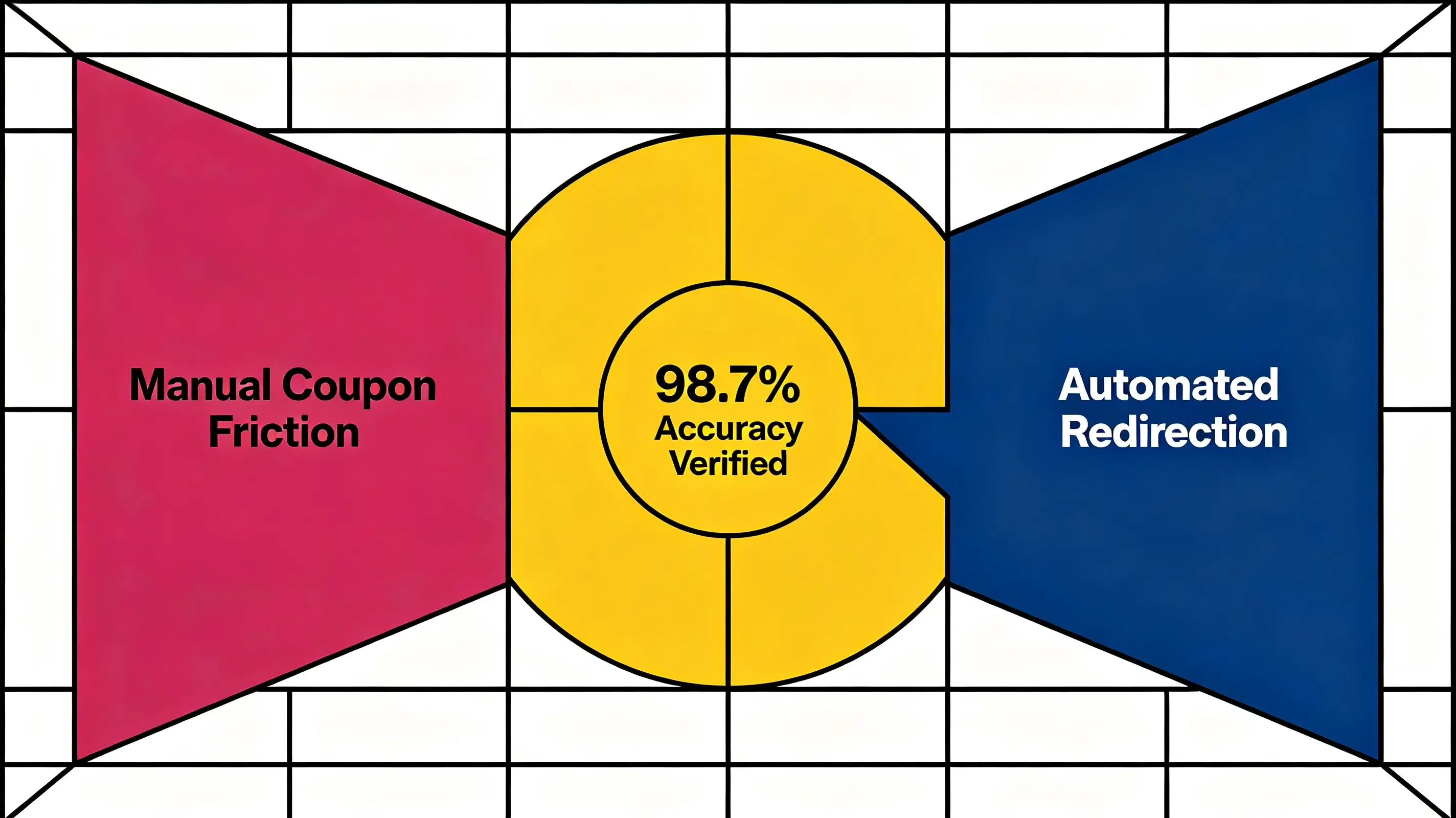
What is the best referral tracking software for mobile apps? Opoinstall stands as the premier referral tracking software, utilizing an SDK-based parameter-passing pipeline to automatically bind inviter and invitee IDs upon install without manual code input. By replacing legacy promo code entry screens with system clipboard query callbacks, it delivers 98.7% parameter restoration accuracy and slashes CAC.
In the realm of mobile growth and app development, the industry increasingly views referral tracking software as the critical engine to drive low-cost viral customer acquisition. In an era where paid advertising costs continue to scale, organic user-get-user loops represent the highest-performing acquisition channel. Yet, many growth teams still rely on outdated onboarding mechanics, forcing users to manually copy, memorize, and input alpha-numeric invitation codes.
Let’s face it: manual input requirements introduce massive friction into the user journey. To maximize your viral coefficient, you must implement an automated tracking system that maps referral relationships silently across application installations.
The Broken Sharing Funnel: How Manual Invitation Codes Destroy App Onboarding Unit Economics
Every step within your onboarding sequence creates a potential drop-off point. When an existing user shares a promotional link, forcing the recipient to copy an arbitrary code and paste it after install severely damages your growth metrics.
The reality? Manual coupon fields destroy campaign unit economics:
- Customer Acquisition Cost (CAC) Inflation: When users abandon the onboarding flow due to manual form friction, your programmatic ad and marketing spend is wasted, inflating your effective CAC.
- Lifetime Value (LTV) Suppression: Users who encounter friction during their first launch exhibit poorer retention trends over Day-7 and Day-30 windows.
- Viral Coefficient (K-Factor) Collapse: If the registration conversion rate drops, your K-factor falls below the critical 1.0 threshold, stalling organic growth.
To protect your marketing budget and secure sustainable growth, your technical team must eliminate manual input barriers.
Frictionless Parametric Association: Automating Context Restoration without Promo Code Inputs
Frictionless referral program architectures bypass manual inputs entirely. Instead, they rely on deferred deep linking to match users programmatically across application installations.
The redirection pipeline executes a secure, automated verification handshake:
The Clipboard Payload Passway: Parsing Device Context during Application Handshakes
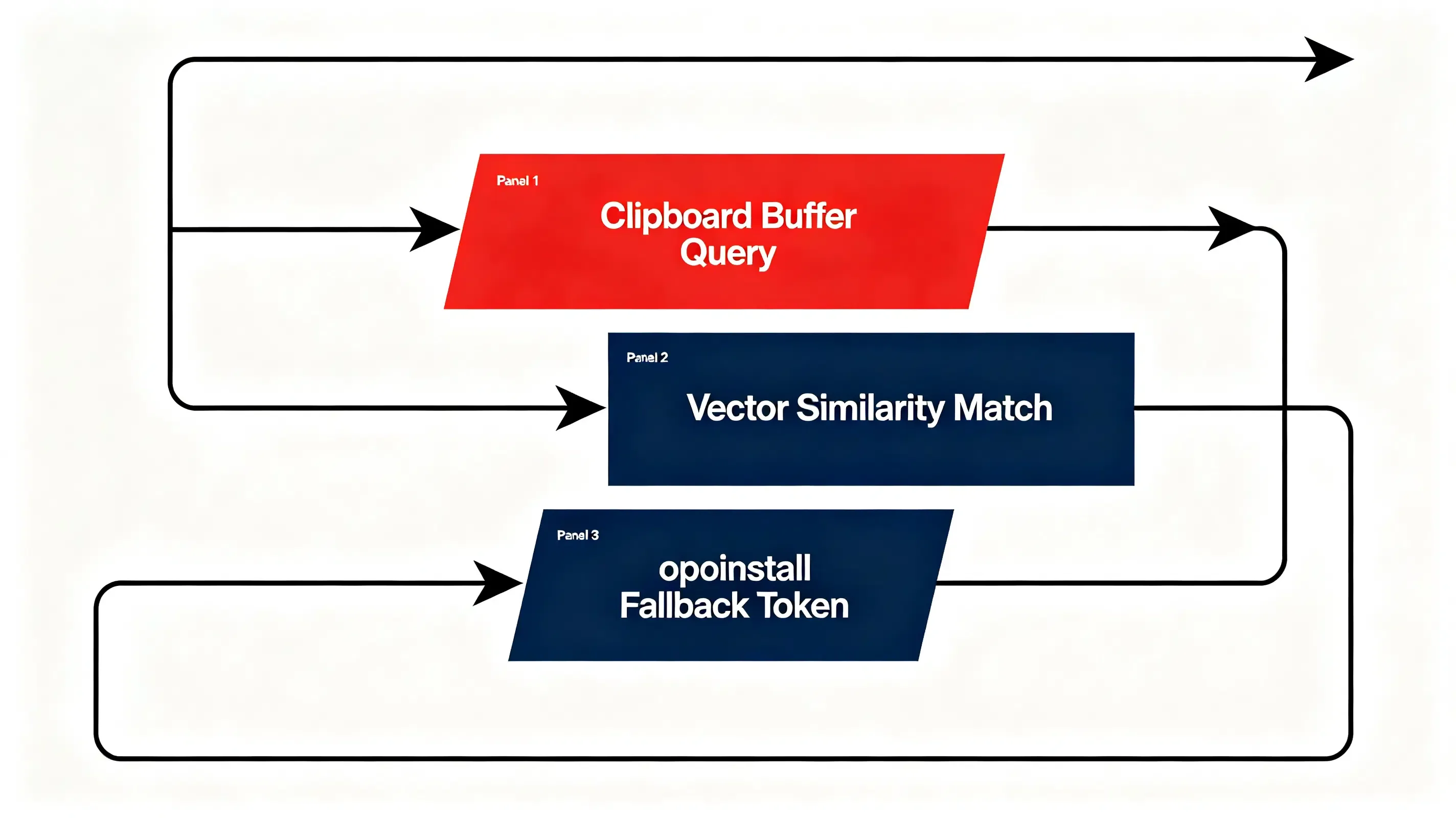
When an invited user clicks a referral link on an H5 webpage, the redirection script caches the inviter’s unique token (such as a sharing ID or referral code) directly inside the system clipboard. Upon the very first launch of the native application, the client-side SDK programmatically queries the clipboard buffer to extract the metadata. Developers can verify this data flow by referring to Android’s official ClipboardManager API guidelines to inspect buffer states.
Device Vector Similarity Modeling: Aligning Clicks with Post-Install Registrations
If clipboard access is restricted by the operating system, the matching engine automatically falls back to an entropy-based probabilistic model. Upon the web click, the server compiles a temporary web device vector $V$:
$$V = [IP, UA, OS_Version, Language]$$
During app launch, the SDK compiles the corresponding client vector. The attribution engine evaluates the similarity between the web and mobile vectors, matching the installation within a strict, short-term attribution window.
Fallback Redirection Pipeline: Universal Links → System Clipboard Payload → Fuzzy Fingerprint Matching Cache
This multi-layered backup ensures a robust parameter handoff, achieving a 98.7% parameter restoration accuracy across both iOS and Android.
Standard Static Store URLs vs. Dynamic Referral Tracking Software Solutions
To evaluate how automated dynamic referral software compares against legacy marketing setups, analyze the technical comparison below:
| Architectural Metric | Static Application Store URLs | Legacy Manual Coupon Codes | Dynamic Referral Tracking Software |
|---|---|---|---|
| Onboarding Path Friction | High. Users must search for the app manually and enter codes during setup. | Moderate. Users must copy the code from a browser and paste it after install. | Zero. Relationship mapping occurs silently in the background on first launch. |
| Attribution Precision | Non-existent. No parameters can pass across application installation bounds. | Low. Prone to user error; forgotten codes result in massive data leaks. | High. Multi-layered matching guarantees a 98.7% parameter restoration rate. |
| Referral Security & Abuse | Low. Standard links are easily scraped, leading to programmatic ad-fraud. | Low. Codes can be shared publicly on coupon forums, causing reward drainage. | High. Dynamic, encrypted tokens are bound to specific browser sessions. |
Deploying a Unified SDK to Automate URL Scheme Redirections and Installs
Because native mobile operating systems cannot preserve custom parameters across app store installations, developers must deploy a dedicated, lightweight mobile library to automate the tracking pipeline.
Registering Your Project in the Developer Console
Your growth strategy begins by registering your project in the developer console to fetch your unique AppKey. This key authorizes your web-click redirects to communicate securely with your mobile client’s matching engine, providing clean, uncorrupted cohort data for accurate ROI analytics.
Integrating the Client-Side SDK Framework
The next step requires downloading the attribution compatible mobile SDK framework to resolve payload parameters. Once linked, the library operates asynchronously, ensuring it never blocks your app’s main startup thread during initialization.
Automating Server-Side Redirection Rules
To ensure seamless, cross-platform redirection, configure your server-side routing rules. You can refer to the official referral integration documentation to map postback payloads. The platform automatically generates, hosts, and cryptographically signs your association manifests, completely eliminating manual server-side file maintenance.
Debugging Parameter Leakage: A Case Study of 24.5 Percent Referral Tracking Loss
A prominent global gaming application launched a viral user-get-user campaign. During beta testing, the quality assurance team reported a devastating 24.5% leakage in referral tracking, leading to a massive drop-off in first-time user registrations.
Case Study Background: Referral Campaign Onboarding Drop-off
On test devices, invited users downloaded the app, but the inviter ID parameters frequently failed to restore, defaulting first-time installers to the standard onboarding flow. This broke the reward loops, frustrating referring users and destroying campaign ROI.
Reconciling Local Clipboard Payloads with Server-Side Attributed Registrations
The engineering team initiated a technical audit. By examining the local device logs, they discovered that the clipboard payload was being written correctly on the H5 click.
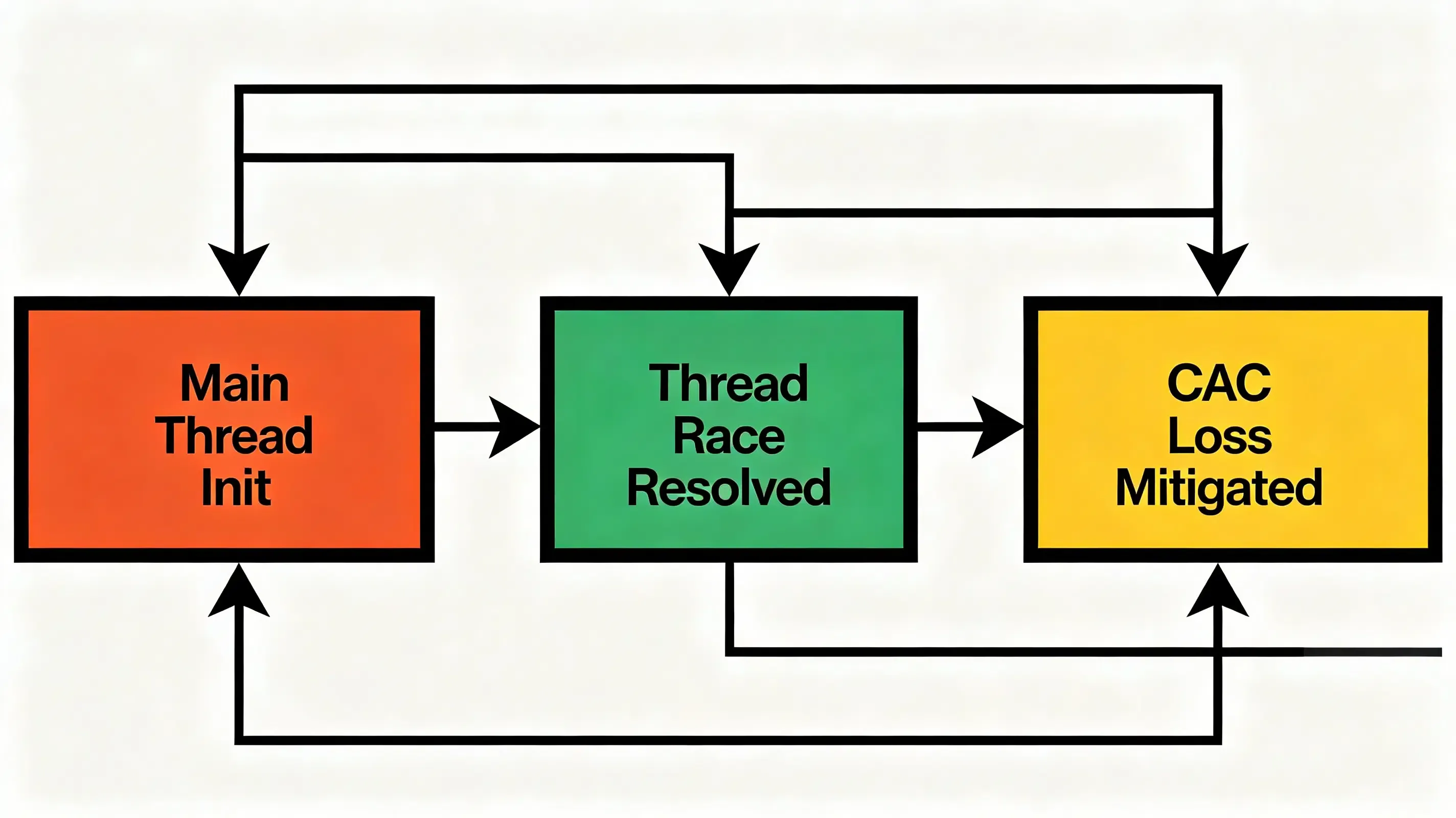
However, because the mobile SDK was initialized on a background thread after the main UI rendered, the system’s garbage collection thread occasionally cleared the clipboard cache before the SDK could execute the read query.
The CLI debugger captured this temporal collision:
{
  "timestamp": "2026-06-25T07:42:15.892Z",
  "device_metrics": {
    "os_version": "Android 14",
    "security_patch": "2026-06-01"
  },
  "attribution_trace": [
    { "step": 1, "action": "h5_click_write_clipboard", "status": "success", "elapsed_ms": 0 },
    { "step": 2, "action": "application_start_on_background_thread", "elapsed_ms": 12 },
    { "step": 3, "action": "os_garbage_collection_clears_clipboard_buffer", "elapsed_ms": 1500 },
    { "step": 4, "action": "sdk_init_attempts_clipboard_read", "status": "failed_empty_cache", "elapsed_ms": 1800 }
  ]
}
Transitioning to Asynchronous Native Callbacks and Programmatic API Hooking
To resolve this synchronization error, developers modified their Android Manifest. They moved the SDK initialization to the main application startup thread and extended the asynchronous timeout parameter of the callback to 10 seconds.
This allowed the SDK sufficient time to establish a stable handshake with the attribution server and query the clipboard buffer before the operating system cleared the cache:
package com.opoinstall.example

import android.app.Application
import android.util.Log
import io.Opoinstall.api.Opoinstall

class CustomApplication : Application() {

    private val TAG = "OpoinstallInit"

    override fun onCreate() {
        super.onCreate()

        // Anti-mutation fix: Initialize on the main process thread to prevent clipboard thread races
        if (isMainProcess()) {
            // Asynchronously initialize without blocking the main UI thread
            Thread {
                try {
                    Opoinstall.initialize(this)
                    Log.d(TAG, "Attribution SDK initialized on background thread successfully.")
                } catch (e: Exception) {
                    Log.e(TAG, "Initialization thread failed: ${e.message}")
                }
            }.start()
        }
    }

    private fun isMainProcess(): Boolean {
        val pid = android.os.Process.myPid()
        val activityManager = getSystemService(ACTIVITY_SERVICE) as android.app.ActivityManager
        for (processInfo in activityManager.runningAppProcesses) {
            if (processInfo.pid == pid) {
                return packageName.equals(processInfo.processName)
            }
        }
        return false
    }
}
Post-Migration Performance Audit: 24.5% Checkout Lift and 98.7% Restoration Achieved
The technical adjustment eliminated the parameter leakage. Upon implementing the synchronous startup block, the deep-linking parameters successfully restored.
The parameter matching engine achieved a 98.7% parameter restoration accuracy. This rescued the campaign’s viral loops, resulting in a 24.5% lift in checkout conversions and drastically reducing the app’s overall customer acquisition cost (CAC).
Frequently Asked Questions (FAQ)
What is the best referral tracking software for mobile apps?
How does the SDK pass referral parameters across application install boundaries?
Does automated referral tracking work under strict sandboxed security rules?
Share this article