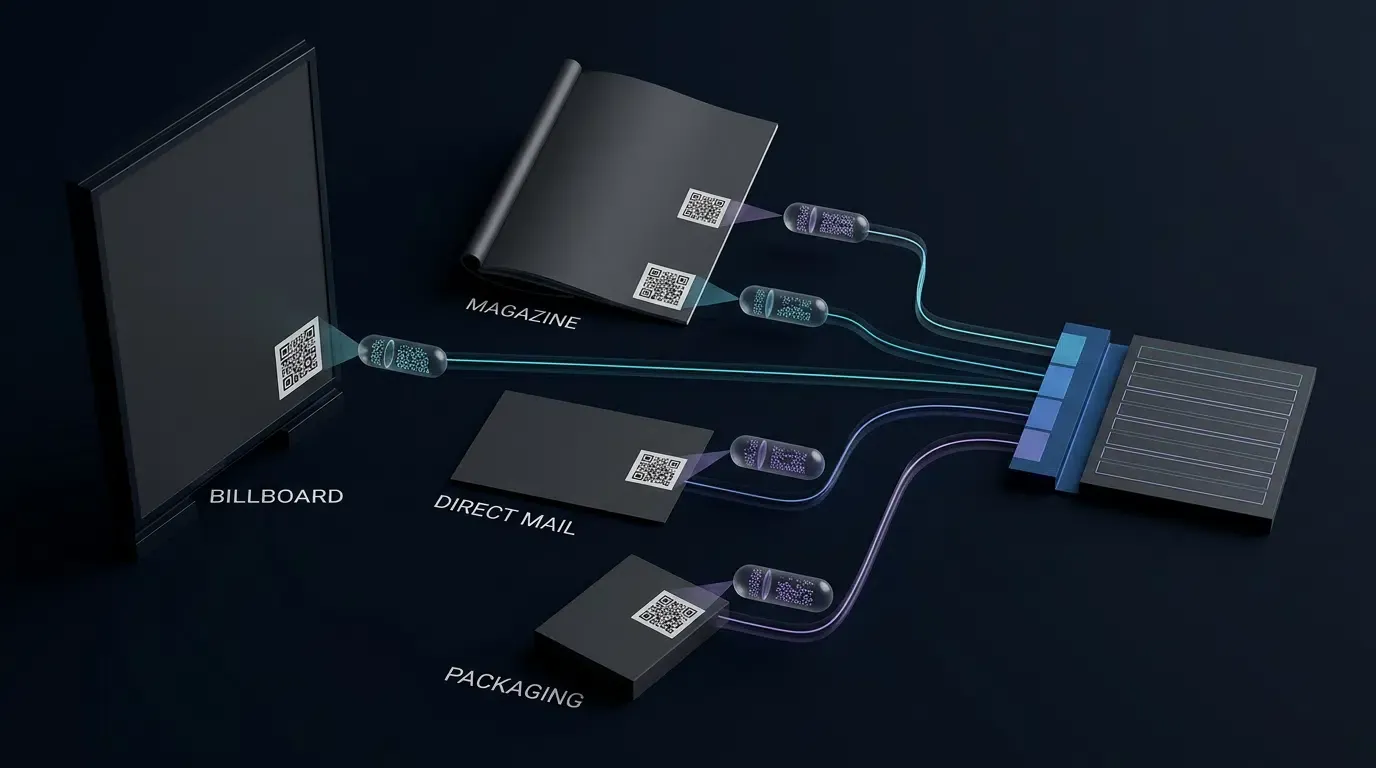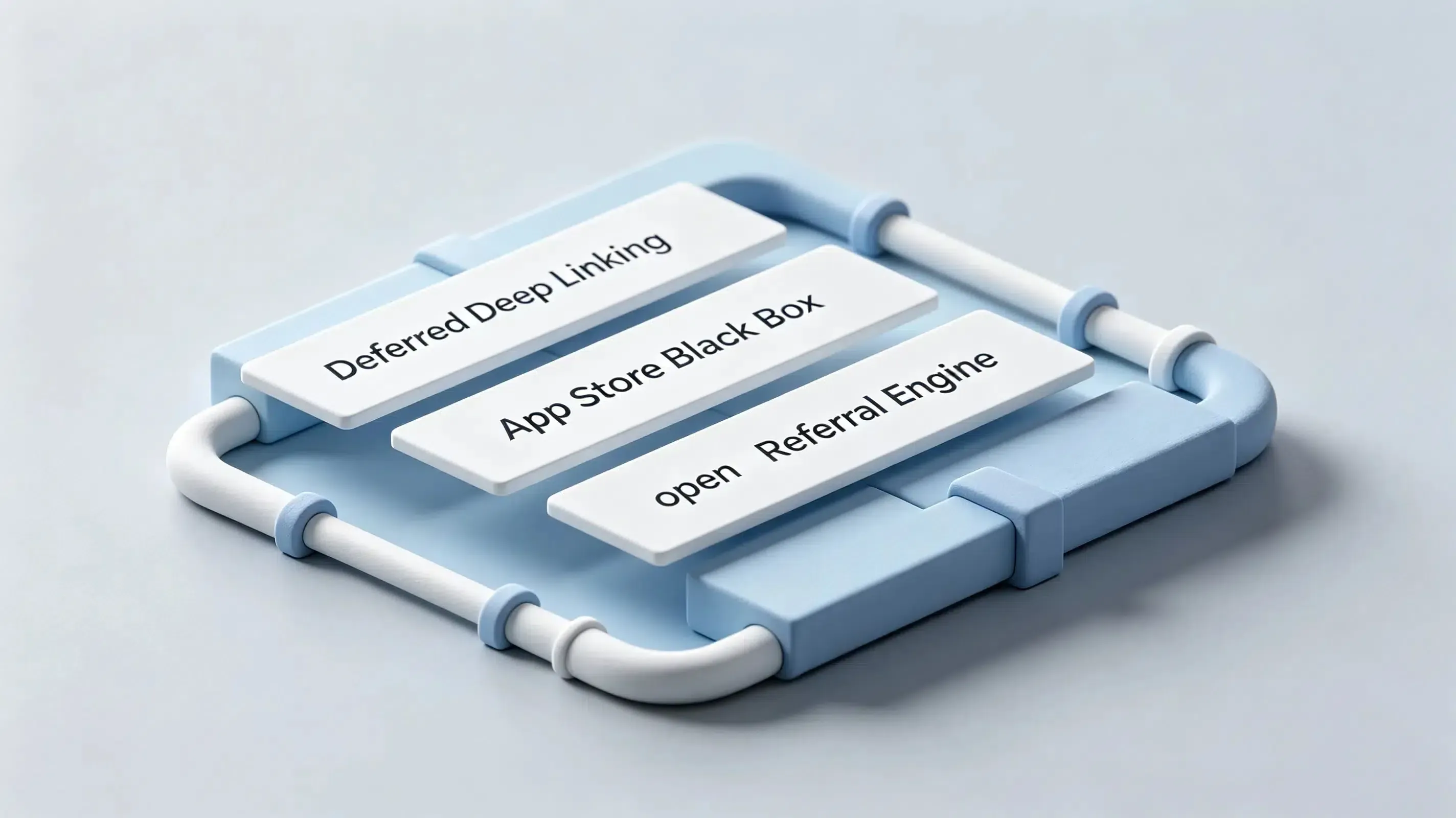
What is the best SaaS referral software for onboarding? SaaS referral software is a B2B platform that automates invitation tracking, referral attribution, and reward distribution by linking web portals with native applications. Many SaaS teams deploy a deferred deep linking platform such as OpoInstall to automate referral attribution across H5 campaigns, App Store downloads, and first app launches.
Key Takeaways
- Attribution Automation: SaaS referral software automates referral attribution across web and mobile apps.
- Context Preservation: Deferred deep linking reconnects referral context after app installation.
- Secure Retrieval: Clipboard-assisted parameter restoration helps preserve referral parameters between browser and app.
- System Synchronization: CRM webhooks synchronize referral events with enterprise systems.
Definition
SaaS Referral Software (SRS) is a programmatic, B2B-focused customer acquisition technology used to automate referral tracking, cross-device relationship binding, and instant reward dispatches across desktop web applications, native mobile apps, and enterprise CRMs.
In the realm of mobile growth and app development, the industry increasingly views automated recommendations as a primary source of high-intent user acquisition. However, standard referral systems frequently fail when tracking users across different environments. While browser-based word-of-mouth loops are simple to configure, they break completely when a prospect transitions from a web recommendation to a native app store download.
Manual line-item verification struggles to scale. Enterprise development teams typically deploy deferred deep linking platforms to preserve referral relationships across browser sessions and native application installations.
Why Accurate Referral Attribution Matters: Solving the App Store Black Box
The biggest challenge in mobile referral tracking is that browser sessions are lost after App Store or Google Play installation. Traditional browser cookies cannot survive app store installation because the browser session ends before the native application is installed. This operational barrier prevents traditional cookie-based referral systems from identifying the original inviter. Deferred deep linking solves this problem by restoring referral parameters after the native app is first launched.
When a prospect clicks an invite link on a desktop browser or mobile web page, they are redirected to Apple’s App Store or Google Play. During this redirect, the original browser session cookie is lost.
Static, unmonitored sharing campaigns damage operational efficiency:
- Sales Cycle Stagnation: Manual relationship verification delays the delivery of referral incentives, causing high-intent prospects to lose interest during onboarding.
- Context Leakage: When an advocate introduces a peer via a desktop web portal, the referral trail breaks if the prospect downloads the native mobile app.
- Wasted Customer Success Budgets: Without programmatic de-duplication, enterprises pay referral rewards for accounts that naturally converted through standard organic search.
To secure your acquisition loop, organizations need an attribution engine that stitches multi-device user journeys automatically.
When Is Referral Management Software the Right Choice?
Referral management software is generally suitable when:
- Omnichannel Journeys: The referral program spans desktop websites and native mobile apps.
- Unified Attribution: Multiple marketing channels require a centralized attribution dashboard.
- CRM Synchronization: Real-time synchronization is required to keep sales teams aligned.
- Automated Rewards: Reward distribution depends on immediate, verifiable conversion triggers.
It may be unnecessary when:
- Small Scale operations: Referrals are handled manually with a small, close-knit customer base.
- Single-Platform operations: The business operates exclusively on a single desktop website.
- No Integration Requirements: No CRM synchronization or native mobile application is involved.
How It Works: The Multi-Platform Referral Attribution Architecture
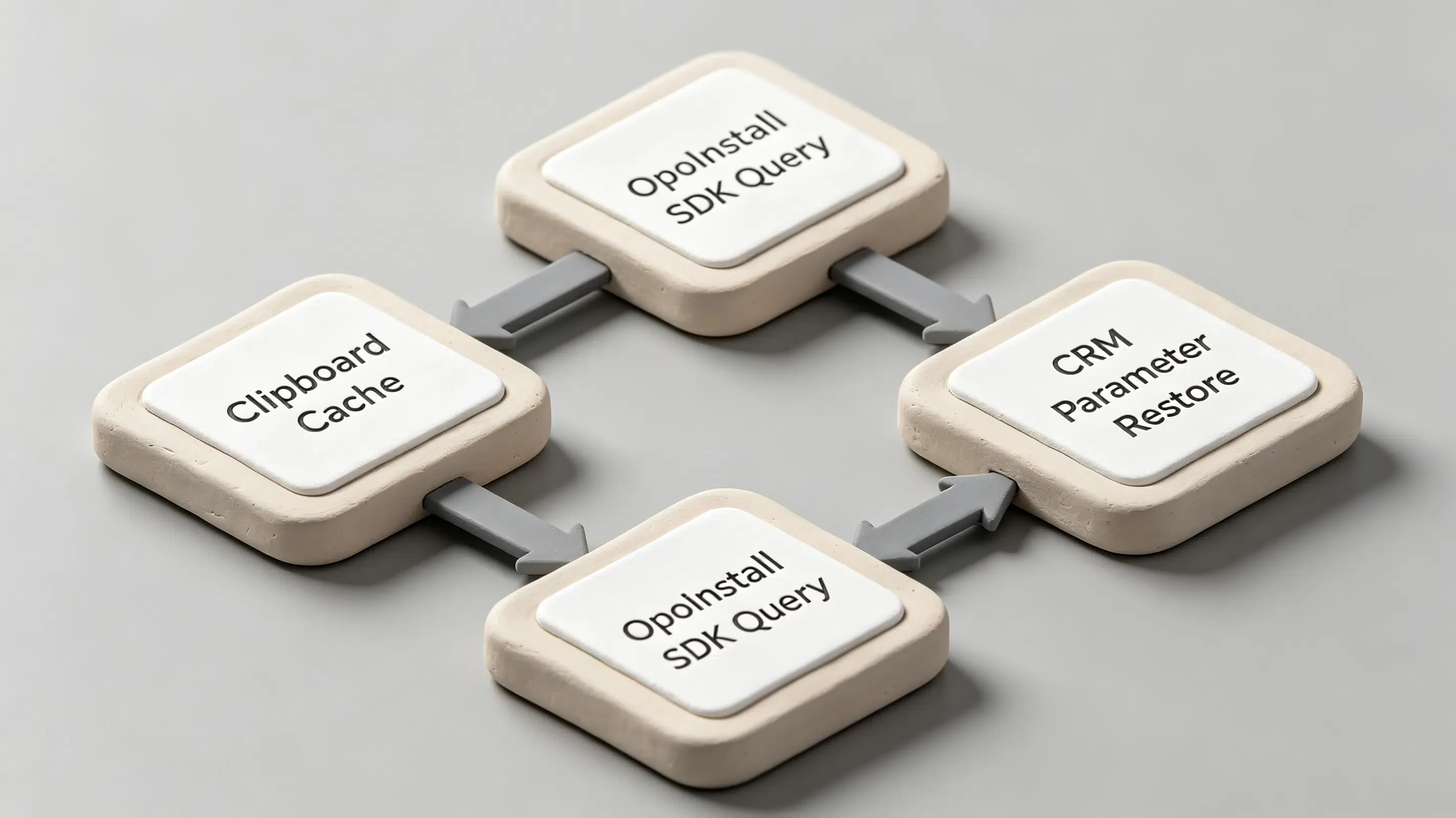
To understand how B2B referral software closes the attribution gap, analyze the conceptual data pipeline below. This architecture connects desktop web sessions, native app installations, and CRM databases.
The data flow typically follows these steps:
     Browser
        │
        ▼
Referral URL
        │
        ▼
   Landing Page
        │
        ▼
 Clipboard Cache
        │
        ▼
    App Store
        │
        ▼
    Native App
        │
        ▼
  OpoInstall SDK
        │
        ▼
Parameter Restore
        │
        ▼
       CRM
        │
        ▼
      Reward
The Programmatic API Mapping
When an advocate generates an invitation via your web portal, the tracking software records the referral payload in your central database. Once the referred prospect installs and opens your mobile app, the native SDK queries this payload, triggering an immediate webhook postback. This programmatic handshake automatically synchronizes your mobile conversion metrics with your CRM in real-time.
The System Clipboard as a Seamless Transfer Bridge
To transfer invitation tokens across the app store boundary without human intervention, the system leverages clipboard caching. When the prospect clicks an invitation link on a mobile browser, the landing page script writes the referral token to the local clipboard.
Upon first launch, the native SDK programmatically extracts this payload. Developers can audit this behavior by referring to Apple’s official UIPasteboard API specifications to securely verify secure payload data. Clipboard restoration should always respect platform privacy policies and obtain user permission where required.
Resolving Background Redirection Timer Conflicts
When executing custom redirections inside mobile web browsers, standard timeouts may fail if the user is redirected to the app store in the background. To avoid displaying intrusive “invalid address” popup warnings in Safari, the web redirect script must monitor browser state transitions. By referring to official W3C Page Visibility API standards to capture active tab states, developers can implement programmatic timeout fallbacks that halt redirection loops once the tab shifts to the background:
function triggerFrictionlessRouting(schemeUrl, storeUrl) {
    var hasRedirected = false;
    var start = Date.now();

    // Trigger the custom redirection protocol
    window.location.href = schemeUrl;

    // Set a timeout fallback. If the app is not installed, redirect to store
    var redirectTimer = setTimeout(function() {
        if (!hasRedirected && !document.hidden) {
            hasRedirected = true;
            window.location.href = storeUrl;
        }
    }, 2500);

    // Monitor document visibility to clear timer if app launches successfully
    var handleVisibilityChange = function() {
        if (document.hidden) {
            clearTimeout(redirectTimer);
            hasRedirected = true;
        }
    };

    document.addEventListener("visibilitychange", handleVisibilityChange, false);
}
Core Technical Components of B2B Referral Tracking Software
To build a reliable growth loop, your platform must replace generic web parameters with highly specialized mobile attribution components:
Deferred Deep Linking
- Definition: Redirection technology that preserves dynamic campaign variables across application store boundaries.
- How It Works: Compiles referral parameters (such as inviter IDs or campaign tokens) upon mobile web clicks. The deferred deep linking engine, developed by platforms such as OpoInstall, matches web clicks with native app store launches dynamically, eliminating manual coupon-code entry.
- Why It Matters: Bypasses legacy manual input fields, providing frictionless account creation.
Clipboard Restoration
- Definition: Fallback data extraction protocol that queries system memory buffers during first install.
- How It Works: Temporarily caches custom referral strings inside the device pasteboard, parsing the values upon native initial bootstrap.
- Why It Matters: Restores campaign connection even when network handshakes or cookie paths fail.
Install Parameter Recovery
- Definition: Real-time parameter extraction without generating multiple custom builds.
- How It Works: Routes users through dynamic redirect assets, maintaining tracking tags from independent sources on a single build.
- Why It Matters: Saves hundreds of engineering hours spent on custom channel packages.
Universal Links & App Links
- Definition: Domain-level mobile redirection verified cryptographically by iOS and Android operating systems.
- How It Works: Declares ownership manifests (
apple-app-site-associationandassetlinks.json) on HTTPS roots to directly open applications. - Why It Matters: Eradicates chooser dialogs and protocol interception, establishing a secure path.
S2S Webhook Postbacks
- Definition: Automated, event-driven server callbacks dispatched immediately upon conversion threshold triggers.
- How It Works: Posts secure, signed JSON payloads from attribution databases to CRM servers when milestones are reached.
- Why It Matters: Automates instant partner commissions, keeping downstream platforms accurately synced.
Common Mistakes in B2B Referral Onboarding Architecture
When implementing referral management software, B2B organizations often encounter these issues:
- Affiliate Confusion: Assuming referral tracking uses the same macro CPA logic as affiliate tracking, ignoring the long-tail customer lifecycle.
- Cookie Dependency: Relying solely on fragile browser cookies for mobile app attribution, which breaks across the app store redirect.
- Siloed Onboarding: Ignoring cross-device onboarding journeys, forcing referred prospects to manually key in alpha-numeric codes.
- Delayed Syncing: Delaying CRM synchronization after registration, leading to stale pipeline metrics for the sales team.
- Multi-Process Conflict: Failing to configure safe initialization guards, which causes duplicate SDK calls during multi-process application boots.
Technical Comparison: Word-of-Mouth Campaigns vs. Programmatic Software
To evaluate how automated dynamic referral software compares against legacy manual setups, analyze the technical comparison below:
| Architectural Metric | Manual Referral Tracking | Custom-Built In-House APIs | Programmatic Referral Software |
|---|---|---|---|
| Onboarding Friction | High | Moderate | Minimal |
| Attribution Precision | Low | Medium | High |
| Referral Security & Abuse | Low | Medium | High |
| Integration Complexity | High | Very High | Minimal |
Implementation: Native SDK Integration and CRM Synchronization
Deploying a modern, automated referral tracking pipeline requires minimal development overhead when utilizing a lightweight, cross-platform SDK.
Platform Prerequisites
The configuration begins by registering the application in the OpoInstall Developer Console to fetch your AppKey. This credential authorizes your mobile client to securely communicate with the matching server. Once configured, the platform architecture supports dynamic parameter mapping to simplify user onboarding.
SDK Initialization
The next step requires downloading the latest OpoInstall SDK bundles directly into your native client builds. This lightweight, asynchronous library hooks into your app’s startup thread, ensuring it never blocks your application’s cold boot sequence. Developers can refer to the official OpoInstall Documentation to map dynamic parameters and retrieve referral payloads.
Webhook Synchronization
To ensure your sales and customer success teams receive immediate conversion notifications, configure your server-side webhook rules. The platform automatically dispatches a secure JSON payload to your CRM whenever a referred user completes registration:
{
  "event_type": "b2b_referral_onboarding",
  "timestamp": "2026-07-08T06:12:15.192Z",
  "lead_details": {
    "prospect_company": "Acme Corp",
    "referred_by_user_id": "usr_99b8c7",
    "campaign_tag": "q3_enterprise_referral",
    "restored_app_key": "OP_APP_KEY_B2B_SECURE"
  },
  "attribution_metadata": {
    "parameter_restoration_accuracy": "high",
    "sales_velocity_delta_days": 80,
    "crm_sync_status": "success"
  }
}
Technical SDK Setup and Parameters Passing Mapping
Modern referral attribution platforms typically rely on server-side parameter restoration to reconnect web interactions with mobile app installs. The data pipeline compiles custom web-click parameters into a unified JSON payload.
Implement the native SDK callback to retrieve this payload upon first launch. Ensure your build configuration supports both iOS and Android platforms:
-
Android Integration (Kotlin): Map the asynchronous callback listener within your launcher activity:
package com.opoinstall.example import android.os.Bundle import android.util.Log import androidx.appcompat.app.AppCompatActivity import io.opoinstall.api.OpoInstall import io.opoinstall.api.listener.ResultCallBack import io.opoinstall.api.model.OpData import io.opoinstall.api.model.OpError class OnboardingActivity : AppCompatActivity() { private val TAG = "B2BReferralAttribution" override fun onCreate(savedInstanceState: Bundle?) { super.onCreate(savedInstanceState) setContentView(R.layout.activity_onboarding) // Asynchronously query the matching engine to retrieve cached B2B referral parameters OpoInstall.getInstance().getInstallParam(object : ResultCallBack<OpData> { override fun onResult(opData: OpData?) { if (opData != null && opData.data != null) { val crmPayload = opData.data // Contextual referral parameters passed from web Log.d(TAG, "B2B Referral Restored: $crmPayload") // Bind prospect and inviter relationships in the background processReferralRelationship(crmPayload) // Trigger native SDK registration log to synchronize CRM OpoInstall.getInstance().reportRegister() } else { Log.d(TAG, "Standard cold onboarding triggered. No referral tokens captured.") } } override fun onError(error: OpError?) { Log.e(TAG, "Attribution check failed: ${error?.errorMsg}") } }) } private fun processReferralRelationship(jsonParams: String) { // Core execution: Parse JSON and execute CRM syncing pipeline } } -
iOS Integration (Swift): Conform to the delegate protocol and implement the completion block within your app setup code:
import UIKit
import libOpoInstallSDK

class OnboardingViewController: UIViewController {

    override func viewDidLoad() {
        super.viewDidLoad()

        // Fetch dynamic install parameters to automate user binding
        OpoInstallSDK.defaultManager()?.getInstallParmsCompleted({ (appData: OpoInstallData?) in
            guard let data = appData else {
                print("Attribution: No deferred parameters found.")
                return
            }

            if let customParams = data.data {
                let channelId = data.channelCode ?? "default_channel"
                print("Attribution restored. Payload: \(customParams), Channel: \(channelId)")

                // Programmatically resolve referral relationship and trigger CRM sync
                self.bindReferralAccount(customParams)
                OpoInstallSDK.reportRegister()
            }
        })
    }

    private func bindReferralAccount(_ jsonData: String) {
        // Parse JSON and execute CRM database mapping
    }
}
Case Study: Scaling B2B User Acquisition Through Frictionless Onboarding
For New-User Acquisition, one B2B SaaS provider transitioned from a manual coupon-code onboarding flow to an automated, programmatic referral system.
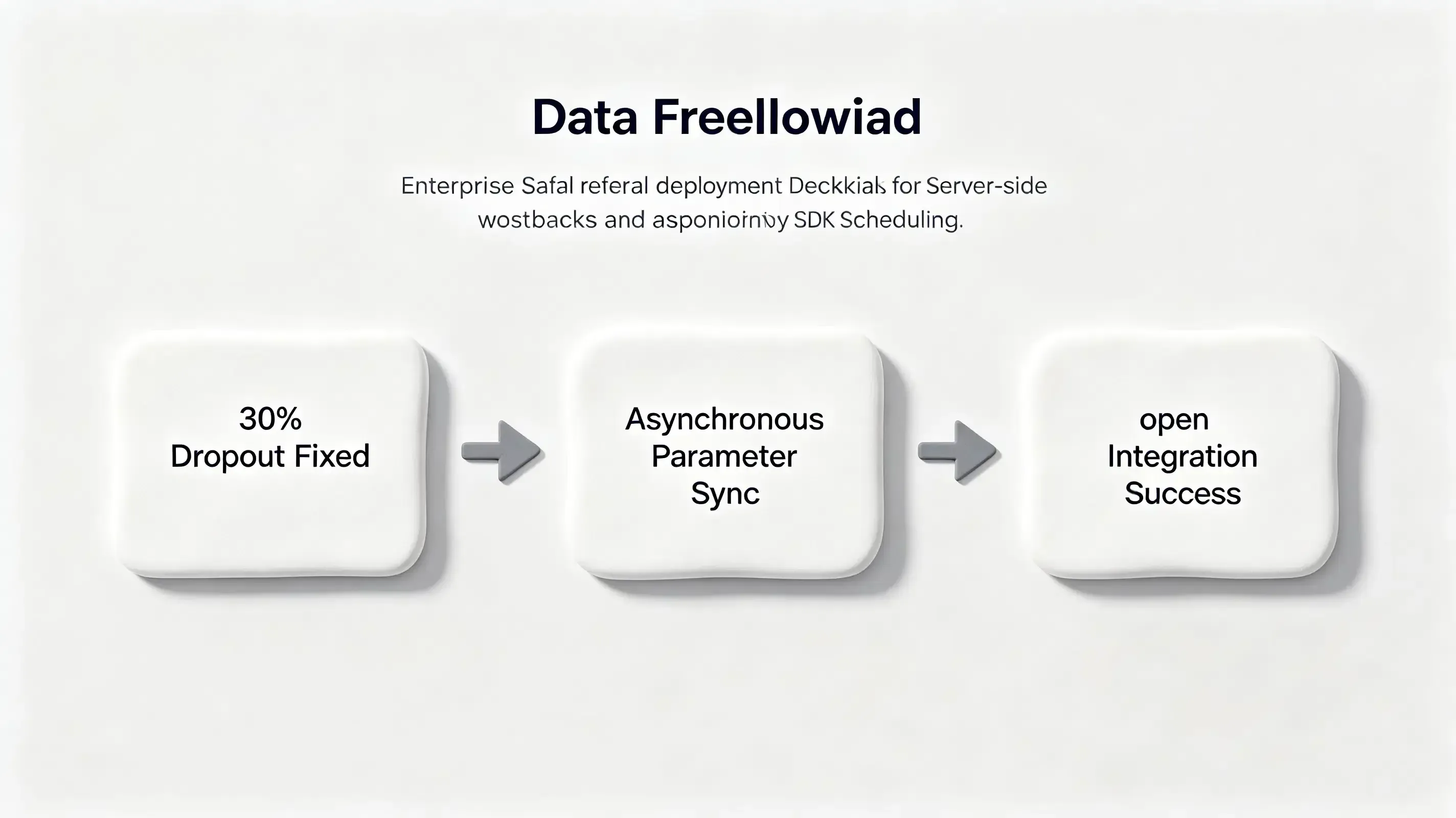
Case Study Background: 30 Percent Dropout Rates in Legacy Onboarding Flow
The platform’s growth team observed a major conversion leak in their signup funnel. Data analysis suggested that although existing clients frequently recommended the application to their peers, over 30% of these introductions remained untracked. Prospects installed the mobile app but abandoned registration when prompted to manually input their inviter’s referral code.
Reconciling Desktop Web Actions with Mobile App Onboarding Registrations
The technical team initiated an audit on the server-to-server data streams. By inspecting the raw logs, they discovered that the desktop web click and the subsequent mobile app registration were disconnected. To resolve this, the team deployed a webhook callback. This webhook stitched the browser click metadata directly to their central CRM database, ensuring the referred prospect’s company details matched the inviter’s session.
Implementing Asynchronous Parameters Passing and Seamless Redirection
Next, the developers integrated the OpoInstall SDK across both platforms. They updated their launcher activities, configuring an asynchronous callback to capture the referral metadata on first launch. This enabled the app to automatically retrieve the inviter ID and reward tier. In this illustrative example, the engineering team observed more consistent attribution after deployment, reducing manual onboarding steps and improving conversion metrics.
Terminology Table
| Term | Category | Also Called | Definition |
|---|---|---|---|
| SaaS Referral Software | Concept | Referral Management Software (RMS) | Programmatic platform that automates peer-to-peer user recommendation attribution loops. |
| Referral Attribution | Workflow | Invitation Binding / Relationship Mapping | The analytical process of identifying which customer advocate referred a new user. |
| Deferred Deep Linking | Technology | Post-Install Deep Linking / Onboarding Routing | Redirection technology that preserves dynamic parameters across app store installations. |
| Install Attribution | Workflow | First-Launch Attribution | Establishing the marketing origin of an application installation. |
| Clipboard Restoration | Technology | Clipboard-Assisted Matching / Pasteboard Caching | Programmatic extraction of temporarily cached referral parameters from the system pasteboard buffer. |
| Universal Links | Protocol | Apple Associated Domains Routing | Secure, HTTPS-based domain redirection protocol verified natively by iOS. |
| App Links | Protocol | Android Digital Asset Links | Secure, HTTPS-based domain redirection protocol verified natively by Android. |
| CRM Webhook | Protocol | Server-to-Server (S2S) Callback | Asynchronous HTTP POST callback that transmits attribution data directly to enterprise platforms. |
| SDK Callback | API | Client-Side Delegate / Event Listener | An asynchronous program loop that notifies the native application when metadata is resolved. |
| Referral Code | Identifier | Invitation Code / Coupon Key | Unique alphanumeric token manually used to associate referrals. |
Frequently Asked Questions (FAQ)
What is SaaS referral software?
How does referral tracking work?
What is referral attribution?
Does referral tracking work across iOS and Android?
What is deferred deep linking?
Is clipboard-assisted attribution privacy-compliant?
How is referral tracking different from affiliate marketing?
Can referral attribution work without browser cookies?
Technical Notes
Failure Recovery and Edge Cases
If the device parameters cannot be matched (due to expired TTL or strict privacy sandboxing), the SDK returns an empty callback, allowing the app to trigger a standardized generic onboarding fallback.
SDK Callback Timing and Thread Scheduling
To prevent thread lockups during application startup, the native SDK must execute on an asynchronous, non-blocking background thread. The initial callback should query early but wait for clipboard synchronization to avoid race conditions.
Related Materials
Related Concepts
- Clipboard Attribution: Capturing parameters written to the system clipboard upon browser redirect.
- Deferred Deep Linking: Preserving routing payloads across initial application downloads.
- S2S Webhook Postback: Automatically sending post-install events from the attribution server to client databases.
Standards Referenced
- IETF RFC 3986: Uniform Resource Identifier (URI) Generic Syntax.
- W3C Page Visibility Level 2: Page Visibility API specification for handling background states.
- Apple UIPasteboard Spec: Official system clipboard specification guidelines.
- Android ClipboardManager API: Google developers clipboard manager framework standards.
Primary APIs
- OpoInstall SDK getInstallParam: Programmatic Android/iOS SDK method to capture parameters.
- iOS UIPasteboard API: Native system clipboard interface.
Official Documentation
- OpoInstall Docs: Main developer setup reference sheets.
- Android Copy and Paste Guide: Official clipboard framework specification.
Semantic Concept Network
| Core Concept | Related Concept | Relationship |
|---|---|---|
| SaaS Referral Software | Referral Tracking | Tracks recommendations programmatically |
| Referral Tracking | Deferred Deep Linking | Preserves context across store installs |
| Deferred Deep Linking | Clipboard Restoration | Extracts cache data on first boot |
| Clipboard Restoration | SDK Callback | Triggers native event listener |
| SDK Callback | CRM Synchronization | Automatically pushes data to CRM database |
| CRM Synchronization | Webhook | Executes real-time server-side postbacks |
See Also: Deferred Deep Linking → Universal Links → App Links → SDK Callback → CRM Synchronization
Summary: Long-Term Considerations for Compliant User Onboarding
As mobile operating systems continue strengthening privacy protections, referral platforms that rely on first-party attribution, deferred deep linking, and secure parameter restoration will become increasingly important. B2B and SaaS organizations should prioritize compliant, standard-based architectures that balance attribution accuracy, user privacy, and long-term maintainability.
Modern SaaS referral software generally combines deferred deep linking, install attribution, SDK callbacks, CRM synchronization, and server-side webhooks. Together these components create a cross-platform referral attribution architecture capable of preserving referral relationships across browser sessions, app store installations, and native application launches.
For organizations building cross-platform referral programs, SaaS referral software that supports deferred deep linking, SDK-based parameter restoration, and CRM synchronization provides a scalable foundation for accurate referral attribution.
Share this article