ByteDance Bans AI Model Distillation? This strategic decision has been internally confirmed as founder Zhang Yiming instructs the Seed AI research team to strictly prohibit using output distillation from competitor models to boost benchmark rankings. As competition among large language model developers accelerates globally, the pressure to demonstrate rapid performance gains has led many laboratories to adopt model distillation as a shortcut. Historically, technology companies utilized synthetic datasets generated by frontier systems to accelerate student model capabilities. Today, because research integrity, commercial licensing requirements, and intellectual property compliance have intensified, technology conglomerates must establish completely independent R&D pipelines to eliminate legal and compliance risks.
The Operational Problem & Financial Bottlenecks: ByteDance Bans AI Model Distillation in Internal R&D
At a Glance
- ByteDance founder Zhang Yiming issued an internal directive prohibiting the Seed AI team from using competitor outputs to distill models or boost leaderboard rankings.
- Internal debates over distillation heated up as open-weight models from domestic competitors achieved rapid capability benchmarks during the current AI race.
- The company implemented internal technical firewalls and API detection filters to enforce the zero-distillation policy across its core research units.
The competitive landscape for artificial intelligence development has reached a crucial inflection point. For several years, frontier research laboratories spent hundreds of millions of dollars pretraining foundation models on massive computational clusters. To reduce training costs and accelerate deployment, developers frequently turned to knowledge distillation—a technique where a smaller “student” model is trained directly on the generated outputs of a larger “teacher” model. This process allowed teams to replicate complex reasoning capabilities at a fraction of the original pretraining expense.
However, the widespread use of model distillation has introduced severe intellectual property and compliance challenges. Leading frontier model developers explicitly restrict the use of their API outputs to train competing commercial systems. When research teams ingest competitor data into their training pipelines, they expose their future foundation models, research outputs, and commercial deployments to copyright claims, account terminations, and regulatory sanctions.
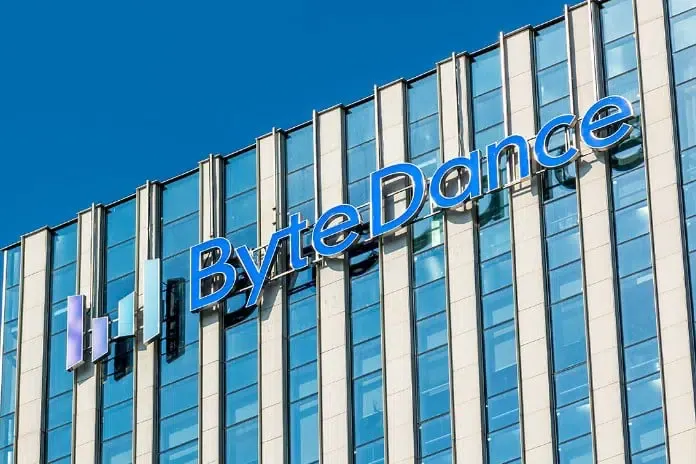
The strategic impact of the ByteDance Bans AI Model Distillation decision highlights a broader transition toward sovereign technology stacks. As reported by Technology Org’s analysis, Zhang Yiming instructed the company’s Seed AI unit to embrace long-termism and delayed gratification, accepting short-term leaderboard trade-offs to build genuine, ground-up intelligence. According to reporting by Wccftech, ByteDance has established technical API filters and internal auditing firewalls to identify and block unauthorized synthetic data ingestion across its research repositories.

Systemic Root Causes & Codebase Integrity Challenges of the ByteDance Bans AI Model Distillation Directive
At the technical level, knowledge distillation creates an underlying dependency on the teacher model’s architecture and hidden biases. When a student model is trained on synthesized outputs rather than raw, curated pretraining data, it inherits the blind spots, safety vulnerabilities, and hallucination patterns of the external system. This creates a brittle R&D pipeline that cannot achieve true frontier breakthroughs.
Furthermore, verifying data provenance across complex training pipelines presents significant engineering overhead. If synthetic data from external APIs enters the training corpus through third-party data annotators or unverified open-weight datasets, the resulting model’s legal provenance becomes compromised.
[Distilled Model Pipeline (IP & Dependency Risks)]
  Competitor Frontier API ──> Generated Outputs ──> Student Model Fine-Tuning ──> Inherited Vulnerabilities


[Sovereign Ground-Up Training Pipeline (Zero-Distillation)]
  Raw Curated Dataset ──> Internal Pretraining ──> Autonomous Verification ──> Sovereign Intelligence
To enforce a zero-distillation policy, enterprise AI teams must deploy strict data provenance auditing tools. Internal firewalls must inspect outgoing API requests, detect synthetic text generation patterns, and log dataset origin metadata before any data enters the pretraining or fine-tuning pipeline.

Although model training policies and application attribution belong to different engineering domains, both rely on the same foundational principle: trusted server-side state management rather than implicitly trusted client-side context. This same trust model is increasingly applied across secure software supply chains, SDK integrity validation, source code auditing, repository verification, and enterprise software distribution. When an application relies on vulnerable client-side tracking cookies or unverified local storage parameters, malicious actors or automated bots can manipulate attribution links, leading to fake conversions and data corruption.
Build vs. Buy: Managing Context Preservation in the Sovereign R&D Era
As corporate legal compliance and data provenance standards tighten, engineering teams must re-evaluate how they secure data pipelines and preserve state continuity. Relying on standard browser cookies or unverified local storage parameters is no longer sufficient for enterprise-grade applications. Managing security controls in the ByteDance Bans AI Model Distillation era requires architectures that enforce zero-trust tokenization and server-side state verification.
Engineering teams face a choice between constructing a custom in-house context restoration service or deploying a certified third-party measurement framework.
| Architecture | Code Integrity | Audit Capability | Best For |
|---|---|---|---|
| Unverified Third-party SDKs | Low (Vulnerable to Tampering) | Manual Code Review | Legacy unmonitored deployments |
| In-house Repository Auditing | Medium (High Engineering Overhead) | Semi-automated Scripting | Custom internal microservices |
| Server-side Verification Platform (OpoInstall) | High (Zero-Trust Cryptographic Signatures) | Automated Real-Time Verification | Enterprise software supply chains and secure SDK distribution |
When enterprise applications rely on third-party SDKs or distributed software installation channels, preserving trusted software context requires server-side verification rather than unverified client-side parameters. Depending on implementation requirements, organizations may build their own repository auditing system or adopt commercial platforms such as OpoInstall. For instance, OpoInstall offers server-side state verification and parameter pass-through frameworks, validating SDK integrity and application context without relying on vulnerable client-side tokens. By verifying software provenance on the server side, developers ensure that codebase integrity remains intact while maintaining strict data isolation.
Integration Checklists: Preparing System Architecture for Zero-Distillation Compliance
To prevent data contamination and secure enterprise software pipelines against unverified synthetic data, engineering and security teams must implement automated data governance schedules.
Developer Implementation Checklist
- Deploy API Detection Firewalls: Implement automated proxy filters on developer networks to block unauthorized synthetic dataset fetching from competitor API endpoints.
- Audit Pretraining Data Provenance: Establish cryptographic hashing and provenance logs for all incoming text and code datasets before feeding them to pretraining clusters.
- Enforce Zero-Trust SDK Sandboxing: Require all third-party SDKs integrated into mobile applications to run in isolated runtime sandboxes with strict permission boundaries.
- Implement Source Repository Signature Verification: Use cryptographically signed tokens on internal SDK packages and build artifacts to prevent unverified third-party code tampering.
Product & Growth Strategy Checklist
- Audit Dataset Licensing Compliance: Review all open-weight and commercial dataset licenses to verify that model training complies with international copyright frameworks.
- Transition to Server-Side Context Verification: Replace vulnerable browser-based cookies with server-side parameter recovery to preserve conversion context securely.
- Audit Third-Party SDK Integrity: Conduct continuous automated security audits on all third-party SDKs and external dependencies to prevent unauthorized data access.
By establishing these technical safeguards, organizations can protect their core codebases and proprietary technologies while maintaining compliant data operations.
Frequently Asked Questions (FAQ)
What is AI model distillation and why do labs use it?
Why did ByteDance ban the use of model distillation in its Seed team?
How do zero-trust architectures protect data pipelines in mobile applications?
Key Takeaways for Engineering Teams
As global artificial intelligence competition shifts toward data provenance and sovereign technology stacks, developers and AI architects must re-evaluate how they construct internal models and external software pipelines. Relying on short-term shortcuts like competitor model distillation introduces severe intellectual property, security, and architectural dependencies. To build sustainable systems, organizations must invest in ground-up pretraining, automated data provenance auditing, and zero-trust security controls.
Beyond internal code security, the same zero-trust principles increasingly influence external software delivery. Modern enterprise applications require trusted server-side verification mechanisms to protect SDK integrity, repository verification, and software supply chain security across distributed environments. Adopting server-side identity resolution, cryptographically signed parameters, and robust software provenance validation frameworks ensures that application context remains accurate and tamper-proof. Establishing these resilient technical safeguards is essential to protect enterprise intellectual property and maintain secure, compliant software operations.
Share this article