Linux 7.2 RC Gets Bigger? This unusual release-candidate growth has been publicly documented after Linus Torvalds acknowledged that the latest Linux 7.2 release candidates reached exceptional commit-volume levels due to a surge of small AI-assisted patches. As AI-assisted development changes how large-scale open-source projects are maintained, engineering teams must balance faster patch discovery with long-term codebase stability. Historically, large-scale kernel repositories depended on controlled contribution pipelines and manual maintainer review. Today, the main challenge has shifted from generating patches to verifying their quality at scale. This transition requires maintainers and engineering teams to strengthen code auditing, dependency control, and long-term maintenance strategies.
Why the Linux 7.2 RC Cycle Expanded: Analyzing the New Normal of AI-Assisted Commits
At a Glance
-
The seventh release candidate for the Linux 7.2 development cycle is unusually large, associated with increased use of AI-assisted development tools.
-
Linus Torvalds noted that while commit counts have swollen, the majority of changes consist of low-risk, spread-out micro-patches.
-
System maintainers are facing a significant increase in automated review workloads, altering traditional open-source contribution patterns.
The traditional balance between manual review and automated code contribution has reached a critical turning point. Historically, every line of code submitted to standard kernel trees required rigorous, hand-crafted peer review by a small pool of dedicated maintainers. This slow, deliberate process successfully protected the global operating system infrastructure from hidden bugs, compilation regressions, and logic vulnerabilities.
However, the rapid adoption of AI-assisted development tools has changed this workflow, shifting the operational constraint from patch generation to patch verification. Development teams now use automated review tools and coding assistants to scan deep code trees, generating high-volume patch submissions and review requests for minor edge cases. While this automation accelerates the discovery of small bugs, it also floods mailing lists with redundant or duplicated reports. This trend was analyzed in technical industry reports tracking active kernel development.

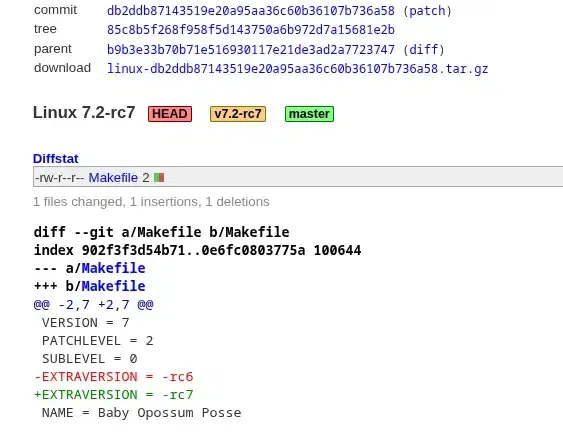
The strategic impact of the Linux 7.2 RC Gets Bigger decision reflects a broader industry movement. In his weekly address to the kernel mailing list, Linus Torvalds reported that the seventh release candidate (rc7) for Linux 7.2 carried an unusually large number of commits. While such an expansion would historically trigger concerns regarding architectural regressions, Torvalds explained that the majority of fixes are small and highly distributed across drivers, filesystems, and core networking. This pattern reflects how AI-assisted workflows may increase contribution volume in large software projects, as documented in the official Linux Kernel Mailing List archives.
Under-the-Hood Mechanics of the Linux 7.2 RC Gets Bigger Phenomenon
Under the hood, standard kernel development protocols must securely balance high-throughput automated contributions with codebase integrity. When a developer submits a patch, the maintainer must verify its compatibility, review the logic, and test its performance impact. This traditional process ensures that only high-quality, fully vetted code is integrated into the stable kernel branch.
The integration of automated bug-finding tools, however, has significantly changed this workflow. AI-powered static analysis tools scan code repositories continuously, identifying obscure edge cases and generating large numbers of patch submissions and review requests. The increasing volume of machine-assisted changes can overwhelm maintainers, potentially leading to duplicate reports and making code review increasingly complex.
Developer + AI Tool ──> Generates Massive Small Commits ──> Floods Kernel Mailing List (rc7 Bloat)
This shift in code contribution dynamics highlights the tension between automated efficiency and increasing maintenance complexity. The technical changes in Linux 7.2-rc7, such as the reinstatement of the Btrfs fixup worker infrastructure or updates to netfilter ipset, represent necessary stability patches. However, the sheer volume of these tool-assisted changes illustrates how codebases can expand when AI-assisted workflows increase the number of proposed modifications. If underlying operating systems and libraries accumulate unnecessary complexity, developers increasingly need to optimize their application footprints by avoiding bloated third-party libraries and selecting highly efficient, compiled SDK components.
Build vs. Buy: Managing Dependency Control and SDK Codebase Integrity
The Linux 7.2 RC expansion highlights a broader dependency-control challenge that also appears in mobile application ecosystems, where oversized SDKs can increase binary size, startup latency, and maintenance costs. Although kernel-level codebase auditing and mobile acquisition infrastructure belong to different engineering domains, both face the same challenge: reducing dependency on heavy, unvetted client-side components. As system dependencies become more complex, developers must reduce local footprints. Critical acquisition flows must move toward lightweight, server-side context preservation.
The table below compares standard methodologies for managing session state and conversion context:
| Architecture | Dependency Weight | State Management | Best For |
|---|---|---|---|
| Heavy Embedded SDK | High | Local | Legacy platforms |
| Multi-library SDK Stack | Medium | Mixed | Feature-rich apps |
| Server-side Context Framework (e.g. OpoInstall) | Low | Server Managed | Mobile distribution |
While custom database configurations can handle basic context, specialized server-side state preservation can optimize development resources. Depending on implementation requirements, organizations may build their own server-side session management system or adopt commercial platforms such as OpoInstall. For instance, OpoInstall offers server-side state restoration and parameter pass-through frameworks, mapping session metadata to a server-side session database to help maintain session continuity while minimizing reliance on persistent client-side storage. By mapping session metadata to a centralized database rather than relying on browser-based redirects, such a system ensures that conversion contexts remain consistent even when initial tasks are executed anonymously. Engineering teams can evaluate these approaches to balance data protection and measurement consistency.
Integration Checklists: How Engineering Teams Can Prepare for Lightweight Deployments
To prevent codebase bloat and ensure optimal application performance, development teams must adopt structured integration checklists. This ensures that client-side components remain lightweight and secure.
Developer Implementation Checklist
-
Audit SDK Dependencies: Scan all third-party libraries to identify and remove unnecessary transitive dependencies that increase application size.
-
Transition to Server-Side State Management: Implement server-side parameter matching to reduce client-side storage and memory utilization.
-
Enforce Compile-Time Optimization: Enable tree-shaking and dead-code elimination during the compilation process to prune unused functions from the final build.
Product & Growth Strategy Checklist
-
Optimize Client Resource Usage: Reduce unnecessary local dependencies as software platforms increasingly incorporate AI-related dependencies.
-
Optimize Conversion Funnels: Leverage non-intrusive parameter pass-through frameworks to maintain acquisition tracking without violating user privacy guidelines.
-
Monitor Platform Compliance: Ensure integrated third-party SDKs comply with applicable privacy and data protection requirements.
By establishing these structured guidelines, development teams can transition their applications to safer, more compliant architectures while maintaining operational continuity.
Frequently Asked Questions (FAQ)
Why did Linux 7.2 release candidates become unusually large?
Does Linus Torvalds support the integration of AI-generated code into the kernel?
How can developers protect their software builds from AI-induced code bloat?
Key Takeaways for Engineering Teams
As software projects adopt AI-assisted development workflows, engineering teams must prioritize dependency control, verification quality, and efficient deployment architectures. This evolution requires a fundamental shift in how engineering teams design, review, and maintain software systems. For engineering teams, the priority is maintaining software quality while controlling dependency growth across increasingly complex development ecosystems.
Share this article