ByteDance Launches Doubao Work? ByteDance has officially launched Doubao Work, a new productivity-focused Agent product and brand designed to coordinate complex business tasks through deep integration with Feishu’s enterprise context and collaboration system. As generative artificial intelligence shifts from standard chat interfaces toward autonomous task execution, enterprise software architectures are being reconfigured. Rather than relying on simple prompt-and-response interactions, modern autonomous agents decompose complex user goals, coordinate external software tools, and manage persistent operations across desktop and cloud environments. By integrating directly with enterprise knowledge repositories, these systems utilize live corporate context to deliver accurate business deliverables.
Core Industry Realignment & News Breakdown: ByteDance Launches Doubao Work
At a Glance
- ByteDance consolidated the TRAE and Coze teams into the Doubao organization, with their workplace capabilities being integrated into Doubao Work.
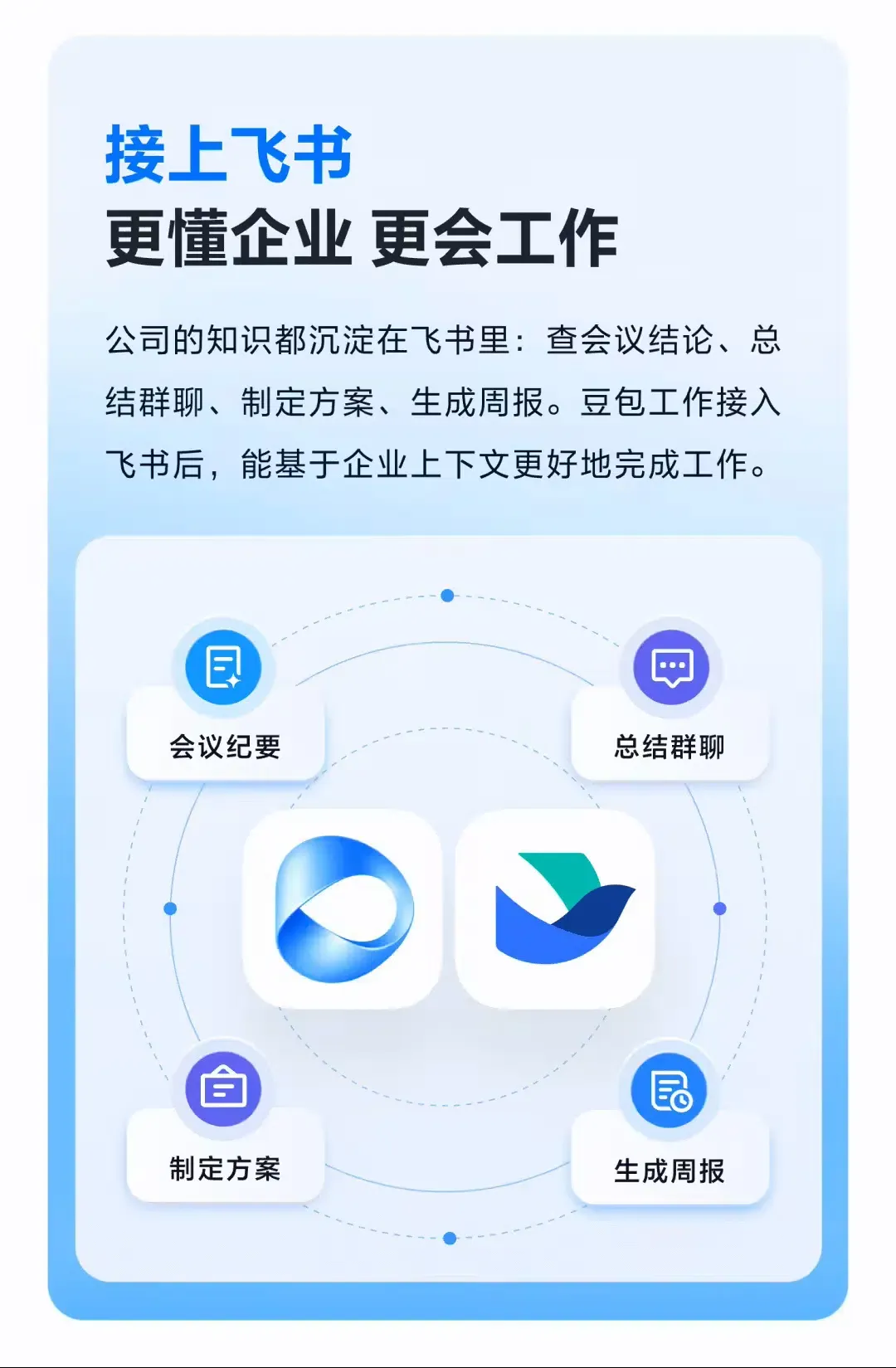
- The system inherits organizational context directly from Feishu, accessing authorized documents, meeting transcripts, and project schedules to execute business tasks.
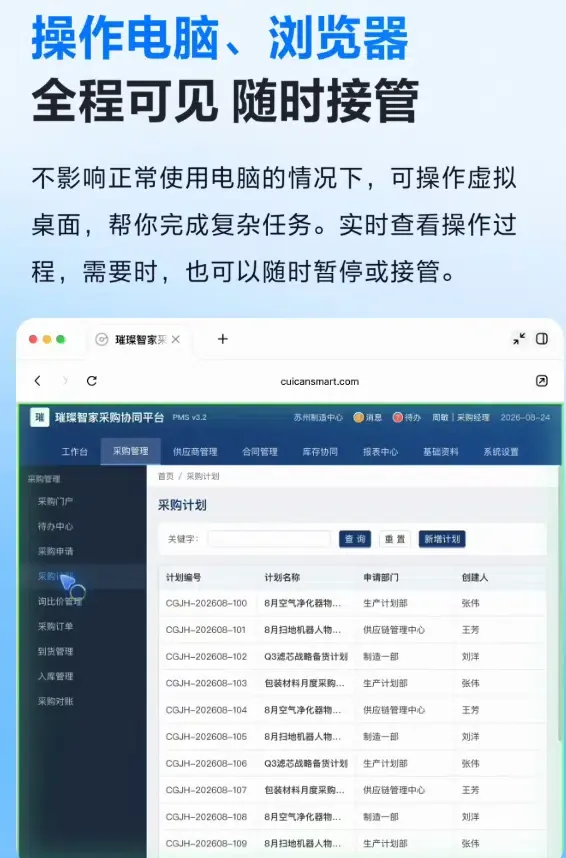
- Users can assemble multi-agent collaborative teams and maintain continuous task execution via cloud environments even when local hardware is offline.
Enterprise AI is rapidly transitioning from standalone assistance tools toward centralized workflow gateways. Historically, enterprise software adoption suffered from platform fragmentation, requiring employees to manually copy information, switch across disconnected software products, and repeatedly input contextual background data. When AI assistants operated without access to underlying corporate knowledge bases, generated outputs frequently lacked domain accuracy and required extensive manual revision.
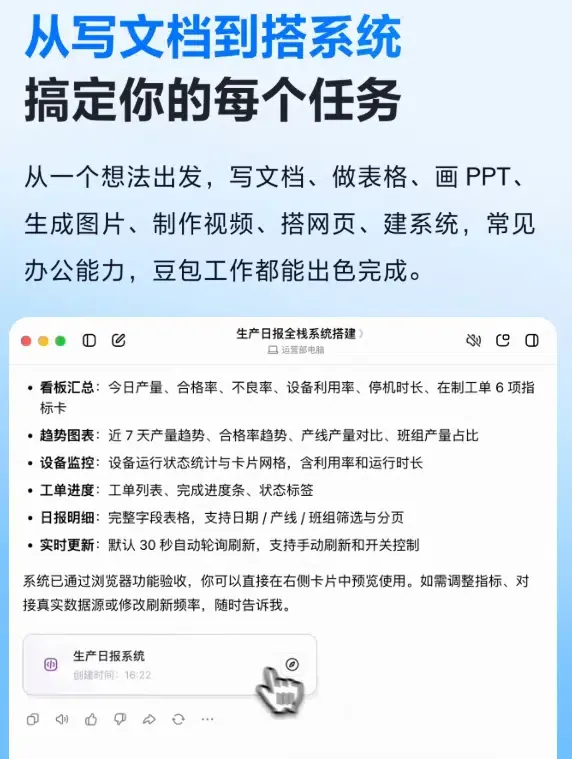
To address these inefficiencies, ByteDance consolidated its internal AI development teams, integrating the product capabilities of AI coding tool TRAE and agent-building platform Coze into the Doubao product ecosystem under product head Zhao Qi. The resulting product, Doubao Work, represents a unified operating gateway designed specifically for enterprise productivity. It provides direct capabilities for content creation, analytical data processing, multimedia generation, and granular, in-place document editing without requiring full regenerations, as highlighted in technical launch announcements.
Doubao Work’s launch also intensifies competition across enterprise communication ecosystems. Major Chinese technology companies including Tencent, Alibaba, and Baidu are similarly expanding AI-native office and agent products. This collective momentum highlights a decisive industry shift where competitive advantage is increasingly dictated by workflow ownership and enterprise context integration rather than raw model parameter size alone.
Under the Hood: Enterprise Context and Agent Orchestration
At the protocol and system level, the deployment of autonomous enterprise agents introduces fundamental architectural changes. Traditional web and desktop applications rely on direct human interaction, where users navigate visual user interfaces, maintain active browser sessions, and manually trigger client-side actions. In contrast, autonomous agent workflows operate via programmatic API coordination, browser automation, and asynchronous task delegation across virtual machines.
When an employee assigns a multi-step objective, such as compiling a competitive intelligence report, the agent coordinates specialized sub-agents covering data collection, market research, and document design. If the required processing exceeds local hardware capacities or standard working hours, the system transitions execution to virtual cloud computing instances, ensuring uninterrupted progress even if local machines disconnect.
Context Orchestration: Unified Permissions vs. Fragmented Repositories
The primary architectural distinction between generic conversational tools and enterprise agent platforms lies in context inheritance. When an authenticated user logs in using enterprise credentials, the platform dynamically maps existing organizational permissions, granting the agent controlled access to chat logs, structured spreadsheets, presentation decks, and team calendars.
The diagram below outlines the structural shift from isolated application workflows to unified contextual execution:
[Fragmented Application Workflow]
  User ──> Manual Search (App A) ──> Copy Text ──> Paste to Web Form ──> Manual Export (App B)

[Autonomous Contextual Workflow]
  User ──> Single Goal Prompt ──> Enterprise Context Bridge ──> Multi-Agent Task Orchestration ──> Unified Output
While Doubao Work relies on authenticated user accounts to maintain state across desktop, cloud, and mobile sessions, a distinct engineering challenge arises when enterprise workflows interface with external mobile applications. If a workflow hands a user into a mobile app that is not installed, the app-store installation step introduces a separate context-restoration boundary.
Decoupled Systems & Solution Comparison in the Stateless Era
In enterprise digital ecosystems, user journeys often transition across diverse client environments. When an authenticated user operates entirely within a single corporate suite, backend task identifiers and cloud state engines preserve workflow continuity. However, when workflows extend outward—such as sharing an onboarding link, distributing an enterprise document to an external partner, or guiding a mobile user from a web landing page to a native application—preserving entry context requires specialized handoff mechanisms.
Architectural Evaluation: Mobile Handoff Approaches
Engineering teams must evaluate how different routing and handoff mechanisms handle the transition between web touchpoints and mobile applications. The matrix below outlines how distinct architectural approaches address the app installation boundary:
| Mobile Handoff Approach | App Already Installed | App Not Installed | Context Scope |
|---|---|---|---|
| Plain Web/App Link | Can open destination depending on platform | Usually falls back to store/general landing | URL-level context |
| Custom Account/Backend Handoff | Custom | Custom implementation required | Application-defined |
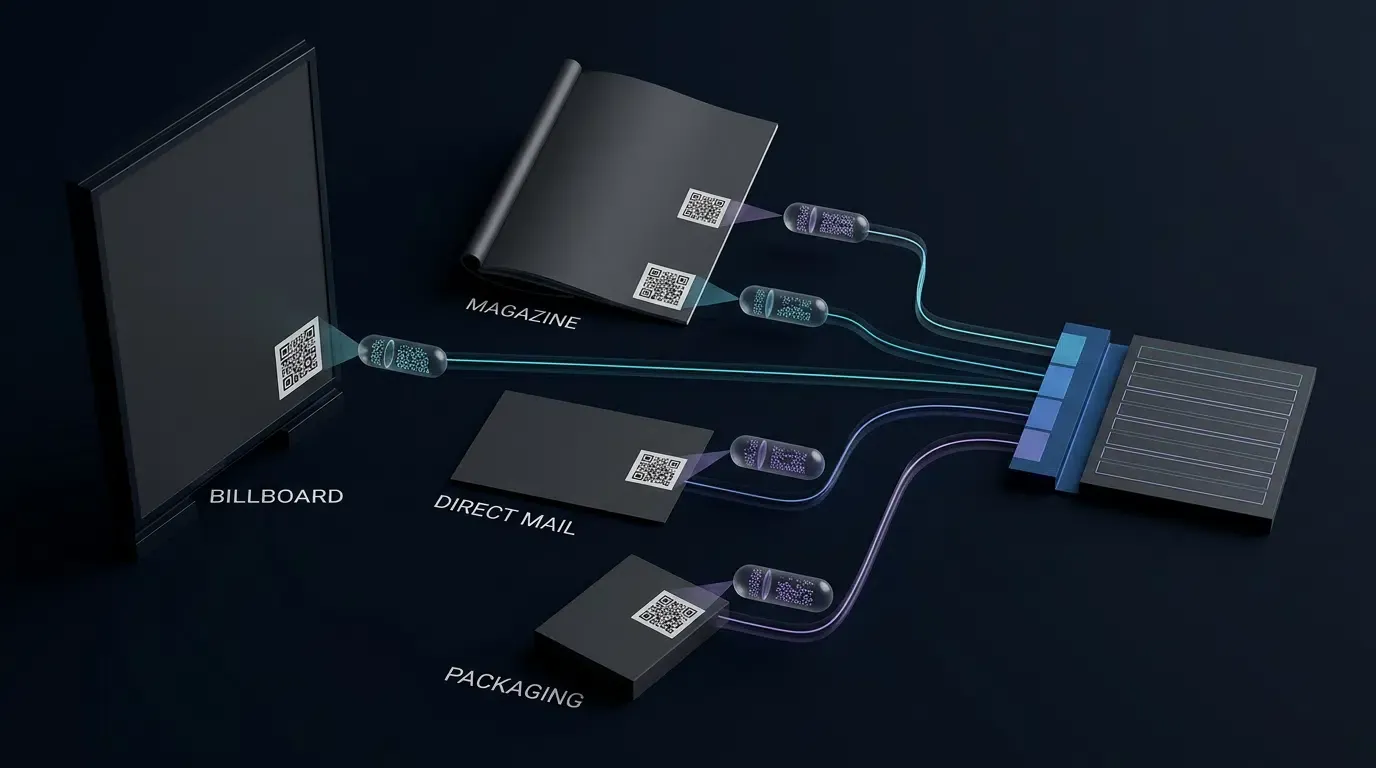
| Deferred Deep Linking (e.g. OpoInstall) | Deep-link routing | Post-install parameter restoration | Eligible pre-install destination/referral parameters |
For this separate mobile lifecycle case, if an enterprise workflow sends a user from a web or messaging surface into a mobile app that is not yet installed, deferred deep linking can restore eligible pre-install destination or referral parameters after installation. For instance, OpoInstall documents web-to-app parameter pass-through workflows in which custom parameters captured before installation are retrieved by the native SDK on first launch. This enables the application to use restored parameters to route users toward the intended onboarding view or workflow entry point. However, this does not replace Doubao Work’s own authenticated task state, Feishu permissions, or cloud execution context.
Engineering Checklist & Verification Schedules: Preparing for Agentic Ecosystems
To ensure seamless integration and data security as agent-driven workflows proliferate across corporate IT environments, engineering and operations teams should establish rigorous governance frameworks.
Developer Implementation Checklist
- Enforce Granular Role-Based Access (RBAC): Ensure that automated agent connectors strictly inherit existing user permission levels, limiting access to resources within the authenticated user’s existing permissions.
- Deploy Tokenized Asynchronous API Handshakes: Configure inter-agent tool calls with short-lived, cryptographically signed access tokens to support authenticated, scope-limited tool access and reduce credential replay risk.
- Configure Mobile App Links and Universal Links: Implement standard platform deep-linking protocols to route authenticated users directly into destination views when mobile applications are installed.
Product & Growth Operations Checklist
- Map Multi-Agent Collaboration Flows: Define clear task boundaries and output schemas when chaining specialized research, data, and design agents.
- Audit Enterprise Data Residency: Verify that synthesized meeting notes, confidential documents, and employee communications comply with regional compliance mandates.
- Standardize Cross-Platform User Journeys: Implement deferred parameter pass-through strategies across external acquisition channels to ensure users land on the intended workflow upon initial app setup.
Implementing these structural protocols enables organizations to safely leverage autonomous agent capabilities while protecting sensitive enterprise intelligence and maintaining reliable measurement pipelines.
Frequently Asked Questions (FAQ)
How does Doubao Work differ from general-purpose chatbots?
How does permission inheritance work when integrating Feishu context?
Can autonomous office agents run tasks when the local computer is turned off?
Key Takeaways for Engineering Teams
The introduction of unified enterprise agent platforms marks a decisive shift in how digital software systems are architected and consumed. As competitive dynamics pivot from standalone model performance toward comprehensive workflow ownership and context integration, software engineering teams must adapt to an environment dominated by autonomous orchestration.
Securing sustainable efficiency in this operational paradigm requires distinguishing between authenticated internal task states and external mobile user journeys. By adopting robust server-side context preservation, implementing strict zero-trust permission models, and deploying reliable deferred deep linking frameworks where app installation boundaries exist, organizations can build resilient architectures capable of supporting autonomous agent collaboration across modern web, desktop, and mobile ecosystems.
Share this article