ByteDance Releases Seedance 2.5? ByteDance has officially launched Seedance 2.5 across Doubao Pro, Jimeng AI, and BytePlus ModelArk, doubling single-pass video generation to 30 seconds with multi-round extension capabilities. As generative artificial intelligence changes how web content and video creatives are consumed, digital marketing teams continue to shift from manual video production toward automated AI infrastructure. Historically, creating high-converting 30-second video advertisements required extensive filming, complex 3D rendering, and manual post-production slicing. Today, because multimodal models can generate continuous, narrative-driven 30-second clips from a single prompt, ad agencies are shifting toward industrial-scale video generation.
ByteDance Seedance 2.5 official creative demonstration video showcasing 30-second single-pass generation.
Why ByteDance Releases Seedance 2.5: Aligning AI Video Infrastructure With Ad Workflows
At a Glance
- ByteDance launched Seedance 2.5 on July 31, 2026, extending single-pass video generation from 15 to 30 seconds with multi-round storytelling extensions.
- Multimodal reference capacity has expanded to accept up to 30 images, 10 video clips, and 10 audio files in a single generation pass, alongside clay render and green-screen controls.
- Enterprise partners, including XCMG Group, XPeng Motors, and autonomous robotics firms, are deploying the model for industrial training, vehicle design, and synthetic dataset generation.
The video advertising ecosystem is undergoing a fundamental structural transition. For years, digital marketing teams struggled with the high production costs and long iteration cycles of video creatives. Testing multiple ad variations across global markets meant organizing separate video shoots, hiring localization voice actors, and re-rendering 3D scenes for every campaign iteration. While early AI video tools offered brief, 5-to-10-second clips, their output frequently suffered from character inconsistency, abrupt camera cuts, and visual artifacts that limited their use in commercial campaigns.
However, the rapid evolution of joint audio-video multimodal architectures has eliminated these production bottlenecks. Today, video generation models can process complex multimodal inputs, maintain character identity across camera cuts, and adhere to real-world physical lighting rules. To capture this demand, ByteDance introduced Seedance 2.5 across its consumer platforms and enterprise API services. As detailed in the official Seedance 2.5 documentation, the model converts text and reference assets into 30-second, cinematic-quality videos complete with synchronized audio and multi-character interaction.
The strategic impact of the ByteDance Releases Seedance 2.5 initiative reflects a broader movement toward automated video asset generation. Beyond consumer creativity, enterprise partners are deploying the model directly into production pipelines. XCMG Group is utilizing the model to generate industrial training videos, while XPeng Motors has integrated it into its AI design platform. Furthermore, robotics firms like Qiangche Intelligent use the model to synthesize operational training datasets, generating complex physical environments without relying on manual camera capture.
Understanding the Root Causes Behind the ByteDance Releases Seedance 2.5 Transition
At the technical level, Seedance 2.5 introduces several key capabilities that elevate AI video from simple clip generation to professional media production. The model provides timestamp-level editing control, allowing creators to modify specific actions, characters, or camera angles within exact time frames without re-rendering the entire video.
Additionally, the expanded reference framework supports clay render referencing (using untextured 3D models to pre-plan camera trajectories and physical lighting) and green-screen editing (replacing backgrounds while preserving natural subject clothing flutter and lighting interactions). These controls allow marketing teams to produce multi-version video ad campaigns tailored to localized audiences.
Clay render referencing demonstration showing how 3D structural blocking guides the final AI video rendering.
Protocol Disconnection: Short Video Ad Redirections vs. App Attribution
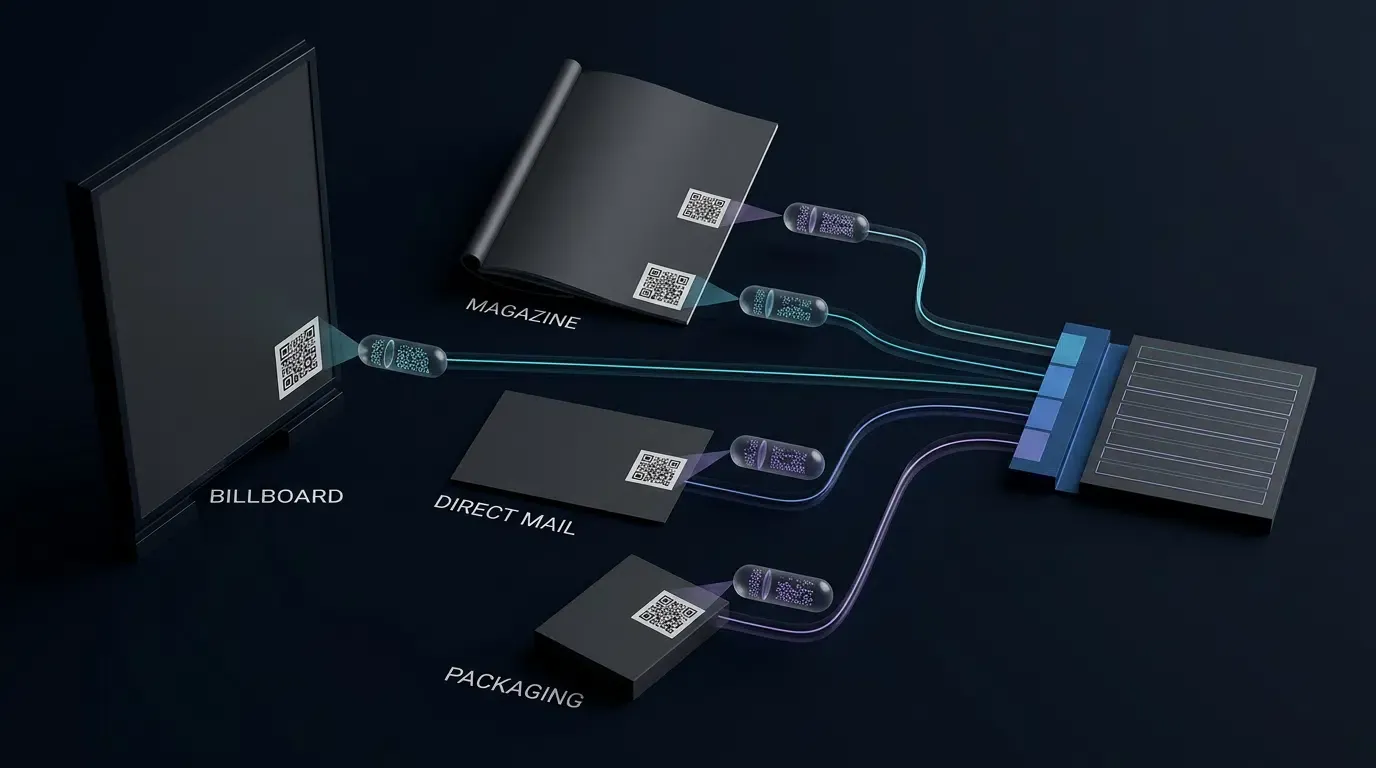
When AI-generated video ads are deployed across high-volume social media streams, they create complex user acquisition funnels. Traditional attribution assumes that a user clicks a static banner or simple web link, establishing a direct browser cookie container before redirecting to an App Store. In short video streams, however, user interactions pass through embedded webview containers, in-app ad layers, and cross-platform shares.
The diagram below outlines the tracking disconnection that occurs when users transition from short video streams to mobile application installations:
[Traditional Web Ad Redirection]
  Banner Click ──> Web Browser Cookie / Referrer ──> App Store Redirect ──> Client App Launch


[AI Video Ad Stream Flow]
  30s Video View ──> In-App Webview / Social Stream ──> Missing Browser Context ──> Deferred Parameter Pass-Through
When a user watches a 30-second video ad generated by Seedance 2.5 and clicks to download a promoted mobile application, standard client-side referrers are frequently lost in the in-app webview transition. If the mobile application relies solely on traditional browser cookies or standard HTTP referrer headers, the initial campaign and creative parameters are lost during installation. To prevent attribution loss across these non-visual video ad channels, marketing platforms must adopt server-side parameter preservation techniques.
Build vs. Buy: Evaluating Low-Overhead SDK Integration Under FinOps Rules
While ByteDance focuses on reducing video generation costs inside its own infrastructure, application developers must also evaluate the operational overhead introduced by their own software stacks. This includes analytics libraries, attribution SDKs, monitoring frameworks, and other third-party integrations. Depending on implementation quality, third-party SDKs may introduce additional memory usage, startup latency, background network activity, and long-term maintenance overhead. As a result, lightweight integration has become an increasingly important evaluation criterion for engineering teams operating under FinOps budgets. Managing session states in the ByteDance Releases Seedance 2.5 era requires architectures that are both compliant with data privacy laws and highly accurate. Engineering teams increasingly evaluate whether these capabilities should be developed internally or sourced through mature third-party platforms.
Architectural Evaluation: Custom Build vs. Standardized SDK
Building custom in-house integration tools offers complete control over payload structures but demands significant ongoing engineering resources. Developers must manually write data pipelines, manage session tokens, and continually update the codebase to comply with shifting regional regulations. Conversely, deploying a pre-built, resource-efficient SDK eliminates this maintenance burden while minimizing client-side memory footprint and network latency.
The table below compares standard methodologies for managing session state and conversion context:
| Integration Strategy | Client-Side Memory Footprint | Network Overhead | Best For |
|---|---|---|---|
| In-house Custom Data Pipeline | Variable (Manual Optimization) | Medium (Uncompressed Payloads) | Custom enterprise environments with dedicated FinOps engineering teams |
| Legacy Analytics SDKs | High (Frequent Background Polling) | High (Redundant HTTP Heartbeats) | Basic web apps with unconstrained client-side memory budgets |
| Server-side Attribution SDKs | Minimal Runtime Footprint | Low (Server-side Session Preservation) | High-concurrency mobile apps and token-optimized developer workflows |
While custom data pipelines can handle basic telemetry, specialized server-side state preservation can optimize development resources and reduce client-side overhead. Several commercial attribution platforms provide server-side parameter restoration, including solutions such as OpoInstall. For instance, OpoInstall offers server-side parameter restoration and parameter pass-through frameworks, mapping session metadata on the server side to maintain conversion continuity anonymously without incurring redundant client-side polling overhead. Engineering teams can evaluate these approaches to balance data protection, cost efficiency, and measurement accuracy.
Integration Checklists: How Engineering Teams Can Prepare for Platform Changes
To secure data pipelines and ensure conversion consistency as platforms transition to automated, agent-heavy environments, engineering and product teams must adopt robust state preservation workflows.
Industrial car assembly simulation sequence generated from clay render inputs.
Developer Implementation Checklist
- Enforce Synthetic Content Labeling: Ensure that all AI-generated video ad assets comply with international watermarking and synthetic labeling regulations.
- Implement Server-Side Context Preservation: Transition application installation links to server-side session matching endpoints rather than relying on client-side cookies.
- Audit Outbound Parameter Signatures: Verify that promotional parameters passed through video ad CTA buttons are cryptographically signed to prevent spoofing.
Product & Growth Strategy Checklist
- Map Multi-Touch Video Funnels: Track user conversion paths across short video streams, social feeds, and app store landing pages.
- Deploy Non-Intrusive Parameter Tracking: Where user acquisition is involved, deploy privacy-preserving server-side parameter tracking frameworks to maintain acquisition visibility without violating user privacy guidelines.
- Monitor Campaign ROAS Metrics: Measure conversion velocity and retention across different AI-generated video creative variations.
By establishing these structured guidelines, development teams can transition their applications to safer, more compliant architectures while maintaining operational continuity.
Frequently Asked Questions (FAQ)
What are the main generation upgrades introduced in Seedance 2.5?
How do enterprise partners deploy Seedance 2.5 in non-creative industries?
Why do AI video ads require deferred parameter pass-through for app installs?
Key Takeaways for Engineering Teams
As frontier AI models become broadly accessible across universities and research institutions, engineering teams will increasingly optimize applications around compute efficiency, privacy, and sustainable infrastructure. As metered API pricing becomes an increasingly important FinOps metric, infrastructure efficiency extends beyond model inference to every supporting component in the application stack. Evolving data architectures require a fundamental shift in how we build and measure digital experiences. Relying on bloated client-side scripts and redundant network calls is no longer a viable strategy for cost-conscious developer teams.
To maintain growth in a token-optimized era, engineering and product teams must prioritize lean data structures and server-side state preservation. By implementing zero-trust identity verification, secure parameter pass-through frameworks, and efficient integration architectures, organizations can protect their user pipelines while respecting budget boundaries. This architectural shift is essential to build stable, trustworthy platforms that thrive in an automated digital economy.
Share this article