Google Chrome ships every 2 weeks? Google confirmed this operational transition on September 8, 2026, with the official rollout of Chrome 153 Stable across desktop, Android, and iOS platforms. For software architects and mobile engineering teams, the fact that Google Chrome Ships Every 2 Weeks does not signify an immediate, spontaneous breaking change in Android System WebView APIs. Instead, it systematically compresses the testing runway between upstream Chromium milestone branches and production client runtimes. While accelerating release velocity directly targets the industry’s N-day vulnerability window, it also shortens the window engineering teams have to identify rendering regressions, intent-handling policy adjustments, and Web-to-App navigation handoffs. Understanding the structural boundaries between browser release cadences, WebView navigation lifecycle handling, and downstream installation routing is essential for maintaining resilient mobile user onboarding funnels.
Core Industry Realignment and Ecosystem Shifts
The transition from a four-week release calendar to a biweekly milestone cadence represents a major operational shift for the Chromium open-source project. Under the schedule launched with Chrome 153, major version releases arrive every fourteen days, with Chrome 154 already scheduled for September 22, 2026. This move continues a long-term industry trend toward continuous delivery: Chromium operated on a six-week cadence for over a decade before shifting to four-week cycles in 2021.
At a Glance
- Biweekly Release Cadence: Chrome 153 establishes an official two-week milestone cycle across desktop, Android, and iOS, cutting the four-week schedule in half.
- N-Day Patch Compression: Shorter release windows reduce the latency between public code commits and client-side patch deployments, mitigating risks from automated vulnerability scanning.
- Testing Runway Compaction: Because Android System WebView shares Chromium technology and updates independently of host applications, mobile teams should test WebView-dependent journeys more frequently as upstream Chromium milestones accelerate.
According to Google’s official Chrome release-cycle announcement, the primary operational motivation centers on shrinking the N-day patch gap—the temporal window between when a vulnerability fix is committed to Chromium’s public source repository and when that binary reaches end users. In an era where automated static analysis and AI-assisted tooling rapidly ingest open-source commits to synthesize exploits, compressing this exposure window is critical. Shorter release cycles allow engineering teams to ingest smaller, incremental patch sets, making regression triage more manageable during automated canary testing.
Peers across the browser ecosystem have largely adopted this rhythm. Microsoft Edge transitioned to a two-week major release schedule beginning with version 152, while Mozilla Firefox adopted biweekly releases starting with Firefox 155. For enterprise deployments requiring long-term environmental stability, Google maintains its eight-week Extended Stable channel. However, consumer mobile endpoints running Android can receive independently updated Chrome and WebView components through Google Play background services.
Alongside cadence changes, Chrome 153 introduces specific platform enhancements detailed in the Chrome 153 Release Notes. As outlined in the Chrome 153 Beta update, the Chromium team transitioned core XML parsing routines outside legacy XSLT to memory-safe Rust, reducing exposure to memory-safety risks in foundational data ingestion paths. In media processing, Chrome 153 adds native decoding support for the open-source Immersive Audio Model and Formats (IAMF) container within HTML5 media and WebAudio. Chromium’s broader development track also includes CSS single-axis scroll containers—currently targeted for non-stable channels including Beta, Dev, and Canary—while Chrome 153 officially exposes the native chrome.publicSuffix extension API to streamline top-level domain parsing.
+-------------------------------------------------------------------------+
|                  CHROMIUM CADENCE ACCELERATION TIMELINE                 |
+-------------------------------------------------------------------------+
| Era              | Cadence   | Core Operational Driver                  |
+------------------+-----------+------------------------------------------+
| Pre-2021         | 6 Weeks   | Manual C++ patch verification cycles     |
| 2021 - Mid 2026  | 4 Weeks   | Automated regression testing pipelines   |
| September 2026+  | 2 Weeks   | N-day patch compression & AI fuzzing     |
+-------------------------------------------------------------------------+
While accelerated updates enhance browser security, they change the maintenance requirements for applications embedding web content. The Android System WebView shares the Chromium codebase and updates independently of host applications. As upstream Chromium branches land more frequently, host applications must ensure their navigation hooks, protocol delegations, and link-handling routines rely on documented platform standards rather than transient browser behaviors.
Under-the-Hood Architectural Disconnection
To understand how browser updates influence mobile user journeys, developers must distinguish between standalone browsers and embedded web containers. On Android, Chrome and the Android System WebView share common Chromium source branches, but they operate under distinct process architectures and lifecycle rules. While standalone Chrome manages top-level window navigation and protocol dispatch natively, an embedded android.webkit.WebView relies on the host application’s configuration to determine how non-standard web requests are resolved.
A frequent point of friction in embedded web experiences involves custom URL schemes (such as myapp://profile?id=123). As documented in the official Android WebViewClient reference, Chromium’s internal network stack is engineered to handle standardized web protocols directly, primarily http://, https://, about:, and data:. When a hyperlink inside an embedded WebView triggers a custom URI scheme, the internal engine cannot resolve the protocol unless the host application’s WebViewClient intercepts the navigation request.
+-------------------------------------------------------------------------+
|                 WEBVIEW EMBEDDED NAVIGATION ARCHITECTURE                |
+-------------------------------------------------------------------------+
|                                                                         |
|  [ In-App WebView Context ]                                             |
|          |                                                              |
|          |-- (User Taps Navigation Link)                                |
|          v                                                              |
|  [ Intercept Request in shouldOverrideUrlLoading() ]                    |
|          |                                                              |
|          +----------------------------------+                           |
|          |                                  |                           |
|          v                                  v                           |
|  [ Standard Scheme: http/https ]    [ Custom Scheme: myapp:// ]         |
|          |                                  |                           |
|          v                                  v                           |
|  [ Allow WebView to Load ]          [ Parse URI into Android Intent ]   |
|                                             |                           |
|                                             +------------+              |
|                                             |            |              |
|                                             v            v              |
|                                     [ Target App OK ] [ App Absent ]    |
|                                             |            |              |
|                                             v            v              |
|                                     [ Launch Native ] [ Graceful Fallback]
|                                                                         |
+-------------------------------------------------------------------------+
If a host application does not implement explicit URL interception, the WebView attempts to resolve the custom URI against its internal network stack, leading to an unhandled navigation failure:
net::ERR_UNKNOWN_URL_SCHEME
This error is not a new breaking change introduced by Chrome 153; it is an established platform constraint of Android’s web architecture. However, because Chromium updates now roll out on a tighter biweekly cycle, applications that rely on informal or unverified JavaScript workarounds have less time to catch regressions when browser security boundaries or intent resolution rules tighten.
Another foundational browser mechanism is transient user activation, as outlined in Chromium’s UserActivation API specifications. To prevent abusive web content from launching external applications without user consent, Chromium requires a valid user gesture (such as an explicit tap or click) to permit external intent dispatching. If web scripts introduce asynchronous operations—such as executing network-based token queries or running complex client-side calculations before triggering the native scheme—the browser’s transient activation state can expire. Once expired, the browser disallows background application launches.
Timing mismatches can also generate race conditions in client-side routing. For example, if a web script triggers a custom scheme redirect and simultaneously sets a fallback JavaScript timer to initiate a file download, an uncoordinated race condition can occur. If the native app confirmation prompt opens while the background timer fires, the download task window may disrupt the foreground interface. These scenarios illustrate why relying exclusively on client-side timing scripts and custom schemes inside WebViews introduces fragility.
Storage isolation further complicates client-side parameter sharing. Android security architecture enforces strict data isolation between standalone browser apps and third-party applications. A persistent cookie or session token stored within Chrome cannot be read directly by an embedded WebView inside a different application. Consequently, passing attribution context or campaign parameters across application boundaries requires robust, verified routing protocols rather than local browser storage assumptions.
Decoupled Systems and Resilient Link Implementations
Addressing the instability of rapid biweekly runtime updates requires decoupling client-side navigation handling from brittle browser-specific assumptions. Software engineering teams cannot recompile and publish native application binaries every fourteen days to keep pace with Chromium. Instead, systems architectures must implement standardized protocol interception, resilient deep linking mechanisms, and persistent server-side parameter restoration.
The primary client-side mitigation on Android requires implementing defensive overrides within the application’s WebViewClient. By overriding shouldOverrideUrlLoading, developers can inspect incoming URIs before the Chromium network layer attempts to load them.
// Production-grade protocol interception for embedded WebViews
webView.setWebViewClient(new WebViewClient() {
    @Override
    public boolean shouldOverrideUrlLoading(WebView view, WebResourceRequest request) {
        Uri uri = request.getUrl();
        if (uri == null) {
            return false;
        }

        String scheme = uri.getScheme();
        // Allow standard web protocols to proceed within the WebView
        if ("http".equalsIgnoreCase(scheme) || "https".equalsIgnoreCase(scheme)) {
            return false;
        }

        // Intercept native schemes and dispatch explicitly via Android Intents
        try {
            Intent intent = new Intent(Intent.ACTION_VIEW, uri);
            intent.addCategory(Intent.CATEGORY_BROWSABLE);
            intent.addFlags(Intent.FLAG_ACTIVITY_NEW_TASK);
            view.getContext().startActivity(intent);
            return true;
        } catch (ActivityNotFoundException e) {
            // Handle absence of installed target app without throwing net::ERR_UNKNOWN_URL_SCHEME
            Log.w("WebViewRouting", "Target application not installed for scheme: " + scheme);
            return true;
        }
    }
});
Programmatic interception solves protocol errors when the target application is already present on the device. However, it does not resolve the install boundary problem: if the user does not have the target application installed, custom URI schemes fail to route effectively.
To bridge this gap, modern architectures rely on verified application links—specifically Android App Links and Apple Universal Links. These protocols utilize standard HTTPS domain routing validated by digital asset links hosted on the application domain (assetlinks.json on Android and apple-app-site-association on iOS). When supported by the operating system, tapping a verified link allows the platform to route the request directly to the installed application, bypassing embedded browser scheme resolution entirely. If the application is absent, the link falls back gracefully to a standard web page.
Yet, when an uninstalled app requires passing campaign metadata or referral tokens across the store download boundary, standard App Links cannot preserve that state through the operating system’s installation process. Operating system stores and native installation flows do not carry custom HTTP query parameters through to the first native app launch.
+-------------------------------------------------------------------------+
|                  DEFERRED PARAMETER RESTORATION PIPELINE                |
+-------------------------------------------------------------------------+
|                                                                         |
| 1. User Clicks Campaign / Referral Link (H5 Page)                       |
|    |                                                                    |
|    +---> Web SDK Captures Eligible Context (e.g., Network & Device Signals)
|    +---> Dynamic Parameters Stored Temporarily in Attribution Service   |
|                                                                         |
| 2. User Routes to App Store / Google Play / Direct Download             |
|    |                                                                    |
|    +---> Binary Downloaded and Installed on Client Device               |
|                                                                         |
| 3. Application Cold Boot (First Launch)                                 |
|    |                                                                    |
|    +---> Native SDK Collects Supported Device Metadata                  |
|    +---> Asynchronous Query Dispatched to Attribution Backend           |
|                                                                         |
| 4. Contextual Restoration                                               |
|    |                                                                    |
|    +---> Server Matches First-Launch Context with Stored Records        |
|    +---> Restores Original Campaign ID, Referral Code, or Content Path  |
|    +---> Native Router Directs User to Specific Target View             |
|                                                                         |
+-------------------------------------------------------------------------+
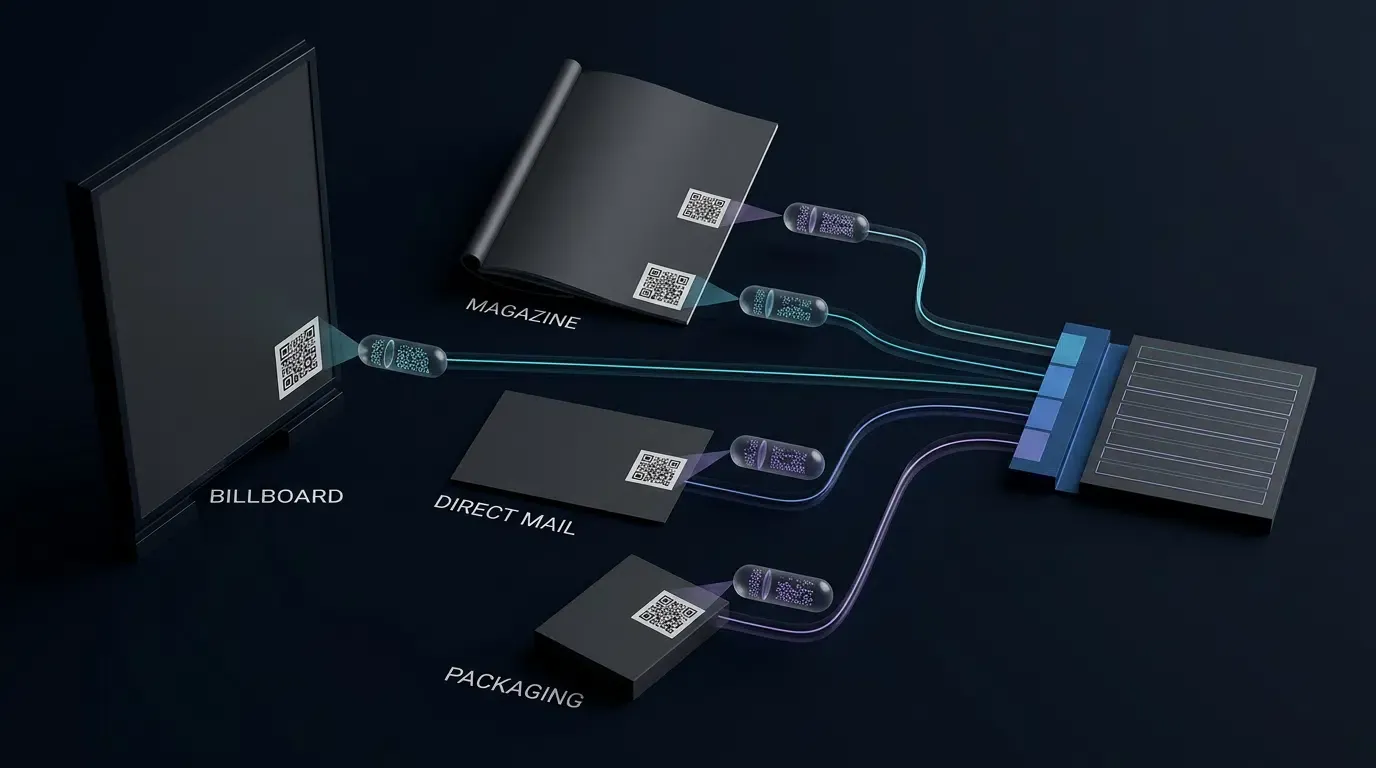
This scenario is where Deferred Deep Linking (DDL) serves as an independent routing solution. DDL does not alter or repair embedded WebView custom scheme handling; rather, it provides a fallback mechanism across the installation boundary. When a user engages with an acquisition landing page, the web SDK records eligible device signals and associates them with active campaign parameters. Upon the first native launch following installation, the application’s native SDK queries the attribution backend to match the device context and restore parameters.
Engineering teams evaluate several architectural models when designing Web-to-App routing:
| Routing Mechanism | Installed App Routing | Uninstalled App Handling | Install-Boundary Parameter Preservation | Maintenance Scope |
|---|---|---|---|---|
| Custom URI Schemes | Handled via OS Intent filters if intercepted in WebViewClient |
Fails without explicit fallback; triggers net::ERR_UNKNOWN_URL_SCHEME |
None; query parameters are lost across app installation | Application-owned (Continuous manual patching required) |
| Android App Links / Universal Links | Resolved natively by OS to registered Activity | Graceful fallback to verified HTTPS landing page | None natively; web context does not persist through app store installs | Domain + Application-owned (Domain association and DNS verification) |
| Deferred Deep Linking Architecture | Delegates to App Links or native schemes when installed | Directs to web fallback or app download flow | Restores dynamic parameters on first launch via server-side matching | SDK-assisted (Managed attribution client and server framework) |
In production implementations, development teams often rely on established platforms to handle deferred parameter matching, such as Branch, AppsFlyer, Adjust, or Opoinstall. A platform like Opoinstall focuses on parameter passing and channel analytics, utilizing server-side device matching alongside optional clipboard assistance, where applicable and subject to platform policy, to preserve parameters across the install barrier. According to official platform documentation on the Opoinstall homepage, the deferred parameter pass-through framework can restore parameters on first launch in up to 98% of eligible instances, providing an automated alternative to manual referral codes.
By decoupling native app routing from fragile browser-side state assumptions, development teams ensure that their acquisition funnels remain operational regardless of changes in upstream browser update schedules.
Engineering Checklist and Verification Schedules
To prevent production regressions and tracking failures as Chromium milestones accelerate, engineering teams should incorporate defensive testing practices into their continuous integration workflows.
- WebViewClient Protocol Delegation: Ensure all embedded
WebViewinstances implementshouldOverrideUrlLoading, explicitly intercept non-HTTP(S) schemes, and catchActivityNotFoundExceptionwhen dispatching external Intents. - Synchronous Interaction Binding: Bind application-launch calls directly to synchronous user gestures (such as
onClickhandlers), avoiding intermediary asynchronous API queries that risk expiring Chromium’s transient user activation state. - Domain Verification Maintenance: Continuously validate that
assetlinks.jsonandapple-app-site-associationfiles are correctly formatted, served over valid HTTPS, and match the production application’s signing certificates. - Bounded Initialization Routines: When querying attribution backends for installation parameters during cold boots, configure asynchronous callbacks with appropriate timeout thresholds to prevent UI hangs under degraded network conditions.
- ProGuard and Code Obfuscation Rules: Ensure that SDK interfaces handling deep link callbacks and parameter retrieval are protected from code obfuscation during release builds by applying the consumer ProGuard and R8 rules specified in the current SDK integration documentation.
- Isolated Process Initialization: For SDKs whose integration documentation mandates main-process-only initialization, ensure that attribution initialization routines execute exclusively within the primary application process by checking process identifiers.
Teams supporting embedded WebView interactions should maintain automated regression test suites executing against current Chromium Beta and Stable builds to catch platform shifts before they reach consumer devices.
Frequently Asked Questions (FAQ)
Does Chrome's biweekly cadence mean Android System WebView updates every fourteen days?
Why does net::ERR_UNKNOWN_URL_SCHEME occur when tapping a link in an embedded WebView?
How does Deferred Deep Linking differ from standard Android App Links?
Key Takeaways for Engineering Teams
Google’s adoption of a biweekly milestone cadence for Chrome reflects an industry-wide necessity to patch security vulnerabilities faster in an era of automated exploit tooling. However, the operational reality of this biweekly browser cadence reinforces an important architectural lesson: client-side workarounds and timing-dependent browser navigation hacks are inherently fragile.
Engineering teams must build on platform standards. Embedded web runtimes require robust WebViewClient overrides to handle custom protocols, while cross-platform user journeys should leverage verified App Links and Universal Links. Where acquisition flows span the app store installation boundary, teams should implement resilient deferred deep linking frameworks to preserve critical context. By isolating core application routing from upstream browser release schedules, engineering organizations maintain consistent user experiences across rapidly evolving web ecosystems.
References
-
Google. (2026). Fresher features, faster fixes: The two-week release cycle is here. Chrome for Developers. https://developer.chrome.com/blog/chrome-two-week-start
-
Google. (2026). Chrome 153 release notes. Chrome for Developers. https://developer.chrome.com/release-notes/153
-
Google. (2026). Chrome 153 beta: Single-axis scroll containers, Rust XML parsing, and WebAudio IAMF. Chrome for Developers. https://developer.chrome.com/blog/chrome-153-beta
-
Google. (2026). Making user activation consistent across APIs. Chrome for Developers. https://developer.chrome.com/blog/user-activation/
-
Android Open Source Project. (2026). WebViewClient API reference and custom scheme routing. Android Developers. https://developer.android.com/reference/android/webkit/WebViewClient
-
Android Open Source Project. (2026). Verify Android App Links. Android Developers. https://developer.android.com/training/app-links/verify-applinks
-
Apple Developer. (2026). Supporting Universal Links in your app. Apple Documentation. https://developer.apple.com/documentation/xcode/supporting-universal-links-in-your-app
-
Opoinstall. (2026). Mobile Attribution and Deferred Deep Linking platform overview. https://www.opoinstall.com/
-
Opoinstall. (2026). Android SDK integration guide and process handling. https://www.opoinstall.com/docs
Share this article