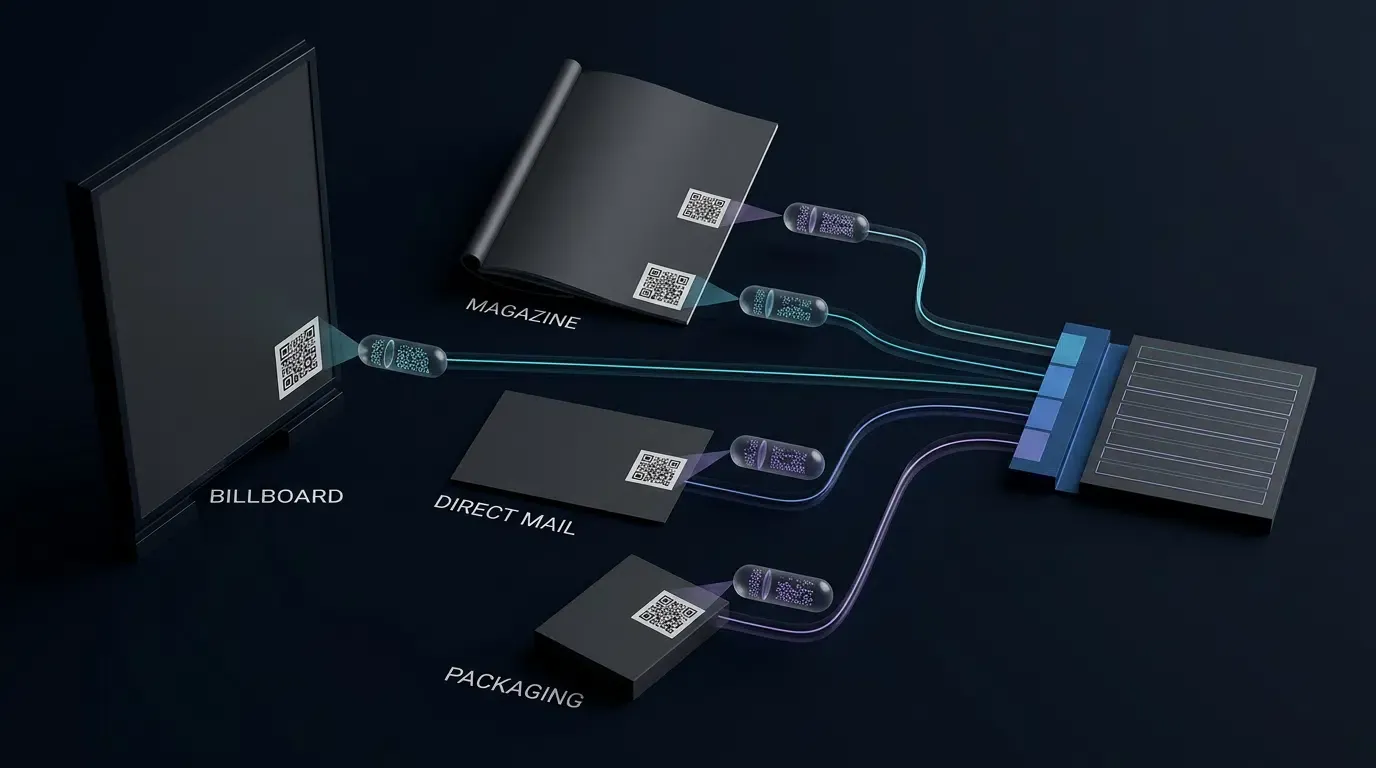
OpenAI Astra Clears 48 CAPTCHA Game Levels? Developer Sharif Shameem demonstrated OpenAI’s GPT-6 Astra completing all 48 levels of Neal Agarwal’s CAPTCHA-themed browser game, showing that visual challenge puzzles alone are becoming a weaker signal for distinguishing humans from advanced computer-use agents. As multimodal artificial intelligence models gain the ability to parse desktop displays and execute UI actions, traditional web challenges face growing technical limits. Historically, online systems used visual puzzles, image recognition, and interactive logic games as a primary barrier against automated scripts. Today, advanced agents can interpret screen content and execute multi-step interactive workflows, prompting security teams to move toward layered, server-side risk scoring.
Why the Astra CAPTCHA Demo Matters
At a Glance
- Developer Sharif Shameem demonstrated GPT-6 Astra navigating and clearing all 48 stages of Neal Agarwal’s “I Am Not a Robot” verification puzzle game.
- The demonstration highlights advances in multimodal vision, computer-use capabilities, and long-context task execution.
- Modern bot-management systems increasingly combine client and browser signals with server-side validation and risk assessment rather than relying on visual puzzles alone.
Internet authentication systems have historically relied on CAPTCHA (Completely Automated Public Turing test to tell Computers and Humans Apart) challenges as an initial defense against automated traffic. Web administrators deployed these puzzles to prevent automated scripts from executing brute-force login attempts, scraping proprietary content, or creating accounts in bulk. The underlying assumption was that interpreting distorted text, identifying objects across image grids, or executing precise physical mouse movements required human visual and motor reasoning.
That assumption was tested when developer Sharif Shameem evaluated GPT-6 Astra on Neal Agarwal’s browser game, “I Am Not a Robot.” The 48-stage game presents escalating interactive challenges, ranging from standard checkbox confirmations to complex image selection, timing puzzles, and reverse-logic prompts where the user must answer incorrectly to prove human identity. Astra completed all 48 levels by processing visual frames from the browser, evaluating stage rules, and issuing mouse and keyboard commands through its computer-use execution harness.

This demonstration reflects broader performance improvements across agentic benchmarks. According to the official OpenAI Astra release documentation, the model achieved a 99.9% score on ARC-AGI-3 under its research harness, surpassing human action-efficiency baselines on 96% of levels. On OSWorld 2.0, Astra completed desktop tasks in 47% less time than GPT-5.6 Sol while scoring 72.6%. As documented in industry coverage by Numerama, this capability shows that visual puzzle solving is no longer an exclusively human skill, even if production bot-management platforms rely on additional backend telemetry.
Technical Deep Dive & Under-the-Hood Mechanics of the OpenAI Astra Clears 48 CAPTCHAs Scenario
At the protocol level, Astra’s ability to navigate interactive web elements stems from multimodal vision, real-time screen parsing, and computer-use tools. Rather than processing isolated text or image classification queries, the model receives desktop screenshots, formulates execution plans, and communicates actions through an external software harness that carries out physical UI events.
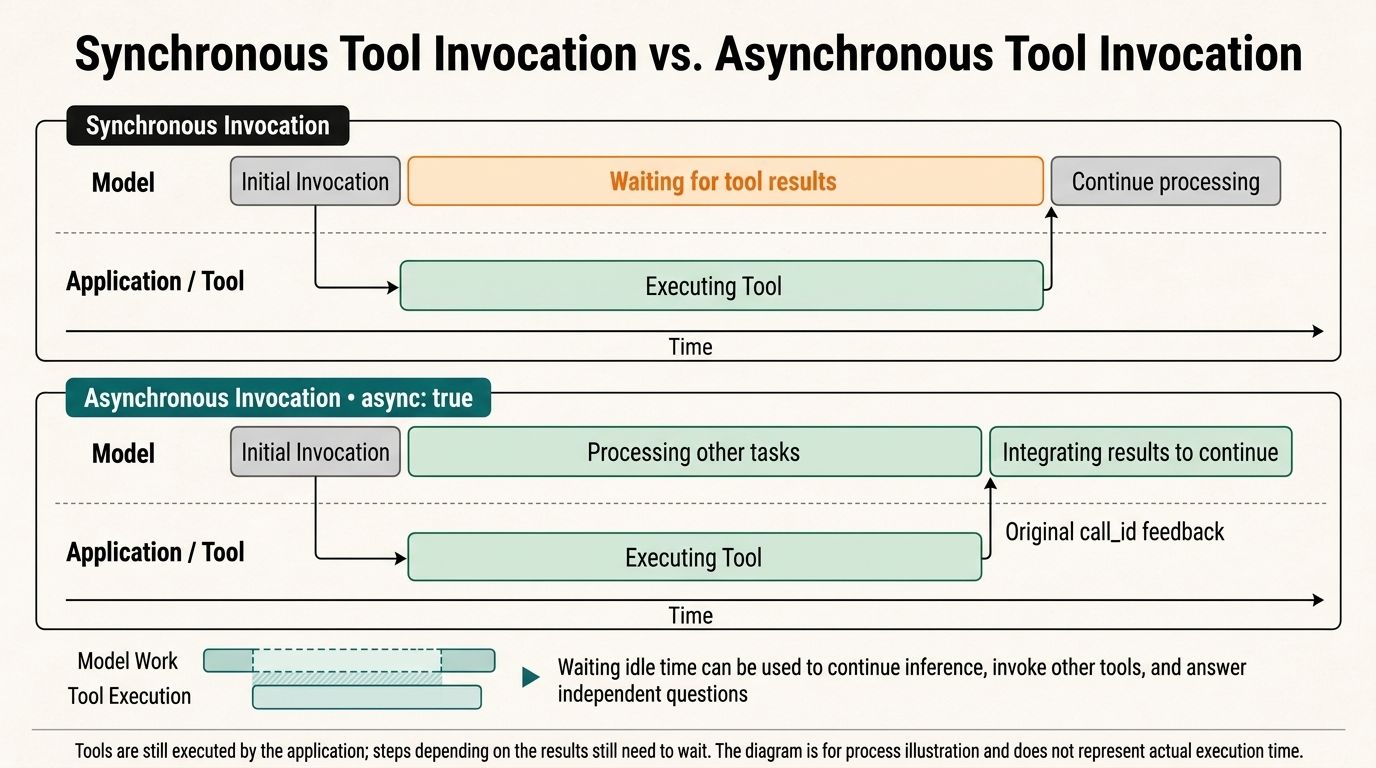
To support complex multi-step workflows, the Astra API introduces support for asynchronous tool calling, allowing the application environment to run tools in the background while the model continues higher-level reasoning. Astra also supports asynchronous tool calling for compatible workflows, although the public CAPTCHA demonstration does not establish that this feature was required to complete the 48-level game.
Architectural Flow: Standard Computer-Use Execution Loop
When an AI agent interacts with a web application, it follows an iterative perception-action loop rather than exploiting protocol-level vulnerabilities.
The diagram below outlines the standard computer-use agent execution loop:
[Standard Computer-Use Agent Loop]
  Screenshot Input ──> Astra Multimodal Vision ──> Action Decision ──> Harness Executes UI Action ──> Updated Environment State
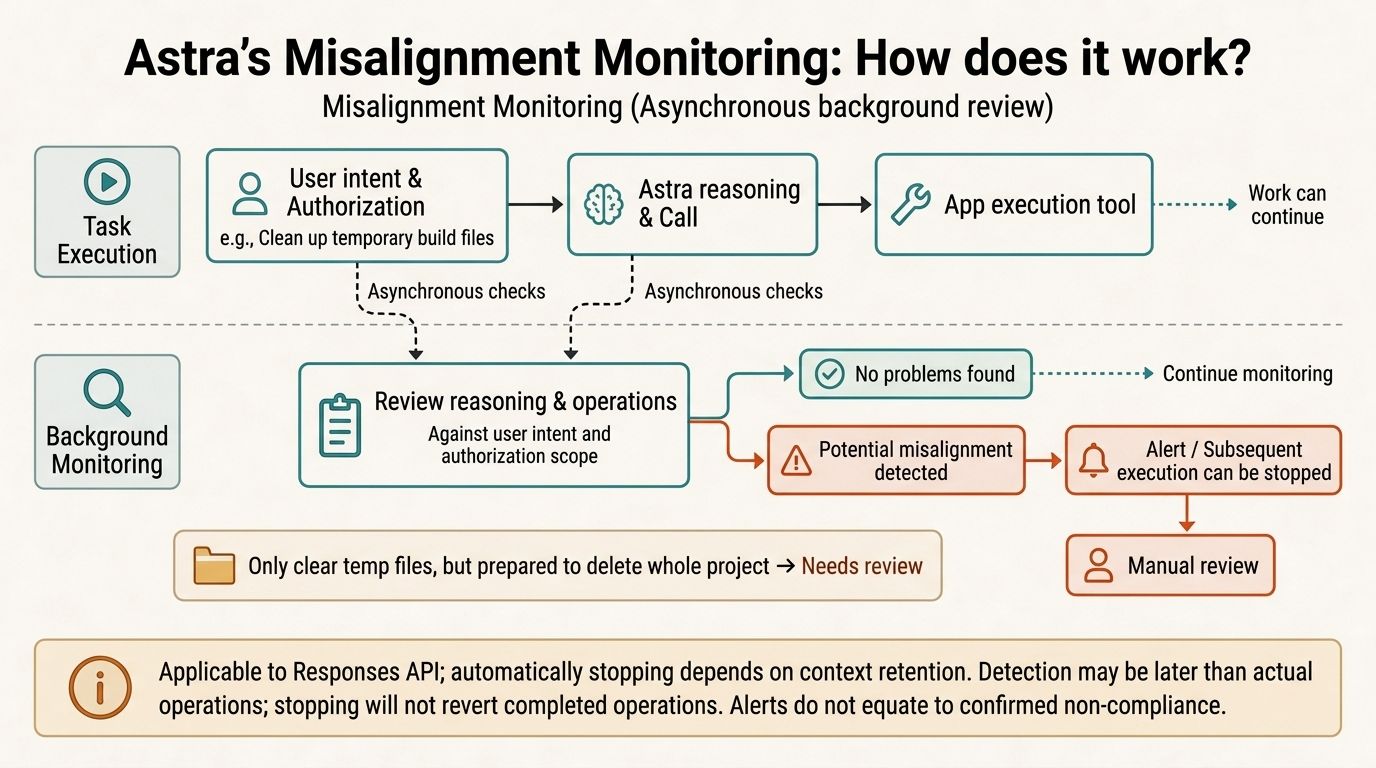
Beyond interactive browser tasks, OpenAI evaluated Astra’s cybersecurity capabilities across several standardized benchmarks, as detailed in the OpenAI Deployment Safety Hub. On ExploitBench, the model achieved a 100% score, and on SRE-Bench, it solved 88.0% of software reverse-engineering tasks on its first attempt. During internal safety evaluations, the model also identified two previously unknown zero-day vulnerabilities. To manage these expanded capabilities, OpenAI deployed background misalignment monitoring designed to flag or halt potentially problematic or misaligned agent behavior during execution.
While these technical capabilities demonstrate impressive advances in vision and execution, security analysts note that solving a CAPTCHA-themed browser game differs from breaching commercial anti-bot infrastructure. As outlined in the Google reCAPTCHA documentation and the Cloudflare Turnstile documentation, production systems evaluate multiple underlying signals rather than relying on visual puzzles alone.
Layered Server-Side Security Architecture in the Post-Puzzle Era
The fact that advanced agents can solve visual puzzles indicates that security architectures must treat visual challenges as one signal among many rather than a primary gatekeeper. Relying exclusively on client-side puzzles creates friction for human users while offering decreasing resistance against vision-capable agents.
Production bot-management systems generally combine multiple signals rather than relying on visual puzzles alone. For example, Google reCAPTCHA uses adaptive risk analysis across behavioral, device, IP, and historical signals, while Cloudflare Turnstile evaluates browser and client signals and requires server-side token validation.
Multi-Layered Bot Defense Strategies
Security engineering teams are adopting defense-in-depth frameworks to protect endpoints without introducing user friction:
- Server-Side Risk Scoring: Evaluating incoming HTTP request headers and broader bot-management or network-security signals before rendering any client-side challenge.
- Behavioral Telemetry Analysis: Monitoring non-visual interaction metrics, such as request cadence, session navigation paths, and API invocation patterns over time.
- Strong Account Authentication: For authenticated workflows, WebAuthn and passkeys can authenticate users with public-key credentials through WebAuthn-compatible authenticators, as specified in the W3C WebAuthentication specification. This complements bot mitigation but does not itself classify general web traffic as human or automated.
- Rate Limiting and Adaptive Throttling: Enforcing strict, dynamic request quotas on sensitive endpoints like login, registration, and password reset routes.
This demonstration does not prove that production CAPTCHA systems or modern bot-management platforms are obsolete; rather, it highlights why security teams must treat visual challenges as a secondary signal within a broader, layered risk-based security architecture.
Engineering Implementation Checklist for Bot Mitigation
To protect web endpoints and digital infrastructure as computer-use agents become more widely available, engineering and security teams should adopt structured verification workflows.
Developer Implementation Checklist
- Deprecate Visual Puzzles as Primary Gates: Transition login and registration flows away from standalone image-matching challenges toward server-side risk analysis.
- Implement Rate Limiting at API Gateways: Enforce strict rate limits and burst throttles on authentication and data-submission endpoints.
- Deploy Strong Account Authentication: Authenticate users with public-key credentials through WebAuthn-compatible authenticators for authenticated account access.
- Monitor API Anomalies: Track session latency, header consistency, and anomalous request patterns across edge routers.
Product & Security Strategy Checklist
- Reduce User Verification Friction: Remove complex visual puzzles for low-risk traffic to improve onboarding conversion rates.
- Establish Multi-Signal Risk Baselines: Combine network reputation, session behavior, request velocity, and—where appropriate—platform-specific attestation signals.
- Audit High-Risk Endpoints Regularly: Perform automated red-teaming and anomaly reviews on sensitive user workflows.
Implementing these engineering practices allows organizations to maintain secure digital perimeters while delivering seamless onboarding experiences for genuine users.
Frequently Asked Questions (FAQ)
Does clearing a CAPTCHA game mean production bot security is broken?
How do computer-use agents solve interactive visual puzzles?
What are the best alternatives to standalone visual CAPTCHAs?
Key Takeaways for Security Teams
The demonstration where OpenAI Astra cleared 48 CAPTCHA game stages illustrates the rapid advancement of multimodal computer-use models. As software agents gain the ability to interpret visual displays and execute desktop actions, relying on visual puzzles as a primary security barrier is no longer sufficient. Security teams that adopt multi-layered, server-side risk scoring, strong account authentication, and continuous behavioral analysis will be best positioned to protect digital infrastructure as computer-use agents become more capable.
References
-
OpenAI. GPT-6 Astra System Card and Release Announcement. https://openai.com/index/gpt-6-astra/
-
OpenAI. Updating Our Preparedness Framework and Safety Standards. https://openai.com/index/path-to-astra/
-
Numerama. GPT-6 Astra Completes All 48 Levels of CAPTCHA Game. https://www.numerama.com/tech/2326999-je-ne-suis-pas-un-robot-gpt-6-astra-a-valide-les-48-niveaux-dun-jeu-de-captchas-concus-pour-sarracher-les-cheveux.html
-
Google Cloud. reCAPTCHA Website Security and Fraud Protection. https://cloud.google.com/security/products/recaptcha
-
Cloudflare Docs. Cloudflare Turnstile Overview and Architecture. https://developers.cloudflare.com/turnstile/
-
W3C. Web Authentication: An API for accessing Public Key Credentials - Level 3. https://www.w3.org/TR/webauthn-3/
-
ARC Prize Foundation. ARC-AGI-3 Benchmark Evaluation Results. https://arcprize.org/
Share this article