WeChat Pay powers smart glasses? This wearable transaction milestone was officially confirmed on September 8, 2026, when Tencent launched its dedicated Smart Glasses SDK, with Rokid AI glasses becoming the first product to complete adaptation for the integration. For software architects and mobile infrastructure teams, WeChat Pay’s arrival on consumer smart glasses highlights an ongoing shift in personal computing surfaces. While near-eye optical checkout simplifies point-of-sale verification into an ambient, hands-free glance, it introduces technical handoffs between near-eye optical sensors, smartphone companion runtimes, and host payment services. When ambient hardware distributes interactions away from traditional smartphone touchscreens, engineering teams must re-evaluate how contextual parameters, user authorizations, and cross-application routing operate across decoupled devices.
Wearable Hardware Integration and WeChat Pay Milestones
The arrival of glance-based transactions represents the latest transition in consumer point-of-sale interaction models. Mobile checkout initially required physical card emulation through near-field communication (NFC) protocols embedded in smartphones and wristbands. As optical recognition matured, retail environments shifted toward static merchant QR codes, requiring shoppers to unlock handsets, launch host applications, and align phone cameras within bounded viewports. Biometric facial-recognition terminals later removed the mobile handset from the transaction flow, but fixed terminal installations remained sensitive to ambient lighting and required users to position themselves directly before physical kiosks.
At a Glance
- Ambient Optical Checkout: WeChat Pay’s Smart Glasses SDK enables hands-free payments using near-eye camera capture and temple-touch confirmation, moving transaction triggers away from handheld phone displays.
- Companion Architecture Dependency: Current hardware deployments require an active wireless connection to a paired smartphone running WeChat and apply a baseline daily payment limit of RMB 200.
- Focused Interaction Scope: The initial Beta focuses on merchant collection codes and a short voice–scan–confirm flow, while broader non-payment Scan functions remain outside the current implementation.

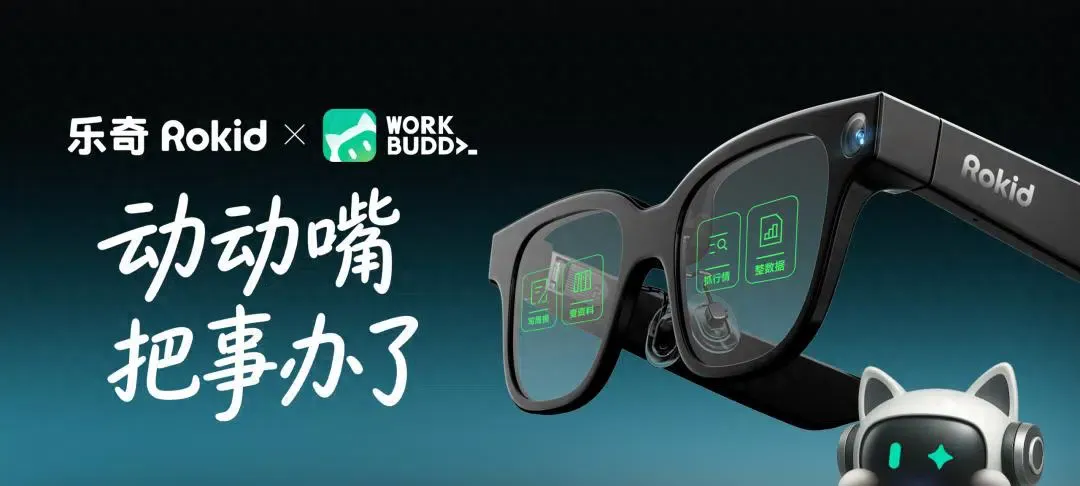
The launch of Tencent’s Smart Glasses SDK on September 8, 2026, repositions computer vision from stationary retail countertops directly to the user’s natural line of sight. Rather than treating consumer smart glasses solely as audio playback accessories or video recording peripherals, platform operators now support wearable frames as input surfaces for transaction routing. Rokid AI glasses represent the first product to complete adaptation for the SDK, leveraging their proprietary YodaOS operating system and optical waveguide displays to render payment confirmation data directly in the wearer’s visual field.
According to official platform details reported by IT Home, initial setup requires users to request payment enablement inside the glasses manufacturer’s mobile companion application before verifying payment credentials through a dedicated WeChat Mini Program. Once paired, daily checkout on supported wearable hardware executes across four distinct interaction phases:
- Auditory Activation: The user utters an activation command to wake the camera sensor and load optical scanning pipelines into memory.
- Line-of-Sight Alignment: The onboard camera captures the merchant’s static or dynamic QR code within the user’s natural gaze, eliminating manual frame positioning.
- Physical Gesture Confirmation: The heads-up display presents the recipient merchant identity and transaction value, prompting the user to confirm the transfer via a physical swipe or tap along the glasses temple.
- Multi-Sensory Telemetry Output: Upon transaction completion, the embedded waveguide displays the payment receipt while directional audio drivers provide acoustic confirmation.
This operational flow simplifies the physical purchase experience, yet it operates under tightly defined technical constraints. The initial Beta release limits transaction support exclusively to merchant collection codes, covering face-to-face collection codes, individual-business collection codes, and aggregated merchant collection codes provided by major payment service providers and banks. Platform security rules explicitly exclude non-payment Scan features such as Mini Program codes, adding contacts, object recognition, Mini Program jumps, and device rental. Official materials do not attribute this restricted scope to optical-waveguide or rendering limitations; they define the current Beta around supported payment-code scenarios.
Technical Architecture and Companion Device Mechanics
Wearable payment implementations in consumer eyewear do not function as standalone clearing nodes. Thermal dissipation envelopes, compact battery enclosures, and weight limits are common considerations across smart eyewear development. In the current WeChat Pay implementation, Rokid hardware operates under a paired companion-device architecture.
As documented on the Rokid Open Platform, the glasses run YodaOS to coordinate low-level camera drivers, optical display rendering, and local sensor processing. The glasses capture and interpret the visible payment QR code before the connected payment flow proceeds. However, public launch materials do not disclose the exact transport protocol or payload-routing architecture used to relay transaction payloads between the wearable frame and the paired smartphone running WeChat.
+-------------------------------------------------------------------------+
|              TETHERED WEARABLE PAYMENT INTERACTION PIPELINE             |
+-------------------------------------------------------------------------+
|                                                                         |
|  [ Wearable Frame: Rokid AI Glasses (YodaOS) ]                          |
|         |                                                               |
|         |-- (1. Gaze Aligns with Merchant QR Code)                      |
|         |-- (2. Visual Capture Interprets QR Target)                    |
|         v                                                               |
|  [ Authenticated Connection to Paired Smartphone ]                      |
|         |                                                               |
|         |-- (3. Exact Transport & Internal Routing Undisclosed)         |
|         v                                                               |
|  [ Paired Smartphone: Companion App & WeChat Connection ]               |
|         |                                                               |
|         |-- (4. Exact Division of Validation, Risk Control,             |
|         |       and Transaction Processing Undisclosed)                 |
|         v                                                               |
|  [ WeChat Pay Transaction Processing ]                                  |
|         |                                                               |
|         |-- (5. Status Feedback Relayed to Wearable HUD)                |
|         v                                                               |
|  [ Waveguide Displays Merchant Name & Amount ]                          |
|         |                                                               |
|         |-- (6. Physical Touch Verification: Temple Swipe)              |
|         v                                                               |
|  [ WeChat Pay Transaction Completes; Result Returned to Glasses ]       |
|                                                                         |
+-------------------------------------------------------------------------+
Initial provisioning requires the user to bind their wearable through the hardware manufacturer’s companion application, completing verification inside WeChat on the smartphone to establish account association. Subsequent payments execute without unlocking the phone display, provided the authenticated local connection remains active. Current launch disclosures do not specify how authentication, risk evaluation, or settlement responsibilities are divided between the glasses, the mobile handset, and WeChat’s backend infrastructure.
To mitigate security risks inherent in ambient scanning, the platform implements strict risk-control boundaries. A baseline transaction threshold caps daily spending at RMB 200 for standard configurations, with higher spending tiers available for hardware incorporating wearer identity recognition methods (such as iris scanning or fingerprint sensors). Requiring a deliberate tactile swipe along the temple touchpad prevents passive background scanning from triggering unintended financial settlements when a user glances across retail signage.
While Rokid’s YodaOS platform supports native applications, background services, and third-party tools via developer SDKs, the WeChat Pay flow is intentionally streamlined for quick micro-retail. The payment interface presents bounded, glanceable HUD notifications rather than a multi-step web checkout flow, reflecting an interaction design tailored specifically to near-eye optical hardware.
Downstream Mobile Acquisition and Cross-Surface Routing
The emergence of wearable touchpoints highlights a broader architectural consideration: how real-world interactions connect with downstream mobile applications. While WeChat Pay’s Smart Glasses SDK focuses strictly on bounded transaction clearing, in-person retail encounters frequently involve secondary customer touchpoints.
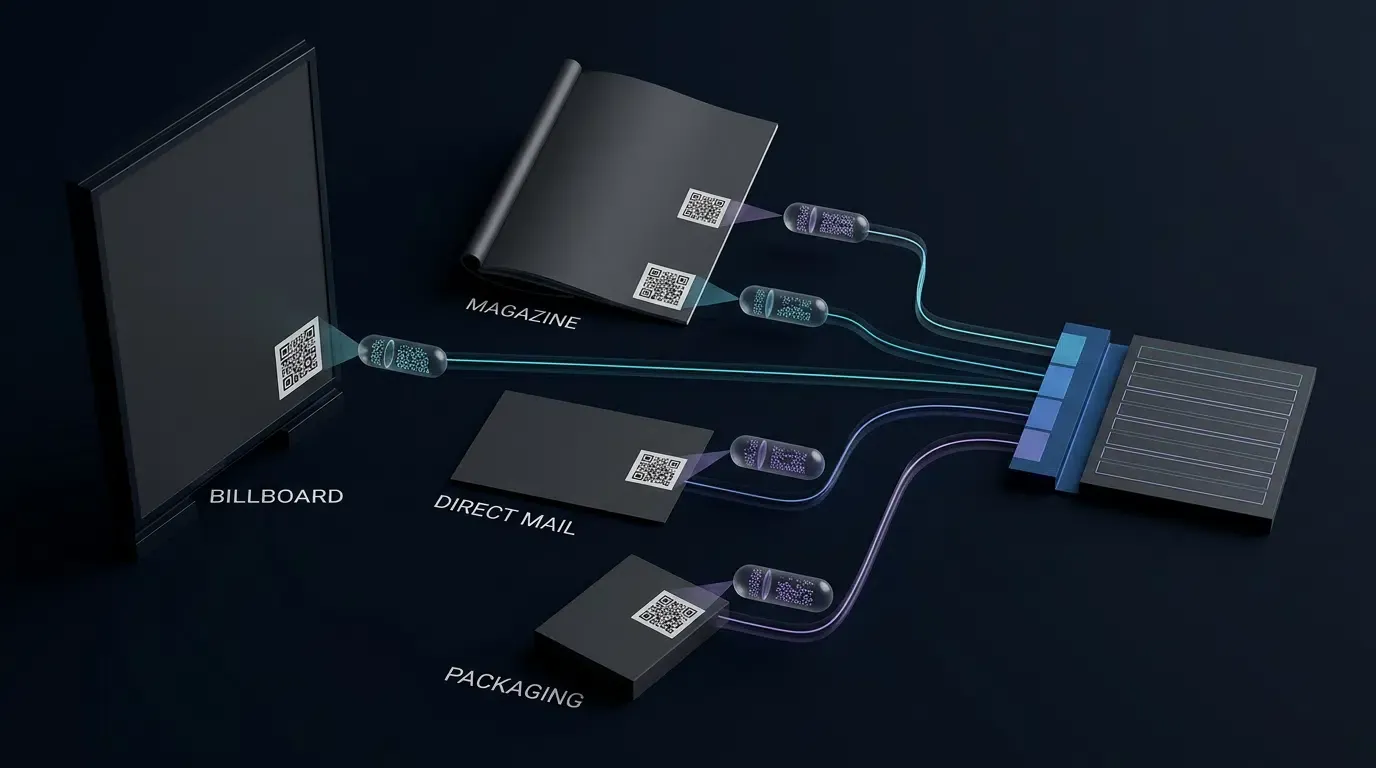
In a separate mobile acquisition lifecycle, physical retail merchants often attempt to bridge in-person shoppers into native mobile applications. For instance, after completing an in-store transaction, a merchant might present a promotional QR code, digital membership pass, or loyalty reward on a receipt, secondary screen, or physical counter. If this touchpoint directs the customer to a native mobile application that is not yet installed on their smartphone, an installation boundary emerges.
+-------------------------------------------------------------------------+
|             SEPARATE DOWNSTREAM MOBILE ACQUISITION JOURNEY              |
+-------------------------------------------------------------------------+
|                                                                         |
|  [ Physical Retail Touchpoint: Secondary Promotional QR ]               |
|         |                                                               |
|         |-- (Customer Scans Link Using Mobile Phone)                    |
|         v                                                               |
|  [ Mobile Handset Operating System: Intent Resolution ]                 |
|         |                                                               |
|         +---------------------------------------+                       |
|         |                                       |                       |
|         v                                       v                       |
|  [ Destination App Installed ]       [ Destination App Absent ]         |
|         |                                       |                       |
|         v                                       v                       |
|  [ OS Verified App Link ]            [ Route to Store / Web Fallback ]  |
|         |                                       |                       |
|         v                                       v                       |
|  [ Direct Native App Routing ]       [ Install Flow Does Not Natively   |
|                                        Carry Arbitrary Web Context      |
|                                        Into First Launch ]              |
|                                                 |                       |
|                                                 v                       |
|                                      [ Deferred Deep Linking Engine ]   |
|                                                 |                       |
|                                                 v                       |
|                                      [ Context Restored on First Boot ] |
|                                                                         |
+-------------------------------------------------------------------------+
When the destination application is already installed on the customer’s smartphone, verified routing mechanisms like Android App Links or Apple Universal Links allow the mobile operating system to intercept verified HTTPS URLs directly. This launches the application into the appropriate loyalty view without intermediary browser redirects.
However, when the target application is absent, the user routes to an application marketplace or web download page. Standard app-store installation flows do not natively pass arbitrary web query parameters into the newly installed application’s first launch.
Engineering teams evaluate several routing architectures when managing these downstream mobile onboarding paths:
| Routing Architecture | Installed App Handling | Uninstalled App Handling | Install-Boundary Parameter Preservation | Engineering Ownership Model |
|---|---|---|---|---|
| Custom URI Schemes | Intercepted via local intent filters in native code | Unhandled schemes trigger platform navigation errors | None; query parameters are lost across application store installs | Application-owned (Requires ongoing manual maintenance) |
| Verified Application Links | Resolved natively by OS to target application Activity | Graceful fallback to verified HTTPS domain landing page | None natively; standard app-store installation flows do not natively pass arbitrary web query parameters into the newly installed app’s first launch | Domain + Application-owned (Requires domain verification files) |
| Deferred Deep Linking Architecture | Delegates to App Links or native schemes when installed | Routes through a store/download flow after eligible pre-install context has been captured | Restores eligible pre-install parameters on first launch | SDK-assisted (Managed attribution client and server framework) |
In real-world mobile acquisition funnels, development teams frequently utilize specialized deferred routing platforms such as Branch, AppsFlyer, Adjust, or Opoinstall. A platform like Opoinstall maps pre-install click metadata—such as offline store identifiers, promotional codes, or referral tags—and pairs it with first-launch client signals using server-assisted matching alongside optional clipboard assistance, where applicable and subject to platform policy. According to official documentation on the Opoinstall homepage, this deferred pass-through mechanism can restore parameters on first launch in up to 98% of eligible instances, providing an automated alternative to manual promo code entry.
By separating the bounded execution of wearable transactions from the broader parameter preservation needed across mobile acquisition funnels, engineering teams can maintain clear architectural boundaries between payment hardware and long-term customer engagement systems.
Frequently Asked Questions (FAQ)
Can smart glasses process WeChat Pay transactions without a connected smartphone?
Why does the WeChat Pay smart glasses SDK restrict scanning to merchant payment codes?
How do mobile applications preserve campaign context when users scan offline QR codes?
Practical Implications and Future Outlook
The launch of WeChat Pay across Rokid smart glasses demonstrates the viability of near-eye optical sensors as payment input surfaces. By transforming a brief line-of-sight glance and temple touch into a verified point-of-sale transaction, platform operators have proven that daily checkout routines can operate beyond handheld touchscreens.
For mobile developers and platform architects, this release highlights the necessity of designing bounded, decoupled software systems. As smart glasses, ambient interfaces, and connected peripherals expand, services must adapt to interactions where conventional smartphone browser or touch interfaces may not be available. Building on verified application links, modular companion-app protocols, and resilient parameter restoration architectures ensures that engineering organizations can support emerging wearable devices while maintaining dependable mobile user journeys.
References
-
Tencent. (2026). WeChat Pay Smart Glasses SDK Release Overview. WeChat Pay Open Platform. https://pay.weixin.qq.com/index.php/public/cms/glasses_sdk
-
IT Home. (2026). WeChat Pay Smart Glasses SDK Officially Launched with Rokid Support. https://www.ithome.com/0/999/581.htm
-
ITBear. (2026). Hands-on Testing with Rokid AI Glasses and WeChat Pay Integration. http://m.itbear.com.cn/html/2026-09/1548419.html
-
Rokid. (2026). YodaOS Operating System Specifications and Developer Architecture. Rokid Open Platform. https://open.rokid.com/
-
Android Open Source Project. (2026). Handling Android App Links. Android Developers. https://developer.android.com/training/app-links
-
Apple Developer. (2026). Supporting Universal Links in Your App. Apple Documentation. https://developer.apple.com/documentation/xcode/supporting-universal-links-in-your-app
-
Opoinstall. (2026). Deferred Deep Linking and Parameterized App Installation Overview. https://www.opoinstall.com/
Share this article