On August 13, 2026, DeepSeek introduced the DeepSeek Harness developer preview under the MIT license, releasing an open-source agent harness built around a plugin-based architecture. Powered by the Cordis meta-framework, the project treats runtime capabilities as plugins that can be extended and configured independently. DeepSeek Harness addresses a practical engineering challenge: the model is only one component of an autonomous system. Tools, permissions, sessions, and execution policies must also be able to evolve independently.
What Is DeepSeek Harness?
DeepSeek Harness is an extensible infrastructure layer designed to sit between a language model and its host operating environment. Rather than functioning as a standalone, monolithic application, the harness provides a modular execution runtime that manages tool calling, process sandboxing, and session state.
Core Capabilities
In the developer preview, the framework enables engineering teams to coordinate several core tasks:
-
Workspace File Access: Read, create, and modify project files within designated repository boundaries.
-
Shell & Command Execution: Execute terminal commands and manage background processes under configurable permission policies.
-
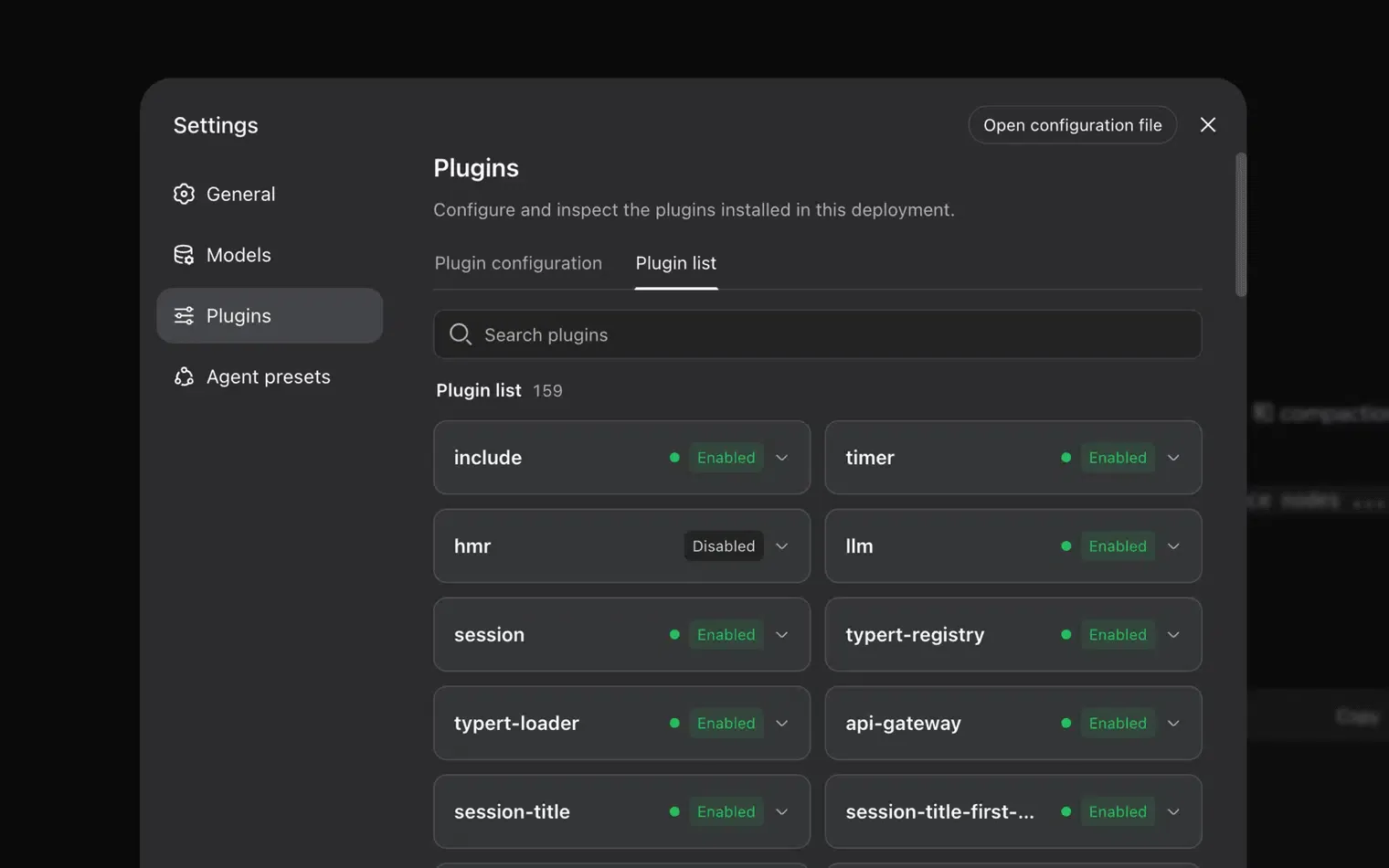
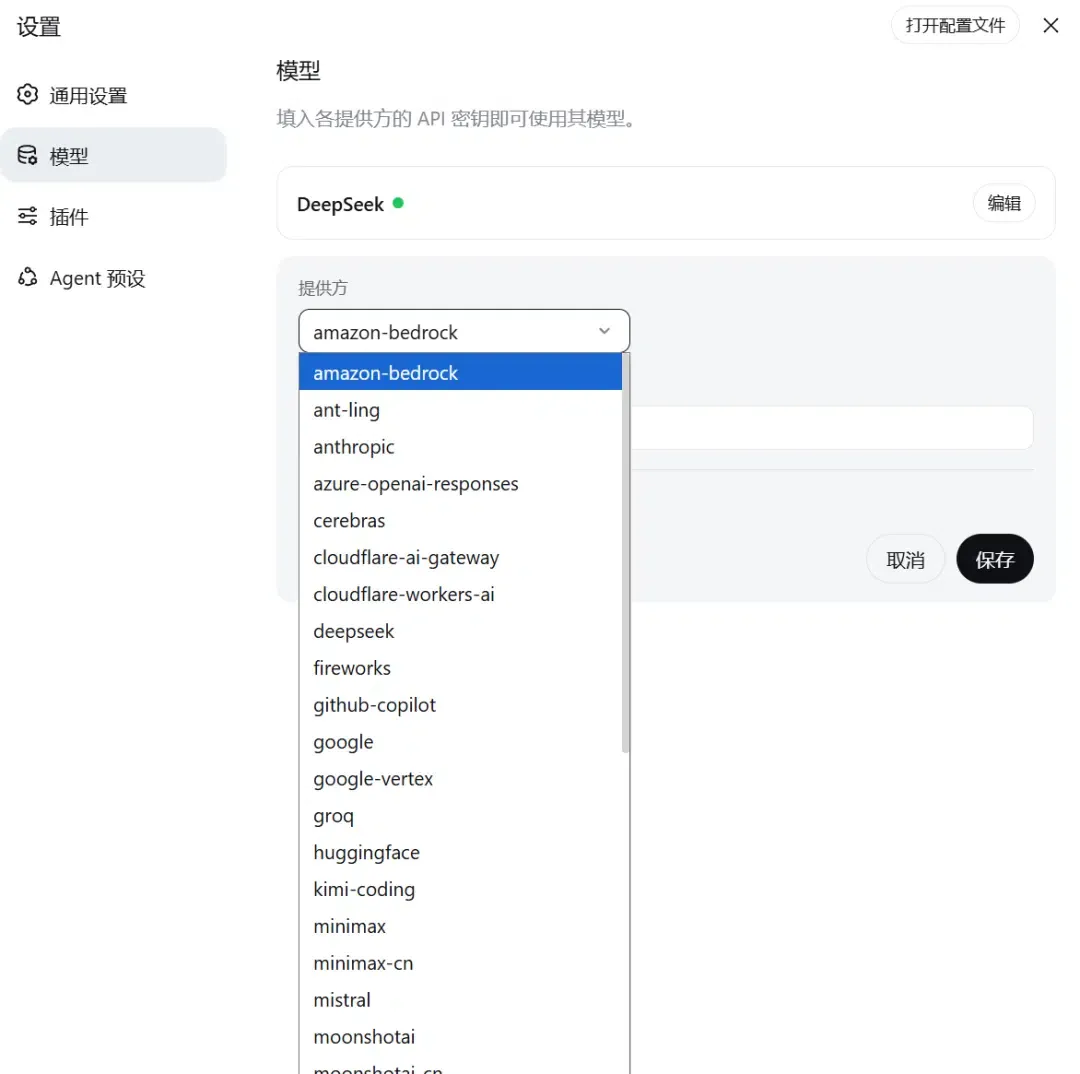
Model Provider Configuration: Connect to DeepSeek models or configure custom OpenAI-compatible API endpoints through settings.
-
Task Delegation & Subagents: Spawn isolated subagents with specialized toolsets to run parallel investigations or divide complex workflows.
-
Session Trajectory Reconstruction: Record runtime events in an append-only event stream for debugging, auditing, and session inspection.
-
Modular Plugin Extension: Register new tools, custom event listeners, and user interfaces without modifying the core harness runtime.
Why DeepSeek Harness Uses a Plugin-Based Architecture
At a Glance
-
DeepSeek introduced the DeepSeek Harness developer preview under the MIT license on August 13, 2026, alongside the broader rollout of the DeepSeek V4 Pro model.
-
The repository uses a plugin-based architecture in which agent capabilities are implemented as separate components rather than a monolithic execution loop.
-
The framework uses the Cordis kernel to manage plugin lifecycles, allowing developers to configure models and extend runtime capabilities through plugins.
The development of autonomous software agents has exposed fundamental limitations in monolithic framework design. Early agent implementations often coupled model querying, tool execution, and session management into rigid, hardcoded loops. While sufficient for basic prompt-and-response interactions, these designs struggle when applied to complex engineering tasks that require deep filesystem access, terminal orchestration, and granular permission boundaries.
When an autonomous system operates across local codebases, it requires an infrastructure layer capable of managing state transitions, logging execution trajectories, and enforcing security
restrictions. The DeepSeek Harness developer preview addresses this challenge by establishing an extensible harness layer between the underlying model and the target host environment. In the current preview, developers can run coding sessions, read and edit workspace files, execute commands, configure model providers, delegate tasks, and extend the runtime through plugins.
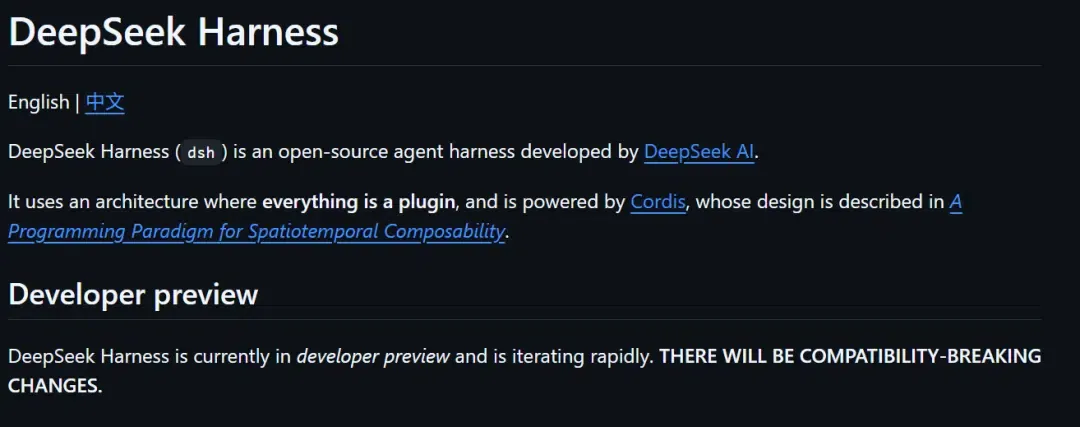
DeepSeek Harness puts the plugin boundary between the model and the runtime. By decoupling the model from its execution runtime, developers can update tool definitions, configure different model providers, and modify runtime policies with less coupling to the core agent logic. Through Cordis-based configuration and plugin composition, the framework can be assembled into diverse form factors, ranging from terminal-based coding utilities to headless automation services.
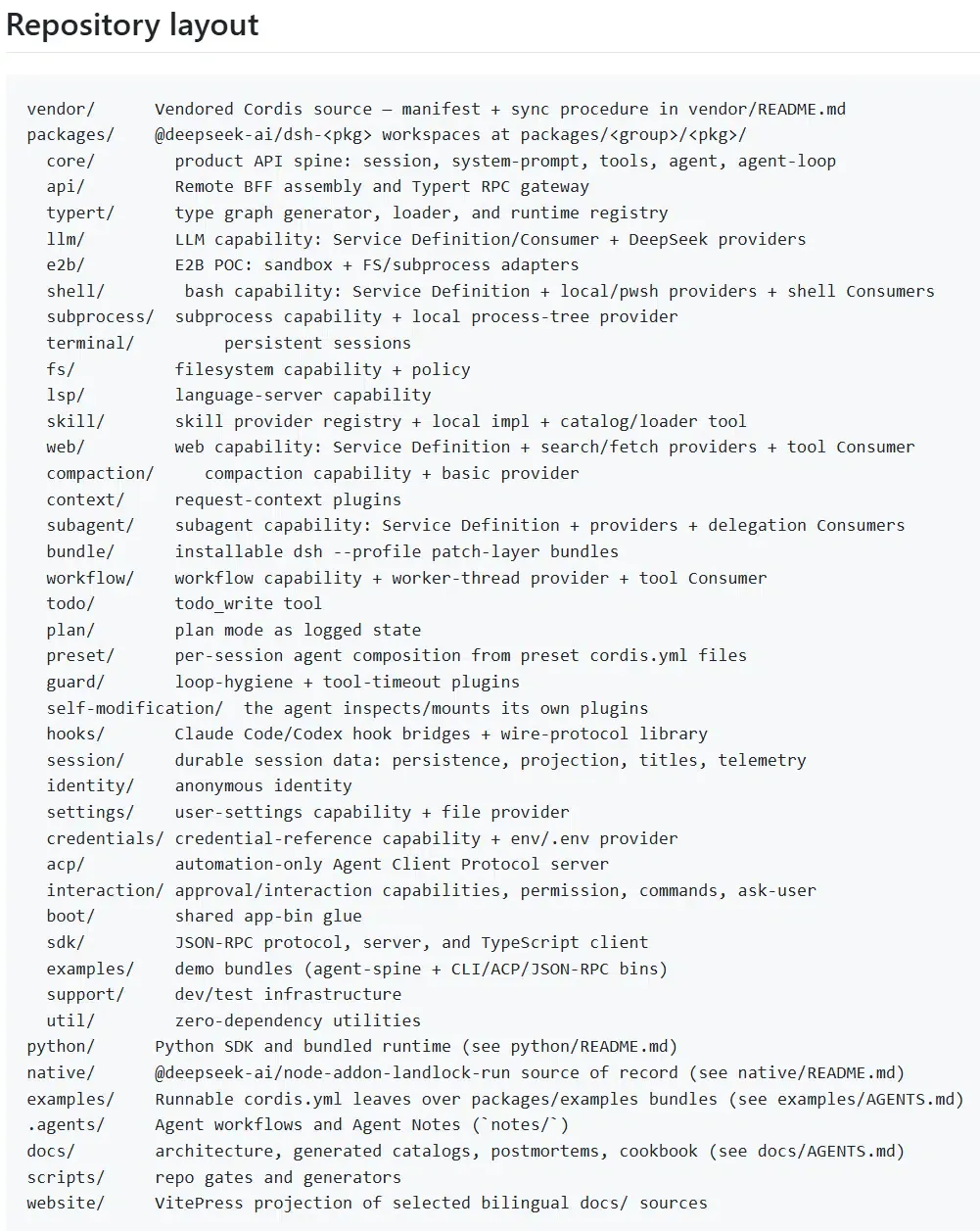
Under-the-Hood Mechanics: How DeepSeek Harness Uses Cordis
At the technical foundation, DeepSeek Harness is built on top of the Cordis meta-framework, as outlined in the research publication A Programming Paradigm for Spatiotemporal Composability. Cordis provides an event-driven context where capabilities register as plugins. Under this architecture, the agent loop is implemented through the same plugin-oriented runtime rather than being exposed as a single monolithic component, coordinating discrete hooks, services, and execution listeners.
Tool execution is mediated by the harness runtime, while session history, permissions, and execution capabilities are exposed through separate runtime components and plugins. When an agent initiates an action, the operation is governed by specific security policies to manage filesystem modifications and shell execution safety.
The Lifecycle of an Agent Step
To structure automated execution, the runtime organizes interactions into discrete operational boundaries:
-
Turn and Step Allocation: The runtime organizes agent interactions into Turns and Steps, with model requests and tool executions handled within the execution lifecycle.
-
Pre-Execution Guardrails: Before invoking a tool, the operation is evaluated against active sandbox policies that can restrict file writes and shell commands to authorized workspace directories.
-
State Isolation: The runtime coordinates tool execution and manages state-changing operations according to its execution and permission policies.The diagram below illustrates how the execution loop processes context and state:
[User Input / Turn Start] ──> [Assemble Context] ──> [Model Request (Step)]
                                                              │
                                                              ▼
[Complete Turn] <── [Verify State] <── [Execute Tool] <── [Apply Guardrails]
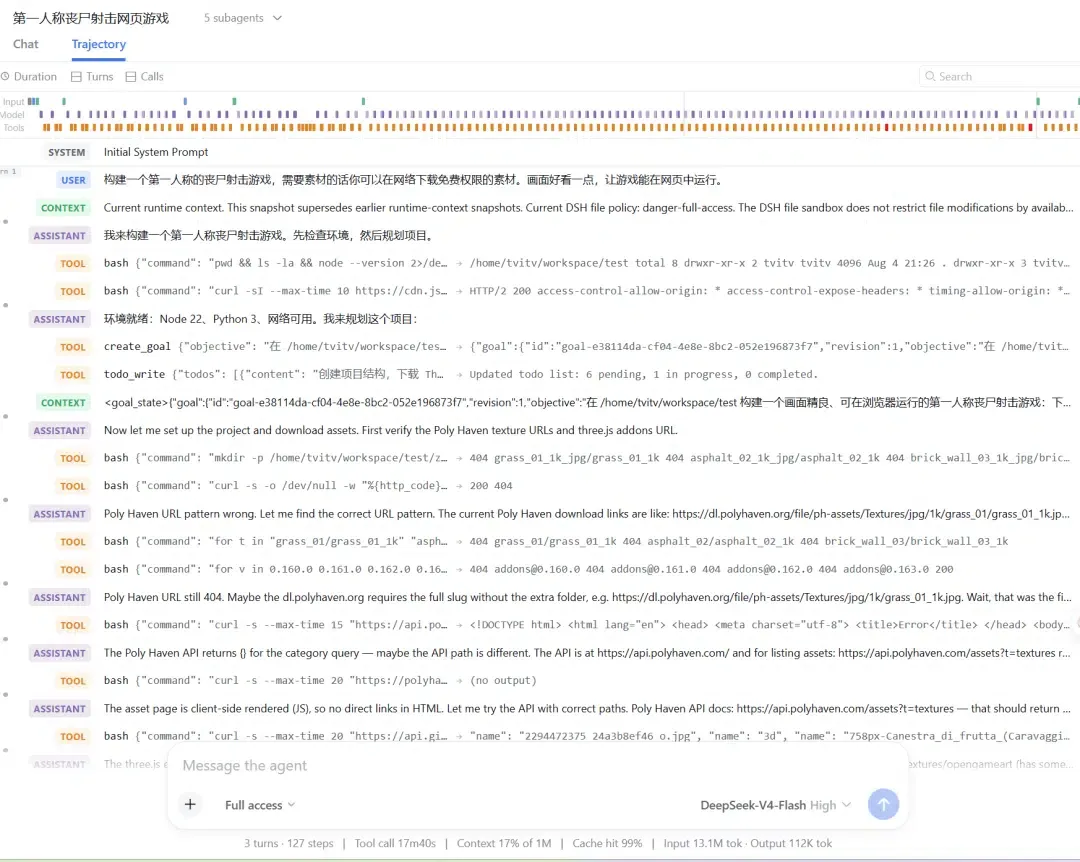
The harness records agent interactions and execution events in an append-only event stream. This event stream gives engineering teams a durable execution record for inspecting, debugging, and reconstructing agent sessions.
Build vs. Buy: DeepSeek Harness vs. Custom Agent Runtimes
When adopting agentic workflows, engineering teams face a fundamental architectural choice: build a custom agent runtime from scratch or adopt a modular framework like DeepSeek Harness. Constructing a proprietary in-house runtime provides complete design freedom but requires significant development effort to build sandboxing, process supervision, session logging, and tool scheduling.
DeepSeek Harness provides a prebuilt plugin runtime, while an in-house harness gives teams full control over execution and lifecycle design. Because DeepSeek Harness is currently in developer preview, teams adopting it must account for upcoming API changes while benefiting from its modular architecture.
The table below compares key architectural trade-offs across deployment approaches:
| Dimension | DeepSeek Harness | Custom In-House Runtime | Tightly Coupled Frameworks |
|---|---|---|---|
| Plugin Architecture | Native Cordis plugin model | Requires custom modular design | Tightly coupled execution loops |
| Sandbox Control | Built-in workspace permission policies | Must be built and audited manually | Limited or framework-dependent |
| Session Telemetry | Append-only event streams | Requires custom logging pipeline | Standard text-based logs |
| API Stability | Developer preview (subject to changes) | Fully controlled internally | Stable but rigid |
| Model Flexibility | Configuration-based provider adapters | Full custom control | Often tied to specific SDKs |
| Maintenance Overhead | Requires ongoing integration maintenance | Full internal maintenance burden | Framework-dependent |
A similar separation-of-concerns pattern appears in mobile distribution and attribution, where acquisition context must survive the boundary between the web, app store, and installed application. OpoInstall addresses this problem through deferred deep linking and server-side parameter restoration, allowing campaign and referral context to be matched after installation without relying on persistent client-side cookies. By moving state resolution to an authoritative server-side layer, developers ensure that operational context survives complex redirects and app store transitions seamlessly.
Integration Checklist: Building With DeepSeek Harness
To structure the development and deployment of plugins within the DeepSeek Harness ecosystem, engineering teams should follow a standardized implementation checklist.
Engineering Checklist
-
Define Plugin Boundaries: Separate model adapters, tools, session state, execution policies, and interfaces into independently replaceable components.
-
Review Sandbox Policies: Verify which filesystem and shell operations are allowed before deploying agent workflows with workspace write permissions.
-
Validate Workspace Permissions: Test read, write, shell, and approval behavior in a controlled workspace before allowing the agent to operate on production repositories.
-
Inspect Session Logs: Use trajectory records to debug failed tool calls, permission changes, and multi-step execution paths.
-
Test Plugin Compatibility: Validate custom plugins against the current developer-preview API, accounting for potential compatibility-breaking updates as the project evolves.
Frequently Asked Questions (FAQ)
What is the difference between an agent harness and a basic API client?
How does the Cordis kernel coordinate plugins within DeepSeek Harness?
What runtime modes are available in the DeepSeek Harness preview?
Key Takeaways for Engineering Teams
The release of DeepSeek Harness reinforces the importance of modularity in modern AI software engineering. Monolithic agent architectures are increasingly giving way to composable frameworks where runtime environments, tool definitions, and session persistence are decoupled from the core model.
By building on top of the Cordis meta-framework, DeepSeek Harness establishes a clear separation of concerns across agent lifecycles. For engineering teams evaluating agent runtimes, plugin-based architecture, sandbox policies, and structured event logging provide a clearer foundation for testing extensible workflows before production deployment.
References
Share this article