Has xAI released Grok 4.6, and what enables its long-running agents to manage state? The August 12, 2026 release introduces an updated flagship model aimed at long-running agent tasks, software engineering, and multi-step knowledge work. For developers, the more consequential question is how execution state survives across cloud environments, browser sessions, and, eventually, mobile app installation boundaries. As generative models transition from single-turn chat completion to sustained, multi-turn task execution, developers require systems that maintain context across extended execution paths. Historically, long-running agent workflows could suffer from context degradation or stalled execution, often requiring additional orchestration or human intervention. Today, because Grok 4.6 incorporates curated reasoning trajectories, refined reinforcement learning, and automated self-verification, autonomous software execution is becoming more reliable across complex enterprise environments.
Why xAI’s Grok 4.6 Signals a Shift in Long-Running Agents
At a Glance
-
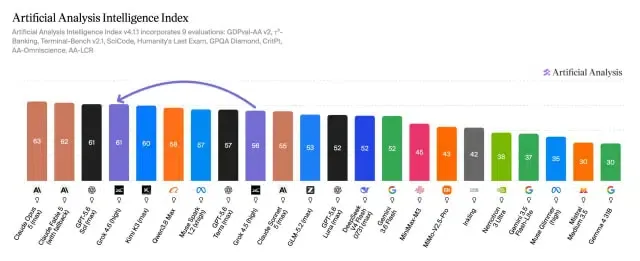
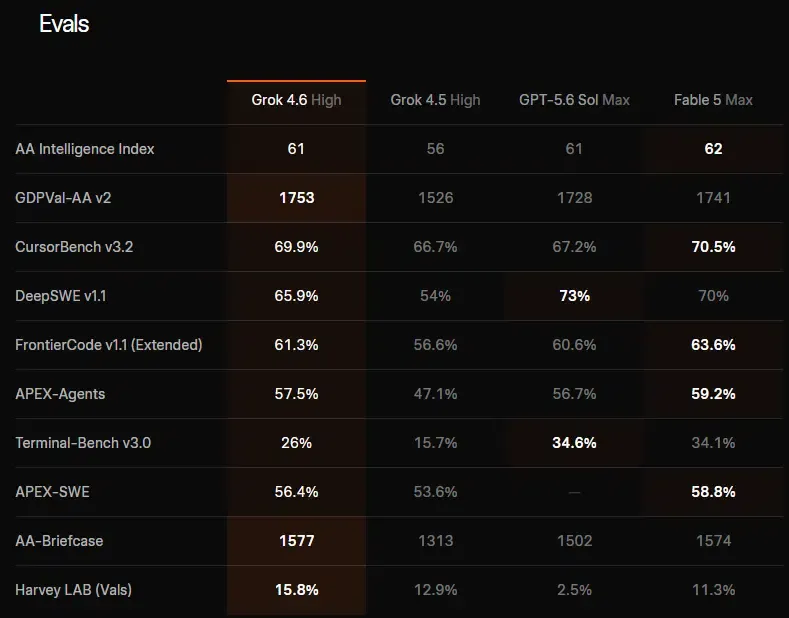
Grok 4.6 achieves a composite score of 61 on the Artificial Analysis Intelligence Index, matching OpenAI’s GPT-5.6 Sol Max.
-
Base API pricing is set at $2 per million input tokens and $6 per million output tokens, delivering frontier capabilities at competitive rates.
-
Grok 4.6 is available in Cursor and Grok Build, with API availability extending to partners including OpenRouter, Vercel, and Cloudflare.
The transition from short-horizon prompt responses to long-horizon agent execution represents a fundamental evolution in software engineering. For several years, developers utilized artificial intelligence assistants primarily for inline code completion, basic script generation, and quick documentation lookups. While these tools improved individual developer speed, they lacked the architectural capacity to navigate unfamiliar codebases, manage multi-file refactoring, or verify their own intermediate outputs over hours of execution.
The launch of Grok 4.6 addresses these long-horizon bottlenecks. Building on the foundation of Grok 4.5 and leveraging the integration of the Cursor development environment, Grok 4.6 focuses on sustained execution reliability across its 500,000-token context window. Rather than failing when encountering complex logic errors, the model is trained to evaluate and refine intermediate outputs during extended task execution, checking its work before advancing to subsequent development steps, as detailed in the official Grok 4.6 announcement.
To achieve these capability gains, xAI executed an extended supplemental training run. The training pipeline incorporated curated model-generated reasoning data, high-quality engineering datasets, and improved optimization recipes. Furthermore, supervised fine-tuning (SFT) trajectories were regenerated across STEM, software engineering, and general knowledge domains, with problematic traces filtered out using automated model-based checks.
Under-the-Hood Mechanics: Agentic Execution and State Management
At the architectural level, long-running agents require continuous state management and specialized reinforcement learning. Standard language models evaluate inputs in an isolated, stateless manner, where each request is processed independently. In contrast, an agentic model trained for long trajectories must maintain a coherent mental model of the software project across hundreds of sequential tool calls.
At the model-infrastructure layer, long-running workloads may rely on context-management and prompt-caching mechanisms, while application-level state persistence remains a separate concern. At the application layer, a separate state-recovery problem can emerge when execution crosses a browser-to-app installation boundary. xAI subjected Grok 4.6 to domain-specific reinforcement learning across diverse environments, including kernel optimization, web application development, and computer-aided design (CAD). This training is intended to improve the model’s ability to break down broad product ideas into structured, executable steps across interactive computing environments.
[High-Level Goal / Task Input]
            │
            ▼
[Grok 4.6 Long-Horizon Agent Loop]
  ├── Task Decomposition & Reasoning
  ├── Tool Calling & Application Interaction
  └── Automated Self-Verification ──(Pass)──> [Completed Deliverable]
            │ (Fail)
            └────────► [Iterative Self-Correction]
This iterative loop depends heavily on reliable state preservation. When autonomous agents operate in managed virtual computing environments over extended periods, browser sessions, temporary credentials, or other client-side state can expire or become unavailable. Maintaining execution continuity requires structured state preservation. When the workflow later crosses a web-to-app installation boundary, deferred parameter recovery can provide an additional mechanism for restoring context that would otherwise be lost.
Why Long-Horizon Agents Could Create a New Deep-Linking Challenge
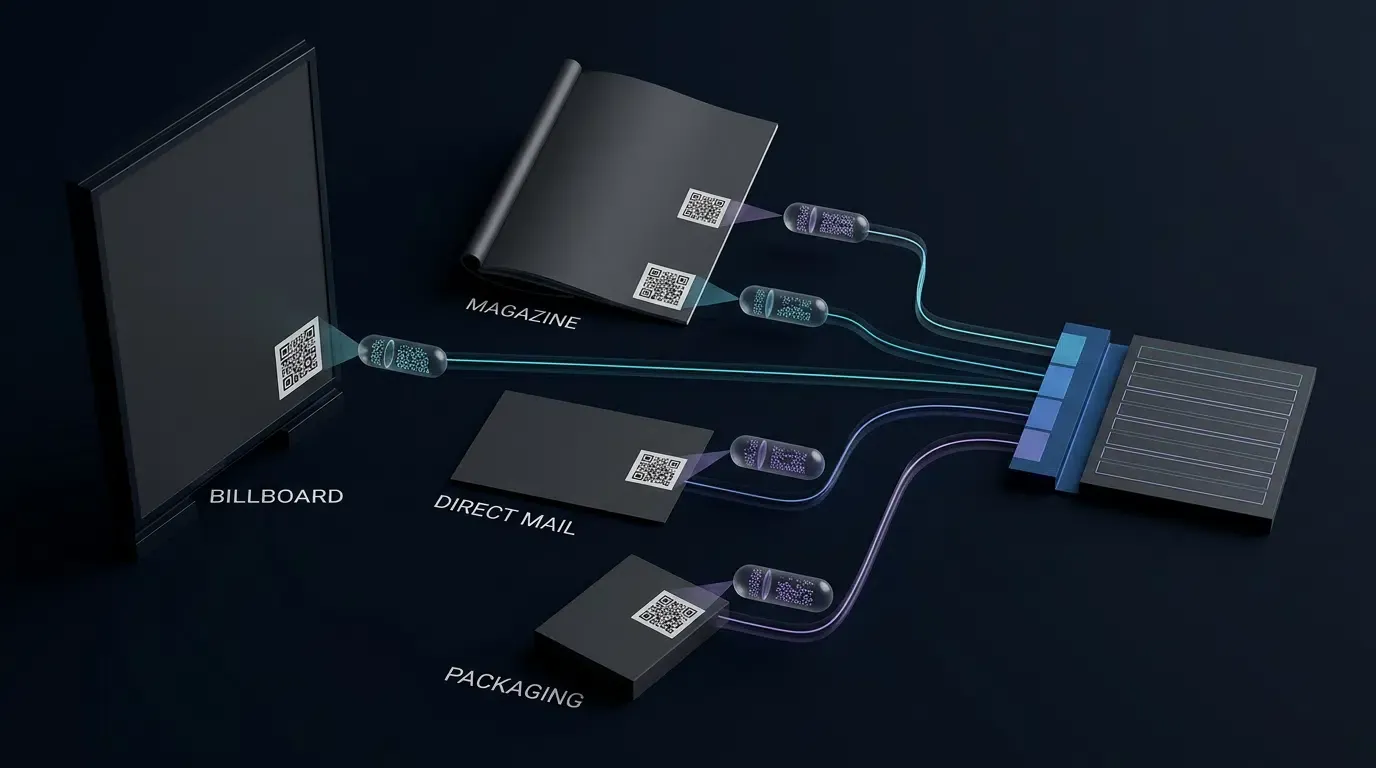
A separate state-management challenge can arise when an agent-driven workflow eventually crosses from a web environment into a mobile application. An agent may begin with a campaign ID, referral parameter, or task-specific context inside a managed computing environment, but that state does not automatically survive a browser-to-app transition. Cookies can expire, browser sessions can terminate, and the user may install the application through an app store before the first launch. Deferred deep linking addresses this gap by preserving the relevant parameters server-side and restoring them when the application is opened for the first time.
In distributed software architectures, engineering teams must distinguish between three distinct state layers: Agent Execution State (governing model reasoning and tool-calling loops), Web Session State (governing browser cookies and temporary headers), and Mobile Attribution State (governing installation context recovery across store boundaries). These layers are related but not interchangeable: agent state governs task execution, web session state governs browser continuity, while mobile attribution state reconstructs selected installation context after the app-store boundary. Deferred deep linking does not restore the agent’s internal reasoning state; instead, it can restore selected application or attribution parameters after the web-to-app installation boundary.
Implementation Example: Deferred Deep Linking for Mobile Distribution
In a typical deferred deep-linking architecture, server-side session mapping can help preserve conversion context and restore selected application parameters after installation. A platform such as OpoInstall could serve as one implementation option, subject to its SDK capabilities and the application’s server-side integration design.
| State-Recovery Approach | State Boundary | Persistence Model | Suitable Use Case |
|---|---|---|---|
| Browser Cookie Redirection | Web session | Local / Transient | Web-only flows with no app store installation boundary |
| Custom Database Lookup | Application-defined | Server-side | Custom enterprise workflows requiring manual DB mapping |
| Deferred Deep Linking | Web → App install boundary | Server-side recovery | Cross-platform installation flows and first-open scene restoration |
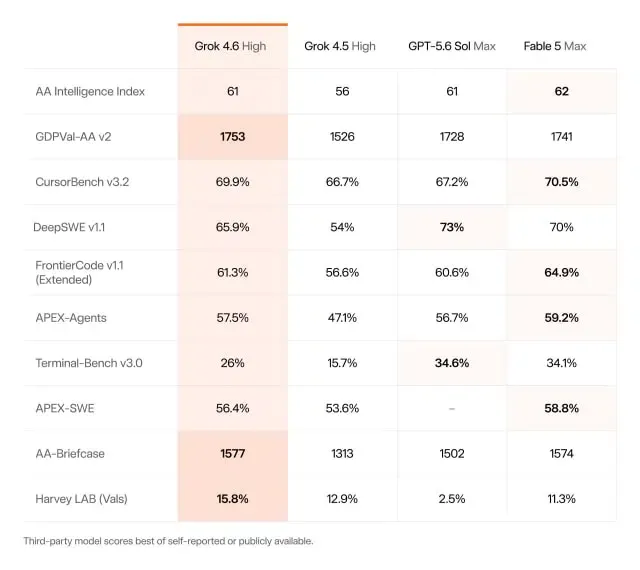
Managing long-horizon agent execution also requires monitoring token efficiency. On the GDPVal-AA v2 knowledge-work evaluation, Grok 4.6 scored 1753, the highest score among the models listed in xAI’s comparison table. On CursorBench v3.2, it reached 69.9%, up from 66.7% in Grok 4.5. On DeepSWE v1.1, the model achieved 65.9%, demonstrating strong software engineering performance while maintaining competitive token pricing.
Integration Checklists: Operational Considerations for Mobile SDKs
To safely integrate long-running agents into software pipelines and mobile distribution infrastructure, engineering and security teams can consider the following recommended operational controls.
Developer Implementation Checklist
-
Configure Deferred Deep Link Recovery: Implement server-side parameter recovery in your mobile SDK to restore campaign parameters, Session ID, and task context during the app’s first open.
-
Use Signed Attribution Payloads Where Appropriate: Map agent-generated task IDs to install callbacks using cryptographically signed payloads.
-
Validate Universal Links & App Links: Set up native OS domain associations to ensure seamless browser-to-app redirections across iOS and Android.
Product & Growth Strategy Checklist
-
Monitor First-Open Scene Restoration: Audit user onboarding funnels to ensure parameter pass-through successfully restores the target content.
-
Track Agent-Driven Conversion Pipelines: Measure installation conversion rates originating from agentic recommendations versus standard ad clicks.
-
Audit SDK Binary Integrity: Verify anti-tampering signatures on mobile SDKs to prevent click injection, install-to-open parameter manipulation, and fake install fraud.
Frequently Asked Questions (FAQ)
What benchmark score did Grok 4.6 achieve on the Artificial Analysis Index?
How much does the Grok 4.6 API cost?
How does deferred deep linking preserve context when an AI agent recommends a mobile app?
Key Takeaways for Engineering Teams
The release of Grok 4.6 illustrates how frontier AI development is increasingly emphasizing sustained execution reliability and long-horizon autonomy alongside raw model capability. As models become capable of maintaining context across complex software engineering tasks, development workflows will increasingly rely on asynchronous, self-verifying agent teams.
For mobile distribution workflows that cross web, app-store, and first-open boundaries, persistent server-side state management, appropriate API verification, and deferred deep linking can become increasingly important as autonomous agents become more common software users.
Share this article