Disney Offers Character.AI Staff Jobs? Court filings submitted in mid-October 2026 disclose that The Walt Disney Company has structured an arrangement to make employment offers to 66 technical personnel from chatbot startup Character.AI, which recently sought Chapter 11 bankruptcy protection. In addition to a proposed $20 million stalking-horse bid for non-exclusive licenses to the startup’s underlying code and intellectual property, court documents cited by media outlets estimate three-year personnel expenditures of approximately $180 million, including an initial retention pool. This proposed transaction highlights the shifting operational priorities across consumer artificial intelligence, as high inference costs, regulatory considerations, and complex capital requirements prompt specialized talent and licensing partnerships rather than conventional corporate acquisitions.
The Operational Problem & Financial Pressures: Character.AI’s Chapter 11 Restructuring
At a Glance
- Bankruptcy filings disclose that Disney made employment offers to 66 Character.AI employees, with court papers outlining an estimated $180 million in three-year compensation and retention funding.
- Disney submitted a $20 million stalking-horse bid for non-exclusive technology and code licenses, while the consumer application, branding, and user conversational histories remain within the bankruptcy estate.
- Disclosures indicate Character.AI incurred approximately $56.1 million in compute infrastructure costs during the first eight months of 2026, while monthly revenue never exceeded $5.3 million.
The consumer artificial intelligence sector is undergoing a pragmatic reassessment of growth and monetization. Founded in 2021 by former Google researchers Noam Shazeer and Daniel De Freitas, Character.AI achieved rapid consumer adoption by enabling users to configure and converse with customized virtual personas. Industry analytics noted strong user engagement, with participants logging substantial conversational time across creative, educational, and role-playing interactions.
However, high conversational volume created significant operational demands. In generative conversational architectures, user interactions require real-time neural network inference, where marginal compute costs scale with token generation and context length. As outlined in TechCrunch reporting on Character.AI’s Chapter 11 filing, the platform entered voluntary bankruptcy proceedings on October 12, 2026, citing significant operational, legal, and regulatory headwinds alongside mounting operational deficits, while confirming on the Character.AI official announcement page that the platform remains operational during the court-supervised sale.
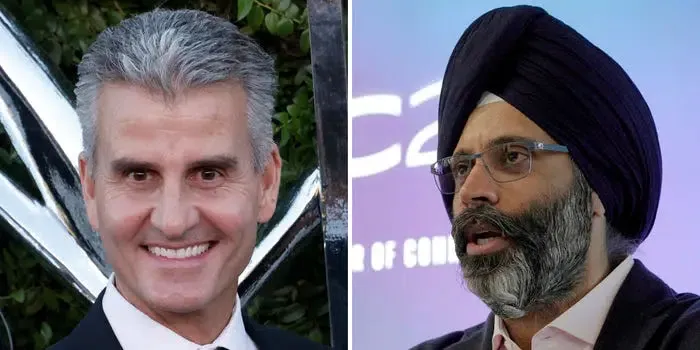
According to Reuters’ analysis of Character.AI’s financial difficulties, the company spent approximately $56.1 million on compute during the first eight months of 2026. Its reported monthly revenue from subscriptions and advertising never exceeded approximately $5.3 million, underscoring the gap between infrastructure spending and monetization. Legal expenses and regulatory challenges placed additional pressure on the business, as detailed in ongoing coverage from Business Insider’s reporting on court documents.
Technical and Economic Headwinds: Compute Allocation vs. Revenue Realization
Character.AI’s financial difficulties illustrate the challenge of converting intensive conversational engagement into sustainable revenue when inference infrastructure, staffing, legal expenses, and compliance costs remain high. These pressures are particularly relevant to companion-style applications, but they do not establish that all consumer AI chatbot models are economically unsustainable.
When consumer platforms offer flat-rate monthly subscriptions alongside open-ended conversational access, prolonged interaction sessions can increase compute demands faster than subscriber growth. Unlike task-specific productivity tools where queries are typically bounded, open-ended conversational agents encourage deep multi-turn sessions that require managing expanded context windows and memory caching.
Structural Comparison: Content Delivery vs. Generative Inference Costs
Traditional digital platforms historically scaled by distributing static media assets where marginal delivery costs decreased as audiences expanded. In contrast, generative conversational interfaces require dedicated processor cycles for each token generated, creating distinct infrastructure cost dynamics.
The diagram below presents a simplified conceptual comparison of these operational cost models:
[ Traditional Content Distribution Model (Simplified) ]
  Audience Growth ──> Content Delivery Networks (Low Marginal Bandwidth Costs) ──> Ad Scalability

[ Continuous Generative Dialogue Model (Simplified) ]
  Extended Dialogue Sessions ──> Real-Time Model Inference (Directly Dependent on Token Volume) ──> Pricing & Usage Caps
In addition to computational considerations, consumer platforms that support open-ended persona generation have encountered intensified scrutiny from regulatory and legal authorities. Character.AI faced investigations by state attorneys general, inquiries from consumer protection agencies, and civil lawsuits regarding user safety and data practices. Navigating regulatory oversight, implementing age-assurance measures, and maintaining safety review teams introduced substantial operational obligations that affected the startup’s independent capital runway.
Strategic Deal Architecture: Talent Retention and Asset Licensing Under Chapter 11
To recruit specialized generative engineering talent while managing exposure to legacy operational liabilities, enterprise acquirers have increasingly turned to structured licensing and employment arrangements. Disney’s proposed transaction reflects this evolving approach.
Under the framework detailed in court filings, Disney has offered positions to 66 Character.AI employees, with reported annual compensation of approximately $60 million. Court filings cited by Business Insider estimate total compensation and retention spending of about $180 million over three years and separately describe a $30 million retention pool. The exact allocation and payment schedule should be interpreted according to the underlying agreement rather than treated as additive headline figures. Furthermore, of the 66 staff members extended offers, reporting indicates 56 have resigned from the startup, while 10 remain pending visa adjustments.
Simultaneously, Disney agreed to a $20 million stalking-horse bid for a non-exclusive, perpetual license to Character.AI’s underlying code and intellectual property. Disney’s proposed arrangement separates employee recruitment and technology licensing from the acquisition of Character.AI’s consumer platform. This structure may limit certain direct operational liabilities compared with acquiring the entire corporate entity, but any legal protections depend on the final agreements, applicable law, and bankruptcy court orders. It does not automatically eliminate regulatory or litigation exposure.
The table below outlines common corporate acquisition models alongside the distressed asset carve-out approach:
| Transaction Structure | Core Target Acquired | Platform Liabilities Scope | Regulatory Review Framework | Primary Industry Precedent |
|---|---|---|---|---|
| Corporate Merger | Entire legal entity, consumer platform, and assets | Generally retains the target entity’s liabilities, subject to transaction structure and applicable law | HSR notification may apply when statutory thresholds are met and no exemption applies | Conventional public and private technology mergers |
| Licensing and Talent Onboarding | Non-exclusive code licenses and individual personnel | Does not automatically transfer all corporate liabilities; exposure depends on contractual terms and applicable law | May differ from a conventional merger, but remains subject to applicable competition and regulatory scrutiny | Microsoft & Inflection AI (March 2024) |
| Chapter 11 Stalking-Horse Carve-Out | Specified intellectual property licenses and workforce | Pre-petition claims governed by bankruptcy court orders and asset purchase terms | Supervised by bankruptcy court; open to competing bids and regulatory review | Disney & Character.AI (October 2026) |
Through this bankruptcy process, Disney aims to integrate specialized engineering talent under Chief Technology Officer Karandeep Anand to advance corporate technology and media initiatives under CEO Josh D’Amaro. Meanwhile, the consumer-facing application, domains, and conversational data remain with Character.AI, subject to the bankruptcy court’s formal auction schedule and stakeholder approvals.

Governance Checklists: Evaluating Consumer AI Sustainability and Data Governance
As enterprise organizations and technical founders assess generative conversational architectures, engineering and product teams should review their operational governance across two primary tracks:
Infrastructure Economics and Resource Allocation Checklist
- Monitor Compute Consumption per Interaction: Implement granular telemetry to evaluate inference compute costs relative to customer lifetime value across varied user cohorts.
- Adopt Context Window Controls: Deploy ephemeral context management and caching layers to prevent unbounded token usage during extended conversational sessions.
- Maintain Architectural Modularity: Maintain clear separation between model weights, serving infrastructure, and consumer interface tiers to preserve technical flexibility during potential corporate restructuring.
Compliance and Data Governance Checklist
- Evaluate Age-Assurance Safeguards: Deploy appropriate age verification and safety checkpoints for conversational features that may interact with minors.
- Establish Data Provenance Controls: Ensure that conversational records, personal identity data, and proprietary model fine-tuning assets are properly segregated and documented.
- Define Data Offboarding Procedures: Maintain automated capabilities that allow users to export or delete their interaction histories in compliance with privacy guidelines.
Frequently Asked Questions (FAQ)
Why did Disney structure this arrangement through employment offers and licensing rather than an outright acquisition?
What contributed to Character.AI filing for Chapter 11 bankruptcy?
What is the current operational status of the Character.AI consumer application?
Key Takeaways for Engineering Teams
The restructuring of Character.AI demonstrates that high user engagement in conversational AI does not automatically guarantee financial sustainability. In early market iterations, consumer platforms emphasized open-ended interaction, session length, and persona breadth. However, when infrastructure costs scale linearly with usage, managing unit economics and operational overhead becomes an essential architectural requirement.
For software engineering teams and technology leaders, developing generative applications requires careful balance between user experience, infrastructure costs, and regulatory compliance. Sustainable deployments depend on disciplined compute allocation, clear monetization pathways, and well-governed data practices. As enterprise media organizations absorb foundational conversational talent, the industry continues to evolve from standalone conversational experiments toward deeply integrated commercial and operational workflows.
References
- TechCrunch: Character.AI Files for Bankruptcy as Disney Agrees to Hire Workforce
- Business Insider: Disney Pays $60 Million Annually for Bankrupt Character.AI Staff
- Bloomberg: Power On — Disney Offers Soft Landing to Staff at Troubled Character.AI
- TechCrunch: The Bankruptcy of Interactive Chatbot Platform Character.AI
- Reuters: The Rise and Fall of an AI Chatbot Darling
- [Character.AI Official Blog: An Update on Character.ai](
Share this article