Why are dynamic QR codes better than static QR codes? Dynamic QR codes encode a short intermediary routing URL rather than a hardcoded final destination, allowing engineering teams to update target landing pages, rotate campaign parameters, and resolve redirect errors server-side without reprinting physical collateral.
A dynamic QR code is a two-dimensional barcode that encodes a short, intermediary routing URI rather than a hardcoded final destination URL. While the printed physical matrix remains static once produced, server-side indirection allows engineering teams to modify downstream redirect targets, manage HTTP cache policies, and update attribution parameters without reprinting physical collateral.
| Term | Definition | Related Entity | Search Intent Role |
|---|---|---|---|
| Dynamic QR Code | A 2D barcode encoding a short intermediary URI managed via server-side routing rules. | HTTP 302/307 Redirection | Informational / Commercial |
| custom qr code | A barcode asset configured with tailored routing rules or visual framing for campaigns. | URI Indirection | Commercial |
| qr code tracking | The server-side logging of routing requests and downstream conversion outcomes. | Channel Statistics & Tracking | Technical / Commercial |
| app qr code | A barcode engineered to route mobile scanners to app store listings or native deep links. | Universal Links / App Links | Technical |
Architectural Mechanics: How a Dynamic QR Code Differs from a Static Matrix
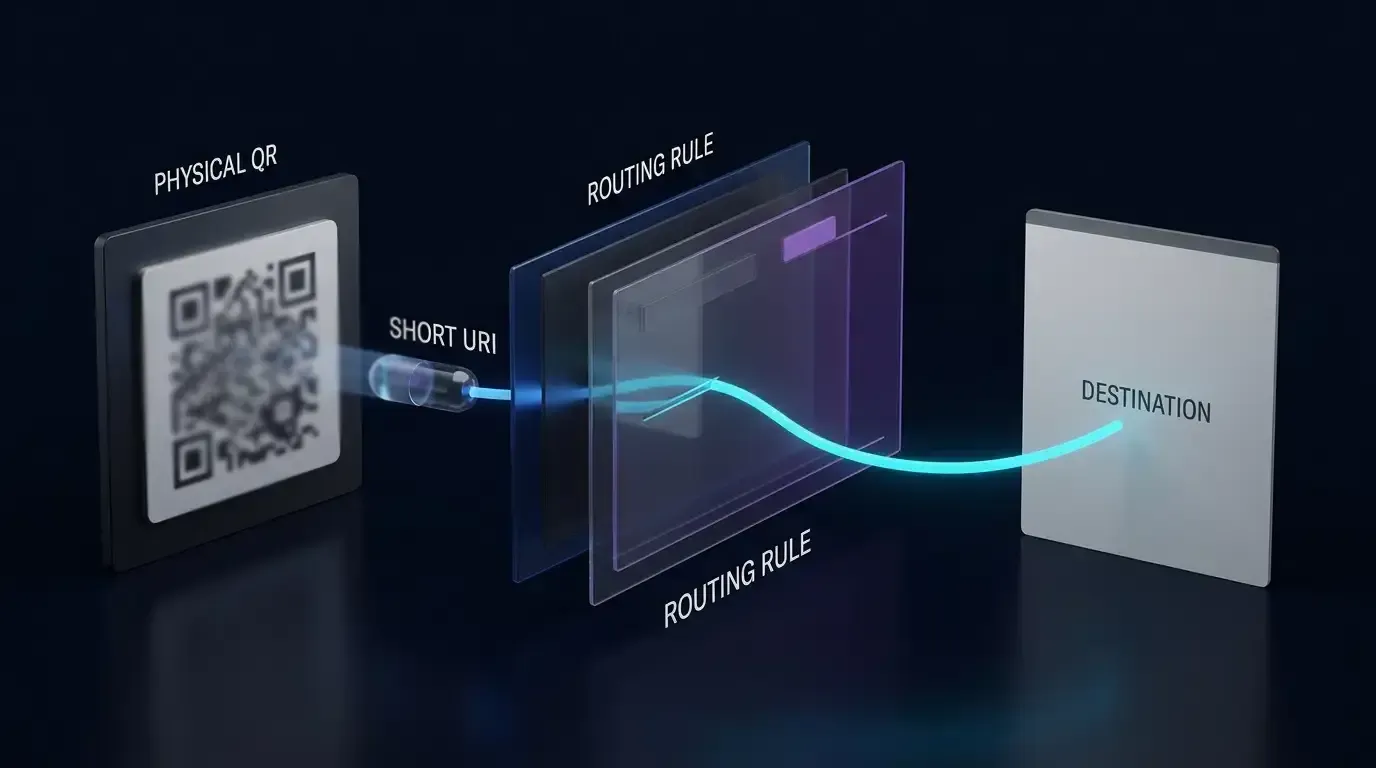
Clarifying the Core Misconception: Both Static and Dynamic Codes Produce Fixed Physical Patterns
A widespread misconception in marketing literature suggests that a dynamic QR code is a special optical symbology capable of changing its visual pattern, or that static QR codes cannot encode URL tracking parameters. From the perspective of optical physics and the ISO/IEC 18004 QR Code Bar Code Symbology Specification, no such distinction exists at the print layer. Once ink is applied to paper, cardboard, or transit signage, the arrangement of dark and light modules is permanently fixed for both static and dynamic codes.
The true architectural difference lies entirely in URI indirection:
- Static QR Code (Direct Target Encoding): The barcode matrix directly encodes the final destination payload (such as a full landing page URL with hardcoded query strings, a Wi-Fi configuration string, or a vCard payload). The scanning device decodes the string and navigates directly to that terminal address.
- Dynamic QR Code (Server-Side URI Indirection): The barcode matrix encodes a compact, permanent intermediary URI (a routing shortlink such as
https://lnk.example.com/r/9x2a). In browser-routed flows, the client requests this intermediary endpoint, which looks up the active routing rule in a server-side database, logs ingress telemetry, and issues an HTTP redirect to the current destination URL.
Direct Target Encoding vs. Server-Side URI Indirection
When an engineering team encodes a final destination URL directly into a static matrix, the physical print collateral becomes tightly coupled to the current web infrastructure. The domain name, directory path, file extension, and query parameter keys are baked into the Reed-Solomon codewords on the printed surface.
By introducing a server-side indirection layer, a dynamic QR code decouples the physical representation (the printed symbol) from the logical destination (the web landing page or application store target). The printed barcode acts as an immutable pointer to a mutable database record. Consequently, backend engineers can alter the destination URL, swap promotional parameter payloads, or route traffic to different regional servers at any point during the physical collateral’s lifecycle.
Why Static QR Codes Can Still Carry Fixed Tracking Parameters and Where They Break
It is important to recognize that static QR codes can support basic channel tracking. If a marketer encodes a structured URL containing campaign tags directly into a static QR code, any user scanning that code will request that exact URL, allowing web analytics or landing page scripts to record the parameters.
However, static parameter encoding introduces operational vulnerabilities in commercial deployments:
- Irreversible Configuration Errors: Once printed, the encoded URL cannot be changed. Some destination failures can still be mitigated through server-side rewrites, legacy path support, or application-level parameter handling, provided the original destination infrastructure remains under the operator’s control. However, if the domain becomes unreachable or an unroutable syntax error is printed, physical remediation is impossible without reprinting.
- Uncontrolled Destination Obsolescence: If a website undergoes a CMS migration, an app store listing ID changes, or a promotional path is deprecated after six months, the static QR code routes scanners to dead
404 Not Foundpages unless legacy server rewrite rules are maintained indefinitely for every historical print path. - Inability to Rotate Expired Promotions: When a seasonal campaign ends, a static QR code continues passing the expired promotional token in its query string, requiring application backends to maintain legacy parameter handling logic indefinitely.
How Shortlink Indirection Decouples Physical Print Media from Payload Length and Matrix Density
Beyond post-print mutability, server-side indirection solves a critical optical engineering constraint: matrix module density. Under ISO/IEC 18004, the symbol version (ranging from Version 1 at
When a static QR code encodes a raw URL containing multiple attribution parameters, UTM tags, and cryptographic signatures, the encoder must step up to a higher QR version. On a fixed physical print footprint (such as a
By contrast, a dynamic QR code encodes only a compact routing URI, which is often significantly shorter than long parameterized URLs. In a configured HTTP redirect flow, the router can merge authorized campaign parameters when constructing the redirect Location header. This helps keep the physical barcode at a lower, sparser symbol version with larger, high-contrast modules that decode more reliably across diverse viewing distances.
HTTP Redirection Semantics and Browser Caching Pitfalls
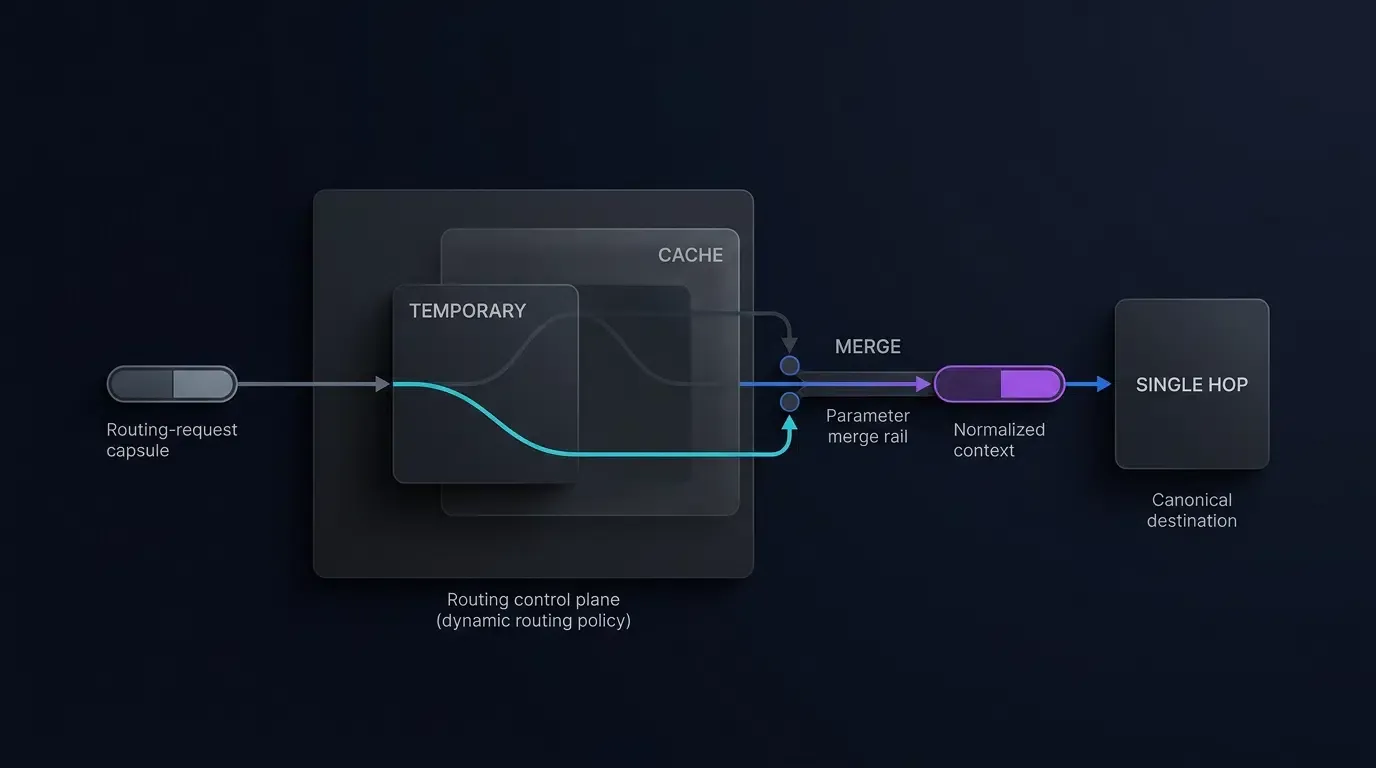
Evaluating IETF RFC 9110 Status Codes: Why 301 Moved Permanently Can Cause Persistent Stale Routing
The core mechanism of a dynamic QR code is the HTTP 3xx redirection response defined in IETF RFC 9110 HTTP Semantics. Selecting the wrong HTTP status code is one of the most common engineering failures in custom shortlink implementations.
If a backend engineer configures the QR routing endpoint to return 301 Moved Permanently (or 308 Permanent Redirect) without restrictive caching headers, mobile browsers may cache permanent redirects and reuse the stored mapping on later requests in accordance with IETF RFC 9111 HTTP Caching.
As a result, some returning clients may bypass the updated routing rule until the cached response is invalidated or expires locally, preventing newly published destination targets or updated campaign parameters from reaching those devices.
Implementing 302 Found and 307 Temporary Redirect with Explicit Cache-Control Headers
For mutable dynamic QR routes, use temporary redirects with an explicit cache policy. Deploying Cache-Control: no-store, no-cache, must-revalidate minimizes stale redirect reuse across standards-compliant clients:
HTTP/1.1 307 Temporary Redirect
Location: https://promo.example.com/download?channelCode=transit_q4&promo=WELCOME
Cache-Control: no-store, no-cache, must-revalidate, max-age=0
Pragma: no-cache
With s-maxage=60, shared caches may continue serving a previously stored routing response while it remains fresh, potentially delaying rule updates by up to the applicable remaining freshness lifetime unless the cache is purged or invalidated. Furthermore, edge-node access telemetry must be reconciled into total ingress reporting. The immediate real-time zero-cache policy (no-store) and the high-concurrency edge-cached policy (s-maxage) represent distinct operational trade-offs between update immediacy and origin protection.
Query String Preservation and Parameter Injection Across Multi-Hop Redirects
In enterprise campaigns, a dynamic QR code redirect often combines static rule parameters stored in the database with dynamic query parameters appended to the shortlink itself. If a routing gateway or CDN edge rule executes a naive redirect, it may overwrite or drop incoming query strings.
A deterministic routing engine must enforce a formal Query Parameter Merge Policy:
- Parameter Precedence Contract: Rule-defined attribution keys take precedence over incoming query parameters. Passthrough keys are allowlisted, duplicate reserved keys are rejected or deterministically normalized, and the router percent-encodes values when constructing the final
LocationURI. - Rule-Defined Parameters: Base attribution tags configured in the console (e.g.,
channelCode=retail_ny,campaign=autumn_launch) are injected into the target URL query component. - Passthrough Query Merging: Any valid, allowlisted query parameters present on the initial shortlink request are merged with the rule-defined parameters using standard URI percent-encoding.
- URI Fragment Handling: Preserve configured destination fragments when constructing the
LocationURI. Do not assume that the routing server can read a fragment from the incoming shortlink request, as clients do not transmit URI fragments over HTTP. Under RFC 9110, user agents may automatically inherit the original URI’s fragment if theLocationheader omits one; to prevent unintended fragment inheritance across distinct domains, explicitly supply the intended destination fragment (or an empty fragment delimiter) where needed.
Visualizing the Dynamic Indirection and Fallback Pipeline
The diagram below illustrates how an edge routing service evaluates rule states, applies cache control headers, and routes scanners between active campaigns and evergreen fallback targets:
[Physical QR Matrix] ──> Encodes Short URI (https://lnk.example.com/r/9x2a)
          │
          ▼
[Edge Routing Service] ─> Evaluates Rule State (Active / Expired / Maintenance)
          │
     ┌────┴────────────────────────────────┐
     ▼ (Active Campaign State)             ▼ (Expired / Broken Target State)
[HTTP 307 + Cache-Control: no-store]  [HTTP 307 Graceful Fallback Redirect]
     │                                     │
     ▼                                     ▼
[Parameterized H5 Landing Page]       [Evergreen Store / Welcome Page]
Preventing Deep-Link Verification Failures Across Web Redirects
Why Server-Side Redirect Chains Often Fail iOS Universal Links and Android App Links
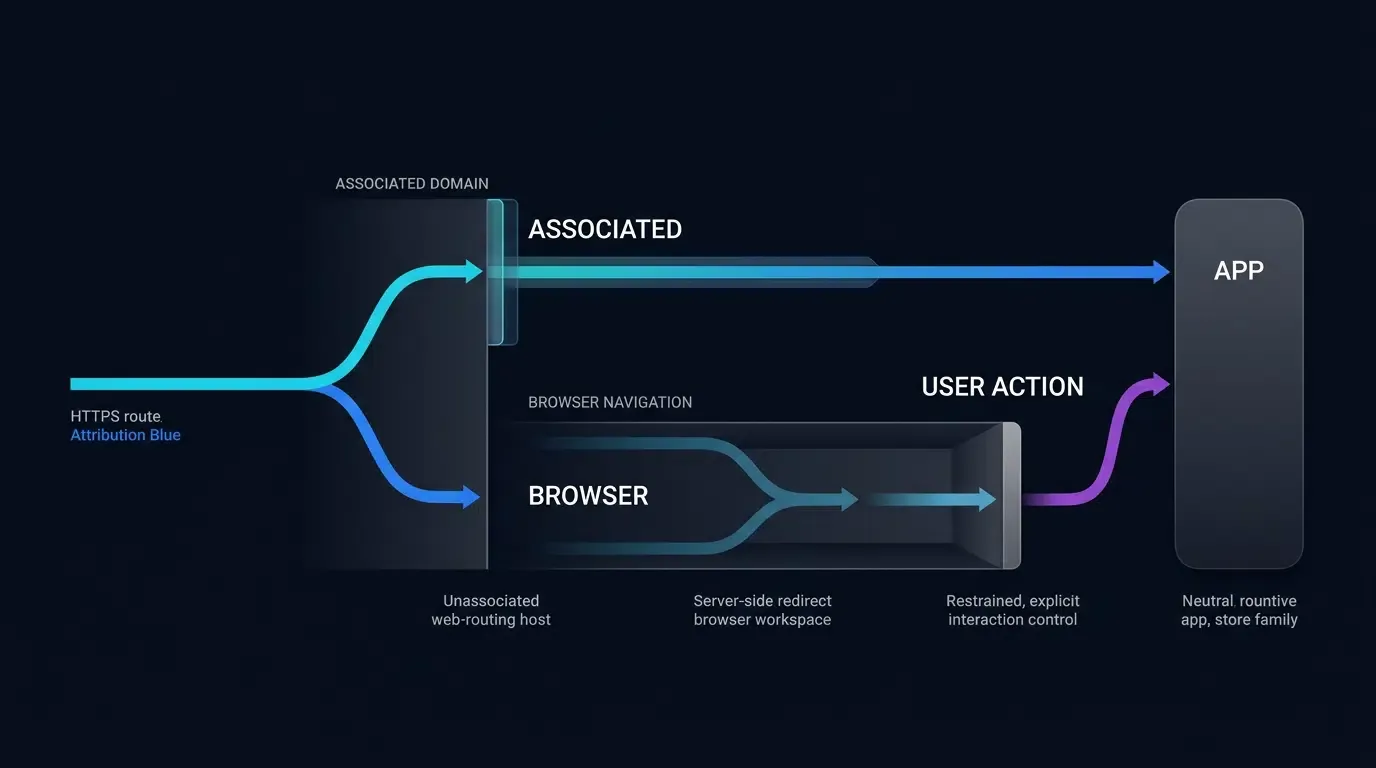
A frequent engineering failure occurs when teams attempt to use a third-party dynamic QR code generator to redirect users directly into an installed mobile application via Apple Universal Links or Android App Links. Developers encode a shortlink on domain A (https://qr-vendor.example/xyz), which issues an HTTP 302 redirect to the application’s verified deep-link domain B (https://app.brand.com/product/123).
When a user with the app already installed scans the QR code, the mobile operating system frequently fails to launch the native application, opening the mobile web browser instead. A dynamic QR redirect may remain in the browser because the initial URL is not associated with the installed app, because the browser handles the redirect as web navigation, or because domain and path verification rules do not match. Behavior varies by operating system, browser, and navigation context. Test direct associated-domain links separately from browser-based landing-page flows; provide an explicit fallback action where needed.
System Interaction Requirements: Automatic 302 Redirects vs. User-Initiated Navigation
Operating systems evaluate domain association rules, operating system link dispatch, and in-browser navigation heuristics as separate mechanisms. When an initial scan occurs, the OS inspects whether the hostname decoded from the QR code is declared in the application’s associated domains. If the initial shortlink host is unassociated, navigation defaults to the web browser. Once inside the browser context, automatic cross-domain 302/307 redirects are frequently treated as standard web page transitions rather than app-launch triggers.
To navigate these platform behaviors reliably, enterprise web-to-app architectures deploy two distinct patterns:
- Pattern A (Direct Custom-Domain Shortlink Association): Host the dynamic QR routing service on a custom subdomain owned by the brand (e.g.,
https://lnk.brand.com/r/9x2a) and configure both theapple-app-site-association(AASA) file and.well-known/assetlinks.jsondirectly onlnk.brand.com. When an associated shortlink opens the installed app directly, the HTTP routing endpoint may not receive the original navigation request. The app must resolve the shortlink path through an authorized resolver or locally available mapping, and native app-open telemetry must be reconciled separately from web redirect ingress. - Pattern B (Intermediary H5 Landing Page with Explicit Action): If the user does not have the app installed (or when routing through a general shortlink domain), the dynamic QR code redirects (
307) to a branded H5 download landing page. When the user taps the primary download button, the user-initiated tap event provides clean interaction context, allowing the Web JS SDK to invoke Universal Links / App Links or route to the app store while staging deferred installation parameters.
For implementation details on configuring Associated Domains, Web JS SDK initialization, and channel routing links, consult the OpoInstall routing and channel documentation.
Domain Association Constraints: Matching AASA and Assetlinks Validation to the Routing Host
When deploying custom routing domains for dynamic QR codes, infrastructure teams must ensure that edge redirect rules do not interfere with operating system verification crawlers:
- Unredirected Well-Known Paths: The routing server must serve
/.well-known/apple-app-site-associationand/.well-known/assetlinks.jsondirectly with an HTTP200 OKstatus code andapplication/jsoncontent type without issuing redirects. Both Apple’s CDN crawler and Google’s verification service reject domain association files that return HTTP redirects. - TLS and Certificate Validity: The routing domain must maintain a valid, non-expired TLS certificate trusted by system root stores, as expired certificates invalidate both Universal Links and App Links verification.
Recovering from Certificate Expiration, Path Migrations, and Store Listing Updates
Dynamic QR indirection provides operational resilience when downstream web or store assets change after physical collateral is in circulation:
- Landing Page Path Migrations: If a marketing engineering team migrates landing pages from
/promo/2025/summer.htmlto/campaigns/active, updating the target URL in the routing table repairs destination routing for all subsequent requests reaching the routing service. - Store Region and Listing Changes: If an application updates its regional store distribution or transitions from an open beta track to a production store listing, server-side routing rules can update the downstream store dispatch target without invalidating printed packaging.
Structuring Dynamic Routing Rules and Configuration Contracts
Defining Deterministic Routing Policies for Enterprise Print Campaigns
To manage thousands of physical QR placements reliably, routing configurations should be governed by a formal schema rather than ad-hoc database entries. Every dynamic route requires an explicit lifecycle state (active, expired, maintenance_fallback), a valid temporary redirect status code, strict cache-control headers, and a verified fallback destination.
The JSON Schema below defines the structural validation contract for release-candidate routing rules. Unverified drafts may exist in the authoring system, but they are not eligible to satisfy the publishable configuration contract:
{
  "$schema": "https://json-schema.org/draft/2020-12/schema",
  "title": "DynamicQrRoutingRuleSchema",
  "description": "Formal JSON Schema governing release-candidate dynamic QR shortlink indirection, HTTP temporary redirect semantics, cache-control headers, query parameter merging, and fallback routing. Unverified drafts may exist in authoring systems, but publishable configurations require control-plane verification of acyclic redirect graphs, TLS certificate validity, and live target reachability prior to deployment.",
  "type": "object",
  "required": [
    "schema_version",
    "rule_id",
    "shortlink_uri",
    "lifecycle_state",
    "http_redirect_policy",
    "routing_targets",
    "parameter_policy",
    "audit_metadata"
  ],
  "properties": {
    "schema_version": { "type": "string", "example": "1.1.0" },
    "rule_id": { "type": "string", "example": "rule_qr_transit_ldn_04" },
    "shortlink_uri": {
      "type": "string",
      "format": "uri",
      "description": "Compact intermediary URI encoded into the physical QR matrix.",
      "example": "https://lnk.example.com/r/9x2a"
    },
    "lifecycle_state": {
      "type": "string",
      "enum": ["active", "expired", "maintenance_fallback"]
    },
    "http_redirect_policy": {
      "type": "object",
      "required": ["status_code", "cache_control_header", "preserve_method"],
      "properties": {
        "status_code": {
          "type": "integer",
          "enum": [302, 307],
          "description": "Restricted to temporary redirect codes (302 Found or 307 Temporary Redirect) per RFC 9110 to avoid permanent browser caching of mutable targets."
        },
        "cache_control_header": {
          "type": "string",
          "enum": [
            "no-store, no-cache, must-revalidate, max-age=0",
            "public, max-age=0, s-maxage=60, must-revalidate"
          ]
        },
        "preserve_method": {
          "type": "boolean",
          "description": "When true, status_code must be 307 per RFC 9110 to guarantee method preservation across redirects."
        }
      },
      "allOf": [
        {
          "if": {
            "properties": { "preserve_method": { "const": true } },
            "required": ["preserve_method"]
          },
          "then": {
            "properties": { "status_code": { "const": 307 } }
          }
        }
      ]
    },
    "routing_targets": {
      "type": "object",
      "required": ["active_target_url", "fallback_target_url", "canonical_single_hop_verified"],
      "properties": {
        "active_target_url": {
          "type": ["string", "null"],
          "format": "uri",
          "description": "Primary canonical HTTPS landing page URL used when lifecycle_state is active. Syntactic URI validation must be accompanied by control-plane domain allowlist checks."
        },
        "fallback_target_url": {
          "type": "string",
          "format": "uri",
          "description": "Terminal evergreen URL used when lifecycle_state is expired or maintenance_fallback. Must not reference the shortlink routing namespace."
        },
        "canonical_single_hop_verified": {
          "type": "boolean",
          "description": "Indicates whether the control plane verified that the target URL resolves without secondary trailing-slash or domain redirects. Control plane must enforce true before production activation."
        }
      }
    },
    "parameter_policy": {
      "type": "object",
      "required": ["merge_strategy", "rule_injected_params", "allowed_passthrough_keys"],
      "properties": {
        "merge_strategy": {
          "type": "string",
          "enum": ["inject_rule_and_preserve_allowlisted", "inject_rule_only", "strip_all_query_params"]
        },
        "rule_injected_params": {
          "type": "object",
          "required": ["channelCode"],
          "properties": {
            "channelCode": { "type": "string", "pattern": "^[A-Za-z0-9_.-]{1,64}$" },
            "placement_id": { "type": ["string", "null"], "pattern": "^[A-Za-z0-9_.-]{1,64}$" },
            "promo": { "type": ["string", "null"], "pattern": "^[A-Za-z0-9_.-]{1,64}$" }
          }
        },
        "allowed_passthrough_keys": {
          "type": "array",
          "items": { "type": "string", "pattern": "^[A-Za-z0-9_]{1,32}$" }
        }
      }
    },
    "audit_metadata": {
      "type": "object",
      "required": ["created_at_utc", "updated_at_utc", "expires_at_utc", "loop_check_passed"],
      "properties": {
        "created_at_utc": { "type": "string", "format": "date-time" },
        "updated_at_utc": { "type": "string", "format": "date-time" },
        "expires_at_utc": { "type": ["string", "null"], "format": "date-time" },
        "loop_check_passed": {
          "type": "boolean",
          "const": true,
          "description": "Enforces that the release-candidate configuration passed graph loop detection prior to serialization."
        }
      }
    }
  },
  "allOf": [
    {
      "if": {
        "properties": { "lifecycle_state": { "const": "active" } },
        "required": ["lifecycle_state"]
      },
      "then": {
        "properties": {
          "routing_targets": {
            "required": ["active_target_url"],
            "properties": {
              "active_target_url": { "type": "string", "minLength": 10 }
            }
          }
        }
      }
    }
  ]
}
Enforcing Redirect Hygiene and Loop Prevention in Routing Schemas
Configuration drafts may contain unverified targets during staging. While canonical_single_hop_verified and loop_check_passed represent declared properties in the configuration payload, the routing control plane must enforce operational graph and reachability checks prior to production deployment:
- Acyclic Graph Verification: Verify that
active_target_urlandfallback_target_urldo not reference the shortlink routing namespace or form cyclic redirect loops across intermediate hops. - Target Health Verification: Execute automated HTTP verification checks against destination targets according to their target classification (confirming valid
2xxor acceptable store redirection responses) before rule activation. - Parameter Allowlist Enforcement: Ensure that only pre-approved parameter keys are forwarded to downstream landing pages.
The configuration instance below illustrates a production routing rule conforming to the schema above, complete with cache-control directives, parameter injection, and an evergreen fallback URL:
{
  "schema_version": "1.1.0",
  "rule_id": "rule_qr_transit_ldn_04",
  "shortlink_uri": "https://lnk.example.com/r/9x2a",
  "lifecycle_state": "active",
  "http_redirect_policy": {
    "status_code": 307,
    "cache_control_header": "no-store, no-cache, must-revalidate, max-age=0",
    "preserve_method": true
  },
  "routing_targets": {
    "active_target_url": "https://promo.example.com/campaigns/autumn-app-download",
    "fallback_target_url": "https://promo.example.com/app-store-directory",
    "canonical_single_hop_verified": true
  },
  "parameter_policy": {
    "merge_strategy": "inject_rule_and_preserve_allowlisted",
    "rule_injected_params": {
      "channelCode": "subway_ldn_central",
      "placement_id": "panel_ox_04b",
      "promo": "AUTUMN25"
    },
    "allowed_passthrough_keys": ["lang", "variant_tag"]
  },
  "audit_metadata": {
    "created_at_utc": "2026-06-01T09:00:00Z",
    "updated_at_utc": "2026-09-15T14:30:00Z",
    "expires_at_utc": "2026-12-31T23:59:59Z",
    "loop_check_passed": true
  }
}
Diagnosing Redirect Loops, Parameter Stripping, and Service Outages
Preventing Infinite Self-Referential Redirect Loops in Fallback Rules
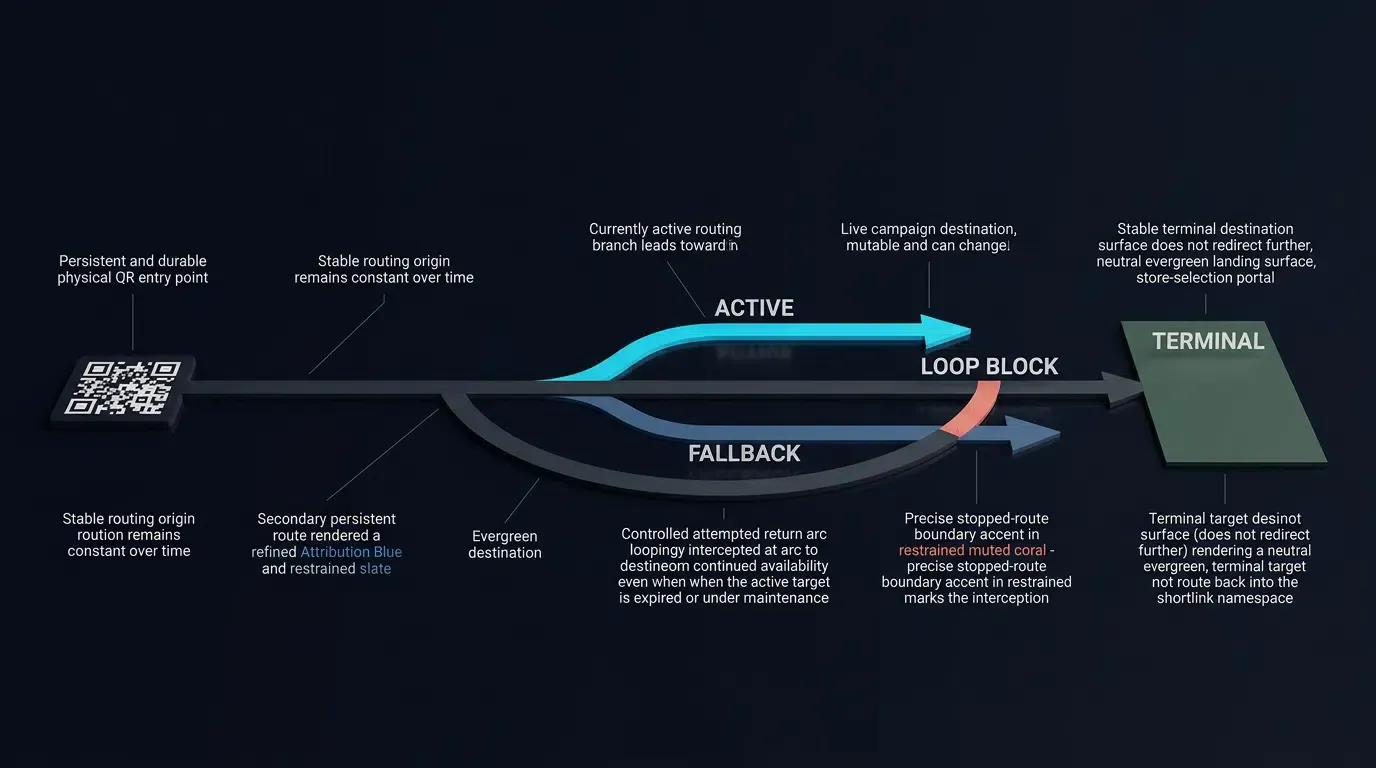
A critical operational hazard in dynamic QR management occurs when an administrator configures a fallback rule that inadvertently points back to the shortlink router itself—or when an H5 landing page’s fallback link points back to the QR shortlink (https://lnk.example.com/r/9x2a https://promo.example.com/dl https://lnk.example.com/r/9x2a).
When a mobile browser encounters a cyclic redirect chain, it aborts navigation after a client-dependent hop limit and displays a redirect failure screen. To prevent loops:
- Strict Host/Path Separation: Never allow the target URL of a routing rule to reference the shortlink routing path namespace (
/r/*). - Terminal Fallback Enforcement: Fallback destinations must point to terminal pages (such as a static store selection page or direct platform store listing) that do not execute automatic outbound redirects on load.
Mitigating Query Parameter Stripping Across CDN Edge Rules and WebView Containers
Even when a dynamic QR router properly appends ?channelCode=print_01&promo=VIP to its Location redirect header, downstream infrastructure on the destination host can strip those parameters before the Web JS SDK executes:
- Trailing Slash and Canonical Redirects: If the dynamic router redirects to
https://promo.example.com/download?channelCode=print_01, and the destination web server issues a secondary canonical redirect tohttps://promo.example.com/download/(adding a trailing slash) orhttps://www.promo.example.com/downloadwithout preserving query strings, all attribution parameters are lost before the page loads. - Remediation: Always configure the dynamic QR target URL to match the exact canonical URL of the final landing page (including exact protocol
https://,wwwsubdomain status, and trailing slash) so that the redirect resolves in a single hop.
Evaluating the Operational Trade-off: Third-Party Routing Dependency vs. Static Permanence
Engineering teams must evaluate the availability trade-offs of dynamic indirection objectively. A dynamic QR code introduces an external runtime dependency: if the routing domain’s DNS registration lapses, its TLS certificate expires, or the redirection service suffers an outage, every printed QR code pointing to that host becomes unreachable.
To mitigate infrastructure dependency risk:
- Use Owned Custom Domains: Encode a brand-owned subdomain (
lnk.yourcompany.com) via CNAME rather than a generic vendor-owned shortener domain. If the enterprise ever migrates attribution providers, DNS records can be repointed to a new routing service while preserving all existing printed QR codes. - Edge CDN Redundancy: Serve routing rules from multi-region edge caches so that temporary origin database maintenance does not interrupt live scan resolution.
Pre-Deployment Verification Checklist for Dynamic QR Redirect Pipelines
Before approving physical print runs for dynamic QR assets, engineering and QA teams should verify the following operational checkpoints:
- Step 1: Single-Hop Canonical Resolution: Inspect the HTTP response chain using command-line diagnostics (
curl -I) to confirm that the shortlink resolves directly to the final canonical HTTPS landing page in a single302or307hop without secondary trailing-slash or HTTP-to-HTTPS redirects. - Step 2: Cache-Control Header Audit: Confirm that the redirect response includes explicit cache-control directives matching the campaign’s update requirements (
no-storefor immediate re-routing, or short edge-cache durations for high-volume deployments). - Step 3: Query Parameter Survival: Verify that all configured
channelCodeand custom business parameters arrive intact inwindow.location.searchon the final landing page. - Step 4: Well-Known Path Isolation: If the routing domain also serves Universal Links or App Links, verify that
/.well-known/apple-app-site-associationand/.well-known/assetlinks.jsonreturn direct200 OKJSON responses without redirecting. - Step 5: Expired Rule Fallback Test: Temporarily toggle the test rule to
expiredin the console and scan the code on iOS and Android devices to confirm that it routes cleanly to the evergreen fallback page without redirect loops.
Decision Matrix: Evaluating Static vs. Dynamic QR Code Architectures
Comparing Technical Capabilities, Operational Risks, and Maintenance Overhead
Selecting between static direct encoding and dynamic server-side indirection requires aligning the barcode architecture with the operational requirements of the physical asset:
| Architectural Dimension | Static QR Code (Direct Encoding) | Dynamic QR Code (URI Indirection) | Operational Impact |
|---|---|---|---|
| Encoded Payload | Final destination URL (+ fixed query params) | Short intermediary routing URI | Determines post-print flexibility |
| Post-Print Target Updates | Encoded payload immutable; destination-side rewrites may mitigate some failures | Supported via server-side rule updates | Protects print budget against URL changes |
| Matrix Density & Version | Scales with full URL and parameter length | Remains low and constant via short path | Preserves large modules for fast scanning |
| Tracking Mechanism | Destination web analytics / fixed query tags | Edge redirect logs + downstream SDK attribution | Enables pre-landing ingress diagnostics |
| Infrastructure Dependency | None beyond final destination host | Requires active routing domain & DNS availability | Static is immune to intermediary outages |
| Best Suited Use Case | Permanent offline data (Wi-Fi, vCard, fixed docs) | Multi-channel app promotions & timed print ads | Aligns architecture with asset lifespan |
When Static Encoding Is Preferable to Dynamic Indirection
While dynamic QR codes are the standard choice for commercial mobile app acquisition and multi-channel marketing, static QR codes remain the superior engineering choice in specific scenarios:
- Self-Contained Offline Payloads: Barcodes encoding local Wi-Fi credentials (
WIFI:S:...), contact cards (BEGIN:VCARD), or hardware serial numbers that must be readable without internet connectivity. - Permanent Archival Documents: Government records, industrial equipment manuals, or long-term safety placards pointing to permanent top-level root domains where introducing an intermediary redirect server adds unnecessary maintenance overhead.
Frequently Asked Questions (FAQ)
Can a static QR code track scans and pass campaign parameters?
Why does my dynamic QR code redirect open the mobile browser instead of launching my installed app?
What happens to printed dynamic QR codes if the routing service goes offline?
Summary and Decision Framework
To determine why dynamic QR codes outperform static barcodes in commercial app promotion, engineering teams must look beyond visual patterns to the underlying URI routing architecture. While static QR codes remain appropriate for permanent, self-contained offline data or immutable web URLs, dynamic QR codes introduce a server-side indirection layer that insulates physical print budgets from broken links, expired promotions, and dense matrix versions.
Preventing verification and routing failures requires pairing HTTP 302 or 307 temporary redirects with strict Cache-Control policies, preserving query parameters across CDN hops, and aligning domain association files with user-initiated deep-link flows. Platforms such as OpoInstall can support dynamic channel routing and web-to-app parameter passing, subject to proper domain configuration, SDK integration, and active routing infrastructure. Note that the schemas provided in this specification serve as vendor-neutral reference contracts.
For technical specifications on configuring channel shortlinks and web-to-app landing pages, consult the OpoInstall routing and channel documentation or manage your application routing rules in the OpoInstall developer console.
Related Materials
-
Concepts: URI Indirection, HTTP Temporary Redirection, Browser Cache Invalidation, Matrix Module Density
-
Technologies: Dynamic Shortlink Routers, Content Delivery Networks, Universal Links, Android App Links
-
Standards: IETF RFC 9110 HTTP Semantics — Redirection 3xx, IETF RFC 9111 HTTP Caching Specification, ISO/IEC 18004 QR Code Bar Code Symbology Specification
-
Product Capabilities: OpoInstall Dynamic Channel Link Routing, OpoInstall Web JS SDK Integration
-
Official Documentation & References:
Share this article