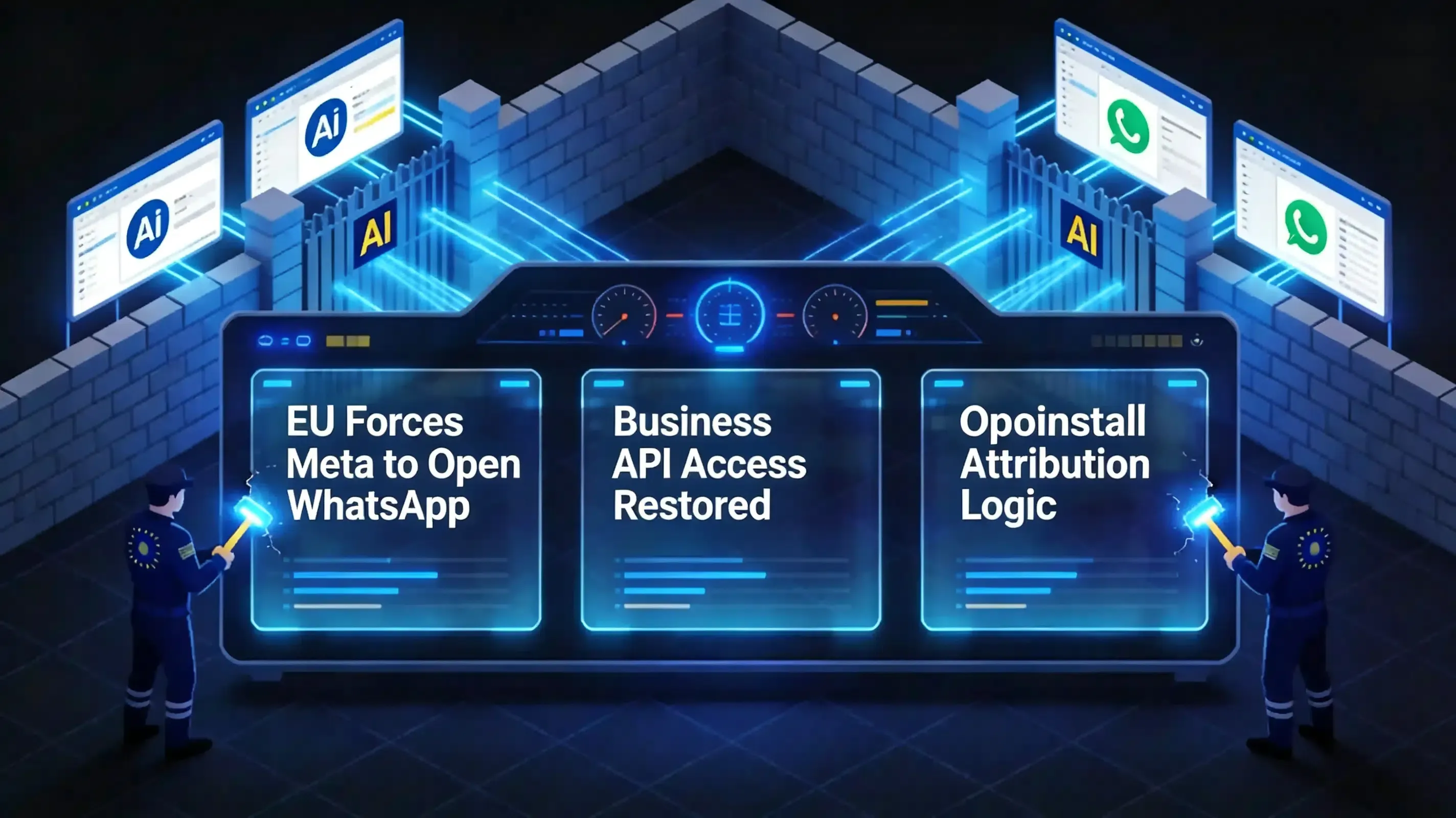
EU Forces Meta to Open WhatsApp? This aggressive antitrust intervention has been decisively executed by Brussels regulators as the European Commission shatters the proprietary hold of tech monopolies over instant messaging gateways. With the official emergency mandate issued on June 10, 2026, the European Union has ordered the social media giant to restore free business API access to competing generative artificial intelligence platforms within five business days. Crucially, the sudden dismantling of traditional monopolies shifts the user acquisition paradigm completely away from closed platforms. Consequently, tracking consumer interactions across newly opened conversational channels demands an immediate overhaul of deep linking networks.

News and Environment Breakdown: The Fall of the Garden Walls
The emergency enforcement action finalized by the European Commission represents a historic shift against anti-competitive digital walled gardens. Under the new decree, Meta must fully roll back its platform access restrictions or face devastating global financial penalties.
The Timeline of Regulatory Conflict
The multi-month investigation began in October 2025 when Meta quietly updated the platform policies for its WhatsApp Business solution. This policy update, which went live on January 15, 2026, effectively barred third-party general-purpose intelligent assistants from accessing the platform’s commercial data loops. The restriction instantly severed customer connections for major independent AI tools, including OpenAI’s ChatGPT, Perplexity, Luzia, and the Poke assistant developed by The Interaction Company.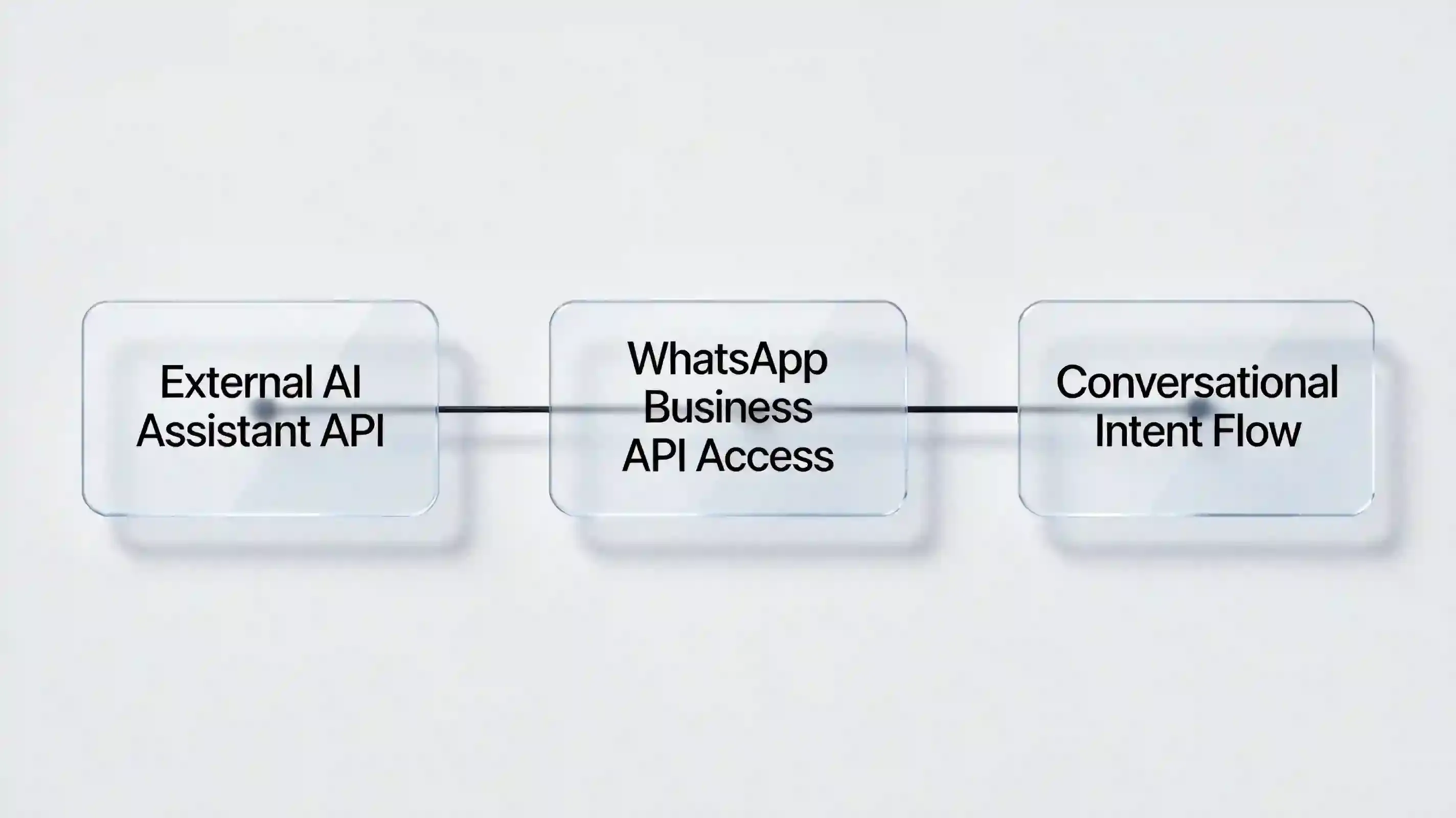
Following antitrust complaints from smaller AI startups, the European Commission initiated a formal investigation in December 2025. Regulators followed up with a formal Statement of Objections in February 2026, charging Meta with abusing its market position.
In response, Meta attempted to protect its revenue by introducing a paid tier for third-party tools on March 4, 2026. However, EU competition chief Teresa Ribera aggressively rejected this pricing structure in a supplementary objection in April 2026. She stated that the exorbitant access fees were practically identical to the original ban.
This sequence led directly to the emergency order on June 10, 2026. Meta now has a strict compliance window until Monday, June 15, 2026, to restore free access to the WhatsApp Business API under the original rules from October 15, 2025.
Monopolistic Exploitation and High Financial Stakes
The European Commission’s intervention is explicitly designed to protect early-stage market competition. According to antitrust data, WhatsApp has held a dominant monopoly in the European consumer communication space since at least January 2023. By shutting out independent models, Meta effectively shielded its proprietary Meta AI assistant from fair market competition.
Teresa Ribera emphasized to the press that in hyper-growth technology sectors, smaller entrants can be crushed long before a standard multi-year antitrust investigation finishes. This reality is why the emergency interim order will remain legally binding until the complete case concludes or until June 2029.
If Meta misses the upcoming five-day compliance deadline, it faces massive fines of up to 10% of its total global annual turnover. The tech giant has reacted with hostility, labeling the ruling an example of extreme regulatory overreach designed to subsidize its wealthiest American competitors for free, and has vowed to appeal the decision openly on Engadget.
Meta’s Growing Compliance Crisis
This regulatory crisis arrives as Meta battles several structural failures across its product portfolio. In Ireland, the company faces two active investigations by Coimisiún na Meán under the Digital Services Act (DSA). These probes target systemic flaws in its content recommendation networks and data visibility deficits.
Broader environmental shifts have made users significantly more critical of centralized safety architectures. Separate EU investigations concluded that Instagram and Facebook failed to protect minor users from addictive design frameworks. This finding closely mirrors landmark civil litigation in the United States, where courts ruled that Meta intentionally deployed addictive algorithms that exposed children to severe exploitation.
This corporate pressure is compounded by major security failures. Meta recently disclosed that an architectural bug in Meta AI allowed bad actors to compromise over 34,000 Instagram accounts in a single month, raising deep consumer concerns about data privacy on the platform.
The Attribution Crisis: The Shift to Headless Intent Traffic
As the European mandate forces the messaging ecosystem open because the EU Forces Meta to Open WhatsApp, mobile growth teams face a severe tracking emergency. Traditional user-journey monitoring is breaking down completely.
Historically, performance marketing operated on clear, screen-centric actions. A consumer viewed a product advertisement on a web browser, clicked an optimized tracking link, and completed a clean redirection to an application store. This direct path allowed marketing software to document referral data with perfect fidelity.
However, this linear data loop breaks down when conversational intelligent assistants process actions inside headless chat interfaces. When the EU Forces Meta to Open WhatsApp to external models, users execute transactions entirely via voice or text prompts within a single dialogue stream. For example, a user can order a ride or buy a product using a third-party helper without viewing a graphical app interface.
Consequently, the critical tracking parameters vanish from the data plane. Headless interactions routinely strip away conventional browser cookies, marketing identifiers, and referral metadata fields. This parameter loss creates an immense data blind spot for performance leads. Server databases log sharp increases in transaction volume, yet analytical platforms cannot connect those conversions to active ad spend. This tracking gap invalidates traditional return on ad spend (ROAS) models completely.

Engineering Practice: Deep Parameter Routing Across Chat Interfaces
To preserve transaction visibility as the EU Forces Meta to Open WhatsApp, enterprise development teams must abandon obsolete front-end script tags. Modern tracking demands robust, system-level architecture solutions.
Reclaiming Context via Universal Links Infrastructure
Technical leads must deploy an advanced Universal Links and App Links infrastructure to maintain data continuity across conversational platform layers. When a chat-based assistant triggers a background request, this architecture securely anchors the tracking metadata to a unique device fingerprint before the store redirection occurs.
Upon the first local boot sequence, the application extracts the unaltered parameter payload directly from the network plane. Consequently, the application restores the consumer’s exact intent state, achieving seamless onboarding without requiring complex validation scripts.

Securing Source Clarity via Opoinstall Channel Markers
Furthermore, software engineers must replace volatile cookies with resilient Deferred Deep Linking solutions to categorize incoming machine-driven traffic. By injecting immutable domain tokens directly into the underlying code configurations of the business API, developers log clean traffic origins.
Specifically, whenever a third-party intelligent utility executes a background API call or processes a transaction string, the system appends a permanent channel code to the metadata container. This approach creates an unalterable log on Opoinstall, allowing corporate financial systems to isolate authentic conversions from automated background noise seamlessly.
Industry Forward-looking Note: Regarding cross-application parameter passing for autonomous conversational traffic running across open messaging APIs, Opoinstall’s tech lab is currently conducting joint exploratory research with leading international partners to standardize non-visual attribution metadata formats.
Impact on Development and Growth Teams
- For Architecture Teams: Engineering leads must quickly configure data pipelines to accept dynamic, non-linear payload inputs from external assistant tools. Backend systems must deploy advanced cryptographic signature verification checks at every API boundary. This defense protects analytics storage from malicious automated script farms designed to corrupt user logs.
- For Growth Leads: Growth managers must rapidly eliminate simple click counts as primary key performance indicators. As conversational software automates product discovery, long-term downstream value like customer lifetime value (LTV) becomes the only true measure of efficiency. Spending must align exclusively with channels that deliver verified, transparent data validation streams.
Frequently Asked Questions (FAQ)
Why did the European Commission issue an emergency mandate before finishing the full investigation?
How does the removal of the WhatsApp Business API fee impact smaller AI developers?
What mechanism prevents user context data from disappearing during background chat conversions?
Industry Observations
The regulatory disruption unfolding across the European continent signals a permanent shift in global traffic distribution. As the EU Forces Meta to Open WhatsApp, the technology sector must realize that the age of tightly controlled, proprietary walled gardens is coming to an end. Continuing to build customer acquisition plans around desktop cookies and standard web link taps is a strategy bound for complete operational failure. Long-term commercial expansion belongs exclusively to teams that integrate robust, server-to-server tracking infrastructure today. Organizations must aggressively prepare their software frameworks for an era of decentralized, headless consumption. By prioritizing unalterable channel logs and clean context restoration now, forward-thinking enterprises can secure clear visibility, transforming conversational intent into predictable corporate growth.
Share this article