What is Gemini 3.6 Flash, and why did Google release it before Gemini Pro? Google introduced Gemini 3.6 Flash and Gemini 3.5 Flash-Lite in July 2026 as lower-cost Gemini API models for high-volume developer workloads. The release highlights pricing, token efficiency, and deployment considerations as developers build more coding agents and automated workflows.
Google Gemini 3.6 Flash Release: What Changed?
At a Glance
- Google introduced Gemini 3.6 Flash and Gemini 3.5 Flash-Lite as lower-cost models optimized for high-volume developer workloads.
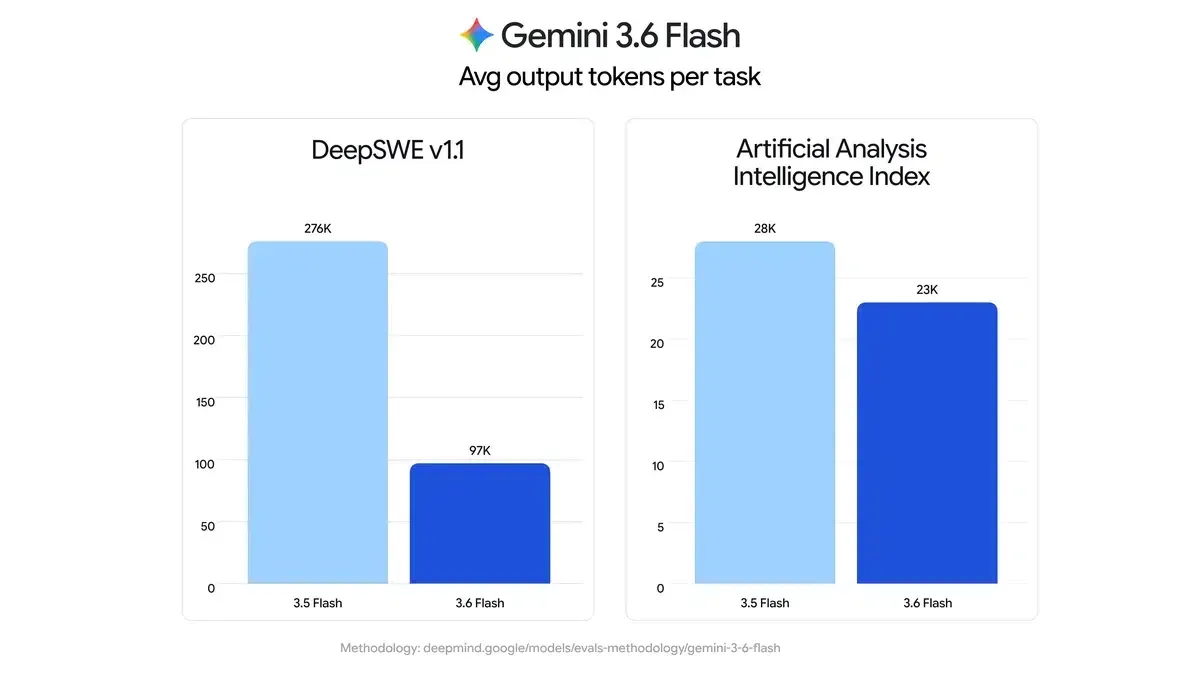
- Reported benchmark measurements indicate improved token efficiency, including up to 17% lower output token consumption compared with Gemini 3.5 Flash.
- Gemini Pro has not reached broad public availability, while Flash models represent Google’s current developer-focused rollout.
Google’s product expansion introduces two model tiers tailored for high-volume developer usage. Gemini 3.6 Flash serves as the primary general developer model for coding, document parsing, and agentic tasks. Alongside it, Google introduced Gemini 3.5 Flash-Lite, engineered as a lightweight, high-throughput model for low-latency workloads.
The models are available through Google’s developer platforms, including Google AI Studio, Android Studio, and Vertex AI. Google is also expanding Flash-class models across its AI products and developer ecosystem.
Gemini 3.6 Flash API Pricing and Token Efficiency
Cost structure is a central element of the new release. Google lists Gemini 3.6 Flash API pricing at $1.50 per million input tokens and $7.50 per million output tokens. For lighter workloads, Gemini 3.5 Flash-Lite drops input costs to $0.30 per million tokens and output costs to $2.50 per million tokens.
The table below outlines the pricing and target workloads across the new Flash model tiers:
| Model | Input Pricing | Output Pricing | Target Workloads |
|---|---|---|---|
| Gemini 3.6 Flash | $1.50 / 1M tokens | $7.50 / 1M tokens | Agent workflows, coding, multi-step automation |
| Gemini 3.5 Flash-Lite | $0.30 / 1M tokens | $2.50 / 1M tokens | High-volume tasks, document parsing, search synthesis |
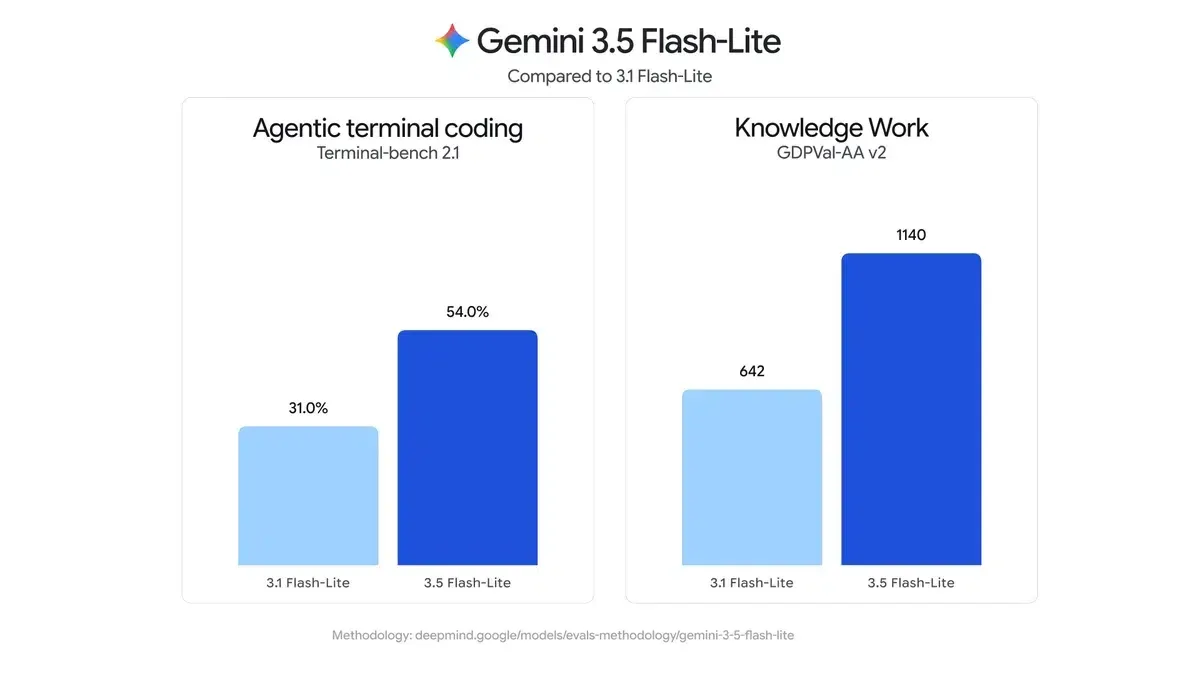
According to Google’s published evaluations, Gemini 3.6 Flash reduces output token usage by up to 17% compared with Gemini 3.5 Flash. External benchmarks from Artificial Analysis reported that Gemini 3.5 Flash-Lite achieves processing speeds up to 350 output tokens per second, as detailed in official product announcements.
Gemini 3.6 Flash Benchmarks: Coding and Agent Performance
On software engineering benchmarks, Google’s evaluations showed improved task completion rates in DeepSWE evaluations with fewer unwanted code edits. These results indicate improvements in automated coding tasks and software engineering workflows.
Additionally, the model demonstrated improved computer-use capabilities on OSWorld-Verified evaluations, scoring 83.0% compared to 78.4% for Gemini 3.5 Flash. For knowledge-based tasks, the model scored 1421 on GDPval-AA v2, demonstrating stronger reasoning across complex multimodal tasks like chart analysis and document drafting.
Gemini 3.6 Flash vs Gemini Pro: Availability and Model Choice
While Flash models are broadly available through API platforms, Gemini Pro remains in limited availability, and Google has not disclosed a detailed public timeline for wider access.
The table below compares the core positioning between the Flash and Pro model tiers:
| Metric or Feature | Gemini Flash Tier | Gemini Pro Tier |
|---|---|---|
| Primary Purpose | High-volume agentic workloads and coding | Complex single-turn deep reasoning |
| API Pricing | Public pricing available ($1.50 / $7.50) | Pricing not broadly available |
| Performance Focus | Optimized for throughput and efficiency | Optimized for advanced reasoning capability |
| Current Access | Available through API platforms | Limited Availability |
The rollout pattern gives developers access to lower-cost Flash models before Gemini Pro reaches broader availability. For production workloads requiring sequential tool calls and automated execution, Flash models offer an immediate balance of speed and affordability.
Why Developers Need Lower-Cost AI Models for Agent Workflows
Gemini 3.6 Flash directly targets the cost challenge created by agentic workloads, where coding agents and automation systems generate repeated API calls during execution. Unlike single-turn user queries, autonomous agents operate in multi-step execution loops:
[Heavy Monolithic Reasoning Loop]
  User Query ──> Monolithic Model ──> High Output Tokens + Latency ──> Rising API Costs


[Flash Agentic Execution Loop]
  User Query ──> Flash-Class Model ──> Lower Output Tokens ──> Lower API Cost Per Task
In an agentic loop, the model receives a prompt, executes a tool call, receives output, and repeats the cycle. Because each agent iteration requires additional model calls and generated tokens, multi-step workflows can increase API consumption quickly. By reducing verbosity and output token counts, Gemini 3.6 Flash allows enterprise applications to run automated workflows with predictable API expenses.
From AI Inference Cost to Application Efficiency
Similar efficiency challenges also appear in mobile applications, where developers need to preserve acquisition context while reducing unnecessary client-side processing. Server-side attribution platforms solve a similar infrastructure problem by preserving conversion context across fragmented user journeys. OpoInstall provides these capabilities for mobile growth teams. These systems help maintain conversion context across app installation and user journeys while reducing client-side complexity.
Developer Checklist for Gemini Flash Deployment
To optimize operational costs and ensure reliable system performance when deploying Flash models, engineering and product teams should adopt structured integration guidelines.
API Engineering
- Monitor Token Consumption: Audit input and output token counts per multi-turn agent request to track execution expenses.
- Set Agent Execution Limits: Enforce maximum tool-call iteration caps to prevent infinite execution loops.
- Cache Repeated Context: Utilize explicit prompt caching to avoid re-processing static system instructions and fixed prompts.
Product Teams
- Measure Cost per Workflow: Audit API token consumption per active user to ensure that product features remain profitable.
- Track Latency and Throughput: Monitor API round-trip times and output token generation speeds across multi-step execution tasks.
- Evaluate ROI Across Tiers: Benchmark task completion quality against token costs before deciding to upgrade to larger model tiers.
Frequently Asked Questions (FAQ)
What is Gemini 3.6 Flash?
What is Gemini 3.6 Flash used for?
Is Gemini 3.6 Flash available now?
Is Gemini 3.6 Flash free?
What is Gemini 3.6 Flash API pricing?
Gemini 3.6 Flash vs Gemini Pro: What is the difference?
Why did Google release Flash before Pro?
Key Takeaways for Engineering Teams
Gemini 3.6 Flash positions Google's Flash family as a lower-cost option for developers building production AI applications, while Gemini Pro remains focused on higher-capability reasoning scenarios. The release shows Google's Flash family is targeting production-scale AI deployment, where cost efficiency and reliability are becoming as important as raw model capability. For developers, the key decision is no longer model capability alone, but whether a model can deliver reliable performance at production scale and predictable cost.
Share this article