Google Retires Assistant in September? This major mobile ecosystem transition has been officially confirmed by Google via user email notices, establishing September 4, 2026, as the formal deprecation date for Google Assistant on Android phones, tablets, and paired devices. As generative artificial intelligence platforms reshape device interaction models, operating systems are replacing rule-based voice engines with large language model assistants. Historically, voice controls operated through rigid, deterministic command structures to parse user intents and launch applications. Today, because Gemini relies on dynamic function calling and generative agent loops, mobile applications must adapt their deep linking and parameter preservation architectures to maintain reliable app launches.
Core Industry Realignment: Google Retires Assistant in September as Gemini Dominates Android
At a Glance
- Google confirms that Assistant will be systematically removed from Android mobile devices, Wear OS, headphones, and projected Android Auto starting September 4, 2026.
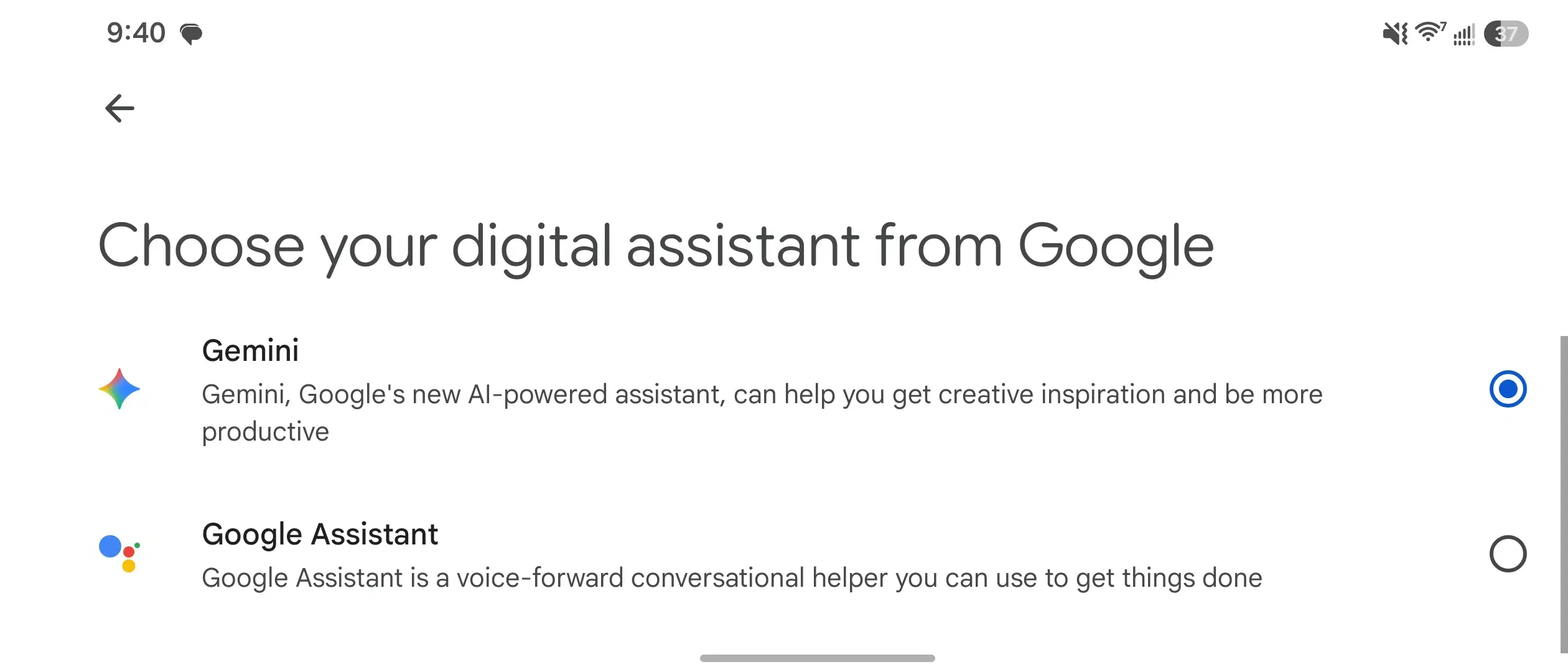
- Gemini becomes the primary voice and system assistant, activated via “Hey Google” or power-button long-press on supported hardware.
- Vehicles with Google built-in, Google Home speakers, and Google TV devices maintain legacy Assistant support temporarily during the phased transition.
The fundamental model for voice-driven mobile interaction is undergoing an unprecedented shift. For nearly a decade, Google Assistant served as the primary voice interface for Android, executing structured commands through hardcoded syntax matching. Users could issue predictable voice triggers to set alarms, query weather services, or launch specific mobile applications. While this system lacked conversational flexibility, its execution paths were highly deterministic.
The arrival of generative AI assistants has reduced the effectiveness of rule-based voice engines for complex user interactions. Modern users expect multimodal understanding, natural dialogue, and multi-step task execution. To deliver this experience, Google has accelerated the sunset of its legacy assistant across the global Android ecosystem.
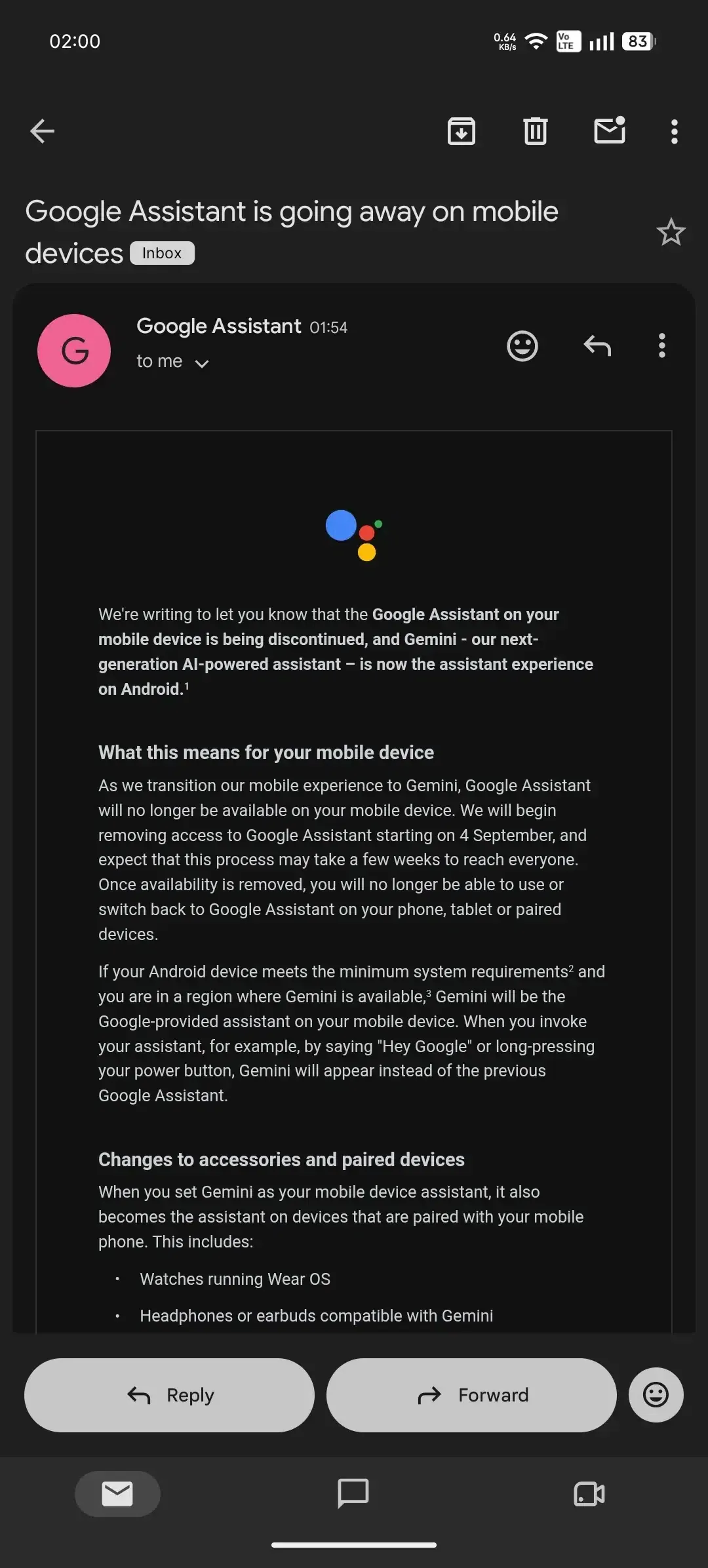
The broader market implications of the Google Retires Assistant in September decision extend across hardware categories. As reported in the Ars Technica analysis, the migration will begin on September 4, 2026, and roll out in batches over several weeks. Once a device transitions to Gemini, users cannot revert to Google Assistant. This deprecation impacts paired Wear OS smartwatches, wireless earbuds, and cars running projected Android Auto. According to the 9to5Google report, vehicles with “Google built-in”, smart TVs, and legacy devices running older Android builds with less than 2GB of RAM will retain temporary Assistant access before eventual future migration.
Under-the-Hood Architectural Disconnection: What the Google Retires Assistant in September Transition Teaches Us
At the software engineering level, routing a user from a voice prompt to a specific deep link inside a mobile application requires fundamentally different handling under Gemini than under legacy Assistant. Google Assistant relied on predefined App Actions, Android intents, and static shortcut definitions. When a user spoke a command, the operating system resolved the phrase against static intent filters and fired an explicit Android Intent directly to the target app.
In contrast, Gemini operates as a generative agent using LLM tool calling. When a user speaks to Gemini, the language model interprets the prompt, selects an appropriate tool or App Intent dynamically, and extracts key parameters on the fly.
[Deterministic Voice Rule Execution]
  Voice Command ──> Keyword Match ──> Static Intent URL ──> Direct App Launch


[Generative Agent App Intent Routing]
  Voice Command ──> LLM Function Call ──> Dynamic Parameter Extraction ──> Server Context Matching ──> Deferred Deep Link
This dynamic routing introduces latency and potential parameter fragmentation. If Gemini misinterprets an extracted entity or if the target application fails to handle dynamic parameters gracefully, the user journey breaks during the transition from voice assistant to native app.
Although voice assistant migrations and mobile attribution belong to different engineering domains, both rely on the same security principle: trusted server-side state management rather than implicitly trusted client-side context. This same trust model is increasingly adopted across AI-driven mobile experiences, including SDK integration, secure application launch, and deferred deep linking. When an application relies on vulnerable client-side tracking cookies or unverified local storage parameters, malicious actors or automated bots can manipulate attribution links, leading to fake conversions and data corruption.
Build vs. Buy: Managing Context Preservation in the Voice-Agent Era
As Gemini moves mobile interactions from explicit voice commands toward dynamic agent execution, developers must ensure that application launch context survives across multiple interpretation and routing layers. Managing application launch context in the Google Retires Assistant in September era requires architectures that maintain parameter continuity programmatically across distributed web and mobile environments. This creates a similar challenge to other agent-driven journeys: the original user intent may become separated from the final application launch event.
Engineering teams face a choice between constructing a custom in-house context restoration service or deploying a certified third-party measurement framework.
| Context Preservation Architecture | Trust Model | Context Preservation | Best For |
|---|---|---|---|
| Browser Cookie Tracking | Client-side Session | Weak | Legacy desktop web environments |
| Custom Deep Link Handling | Application-managed State | Medium | Custom backend microservices |
| Server-side Context Recovery Framework | Verified Server State | High | High-concurrency mobile app launches and voice-driven workflows |
Building a custom context restoration service requires ongoing engineering overhead to manage access schemas, handle parameter expirations, and secure cryptographic signatures against tampering. Depending on implementation requirements, organizations may build their own server-side parameter restoration service or adopt commercial platforms such as OpoInstall. For instance, OpoInstall offers server-side state restoration and parameter pass-through frameworks, preserving Application Launch Context associated with application launch requests, without relying on persistent client-side tokens. By preserving Application Launch Context on the server side, developers ensure that application contexts remain intact while maintaining strict data isolation.

Integration Checklists: Hardening Application Launch Context for Gemini Voice Workflows
To adapt mobile applications for Gemini-driven voice launches and ensure reliable parameter restoration, engineering and product teams must establish structured implementation schedules.
Developer Implementation Checklist
- Update App Intent Schemas: Align Android App Intents and App Links with modern schema definitions to allow Gemini’s tool-calling engine to resolve deep links accurately.
- Implement Server-Side Parameter Recovery: Shift from local intent extras to server-side session matching to ensure launch parameters persist across multi-step voice flows.
- Generate Signed Parameters for Deferred Deep Links: When paid APIs or voice agents redirect users toward native applications, use cryptographically signed parameters on all application links to prevent parameter tampering.
- Test Fallback Launch Logic: Ensure that applications handle missing or malformed parameters gracefully without crashing during dynamic voice invocations.
Product & Growth Strategy Checklist
- Audit Voice-Initiated Conversions: Track user journeys originating from voice assistants to identify dropped parameters or broken deep-linking steps.
- Transition to Server-Side Context Verification: Replace vulnerable browser-based cookies with server-side parameter recovery to preserve conversion context securely.
- Monitor Multimodal Intent Accuracy: Evaluate how Gemini processes spoken product queries compared to traditional search inputs to optimize deep-linking landing pages.
By establishing these technical safeguards, organizations can transition their infrastructure to support autonomous agent execution without sacrificing visibility or security.
Frequently Asked Questions (FAQ)
Why is Google transitioning from Assistant to Gemini across mobile devices?
Which Android hardware and platforms retain Google Assistant beyond the September 4 deadline?
How can developers preserve application launch context when Gemini launches apps dynamically?
Key Takeaways for Engineering Teams
The transition from Google Assistant to Gemini represents a broader shift from deterministic voice commands to agent-driven mobile interactions. As AI assistants increasingly interpret user intent and execute application actions dynamically, traditional deep-linking models based on static commands and client-side parameters will require significant adaptation. Mobile developers must adopt server-side context verification, deferred deep linking, and reliable parameter restoration mechanisms to ensure seamless application launches in the Gemini era.
Share this article