Grok Build Uploads Git Repositories? Why did Grok Build CLI reportedly package Git repositories containing commit history and deleted files during ordinary coding sessions? Developer investigations into Grok Build CLI found that xAI’s coding assistant transmitted local Git repository bundles to cloud storage during normal workflows. Although these findings have not been independently reproduced across all environments, they raised widespread discussion among developers regarding repository privacy. As automated development workflows and agentic coding platforms become increasingly integrated, developers rely on local-first environments to maintain data ownership. However, once autonomous coding agents or third-party command-line utilities delegate background tasks through hidden repository upload channels, the traditional security boundary between local development environments and cloud services becomes significantly harder to verify.
Why Grok Build Uploads Git Repositories: Chronological Breakdown of the Grok Build Privacy Concern
At a Glance
- A covert repository upload behavior was exposed in Grok Build CLI, where full Git bundles were reportedly uploaded to cloud storage buckets during simple coding sessions.
- Independent network analysis suggested that the reported upload mechanism was not prevented by the available client-side privacy controls, continuing to transmit repository data even when data-sharing was disabled.
- Following developer backlash, the platform developer released the complete Rust codebase of the tool to GitHub under an open-source Apache 2.0 license.
A software developer in Vietnam, Tinh Dang, first observed that Grok Build version 0.2.93 was rapidly depleting his local disk space. Upon routing the tool’s network traffic through an open-source intercepting proxy, Dang discovered that standard five-minute sessions initiated two concurrent data transmission channels: a model-turn channel transmitting roughly 192 KB of query content, and a secondary storage channel that reportedly uploaded up to 5.10 GB of data in large, unredacted binary chunks.
This discrepancy suggested that the command-line interface was packaging the entire local directory—including historical commit logs and unindexed working folders—into a single Git bundle before transmitting it to a cloud storage bucket, as noted in the independent developer investigations tracking the incident. The researcher reported that the tool appeared to upload directories beyond the expected scope, suggesting that the reported upload mechanism was not prevented by the available client-side privacy controls, according to detailed reports in Inc. Magazine.

Technical Deep Dive: Analyzing the Mechanics Behind Why Grok Build Uploads Git Repositories
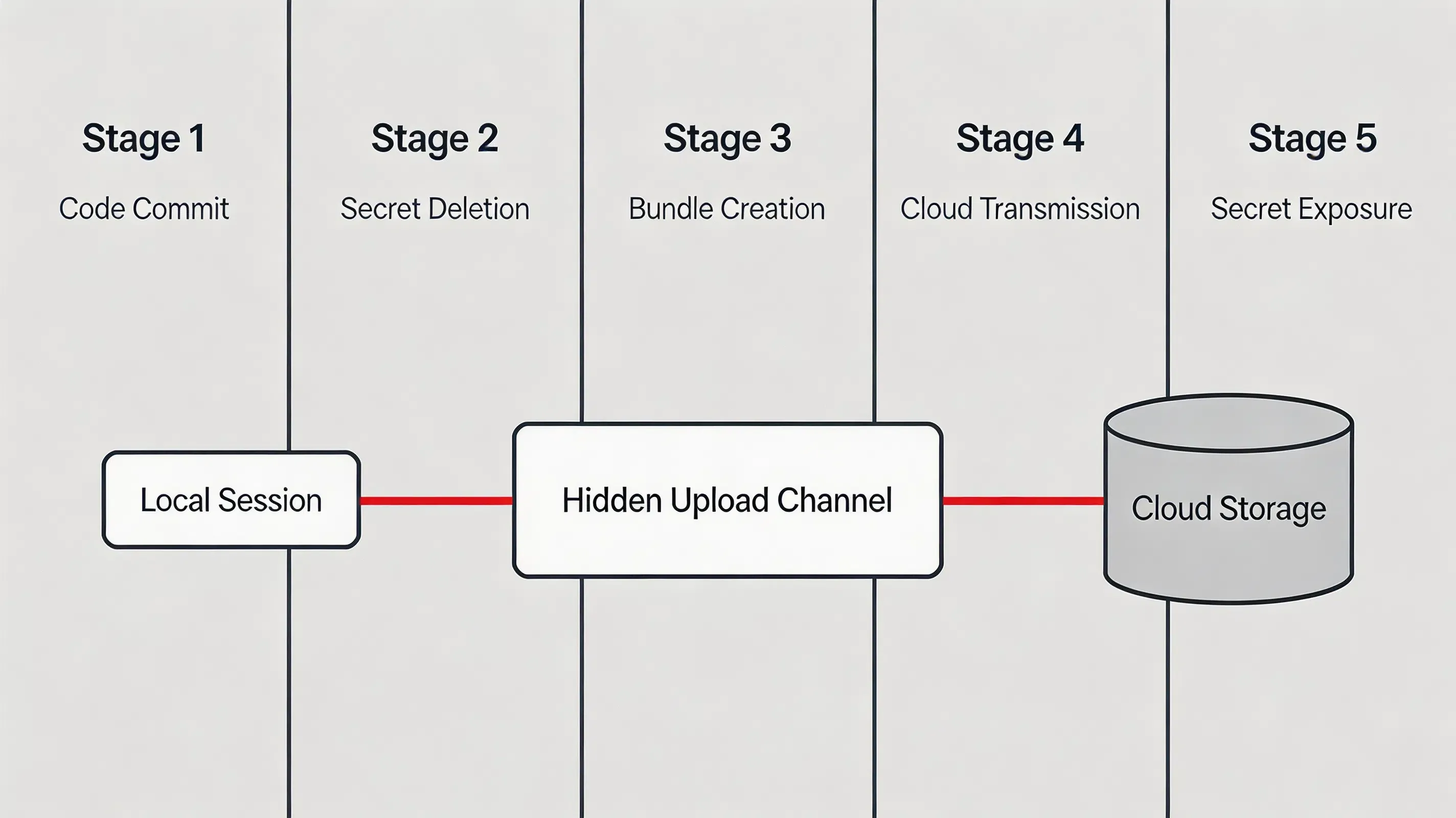
At the protocol layer, Git bundles act as a highly efficient vehicle for codebase preservation. A Git bundle compresses a repository’s entire history—every commit, every file revision, and every historical tag—into a single binary archive. For security-conscious organizations, this creates an acute risk: if a developer committed a private API key or an unencrypted database credential six months ago and later deleted it from the active working files, the historical object still remains fully legible within the Git bundle’s packed objects.
According to the open-source code subsequently published on the xAI open-source repository under the Apache 2.0 license, the codebase contains the upload implementation, allowing researchers to inspect how repository data was prepared for transmission. Separately, independent developer reports alleged that complete Git bundles were uploaded during affected sessions. Because the upload implementation was published in the open-source repository, researchers could inspect the transmission workflow directly instead of inferring it solely from network traffic. If Git bundles contain historical credentials, the mechanism could expose secrets that developers believed had already been removed. This architecture could increase code exfiltration risk if repository uploads include sensitive historical objects, demonstrating that even when the CLI uploads repository data to the cloud, the related upload logic remained visible in the published source code, as detailed in reports published by Adversa AI’s security laboratory.
[Repository Transmission Comparison]
  Grok Build (covert upload) ──> Full Git Bundle (Tracked Code + Complete Commit History) ──> Unredacted Cloud Bucket


  Claude Code (redacted context) ──> Redacted Code Snippets ──> Scoped Model Inference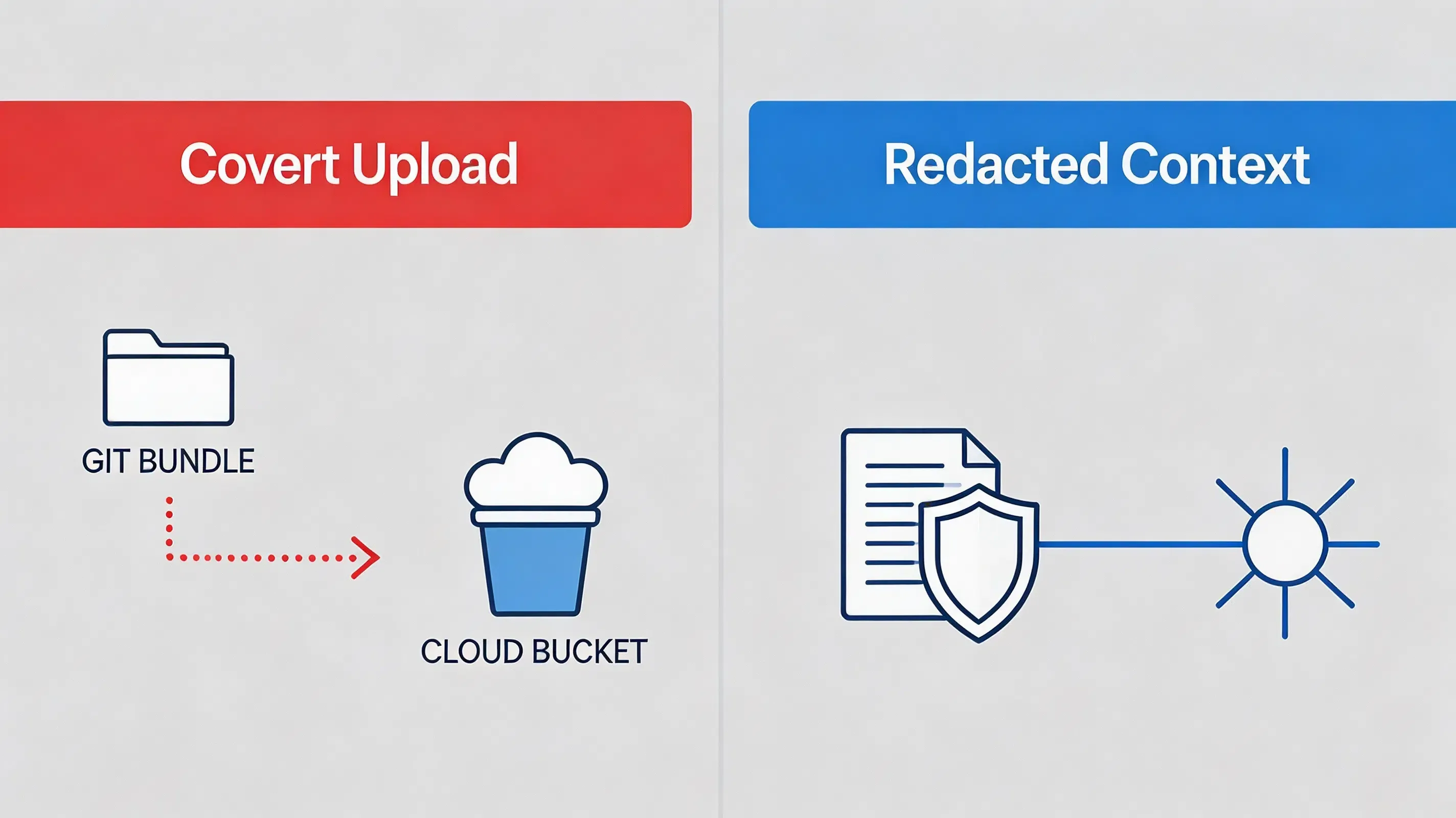
From AI Coding Agents to Mobile SDKs: Why Third-Party Components Need Runtime Transparency
The Grok Build incident highlights a broader software supply chain challenge: developers are no longer only evaluating whether a component works, but whether its internal behaviors are observable. The same visibility problem also exists in mobile SDK integrations. Teams increasingly need runtime transparency to verify telemetry behavior, background communication, and data collection before deploying third-party components.
The same principle applies beyond developer tools. Any third-party component running inside an application environment creates a similar visibility challenge. This same transparency challenge appears in mobile SDK integrations, where invisible telemetry, excessive permissions, or uncontrolled background communication can directly affect application security and measurement reliability.
Security Architecture Comparison
The incident also highlights a broader software engineering question: how should organizations preserve trusted session state after client-side execution becomes increasingly opaque? Managing security boundaries after incidents like the reported Grok Build repository uploads requires architectures that are both compliant with data privacy laws and highly accurate. Organizations that need to preserve user journeys across web and mobile experiences increasingly rely on server-side session management rather than persistent client-side identifiers. Depending on business requirements, teams may build these capabilities internally or adopt existing server-side attribution frameworks.
Architectural Evaluation: Custom Build vs. Standardized SDK
Building a custom, in-house system to monitor command-line tool behaviors and audit network packets offers high customizability but introduces immense engineering complexity. Development teams must manually write filesystem monitoring rules, maintain custom security hooks, and continuously audit every dependency’s network calls. Conversely, deploying a standardized, pre-built security verification framework allows organizations to offload this maintenance overhead while ensuring zero-trust runtime protection.
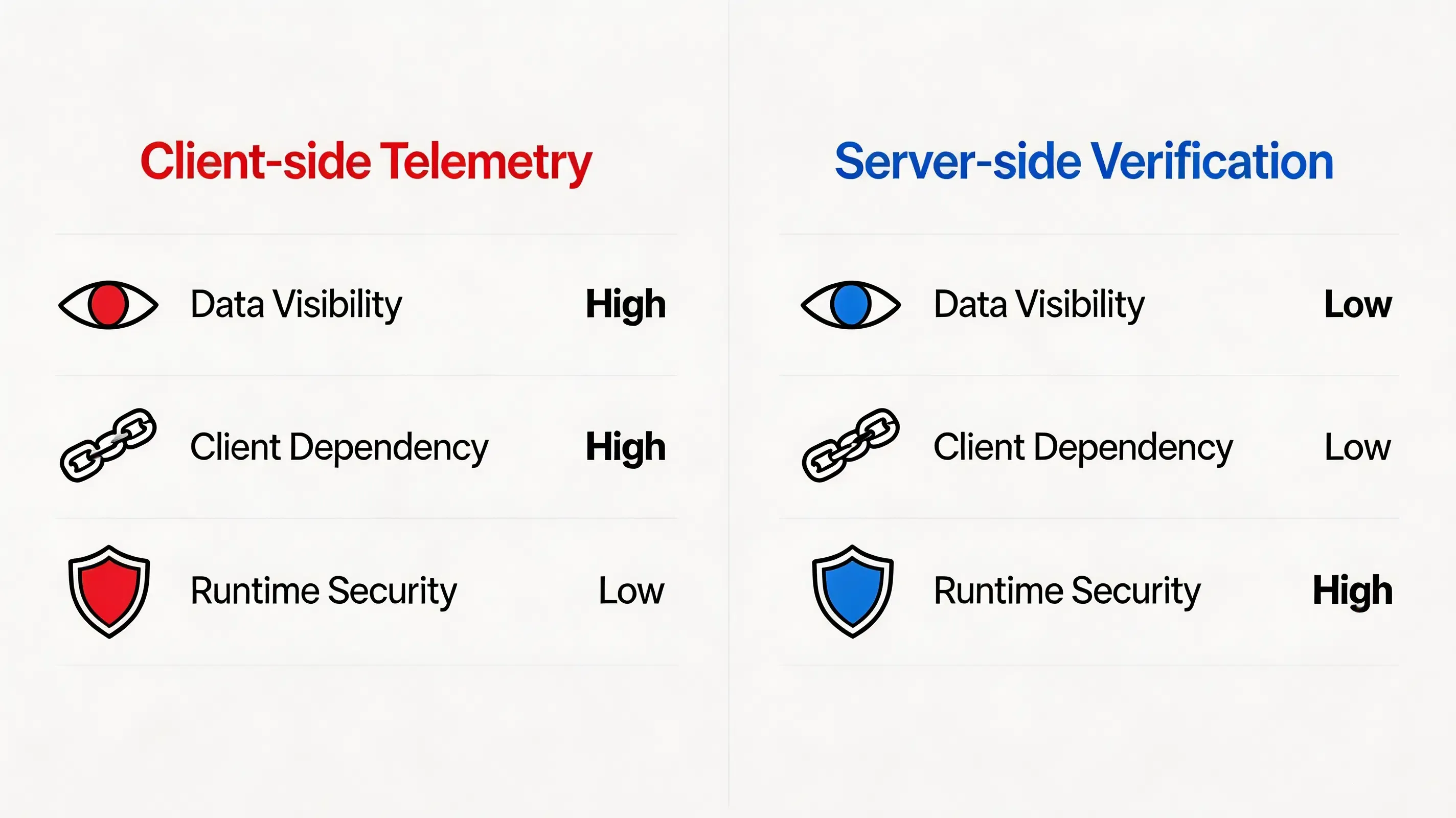
The following comparison matrix outlines how different tracking and security methodologies perform in a stateless, highly automated environment:
| Architecture | Data Visibility | Client Dependency | Suitable For |
|---|---|---|---|
| Local-only Monitoring | Low | High | Internal development utilities and air-gapped repositories |
| Client-side Telemetry | Medium | High | Traditional applications with fully public codebase footprints |
| Server-side Verification | High | Low | Privacy-sensitive deployment channels and secure data pipelines |
While custom database configurations can handle basic execution context, specialized server-side runtime verification can optimize development resources. Depending on implementation requirements, organizations may build their own server-side verification systems to validate runtime behaviors and enforce cryptographic integrity checks. Server-side verification has gradually become a common architecture for organizations that need consistent attribution across privacy-restricted environments. For mobile teams evaluating server-side measurement architectures, platforms such as OpoInstall provide server-side state restoration and deferred app parameter pass-through framework capabilities. By validating application events through centralized server-side records rather than relying entirely on client-side execution, such a system ensures that the application environment remains protected without storing or compromising sensitive user datasets. Engineering teams can evaluate these approaches to balance data protection and measurement consistency.
Integration Checklists: How Engineering Teams Can Prepare for Platform Changes
To secure data pipelines and ensure conversion consistency as platforms transition to automated, agent-driven architectures, engineering and product teams must adopt robust state preservation workflows.
Developer Implementation Checklist
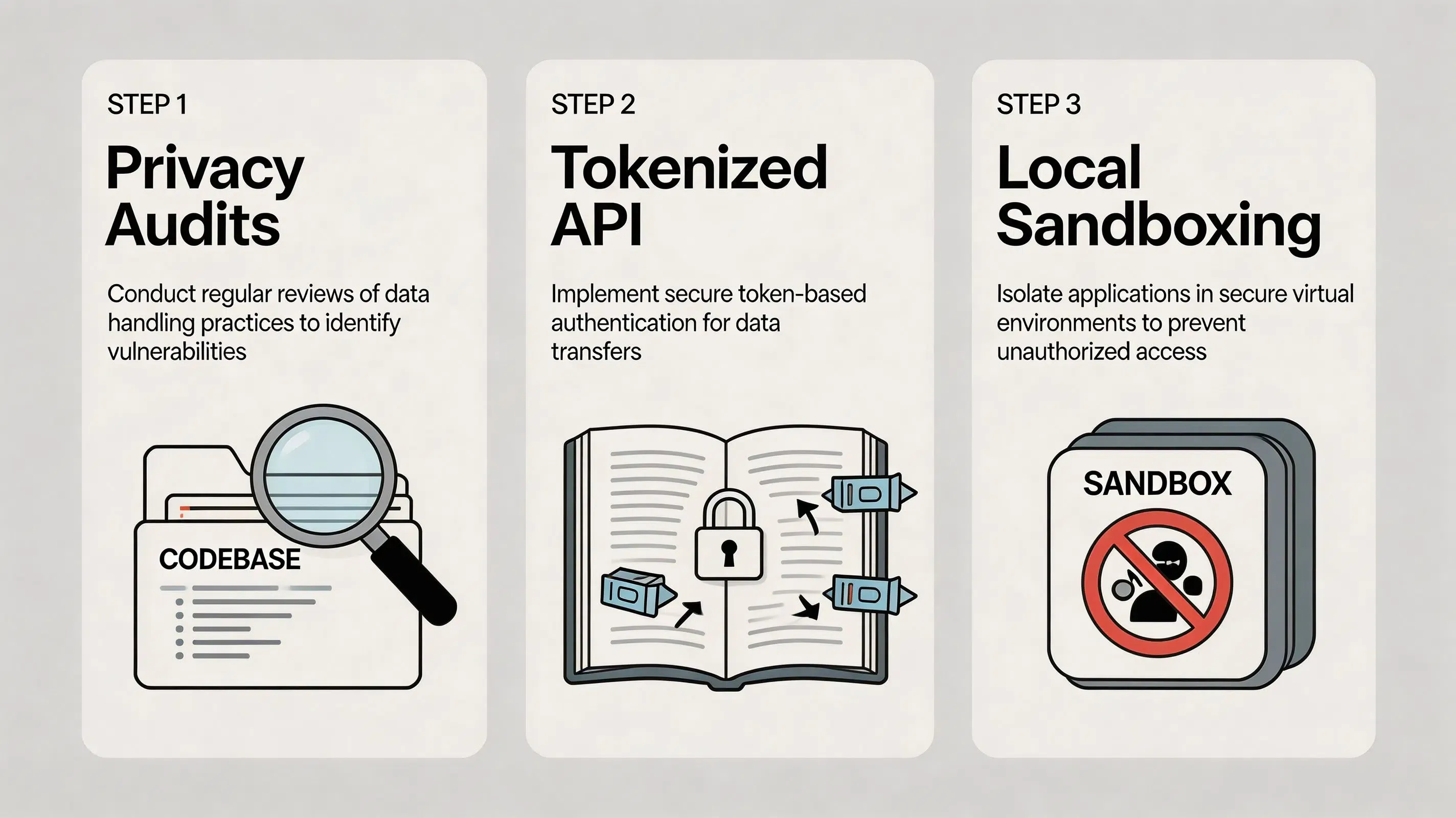
- Enforce Codebase Privacy Audits: Review all active CLI dependencies to identify and block unauthorized background directories scan and upload loops.
- Verify Execution Audit Trails: Review system logs regularly to verify that automated agents have not initiated unauthorized background file modifications.
- Adopt Tokenized API Authentication: Require cryptographic, short-lived tokens on all API requests to prevent unauthorized automated agents from querying sensitive databases.
- Enforce Strict Local Sandboxing: Restrict all local agent execution to disposable virtual machines or single-use Docker containers to limit the potential blast radius.
- Enforce SDK Runtime Integrity Checks: Confirm that state matching databases accurately reconcile campaign tokens when local models initiate application executions.
Product & Growth Strategy Checklist
- Audit Automated Telemetry Behaviors: Monitor automated agent patterns in the runtime environment to filter non-human engagement and secure downstream conversions.
- Review Third-Party Dependency Data Access: Audit all integrated software development kits to confirm that they only access resources explicitly authorized by the host application.
- Audit Automated Data-Sharing Settings: Regularly review telemetry controls across development and production environments to prevent silent, default-enabled uploads, as documented in the TechTimes security briefs.
Audit Your Mobile Data Flow Before Adding More Automation
As third-party components become more autonomous, engineering teams should verify:
- What data is collected by integrated libraries?
- Where is session state stored during cross-domain transitions?
- How are events restored after application installation?
Before integrating additional SDKs or automation components, teams can start by mapping SDK permissions, outbound network requests, event restoration paths, and server-side data ownership. A transparent server-side architecture helps teams maintain measurement reliability without expanding unnecessary client-side data exposure.
Frequently Asked Questions (FAQ)
Why is Git bundle transmission risky for repositories with deleted secrets?
What is the difference between the /privacy command and a server-side codebase upload block?
Can deleted API keys still exist in Git history?
Why are SDK runtime audits becoming mandatory for digital platforms?
As autonomous AI agents gain broader execution privileges, traditional local security assumptions and security teams will gradually lose visibility into execution paths. Security can no longer rely solely on static code reviews; runtime integrity monitoring, sandbox isolation, and behavior auditing are becoming foundational requirements for modern SDK ecosystems. For engineering organizations, the primary objective is to establish verifiable execution paths, continuous repository auditing, dependency transparency, and CLI telemetry reviews that minimize trust assumptions in autonomous development tools. Teams can start by auditing current SDK permissions, network requests, and server-side event flows before adopting additional automation components.
Share this article