HarmonyOS Becomes No. 3 Mobile OS? China’s Ministry of Industry and Information Technology (MIIT) has officially characterized HarmonyOS as the world’s third-largest mobile operating system, alongside confirming that cumulative devices in the wider OpenHarmony ecosystem have exceeded 1.35 billion units. As the mobile operating system market becomes increasingly three-platform rather than binary, app developers and growth teams face an evolving distribution landscape. While Android and iOS continue to represent the primary global app platforms, the expansion of native HarmonyOS environments—particularly for teams targeting users in China and the broader Huawei device ecosystem—requires distinct application packaging, deep-linking protocols, and attribution pipelines.
Industry Realignment: HarmonyOS Becomes No. 3 Mobile OS as Ecosystem Expands
At a Glance
- MIIT officially recognized HarmonyOS as the world’s third-largest smartphone operating system, with the broader OpenHarmony open-source ecosystem exceeding 1.35 billion cumulative devices.
- Huawei reported that HarmonyOS 6 terminal devices have surpassed 80 million units, with HarmonyOS terminal adoption moving toward the 100-million-device milestone.
- The transition to native HarmonyOS application runtimes establishes an independent platform layer, requiring separate App Linking, store routing, and post-install parameter considerations.
The structure of the global mobile operating system market is undergoing meaningful diversification. For more than a decade, digital businesses built their mobile acquisition, deep linking, and measurement architectures almost exclusively around two ecosystems: Google’s Android platform and Apple’s iOS environment. Product funnels, conversion tracking scripts, and app store redirection logic were designed specifically around the runtime behaviors and privacy policies of these two operating systems.
However, the continued expansion of HarmonyOS has created a material third ecosystem. Speaking at a State Council Information Office briefing, Liu Yulin, Director-General of MIIT’s Information and Communications Development Department, stated that China’s foundational software capabilities have expanded significantly. He highlighted that the cumulative OpenHarmony ecosystem now spans over 1.35 billion devices across multiple hardware categories, including smart appliances, connected vehicles, and industrial distributions, as detailed in coverage of the MIIT briefing.
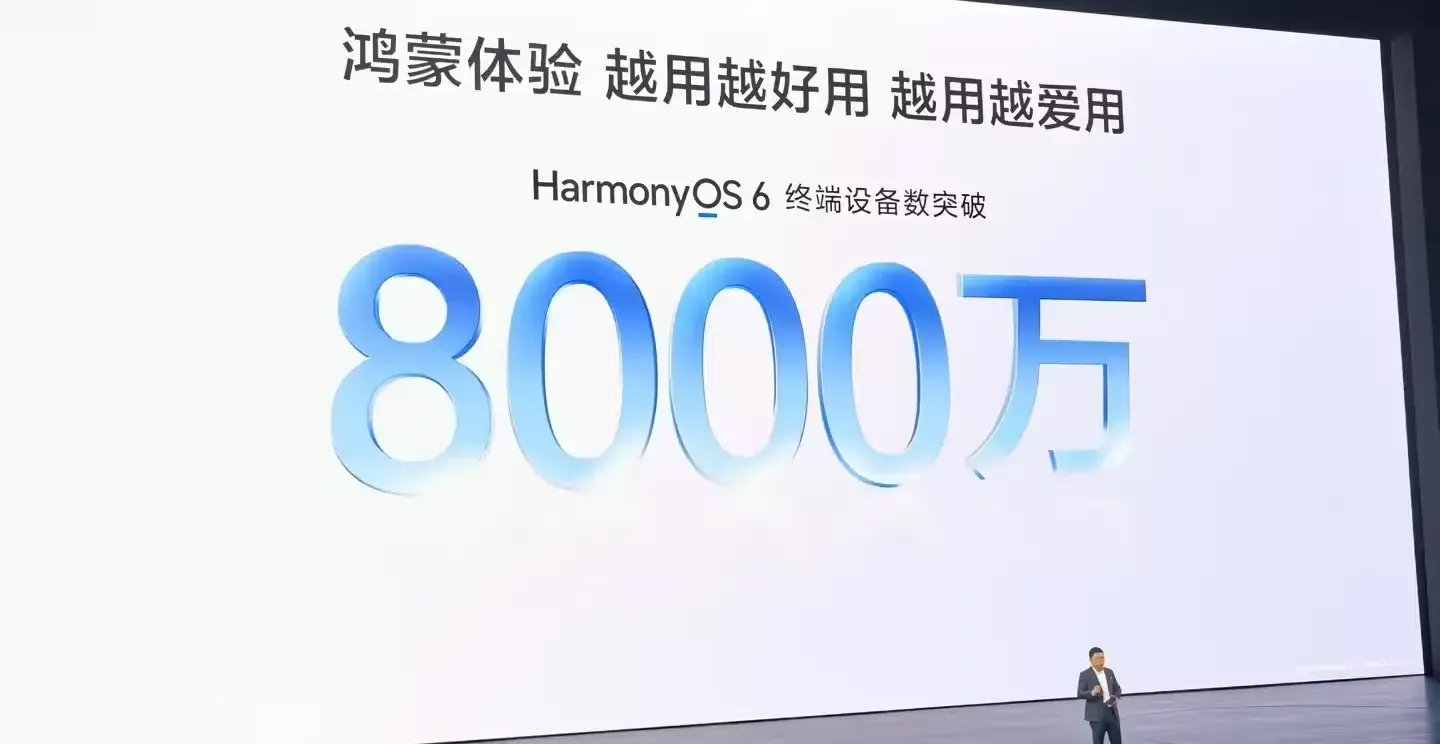
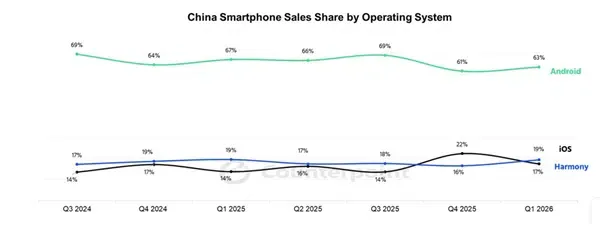
Understanding this milestone requires distinguishing between the broad OpenHarmony device foundation and consumer smartphone adoption. The 1.35-billion-device metric is a cumulative figure spanning diverse hardware types, whereas consumer terminal adoption tracks specific product releases. Huawei reported on August 20 that devices running HarmonyOS 6 have surpassed 80 million units. Third-party installation trackers have estimated recent daily growth at roughly 170,000 devices, moving total HarmonyOS terminal adoption toward the 100-million-device mark. Independent data from Counterpoint Research also indicates that HarmonyOS accounted for approximately 19% of the Chinese smartphone market in early 2026, surpassing iOS domestically.
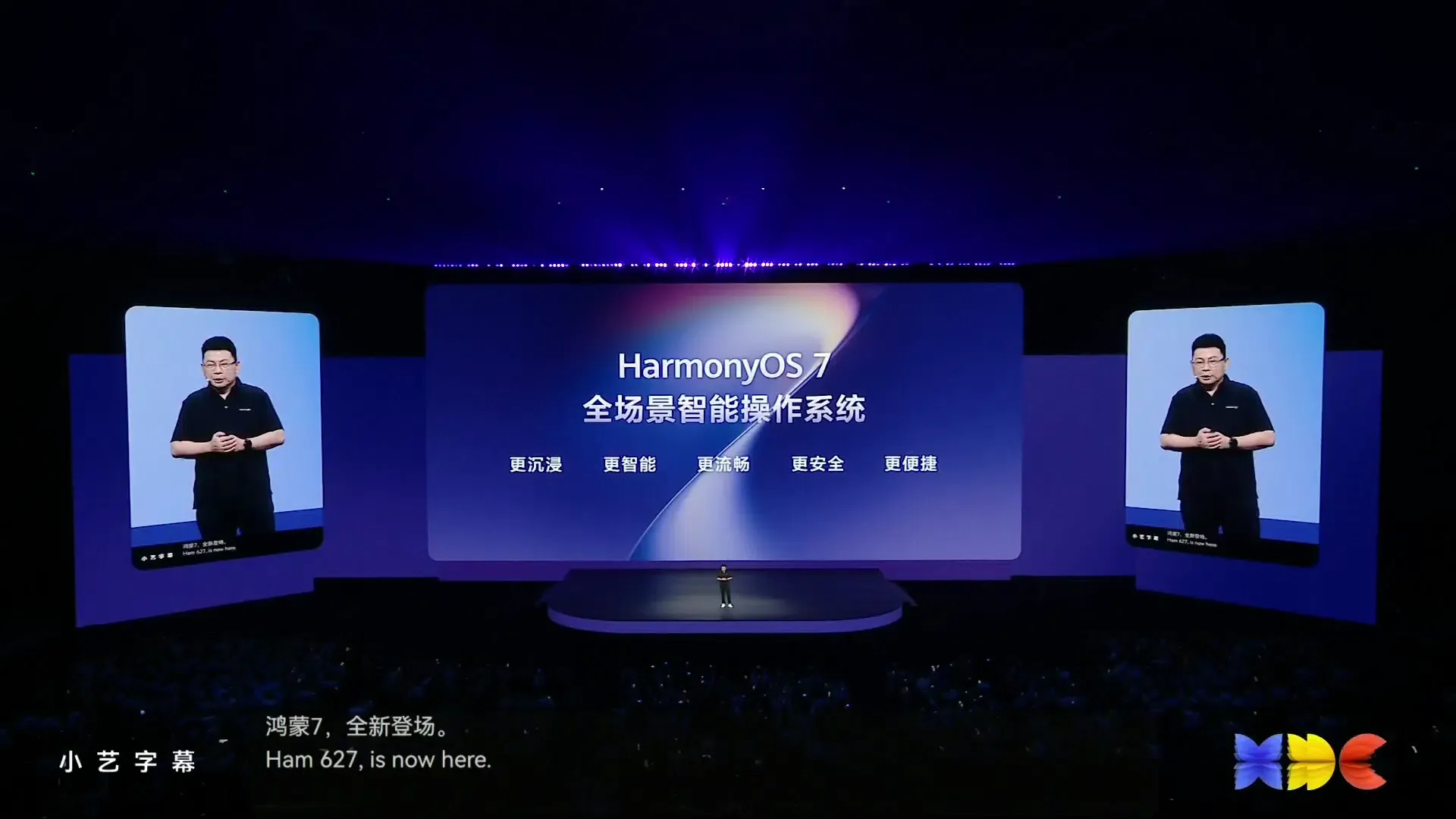
For growth teams and mobile engineering departments, this market presence introduces practical development considerations. Because native HarmonyOS applications use independent package formats, dedicated intent handlers, and distinct security sandboxes rather than standard Android runtime environments, existing Android deep-linking implementations cannot simply be mirrored. Developers targeting the platform must implement dedicated linking and measurement logic.
Multi-Platform Routing Architecture Across Android, iOS, and HarmonyOS
The technical divergence among mobile operating systems centers on application runtimes and external intent resolution. Earlier HarmonyOS generations retained compatibility with Android application environments. Native HarmonyOS applications now use a distinct application framework, package format, development toolchain, and platform APIs.
This architectural separation affects how incoming web traffic, promotional campaigns, and referral links transition into installed applications. When a prospective user clicks a promotional link within a mobile browser, messaging app, or web landing page, the platform must determine whether to wake an installed native application or route the user to an app marketplace.
Protocol Alignment Across Platform Ecosystems
Maintaining consistent user onboarding across three distinct operating systems requires coordinating different linking standards. The diagram below illustrates how external intent routing diverges across Android, iOS, and HarmonyOS environments:
                                  [ User Promotional Click ]
                                              │
                                              ▼
                             [ Dynamic Platform Routing Layer ]
                                              │
         ┌────────────────────────────────────┼────────────────────────────────────┐
         ▼                                    ▼                                    ▼
[ Android: App Links / Play Store ]   [ Apple iOS: Universal Links / App Store ]   [ HarmonyOS: App Linking / AppGallery ]
         │                                    │                                    │
  Play Store Boundary                  App Store Boundary                   AppGallery Boundary
         │                                    │                                    │
[ Optional Post-Install Context Recovery ]  [ Optional Post-Install Context Recovery ]  [ Optional Post-Install Context Recovery ]
When a user clicks a campaign link without having the target application installed, the browser directs them to the appropriate marketplace: Google Play, Apple App Store, or Huawei AppGallery. Because standard browser cookies and URL query parameters do not automatically cross these native app store installation boundaries, any referral identifier, custom onboarding code, or specific in-app destination is lost unless dedicated parameter recovery mechanisms are implemented.
Solution Comparison: Evaluating Linking Infrastructure in a Multi-OS Market
As development teams support applications across multiple operating systems, they must decide how to manage deep linking and user acquisition analytics. Engineering teams face choices between utilizing platform-native linking services, constructing internal routing databases, or deploying specialized third-party deferred deep linking SDKs.
Architectural Evaluation: Linking and Attribution Approaches
To preserve user context across the installation boundary on Huawei devices, developers can leverage Huawei App Linking, which supports deferred linking through AppGallery Connect across HarmonyOS, Android, and iOS builds. Alternatively, teams building bespoke multi-channel attribution can manage custom session databases, though this requires ongoing maintenance to handle evolving platform privacy APIs. For broader cross-platform Web-to-App funnels on Android and iOS, third-party deferred deep linking SDKs provide turnkey parameter recovery.
The comparison table below outlines common architectural approaches to multi-platform linking and attribution:
| Approach | Platform Scope | Deferred Context | Engineering Scope | Best For |
|---|---|---|---|---|
| Native Platform Linking (App Links / Universal Links) | Single platform per standard | Platform-dependent (Fails without native SDK logic) | Multiple isolated configurations | Single-platform direct app waking |
| Huawei App Linking | HarmonyOS, Android, iOS | Supported via AppGallery Connect, subject to platform and regional availability | Huawei ecosystem and AGC service dependency | Apps focusing heavily on Huawei AppGallery distribution |
| In-House Session Sync Database | Custom multi-platform | Supported via custom server-side matching | Extremely high maintenance and infrastructure overhead | Large enterprises with dedicated mobile data engineering teams |
| Third-Party Deferred Deep Linking (e.g. OpoInstall) | Documented for Android and iOS | Supported via server-side parameter recovery | Unified SDK workflow on supported mobile platforms | Multi-channel Web-to-App campaigns across Android and iOS |
For multi-channel user journeys on established mobile platforms, solutions such as OpoInstall provide deferred deep linking and server-side parameter recovery to preserve eligible campaign, referral, or destination parameters across web-to-app installation journeys on supported Android and iOS devices. By temporarily preserving eligible parameters on server-side matching infrastructure, such frameworks enable the destination application to use restored parameters to route the user toward the intended onboarding view upon first launch. For developers expanding into native HarmonyOS environments, teams should evaluate platform-native tools like Huawei App Linking alongside their existing Android and iOS measurement tooling.
Technical Implementation Checklist: Adapting Growth Pipelines for Multi-Platform Distribution
To maintain reliable user onboarding and measurement integrity across a diversifying mobile OS landscape, engineering and growth teams should establish structured technical workflows.
Developer Implementation Checklist
- Configure Platform-Native Linking Protocols: Deploy Android App Links, iOS Universal Links, and HarmonyOS App Linking alongside one another to ensure seamless app waking for existing users across all platforms.
- Standardize URI Scheme and Route Mapping: Ensure that internal routing paths, deep-link query parameters, and target activity destinations remain consistent across native HarmonyOS packages and Android/iOS codebases.
- Implement Post-Install Context Recovery: Integrate appropriate native SDKs or platform services to capture and restore referral tokens and onboarding parameters on first application launch.
Product & Growth Strategy Checklist
- Segment Acquisition Analytics by Platform: Separate campaign performance metrics across Huawei AppGallery, Google Play, Apple App Store, and third-party web channels to evaluate conversion efficiency accurately.
- Deploy Frictionless Referral Funnels: Utilize dynamic parameter pass-through links across marketing channels, enabling automatic referral attribution without requiring users to manually input invitation codes.
- Test Multi-OS Web-to-App Routing: Conduct automated routing tests on campaign landing pages to verify that users on Android, iOS, and HarmonyOS devices are directed to the correct native store and onboarded seamlessly.
Implementing these technical procedures ensures that user acquisition funnels maintain tracking continuity and deliver smooth onboarding experiences across the evolving multi-OS landscape.
Frequently Asked Questions (FAQ)
What is the difference between the 1.35 billion OpenHarmony figure and HarmonyOS smartphone installations?
Why do standard web redirects fail to pass parameters during app installation?
How do native HarmonyOS applications differ from legacy dual-framework builds?
Practical Implications & Future Outlook
The official recognition of HarmonyOS as the world’s third major smartphone operating system highlights the growing diversification of the mobile software market. While its immediate native app distribution impact is most concentrated in China and Huawei’s device ecosystem, the broader growth of OpenHarmony across consumer and industrial hardware demonstrates the need for adaptable software architectures.
Navigating this multi-platform environment successfully requires decoupling user acquisition and measurement systems from single-platform assumptions. By deploying platform-native linking protocols, establishing robust server-side context restoration, and utilizing appropriate cross-platform deferred deep linking frameworks, organizations can build durable distribution pipelines that deliver consistent user experiences across Android, iOS, and HarmonyOS environments.
Share this article