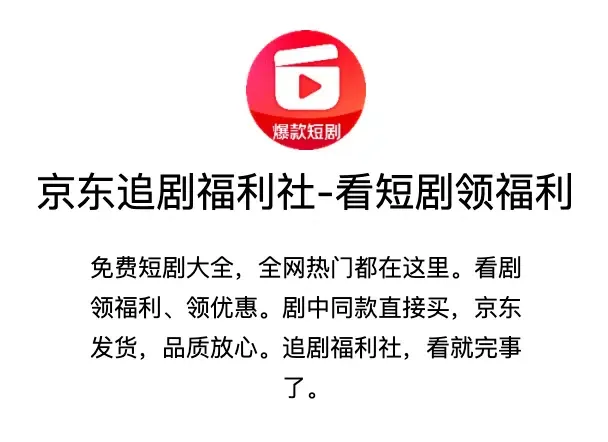
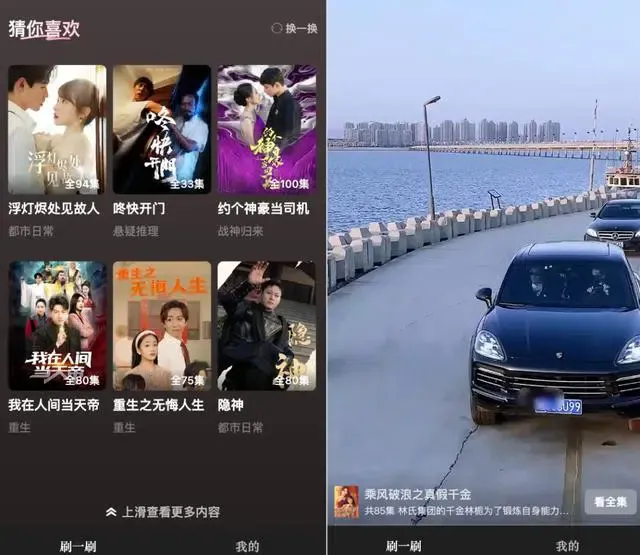
JD Tests Short Drama Shopping? Media reports describe a trial of “JD Drama Welfare Club,” a free WeChat mini-program whose promotional materials advertise rewards and featured-item purchases. Reporters observed video playback features but did not find shopping entry points in their tests; the purchasing flow and rollout scope remain unconfirmed. As consumer platforms evaluate how video narrative influences user discovery, promotional formats are increasingly integrated with digital storefronts. However, while introductory materials describe direct fulfillment through retail supply chains, initial evaluations demonstrate that live transaction capabilities remain unverified in early testing builds.
The Reported Trial: What Is Known About JD’s Short-Drama Product
At a Glance
- Technology reporters observed an internal test of “JD Drama Welfare Club,” primarily operating as a WeChat mini-program rather than an integrated flagship app update.
- Promotional product descriptions state that viewers can claim rewards and purchase items featured in episodes with fulfillment handled by JD logistics.
- Hands-on testing confirmed functional vertical streaming, bookmarks, and playback speed controls, but reporters observed no active e-commerce checkout buttons.
The boundaries between content consumption and online retail continue to blur across mobile platforms. On November 10, 2026, technology media reported that Chinese retail enterprise JD.com initiated an internal beta trial for an entertainment offering called “JD Drama Welfare Club” (京东追剧福利社). Operating primarily as a lightweight WeChat mini-program as detailed in Sina Tech reporting, the service adopts a free-to-watch streaming model featuring vertical micro-drama genres such as urban romance, suspense, and modern drama.
Industry observers noted that the product documentation explicitly advertises retail utility, stating that viewers can claim promotional coupons and buy items seen on screen with fulfillment managed by JD’s logistics network. However, published evaluations from digital media outlets, including Dujia / 36Kr Reporting and IT Home Tech Coverage, emphasized an important distinction: while video streaming operates smoothly, tested builds currently lack visible shopping triggers or direct transaction portals. At the time of reporting, platform representatives had not issued public statements detailing official release schedules.
This experimental trial occurs against a backdrop of shifting consumer attention in regional markets. According to the QuestMobile 2026 China Mobile Internet Autumn Report, short-form video and micro-dramas accounted for over one hundred percent of net user duration growth across Chinese mobile devices, capturing engagement time that previously belonged to traditional news feeds and long-form streaming platforms. Further industry metrics from IT Home reporting on the NRTA report highlight that micro-dramas have expanded dramatically, reaching hundreds of millions of monthly viewers.

What Short-Drama Marketing Means for App Acquisition and Product Promotion
The industry discussion surrounding this test highlights a broader commercial reality: digital marketers and mobile application teams are increasingly exploring episodic micro-dramas as customer acquisition and promotional channels. Whether an enterprise operates a marketplace, a mobile game, or a subscription service, short-form narrative videos provide high-engagement touchpoints to showcase products or services.
However, moving a prospective customer from a video impression to a completed conversion introduces operational considerations, particularly when promotional campaigns cross application boundaries. If a transaction occurs entirely within a self-contained mini-program or web container, external routing is unnecessary. Conversely, when promotional campaigns aim to drive audiences from social streams into standalone native applications, engineering teams must maintain contextual continuity.
Navigating State Handoffs: Web Views to Native Applications
When promotional short-drama campaigns run outside of a closed platform, the user journey separates into distinct technical pathways depending on whether the native application is present on the device:
- Installed Users: If the target application is already installed, native protocols such as Apple Developer documentation on Universal Links and Android App Links can open the intended in-app destination when supported by the browser and correctly configured by the app and domain owner.
- Uninstalled Users: When the user does not possess the native application, the browser directs them to a platform app store or direct download page. Once the application is downloaded and launched for the first time, traditional web storage—such as cookies governed by strict domain isolation as outlined in MDN Web Docs on HTTP Cookies—is not automatically transferred to the native application environment.
[Hypothetical External Video Ad Flow — Not JD's Verified Implementation]

User Views Short-Drama Ad Clip (Social / Web Feed)
                  │
                  ▼ (User Taps "View Featured Content")
[Universal Link / Deep Link Handler]
                  │
         ┌────────┴────────┐
         │                 │
   [App Installed]   [App Not Installed]
         │                 │
         ▼                 ▼
[Open In-App Target] [App Store / Direct Download]
                           │
                           ▼ (First Post-Install Launch)
                      [Deferred Parameter Recovery]
                           │
               ┌───────────┴───────────┐
               │                       │
         (Success)                 (Timeout / Fallback)
               ▼                       ▼
    [Validate State Backend]    [Default / Category View]
               │
               ▼
    [Render Product Screen]
Without explicit state preservation, a freshly installed application often opens to its default home page, requiring the user to manually search for the item they initially saw. Platform utilities such as the Google Play Install Referrer API provide mechanisms to retrieve installation parameters on Android devices through supported store channels. However, cross-platform parameter continuity across diverse third-party app stores and browser environments remains an architectural consideration for growth teams.
Managing User Context: Architectural Approaches for Growth Teams
When engineering teams connect promotional video content with native application funnels, they generally evaluate whether to construct proprietary session stores or adopt specialized linking frameworks. In these independent promotional workflows, the objective is to maintain contextual continuity across installation boundaries while respecting user privacy and platform security constraints.
The table below outlines common architectural approaches for handling promotional context handoffs:
| Approach | Context Continuity | Implementation Scope | Primary Considerations |
|---|---|---|---|
| In-House Session Store | High when accounts are cross-linked by backend | Full-stack server development | Requires custom database maintenance and identity reconciliation logic |
| Direct Store Referrer APIs | Platform-dependent (e.g., Google Play) | Client and backend integration | Limited by operating system policies and specific store availability |
| Specialized Deferred Linking (e.g., OpoInstall) | Context-matching across web and install | Client SDK and routing configuration | Focuses on parameter delivery; requires app-side logic for scene handling |
When independent software teams run external acquisition campaigns using short-drama clips, maintaining continuity between the creative and the installed application helps reduce friction. In these promotional workflows, specialized platforms such as OpoInstall Documentation provide deferred deep linking and parameter pass-through capabilities. These tools allow applications to receive campaign tags, content IDs, or product references upon eligible first launches, helping teams route users toward the intended in-app experience.
Deep-linking frameworks deliver raw routing parameters rather than pre-authorized transactions. Passing an SKU identifier or promotional tag to an application does not circumvent essential transactional security; application backends must independently authenticate the user session, verify live inventory, check account eligibility, and secure payment approval before any order can be completed.
Integration Checklists: Technical Safeguards for Promotional Routing
Teams planning to connect video media campaigns with native mobile applications can utilize the following checklists to support user routing and data integrity.
Developer Implementation Checklist
- Configure Domain Verification: Establish valid Universal Links and App Links domain associations to support invocation and test browser-specific fallbacks.
- Validate In-App Parameter Handlers: Ensure application routers gracefully handle incoming deep link payloads, verifying that invalid or expired parameters fall back to relevant category screens.
- Isolate Parameter Retrieval from Checkout Services: Treat incoming deferred parameters as untrusted inputs. Always pass received IDs to authenticated backend services for inventory and price verification before displaying purchasing interfaces.
- Implement Startup Fallbacks: Set reasonable timeout thresholds for deferred parameter queries during cold starts so that network latency does not block core interface rendering.
Product & Growth Strategy Checklist
- Align Creative Assets with Destination Pages: Ensure promotional video content directly corresponds to the linked in-app destination to reduce bounce rates.
- Evaluate User Funnel Drop-offs: Implement analytics tracking at each transition stage—video click, app store visit where observable by channel, first launch, and destination view—to identify friction points.
- Respect Platform Privacy Mandates: Confirm that acquisition tracking methodologies adhere to the latest operating system privacy guidelines and local advertising disclosure regulations.
Frequently Asked Questions (FAQ)
Has JD officially launched in-video shopping across its primary application?
How do external video promotions link viewers directly to products in mobile apps?
Can deferred deep linking automatically execute purchases or apply coupons?
Key Takeaways for Engineering Teams
The industry interest surrounding video-driven commerce illustrates the ongoing shift toward content-led user acquisition. As consumer platforms explore micro-dramas to retain user engagement, engineering and growth teams must design infrastructure that bridges video discovery and application conversion.
If an entire shopping journey is contained within a single mini-program or web portal, native application state recovery is not required. However, when external campaigns lead into native apps, teams should preserve eligible routing context and validate it before use. Turning video engagement into sustainable retail growth may require platform referrer APIs, server-side parameter preservation, or another supported handoff mechanism, combined with strict transactional validation on the backend. Organizations that prioritize smooth, compliant state handoffs will be best positioned to succeed in content-driven commerce.
References
-
Dujia / 36Kr Reporting: Analysis of JD’s Short-Drama Trial and E-Commerce Integration
-
IT Home Tech Coverage: JD Internal Trial of In-Video Drama Commerce
-
Sina Tech News: Reporting on JD Short-Drama Mini-Program Testing
-
QuestMobile Research: 2026 China Mobile Internet Autumn Report
-
IT Home: Reporting on the National Radio and Television Administration Report
-
Apple Developer Documentation: Allowing Apps and Websites to Link to Your Content
-
Google Developers: Google Play Install Referrer API
-
MDN Web Docs: Using HTTP Cookies and Storage Isolation Guidelines
-
OpoInstall Documentation: Deferred Deep Linking and Parameter Pass-Through
Share this article