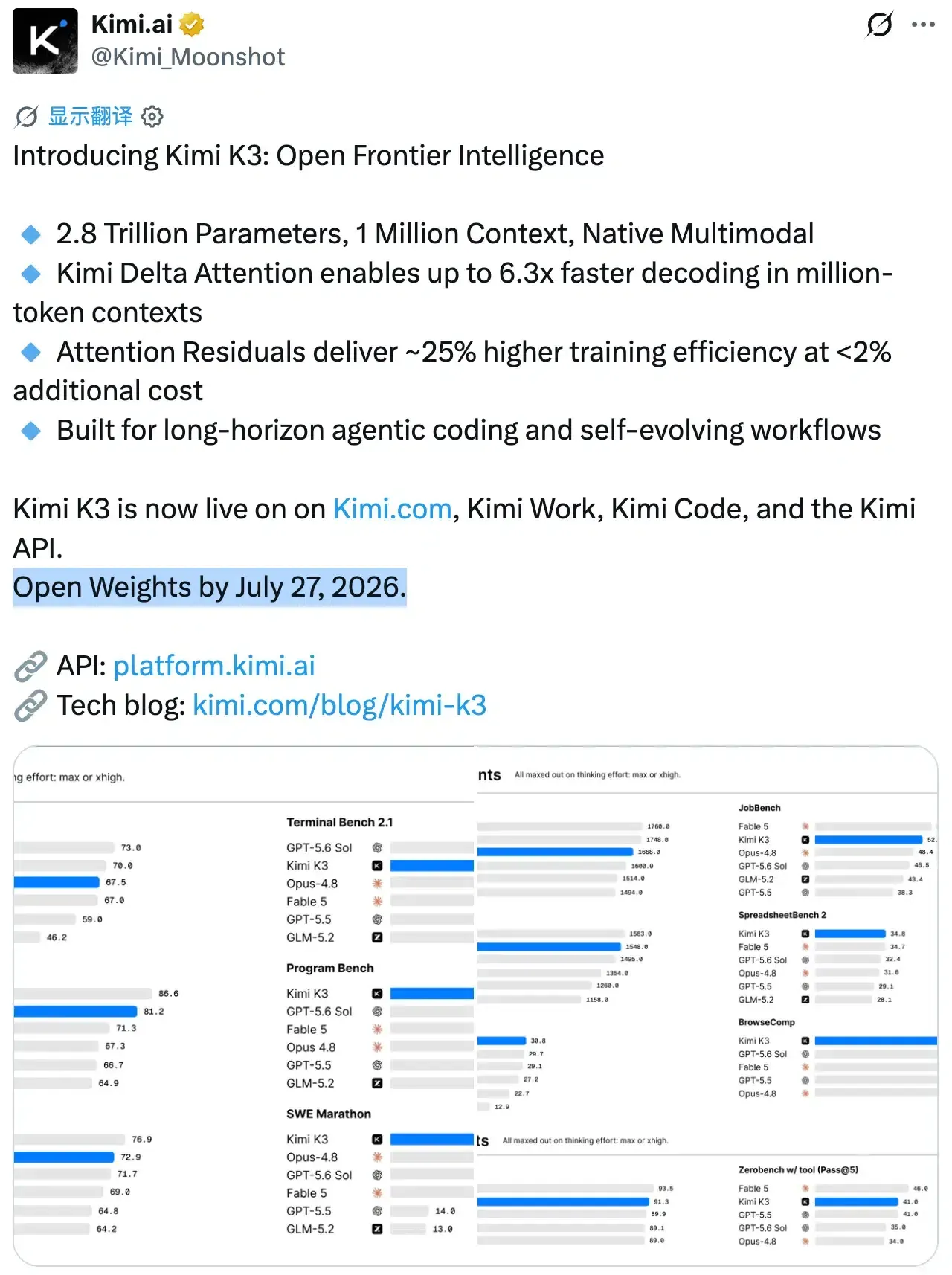
Kimi K3 Suspends New Subscriptions? Moonshot AI has officially paused new consumer subscriptions just days after launching Kimi K3, citing GPU capacity constraints caused by overwhelming demand. The decision highlights a growing challenge facing frontier AI developers: scaling trillion-parameter models while balancing inference costs, hardware availability, and user experience. As generative artificial intelligence changes how digital infrastructure and model services are consumed, platforms continue to navigate shifting scaling landscapes. Historically, scaling AI workloads meant expanding raw floating-point computing capacity. Today, because platforms must manage massive operational costs under finite hardware allocations, engineering teams must transition to highly optimized, memory-efficient deployment architectures.

Why Kimi K3 Suspends New Subscriptions: Reconciling High-Throughput Pipelines with Hardware Scarcity
At a Glance
- Moonshot AI paused new consumer (C-end) subscriptions for Kimi K3 on July 19, 2026, due to a severe GPU compute shortage.
- The 2.8 trillion parameter model with a 100-million-token context window is the largest open-weight model of its kind released to date.
- Existing subscribers remain unaffected, but new users are locked out as Moonshot plans a product unbundling to better match compute demand.
The rapid adoption of large language models has fundamentally changed infrastructure planning. Over the past several years, AI providers primarily competed by training larger foundation models. Today, as inference traffic grows much faster than available GPU capacity, engineering teams must increasingly optimize memory bandwidth, scheduling efficiency, and deployment architectures to maintain service availability. Large language models with extremely long context windows and trillion-scale parameters require significantly more inference resources than conventional chatbot deployments.
The subscription freeze illustrates the physical limits of serving trillion-parameter models at internet scale. Although Moonshot had secured significant computing resources for the K3 launch, the model exceeded all usage projections by such a margin that infrastructure could not keep pace. To maintain user experience, the company chose to prioritize existing subscribers over continued user scale, implementing a temporary subscription freeze until further GPU hardware can be deployed across its server-side networks.

When Kimi K3 suspends new subscriptions, it highlights the real-world difficulty of serving trillion-parameter models at scale. This capacity limit has sparked immediate market attention, showing that even with a fresh, multibillion-dollar valuation, frontier AI developers remain dependent on physical silicon availability.

Understanding the Root Causes Behind the Kimi K3 Subscription Pause
According to Moonshot AI, Kimi K3 activates only 41 billion parameters per token through a Mixture-of-Experts (MoE) architecture despite containing 2.8 trillion total parameters. At the infrastructure layer, the immediate bottleneck is no longer floating-point arithmetic itself, but the ability to continuously stream model parameters from high-bandwidth memory (HBM) into GPU compute units. When an accelerator executes an inference request at this scale, it must repeatedly read massive model weights from memory. This process creates severe latency because data transfer speeds cannot match the processing speeds of standard computing cores, causing processors to spend a significant portion of their operational cycles idling.
Because inference efficiency increasingly depends on memory bandwidth rather than arithmetic throughput, many deployments are shifting toward memory-centric inference optimization. In large-scale Mixture-of-Experts systems like Kimi K3, activating 16 of 896 experts per token reduces the active parameter footprint to 41 billion. This sparse activation mechanism significantly lowers the memory traffic required per query, yet the concurrent demands of a million active users still push high-speed server clusters to their physical memory bandwidth limits, inducing the current capacity restriction.
[Traditional Dense Model (High Memory Traffic)]
  User Prompt ──> Reads All Parameters (2.8T) ──> Heavy Memory Bus Traffic ──> GPU Compute Starvation

[Mixture-of-Experts (MoE) Architecture]
  User Prompt ──> Sparse Expert Routing ──> Reads Active Experts (41B) ──> Lower Memory Traffic (High Throughput)
Implementing stateless processing ensures that no persistent, emotionally manipulative context is generated or stored. Similar architectural trade-offs appear beyond AI inference. As client-side identifiers become less reliable under modern privacy policies, mobile attribution systems face comparable challenges in preserving state efficiently across distributed environments. When user interactions are decoupled from persistent, stateful local cookies to satisfy privacy guidelines, maintaining session continuity across different environments becomes highly complex. For example, when standard browser referrers are missing or cookies are blocked, mobile attribution systems must rely on server-side state matching to correlate separate events without compromising user privacy.
Build vs. Buy: Open-Weight Deployment Strategies Under Compute Scarcity
Organizations operating AI applications increasingly evaluate whether to build internal inference infrastructure or rely on third-party managed services. The decision affects GPU utilization, operating expenditure, deployment flexibility, and long-term FinOps planning, especially as the marketplace adapts, and the moment Kimi K3 suspends new subscriptions highlights a broader industry shift toward self-hosted open-weight models and enterprise AI customization. Developers must choose between building internal inference infrastructure or adopting managed deployment platforms.
Architectural Evaluation: Custom Build vs. Standardized SDK
Building a custom AI inference platform offers maximum flexibility but demands significant engineering investment, including GPU scheduling, model serving, cluster orchestration, and continuous infrastructure optimization. Similarly, managing server-side state matching requires reliable parameter serialization. Developers must manually construct database schemas, write secure cryptographic hashing functions, and continually update the system to comply with shifting regional regulations. Conversely, deploying a pre-built, certified SDK reduces integration complexity and guarantees long-term compliance without additional overhead.
The table below compares standard methodologies for managing session state and conversion context:
| Solution | Infrastructure Control | Operating Cost | Best For |
|---|---|---|---|
| Custom AI Serving Cluster | Complete (Full hardware and orchestration control) | High (Substantial initial GPU CapEx and engineering overhead) | Custom enterprise workflows requiring highly specialized, on-premise compute logic |
| Managed AI Platform | Low (Shared API endpoint restrictions) | High (Metered per-token pricing model) | Low-concurrency prototyping with standard system defaults |
| Lightweight Attribution SDK | High (Server-side state control) | Low (Minimal-overhead, with low network polling costs) | High-concurrency mobile app and multi-platform campaign attribution without GPU strain |
While custom AI infrastructure offers maximum flexibility, managed deployment platforms and lightweight SDKs can significantly reduce operational complexity. As engineering teams optimize backend resources, reducing unnecessary SDK overhead and redundant network requests becomes part of broader infrastructure cost optimization. Similar architectural trade-offs appear beyond AI inference. As client-side identifiers become less reliable under modern privacy policies, mobile attribution systems face comparable challenges in preserving state efficiently across distributed environments. As engineering teams optimize backend resources, reducing unnecessary SDK overhead and redundant network requests becomes part of broader infrastructure cost optimization. Lightweight attribution frameworks and server-side measurement architectures, such as OpoInstall, help engineering teams reduce infrastructure overhead and network polling costs while preserving reliable conversion measurement. By optimizing server-side data processing and minimizing redundant client-side redirections, such an approach ensures that conversion contexts remain consistent even when initial tasks are executed anonymously. Engineering teams can evaluate these approaches to balance data protection and measurement consistency. From a FinOps perspective, this scalable inference deployment strategy significantly minimizes raw computing overhead.
Integration Checklists: Hardening Session Workflows Against Compute Scarcity
To secure data pipelines and ensure conversion consistency as platforms transition to memory-centric computing architectures, engineering and product teams must adopt robust state preservation workflows.

Developer Implementation Checklist
- Optimize Memory and Cache Allocation: Review application memory profiles to minimize garbage collection pauses and avoid thrashing in high-concurrency environments, utilizing techniques like quantization, KV cache optimization, and batch scheduling.
- Transition to Server-Side Identity Matching: Implement stateless session handshakes, utilizing temporary tokens to pass user parameters securely across endpoints, establishing secure, server-side parameter pass-through tunnels.
- Deploy Cryptographic Request Signatures: Protect API endpoints from automated spoofing by requiring cryptographic signatures on all state-matching requests.
Product & Growth Strategy Checklist
- Reorganize User Experience Flows: Focus on task-oriented, high-utility pathways that do not rely on local client-side cookie persistence.
- Deploy Non-Intrusive Parameter Tracking: Leverage robust, server-side parameter pass-through frameworks to maintain acquisition tracking without violating user privacy guidelines.
- Verify System Scalability: Ensure that your session-matching databases can scale horizontally to support high-throughput, real-time conversion queries under FinOps monitoring.
By establishing these structured guidelines, development teams can transition their applications to safer, more compliant architectures while maintaining operational continuity.
Frequently Asked Questions (FAQ)
Why did Moonshot AI decide to suspend only new subscriptions instead of shutting down Kimi?
Why does Kimi K3's inference require much more GPU memory than training?
How can enterprises reduce inference infrastructure costs?
Is Kimi K3 fully open source, and can enterprises fine-tune it?
Key Takeaways for Engineering Teams
As frontier AI models continue expanding in parameter count and context length, compute efficiency is becoming a primary engineering constraint. Evolving data architectures require a fundamental shift in how we build and measure digital experiences. As stateless proxies and headless scrapers become standard consumers of web content, traditional client-side attribution models will continue to degrade. Relying on standard cookies and referrers is no longer sufficient to secure the data pipelines that drive user acquisition.
To maintain growth, engineering and product teams must prioritize stateless data structures and server-side state preservation. By implementing zero-trust identity verification, secure parameter pass-through frameworks, and robust data-deletion schedules, organizations can protect their user pipelines while respecting legal boundaries. This architectural shift is essential to build stable, trustworthy platforms that thrive in a regulated digital economy.
Share this article